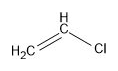
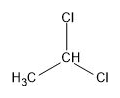
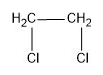
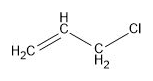
Write the major product A in the following chemical reaction.
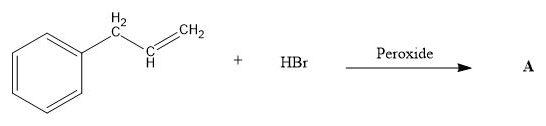
Write the major product A in the following chemical reaction.
Solution
✅ Correct Option: 2
Allylbenzene, , reacts with HBr in the presence of peroxide by a free-radical mechanism (peroxide effect), so addition is anti-Markovnikov.
The radical attacks the terminal of the double bond, because this gives the more stable secondary radical . This radical takes H from HBr, giving (1-bromo-3-phenylpropane), which is Option 2.
Option 1: this is the Markovnikov product, formed by HBr without peroxide.
The peroxide effect works only with HBr, not with HCl or HI.
Related questions:
2026: 21 May Shift 2
2026: 26 May Shift 1
2025: 3 June Shift 2
2026: 22 May Shift 2