Q1:

Haloalkanes & Haloarenes

Easy

In substitution nucleophilic biomolecular SN2S_N^2 reaction, the configuration of the final product involves

Answer options
Option 2
Correct Answer
Explanation for 2026: 18 May Shift 1 CHE question 1

Q2:

Alcohols, Phenols & Ethers

Easy

Ethanol in the presence of concentrated sulfuric acid (conc. H2SO4H_2SO_4) at 443 K produces

Answer options
Option 1
Correct Answer
Explanation for 2026: 18 May Shift 1 CHE question 2

Q3:

Haloalkanes & Haloarenes

Easy

Arrange the alkyl halides in order of their increasing boiling points.

(A) Methyl chloride

(B) Methyl bromide

(C) Methyl iodide

(D) Methyl fluoride

Answer options
Option 3
Correct Answer
Explanation for 2026: 18 May Shift 1 CHE question 3

Q4:

Solutions

Easy

Aquatic species are more comfortable in cold water due to

Answer options
Option 1
Correct Answer
Explanation for 2026: 18 May Shift 1 CHE question 4

Q5:

d & f Block Elements

Medium

The potassium dichromate (K2Cr2O7K_2Cr_2O_7) is

(A) strong oxidizing agent.

(B) the bond angle between Cr-O-Cr is 126∘126^\circ

(C) reduced to Cr3+Cr^{3+} in acidic solution

(D) pentagonal bipyramidal in shape

Answer options
Option 2
Correct Answer
Explanation for 2026: 18 May Shift 1 CHE question 5

Q6:

Aldehydes, Ketones & Carboxylic Acids

Medium

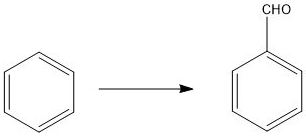
The reagent(s) required to carry out the following conversion are
Figure

Answer options
Option 2
Correct Answer
Explanation for 2026: 18 May Shift 1 CHE question 6

Q7:

Electrochemistry

Easy

Match List-I with List-II

List-I PropertyList-II Unit
(A) Conductivity(I) S m−1S\ m^{-1}
(B) Molar conductivity(II) ohm m
(C) Resistivity(III) S
(D) Conductance(IV) S m2 mol−1S\ m^2\ mol^{-1}
Answer options
Option 2
Correct Answer
Explanation for 2026: 18 May Shift 1 CHE question 7

Q10:

Amines

Easy

Match List-I with List-II

Name reactionChemical reaction
(A) Hinsberg's reaction(I) R−NH2+CHCl3+3KOH→HeatR−NC+3KCl+3H2OR-NH_2 + CHCl_3 + 3KOH \xrightarrow{Heat} R-NC + 3KCl + 3H_2O
(B) Gabriel phthalimide(II) Ph−SO2Cl+C2H5−NH2→PhSO2NH−C2H5Ph-SO_2Cl + C_2H_5-NH_2 \rightarrow PhSO_2NH-C_2H_5
(C) Hoffman bromamide degradation(III) Figure
(D) Carbylamine reaction(IV) R−CONH2+Br2+4NaOH→R−NH2+Na2CO3+H2O+2NaBrR-CONH_2 + Br_2 + 4NaOH \rightarrow R-NH_2 + Na_2CO_3 + H_2O + 2NaBr
Answer options

Q12:

Amines

Medium

Match List-I (reagents) with List-II (transformation)

List-IList-II
ReagentsTransformation
(A) NaNO2+HCl+H2ONaNO_2 + HCl + H_2O (273-278 K)(I) RCN→RCH2NH2RCN \rightarrow RCH_2NH_2
(B) H2/Ni+C2H5OHH_2/Ni + C_2H_5OH(II) C6H5NH2→C_6H_5NH_2 \rightarrow p- Nitroaniline (major)
(C) LiAlH4LiAlH_4(III) C6H5−NH2→C6H5N2+Cl−C_6H_5-NH_2 \rightarrow C_6H_5N_2^+Cl^-
(D) HNO3+H2SO4HNO_3 + H_2SO_4, 288K(IV) RCONH2→RCH2NH2RCONH_2 \rightarrow RCH_2NH_2
Answer options

Q13:

Aldehydes, Ketones & Carboxylic Acids

Easy

The hybridization of carbonyl carbon changes from ...... to ..........in a nucleophilic addition reaction.

Answer options

Q15:

Aldehydes, Ketones & Carboxylic Acids

Medium

The carbonyl (C=O) group in aldehydes and ketones reduces into alcohols in the presence of which of the following reagents.

(A) LiAlH4LiAlH_4

(B) NaBH4NaBH_4

(C) CrO3CrO_3-H2SO4H_2SO_4

(D) Grignard reagents.

Answer options

Q16:

Alcohols, Phenols & Ethers

Easy

The sugar (C12H22O11C_{12}H_{22}O_{11}) from sugarcane and grapes in the presence of an enzyme invertase produces

Answer options

Q17:

Haloalkanes & Haloarenes

Easy

DDT (p,p'-dichlorodiphenyl-trichloro-ethane) is known for application against

Answer options

Q18:

Chemical Kinetics

Medium

A catalyst

(A) increases the rate of reaction.

(B) alters the equilibrium constant.

(C) does not alter the Gibbs energy.

(D) catalyses only spontaneous reactions.

Answer options

Q19:

Electrochemistry

Easy

S cm−1S\ cm^{-1} is equal to

Answer options

Q20:

d & f Block Elements

Medium

Choose the Incorrect statement about interstitial compounds:

Answer options

Q21:

Chemical Kinetics

Easy

Match List-I with List-II

List-IList-II
Specific termsObservations
(A) Instantaneous rate(I) rate at a particular moment of time
(B) Rate law(II) sum of powers of the concentration of the reactants in the rate law expression
(C) Order of a reactiom(III) representation of rate of reaction in terms of concentration of the reactants
(D) Elementary reaction(IV) reactions taking place in one step
Answer options

Q23:

Solutions

Medium

The increasing order of solubilty in water at 298 K, of the following gases is

(A) Carbon dioxide (KHK_H = 1.67 kbar)

(B) Vinyl chloride (KHK_H = 0.611 kbar)

(C) Methane (KHK_H = 0.413 kbar)

(D) Formaldehyde (KH=1.83×10⁻⁵K_H = 1.83 \times 10^{-5} kbar)

Answer options

Q24:

Aldehydes, Ketones & Carboxylic Acids

Medium

The aldehyde group is converted into carboxylic acid in the presence of

(A) aqueous copper sulfate and alkaline sodium potassium tartarate.

(B) Freshly prepared ammonical silver nitrate solution.

(C) Lithium aluminium hydride.

(D) H2H_2 and Palladium on barium sulphate.

Answer options

Q25:

Solutions

Medium

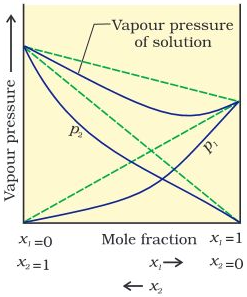
The graph given below indicates which of the following phenomena/ examples:
Figure

(A) Positive deviation from Raoult's law.

(B) Negative deviation from Raoult's law.

(C) Chloroform and acetone.

(D) Phenol and aniline.

Answer options

Q26:

Chemical Kinetics

Easy

A reaction is first order in A and second order in B. How is the rate affected on increasing the concentration of B three times?

Answer options

Q27:

Electrochemistry

Medium

Which one is generally used to prevent the corrosion of metals in the presence of atmospheric oxygen?

Answer options

Q30:

Aldehydes, Ketones & Carboxylic Acids

Medium

Arrange the following compounds in the increasing order of their boiling points.

(A) n-Butane

(B) Propanol

(C) Propanal

(D) Acetone

Answer options

Q31:

d & f Block Elements

Medium

Arrange the following lanthanoid ions increasing order of their number of 4f electrons:

(A) Ce4+Ce^{4+} (Z=58)

(B) Tb4+Tb^{4+} (Z=65)

(C) Yb2+Yb^{2+} (Z=70)

(D) Eu3+Eu^{3+} (Z=63)

Answer options

Q32:

Chemical Kinetics

Easy

The order of a reaction with rate-constant, k=4×10⁻⁵ mol L−1 s−1k = 4\times10^{-5}\ mol\ L^{-1}\ s^{-1} is

Answer options

Q33:

Alcohols, Phenols & Ethers

Easy

Methanol poisoning can be treated using intravenous infusions of which of the following compound ?

Answer options

Q34:

Amines

Easy

The final product of the following reaction is

R−CO−NH2+Br2+4NaOH⟶?R-CO-NH_2 + Br_2 + 4NaOH \longrightarrow ?

Answer options

Q36:

d & f Block Elements

Easy

Match List-I with List-II

List-IList-II
Catalysts/ ProcessApplications
(A) Iron catalyst(I) Ethyne to ethanal
(B) Ziegler catalyst(II) Production of ammonia
(C) Nickel catalysts(III) Manufacturing of polythene
(D) Wacker process(IV) Hydrogenation of fats
Answer options

Q39:

Electrochemistry

Medium

Arrange the following materials in the increasing order of conductivity:

(A) Sodium

(B) Graphite

(C) Silver

(D) Teflon

Answer options

Q41:

Coordination Compounds

Easy

Coordination Compounds

Alfred Werner (1866-1919), a Swiss chemist was the first to formulate his ideas about the structures of coordination compounds. He prepared and characterised a large number of coordination compounds and studied their physical and chemical behaviour by simple experimental techniques. Werner proposed the concept of a primary valence and a secondary valence for a metal ion. The formulas and names adopted for coordination entities are based on the recommendations of the International Union of Pure and Applied Chemistry (IUPAC). Many approaches have been put forth to explain the nature of bonding in coordination compounds viz. Valence Bond Theory (VBT), Crystal Field Theory (CFT), Ligand Field Theory (LFT) and Molecular Orbital Theory (MOT). The Valence Bond Theory (VBT) explains with reasonable success, the formation, magnetic behaviour and geometrical shapes of coordination compounds. It, however, fails to provide a quantitative interpretation of magnetic behaviour and has nothing to say about the optical properties of these compounds. The Crystal Field Theory (CFT) to coordination compounds is based on the effect of different crystal fields (provided by the ligands taken as point charges), on the degeneracy of d orbital energies of the central metal atom/ion. The splitting of the d orbitals provides different electronic arrangements in strong and weak crystal fields. The treatment provides for quantitative estimations of orbital separation energies, magnetic moments and spectral and stability parameters. However, the assumption that ligands consititute point charges creates many theoretical difficulties.

[(Ph3P)3RhCl][(Ph_3P)_3RhCl] known as Wilkinson catalyst finds applications in

Answer options

Q42:

Coordination Compounds

Easy

Coordination Compounds

Alfred Werner (1866-1919), a Swiss chemist was the first to formulate his ideas about the structures of coordination compounds. He prepared and characterised a large number of coordination compounds and studied their physical and chemical behaviour by simple experimental techniques. Werner proposed the concept of a primary valence and a secondary valence for a metal ion. The formulas and names adopted for coordination entities are based on the recommendations of the International Union of Pure and Applied Chemistry (IUPAC). Many approaches have been put forth to explain the nature of bonding in coordination compounds viz. Valence Bond Theory (VBT), Crystal Field Theory (CFT), Ligand Field Theory (LFT) and Molecular Orbital Theory (MOT). The Valence Bond Theory (VBT) explains with reasonable success, the formation, magnetic behaviour and geometrical shapes of coordination compounds. It, however, fails to provide a quantitative interpretation of magnetic behaviour and has nothing to say about the optical properties of these compounds. The Crystal Field Theory (CFT) to coordination compounds is based on the effect of different crystal fields (provided by the ligands taken as point charges), on the degeneracy of d orbital energies of the central metal atom/ion. The splitting of the d orbitals provides different electronic arrangements in strong and weak crystal fields. The treatment provides for quantitative estimations of orbital separation energies, magnetic moments and spectral and stability parameters. However, the assumption that ligands consititute point charges creates many theoretical difficulties.

What is the hybridization of [Co(NH3)6]3+[Co(NH_3)_6]^{3+} ?

Answer options

Q43:

Coordination Compounds

Medium

Coordination Compounds

Alfred Werner (1866-1919), a Swiss chemist was the first to formulate his ideas about the structures of coordination compounds. He prepared and characterised a large number of coordination compounds and studied their physical and chemical behaviour by simple experimental techniques. Werner proposed the concept of a primary valence and a secondary valence for a metal ion. The formulas and names adopted for coordination entities are based on the recommendations of the International Union of Pure and Applied Chemistry (IUPAC). Many approaches have been put forth to explain the nature of bonding in coordination compounds viz. Valence Bond Theory (VBT), Crystal Field Theory (CFT), Ligand Field Theory (LFT) and Molecular Orbital Theory (MOT). The Valence Bond Theory (VBT) explains with reasonable success, the formation, magnetic behaviour and geometrical shapes of coordination compounds. It, however, fails to provide a quantitative interpretation of magnetic behaviour and has nothing to say about the optical properties of these compounds. The Crystal Field Theory (CFT) to coordination compounds is based on the effect of different crystal fields (provided by the ligands taken as point charges), on the degeneracy of d orbital energies of the central metal atom/ion. The splitting of the d orbitals provides different electronic arrangements in strong and weak crystal fields. The treatment provides for quantitative estimations of orbital separation energies, magnetic moments and spectral and stability parameters. However, the assumption that ligands consititute point charges creates many theoretical difficulties.

The subscript 'g' is used in crystal field theory for complexes due to

Answer options

Q44:

Coordination Compounds

Easy

Coordination Compounds

Alfred Werner (1866-1919), a Swiss chemist was the first to formulate his ideas about the structures of coordination compounds. He prepared and characterised a large number of coordination compounds and studied their physical and chemical behaviour by simple experimental techniques. Werner proposed the concept of a primary valence and a secondary valence for a metal ion. The formulas and names adopted for coordination entities are based on the recommendations of the International Union of Pure and Applied Chemistry (IUPAC). Many approaches have been put forth to explain the nature of bonding in coordination compounds viz. Valence Bond Theory (VBT), Crystal Field Theory (CFT), Ligand Field Theory (LFT) and Molecular Orbital Theory (MOT). The Valence Bond Theory (VBT) explains with reasonable success, the formation, magnetic behaviour and geometrical shapes of coordination compounds. It, however, fails to provide a quantitative interpretation of magnetic behaviour and has nothing to say about the optical properties of these compounds. The Crystal Field Theory (CFT) to coordination compounds is based on the effect of different crystal fields (provided by the ligands taken as point charges), on the degeneracy of d orbital energies of the central metal atom/ion. The splitting of the d orbitals provides different electronic arrangements in strong and weak crystal fields. The treatment provides for quantitative estimations of orbital separation energies, magnetic moments and spectral and stability parameters. However, the assumption that ligands consititute point charges creates many theoretical difficulties.

The metal to carbon bonding in metal carbonyl, creates an effect which strengthens the bond between metal and carbonyl that is known as

Answer options

Q45:

Coordination Compounds

Medium

Coordination Compounds

Alfred Werner (1866-1919), a Swiss chemist was the first to formulate his ideas about the structures of coordination compounds. He prepared and characterised a large number of coordination compounds and studied their physical and chemical behaviour by simple experimental techniques. Werner proposed the concept of a primary valence and a secondary valence for a metal ion. The formulas and names adopted for coordination entities are based on the recommendations of the International Union of Pure and Applied Chemistry (IUPAC). Many approaches have been put forth to explain the nature of bonding in coordination compounds viz. Valence Bond Theory (VBT), Crystal Field Theory (CFT), Ligand Field Theory (LFT) and Molecular Orbital Theory (MOT). The Valence Bond Theory (VBT) explains with reasonable success, the formation, magnetic behaviour and geometrical shapes of coordination compounds. It, however, fails to provide a quantitative interpretation of magnetic behaviour and has nothing to say about the optical properties of these compounds. The Crystal Field Theory (CFT) to coordination compounds is based on the effect of different crystal fields (provided by the ligands taken as point charges), on the degeneracy of d orbital energies of the central metal atom/ion. The splitting of the d orbitals provides different electronic arrangements in strong and weak crystal fields. The treatment provides for quantitative estimations of orbital separation energies, magnetic moments and spectral and stability parameters. However, the assumption that ligands consititute point charges creates many theoretical difficulties.

Write down the IUPAC name of the given coordination compounds:

a. Hg[Co(SCN)4]Hg[Co(SCN)_4]

b. K3[Al(C2O4)3]K_3[Al(C_2O_4)_3]

Answer options

Q46:

Biomolecules

Easy

Carbohydrates are primarily produced by plants and form a very large group of naturally occurring organic compounds. Some common examples of carbohydrates are cane sugar, glucose, starch, etc. Most of them have a general formula, Cx(H2O)yC_x(H_2O)_y , and were considered hydrates of carbon from where name carbohydrate was derived. For example,, molecular formula of glucose (C6H12O6C_6H_{12}O_6) fits into this general formula, C6(H2O)6C_6(H_2O)_6. But all compounds which fit into this formula may not be classified carbohydrates. For example, acetic acid (CH3COOHCH_3COOH) fits into this general formula, C2(H2O)2C_2(H_2O)_2 but is not a carbohydrate.Some of carbohydrates, which are sweet in taste, are also called sugars. Carbohydrates are classified on basis of their behavior on hydrolysis. They have been broadly divided into following three groups: (i) Monosaccharides, (ii) Oligosaccharides, and (iii) Polysaccharides.The carbohydrates may also be classified either reducing or non-reducing sugars. All those carbohydrates which reduce Fehling's solution and Tollens' reagent are referred to reducing sugars. All monosaccharides, whether aldose or ketose, are reducing sugars.Glucose is an aldohexose and is also known dextrose. It is monomer of many of larger carbohydrates, namely starch and cellulose. Glucose is found to exist in two different crystalline forms which are named α-D-Glucose and β-D-Glucose.The two monosaccharides, are joined together by an oxide linkage formed by loss of a water molecule. Such a linkage between two monosaccharide units through oxygen atom is called glycosidic linkage.Polysaccharides contain a large number of monosaccharide units joined together by glycosidic linkages. Vitamins are classified into two groups depending upon their solubility in water or fat: (i) Fat-soluble vitamins, and(ii) Water-soluble vitamins.

Lactose sugar is composed of

Answer options

Q47:

Biomolecules

Medium

Carbohydrates are primarily produced by plants and form a very large group of naturally occurring organic compounds. Some common examples of carbohydrates are cane sugar, glucose, starch, etc. Most of them have a general formula, Cx(H2O)yC_x(H_2O)_y , and were considered hydrates of carbon from where name carbohydrate was derived. For example,, molecular formula of glucose (C6H12O6C_6H_{12}O_6) fits into this general formula, C6(H2O)6C_6(H_2O)_6. But all compounds which fit into this formula may not be classified carbohydrates. For example, acetic acid (CH3COOHCH_3COOH) fits into this general formula, C2(H2O)2C_2(H_2O)_2 but is not a carbohydrate.Some of carbohydrates, which are sweet in taste, are also called sugars. Carbohydrates are classified on basis of their behavior on hydrolysis. They have been broadly divided into following three groups: (i) Monosaccharides, (ii) Oligosaccharides, and (iii) Polysaccharides.The carbohydrates may also be classified either reducing or non-reducing sugars. All those carbohydrates which reduce Fehling's solution and Tollens' reagent are referred to reducing sugars. All monosaccharides, whether aldose or ketose, are reducing sugars.Glucose is an aldohexose and is also known dextrose. It is monomer of many of larger carbohydrates, namely starch and cellulose. Glucose is found to exist in two different crystalline forms which are named α-D-Glucose and β-D-Glucose.The two monosaccharides, are joined together by an oxide linkage formed by loss of a water molecule. Such a linkage between two monosaccharide units through oxygen atom is called glycosidic linkage.Polysaccharides contain a large number of monosaccharide units joined together by glycosidic linkages. Vitamins are classified into two groups depending upon their solubility in water or fat: (i) Fat-soluble vitamins, and(ii) Water-soluble vitamins.

Which position of the hydroxyl (-OH) group present in the D-Fructose structure forms the β-D-Fructofuranose?

Answer options

Q48:

Biomolecules

Easy

Carbohydrates are primarily produced by plants and form a very large group of naturally occurring organic compounds. Some common examples of carbohydrates are cane sugar, glucose, starch, etc. Most of them have a general formula, Cx(H2O)yC_x(H_2O)_y , and were considered hydrates of carbon from where name carbohydrate was derived. For example,, molecular formula of glucose (C6H12O6C_6H_{12}O_6) fits into this general formula, C6(H2O)6C_6(H_2O)_6. But all compounds which fit into this formula may not be classified carbohydrates. For example, acetic acid (CH3COOHCH_3COOH) fits into this general formula, C2(H2O)2C_2(H_2O)_2 but is not a carbohydrate.Some of carbohydrates, which are sweet in taste, are also called sugars. Carbohydrates are classified on basis of their behavior on hydrolysis. They have been broadly divided into following three groups: (i) Monosaccharides, (ii) Oligosaccharides, and (iii) Polysaccharides.The carbohydrates may also be classified either reducing or non-reducing sugars. All those carbohydrates which reduce Fehling's solution and Tollens' reagent are referred to reducing sugars. All monosaccharides, whether aldose or ketose, are reducing sugars.Glucose is an aldohexose and is also known dextrose. It is monomer of many of larger carbohydrates, namely starch and cellulose. Glucose is found to exist in two different crystalline forms which are named α-D-Glucose and β-D-Glucose.The two monosaccharides, are joined together by an oxide linkage formed by loss of a water molecule. Such a linkage between two monosaccharide units through oxygen atom is called glycosidic linkage.Polysaccharides contain a large number of monosaccharide units joined together by glycosidic linkages. Vitamins are classified into two groups depending upon their solubility in water or fat: (i) Fat-soluble vitamins, and(ii) Water-soluble vitamins.

Amylose is water soluble component which constitutes about 15-20 % of

Answer options

Q49:

Biomolecules

Easy

Carbohydrates are primarily produced by plants and form a very large group of naturally occurring organic compounds. Some common examples of carbohydrates are cane sugar, glucose, starch, etc. Most of them have a general formula, Cx(H2O)yC_x(H_2O)_y , and were considered hydrates of carbon from where name carbohydrate was derived. For example,, molecular formula of glucose (C6H12O6C_6H_{12}O_6) fits into this general formula, C6(H2O)6C_6(H_2O)_6. But all compounds which fit into this formula may not be classified carbohydrates. For example, acetic acid (CH3COOHCH_3COOH) fits into this general formula, C2(H2O)2C_2(H_2O)_2 but is not a carbohydrate.Some of carbohydrates, which are sweet in taste, are also called sugars. Carbohydrates are classified on basis of their behavior on hydrolysis. They have been broadly divided into following three groups: (i) Monosaccharides, (ii) Oligosaccharides, and (iii) Polysaccharides.The carbohydrates may also be classified either reducing or non-reducing sugars. All those carbohydrates which reduce Fehling's solution and Tollens' reagent are referred to reducing sugars. All monosaccharides, whether aldose or ketose, are reducing sugars.Glucose is an aldohexose and is also known dextrose. It is monomer of many of larger carbohydrates, namely starch and cellulose. Glucose is found to exist in two different crystalline forms which are named α-D-Glucose and β-D-Glucose.The two monosaccharides, are joined together by an oxide linkage formed by loss of a water molecule. Such a linkage between two monosaccharide units through oxygen atom is called glycosidic linkage.Polysaccharides contain a large number of monosaccharide units joined together by glycosidic linkages. Vitamins are classified into two groups depending upon their solubility in water or fat: (i) Fat-soluble vitamins, and(ii) Water-soluble vitamins.

Glucose on prolonged heating with HI forms

Answer options

Q50:

Biomolecules

Easy

Carbohydrates are primarily produced by plants and form a very large group of naturally occurring organic compounds. Some common examples of carbohydrates are cane sugar, glucose, starch, etc. Most of them have a general formula, Cx(H2O)yC_x(H_2O)_y , and were considered hydrates of carbon from where name carbohydrate was derived. For example,, molecular formula of glucose (C6H12O6C_6H_{12}O_6) fits into this general formula, C6(H2O)6C_6(H_2O)_6. But all compounds which fit into this formula may not be classified carbohydrates. For example, acetic acid (CH3COOHCH_3COOH) fits into this general formula, C2(H2O)2C_2(H_2O)_2 but is not a carbohydrate.Some of carbohydrates, which are sweet in taste, are also called sugars. Carbohydrates are classified on basis of their behavior on hydrolysis. They have been broadly divided into following three groups: (i) Monosaccharides, (ii) Oligosaccharides, and (iii) Polysaccharides.The carbohydrates may also be classified either reducing or non-reducing sugars. All those carbohydrates which reduce Fehling's solution and Tollens' reagent are referred to reducing sugars. All monosaccharides, whether aldose or ketose, are reducing sugars.Glucose is an aldohexose and is also known dextrose. It is monomer of many of larger carbohydrates, namely starch and cellulose. Glucose is found to exist in two different crystalline forms which are named α-D-Glucose and β-D-Glucose.The two monosaccharides, are joined together by an oxide linkage formed by loss of a water molecule. Such a linkage between two monosaccharide units through oxygen atom is called glycosidic linkage.Polysaccharides contain a large number of monosaccharide units joined together by glycosidic linkages. Vitamins are classified into two groups depending upon their solubility in water or fat: (i) Fat-soluble vitamins, and(ii) Water-soluble vitamins.

What is the name of the disease caused by a deficiency of vitamin D?

Answer options

CUET Chemistry 2026 18 May Shift 1 Past Year Question Paper

Every question from the CUET Chemistry 2026 18 May Shift 1 paper is here in full, with the correct answer and a step by step solution for each one. It is completely free, there is no login and no paywall, and you can read the whole paper online or download it to revise offline.

You can also attempt it instead of only reading it. Take the paper as a full length mock under exam conditions, or filter it by topic and attempt just that topic as a topic test. Both are free, and you get a breakdown of your accuracy, your timing and your weak areas once you submit.

CUET Chemistry past year questions (PYQs) are the closest thing to the real exam, so working through them is the quickest way to learn the paper pattern, the marking scheme and the level of difficulty to expect on the day.