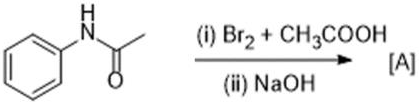
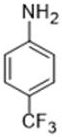
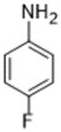
Q1:

Chemical Kinetics

Easy

For a reaction A+B →\rightarrow C; rate = k[A][B]2^2, on doubling the concentration of A and decreasing the concentration of B to half, by what factor the initial rate changes

Answer options
Option 2
Correct Answer
Explanation for 2026: 19 May Shift 2 CHE question 1

Q2:

Solutions

Medium

Arrange the 0.1 molar aqueous solutions of the following salts in increasing order of their elevation in boiling points:

A. Ammonium phosphate.

B. Ammonium sulphate.

C. Aluminium sulphate.

D. Barium sulphate.

Answer options
Option 4
Correct Answer
Explanation for 2026: 19 May Shift 2 CHE question 2

Q4:

Biomolecules

Medium

Match the LIST-I with LIST-II.

LIST-I Vitamin / Amino acidLIST-II Deficiency disease / amino acid code
A.Vitamin B12_{12}I.N
B.Vitamin B6_6II.Pernicious anaemia
C.Aspartic acidIII.D
D.AsparagineIV.Convulsions
Answer options
Option 3
Correct Answer
Explanation for 2026: 19 May Shift 2 CHE question 4

Q5:

Coordination Compounds

Medium

Which of the following is not a correct match between complex and its IUPAC name?

Answer options
Option 4
Correct Answer
Explanation for 2026: 19 May Shift 2 CHE question 5

Q6:

d & f Block Elements

Medium

Which of the following pair of transition metal ions have same value of spin only magnetic moment (in BM)?

Answer options
Option 2
Correct Answer
Explanation for 2026: 19 May Shift 2 CHE question 6

Q7:

Aldehydes, Ketones & Carboxylic Acids

Medium

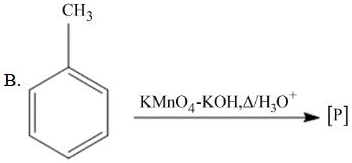
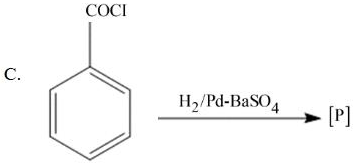
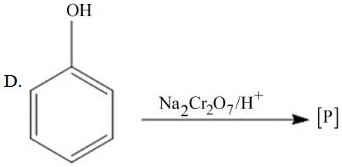
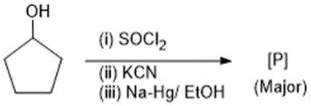
Which of the following reaction products [P] gives Cannizzaro reaction?

A. Figure
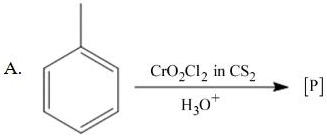
B. Figure

C. Figure

D. Figure

Answer options
Option 3
Correct Answer
Explanation for 2026: 19 May Shift 2 CHE question 7

Q8:

d & f Block Elements

Easy

A well known alloy mischmetall (used to produce bullets, shells, and lighter flints), consists of a lanthanoid metal as major constituent (~ 95%). The second main constituent is .....

Answer options
Option 2
Correct Answer
Explanation for 2026: 19 May Shift 2 CHE question 8

Q9:

Solutions

Medium

What will be the change in freezing point of water, when 0.05 mol of calcium phosphate is dissolved in 1000 g of water? Assume calcium phosphate completely dissociates into its ions in aqueous solution. (KfK_f= 1.86 K kg mol−1^{-1}).

Answer options
Option 3
Correct Answer
Explanation for 2026: 19 May Shift 2 CHE question 9

Q10:

Biomolecules

Medium

Match the LIST-I with LIST-II.

LIST-I (Side chain functional group )LIST-II (Amino acid)
A.IsobutylI.Asparagine
B.1° amineII.Leucine
C.AmideIII.Tyrosine
D.PhenolIV.Lysine
Answer options

Q11:

Coordination Compounds

Hard

Match the LIST-I with LIST-II.

LIST-I (Complex)LIST-II (Number of t2gt_{2g} orbital electrons)
A.[CoF6]3−[CoF_6]^{3-}I.t2g3t_{2g}^3
B.[Fe(CN)6]3−[Fe(CN)_6]^{3-}II.t2g6t_{2g}^6
C.[V(CN)6]4−[V(CN)_6]^{4-}III.t2g4t_{2g}^4
D.[Co(NH3)6]3+[Co(NH_3)_6]^{3+}IV.t2g5t_{2g}^5
Answer options

Q12:

Chemical Kinetics

Easy

Find the order of reaction having rate constant 1.5×10−31.5 \times 10^{-3} L−1^{-1} mol s−1^{-1}.

Answer options

Q13:

Solutions

Medium

At 27°C, a solution containing 5 g of protein sample in 100 mL of solution exerts an osmotic pressure 0.4 bar. The molecular mass (in g mol−1^{-1}; nearest integer) of the solute is (Given R= 0.083 L bar K−1^{-1} mol−1^{-1}):

Answer options

Q14:

Aldehydes, Ketones & Carboxylic Acids

Easy

The product of Hell-Volhard-Zelinsky reaction of propanoic acid is

Answer options

Q15:

Alcohols, Phenols & Ethers

Easy

The conversion of phenol to aspirin is carried out by

Answer options

Q16:

Solutions

Medium

Which of the following statements is false with respect to ideal solutions?

Answer options

Q17:

Aldehydes, Ketones & Carboxylic Acids

Easy

Which of the following acids do not contain a carboxylic group?

A. Picric acid

B. Phthalic acid

C. Benzoic acid

D. Sulphurous acid

Answer options

Q20:

d & f Block Elements

Medium

Choose the Incorrect statement for the lanthanoid contraction:

A. It arises due to the imperfect shielding of one electron by another in the same sub-shell.

B. Similar type of phenomenon is not observed in actinoids.

C. It causes decrease both in atomic and ionic radii.

D. 4f orbital is filled immediately after 5d orbitals.

Answer options

Q22:

Chemical Kinetics

Easy

Match the LIST-I with LIST-II.

LIST-I (Condition/ Reaction)LIST-II (Possibility)
A.Molecularity of reactionI.Can have fractional value
B.Thermal decomposition of HI on gold surfaceII.Not meaningful for complex reaction.
C.Order of reactionIII.First order reaction
D.Radioactive decayIV.Zero order reaction
Answer options

Q23:

Amines

Medium

Choose the incorrect statement for N-methylbenzamide.

Answer options

Q24:

Aldehydes, Ketones & Carboxylic Acids

Medium

Which of the following reactions does not produce ketone?

Answer options

Q25:

Amines

Medium

When benzene diazonium fluoroborate is heated with aqueous sodium nitrite in the presence of Cu, followed by heating with iron and concentrated hydrochloric acid, yields

Answer options

Q26:

Aldehydes, Ketones & Carboxylic Acids

Medium

Arrange the following carbonyl compounds in decreasing order of their reactivity toward hydrogen cyanide.

A. Benzaldehyde

B. Acetone

C. Formaldehyde

D. Benzophenone

Answer options

Q28:

Coordination Compounds

Easy

In coordination compounds, linkage isomerism arises due to the presence of ligand:

Answer options

Q29:

Biomolecules

Easy

Which of the following proteins are globular proteins?

A. Insulin

B. Myosin

C. Keratin

D. Albumin

Answer options

Q30:

d & f Block Elements

Medium

Which of the following reactions do not produce Manganese dioxide?

Answer options

Q32:

Chemical Kinetics

Easy

For an equation A + 3B →\rightarrow 4C + 2D ; if −d[A]dt-\dfrac{d[A]}{dt} at time t, is 1.5×10−21.5 \times 10^{-2} M s−1^{-1}, the value of +d[C]dt+\dfrac{d[C]}{dt} at t will be:

Answer options

Q33:

Amines

Medium

Which of the following factors are not responsible for deciding the order of basic strength of methyl- and ethyl-substituted amines in aqueous solution?

Answer options

Q34:

Chemical Kinetics

Easy

Arrange the following rate expressions in decreasing order of their overall order of reaction:

A. Rate = k [A]3/2[A]^{3/2} [B]1/2[B]^{1/2}

B. Rate = k [A]−1[A]^{-1} [B]3/2[B]^{3/2}

C. Rate = k [A]1/2[A]^{1/2} [B]1/2[B]^{1/2}

D. Rate = k [A]1/2[A]^{1/2} [B]

Answer options

Q35:

Aldehydes, Ketones & Carboxylic Acids

Medium

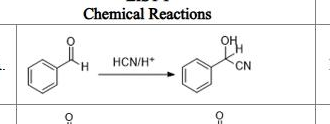
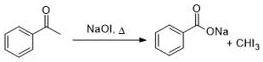
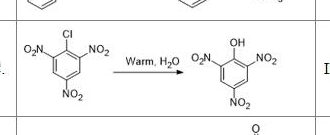
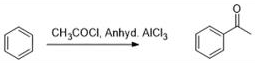
Match LIST-I with LIST-II.

LIST-I Chemical ReactionsLIST-II Type of Reactions
A.FigureI.Electrophilic substitution reaction
B.FigureII.Nucleophilic substitution reaction
C.FigureIII.Nucleophilic addition reaction
D.FigureIV.Oxidation
Answer options

Q37:

Coordination Compounds

Easy

When 0.1 mol of CoCl3_3.6NH3_3 is treated with excess of silver nitrate solution, 0.3 mol of silver chloride is obtained. The conductivity of the solution corresponds to (cation:anion):

Answer options

Q39:

Amines

Medium

Rank the following amines in increasing order of tendency for ease of formation of cation by accepting a proton from acid.

A. Figure
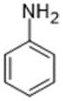
B. Figure

C. Figure

D. Figure

Answer options

Q40:

d & f Block Elements

Easy

Arrange the following 3d transition metals in increasing order of their highest exhibited oxidation state:

A. Cr

B. Ti

C. Mn

D. Sc

Answer options

Q41:

Electrochemistry

Easy

Electrochemistry

A galvanic cell is an electrochemical cell that converts the chemical energy of a spontaneous redox reaction into electrical energy whereas, an electrolytic cell is a device which uses electrical energy to carry out the non-spontaneous chemical reactions. We can construct innumerable number of galvanic cells on the pattern of Daniell cell (Cu-Zn cell) by taking combinations of different half-cells. Each half-cell consists of a metallic electrode dipped into an electrolyte. The two half-cells are connected by a metallic wire through a voltmeter and a switch externally. The electrolytes of the two half-cells are connected internally through a salt bridge. In a galvanic cell, the half-cell in which oxidation takes place is called anode and it has a negative potential with respect to the solution and in an accepted convention we keep the anode on the left and the cathode on the right side. The potential difference between the two electrodes of a galvanic cell is called the cell potential and is measured in volts. The cell potential is the difference between the electrode potentials (reduction potentials) of the cathode and anode. It is called the cell electromotive force (emf) of the cell when no current is drawn through the cell.

In which of the following cells, electrical energy can be used to carry out chemical reactions that do not proceed spontaneously?

Answer options

Q42:

Electrochemistry

Easy

Electrochemistry

A galvanic cell is an electrochemical cell that converts the chemical energy of a spontaneous redox reaction into electrical energy whereas, an electrolytic cell is a device which uses electrical energy to carry out the non-spontaneous chemical reactions. We can construct innumerable number of galvanic cells on the pattern of Daniell cell (Cu-Zn cell) by taking combinations of different half-cells. Each half-cell consists of a metallic electrode dipped into an electrolyte. The two half-cells are connected by a metallic wire through a voltmeter and a switch externally. The electrolytes of the two half-cells are connected internally through a salt bridge. In a galvanic cell, the half-cell in which oxidation takes place is called anode and it has a negative potential with respect to the solution and in an accepted convention we keep the anode on the left and the cathode on the right side. The potential difference between the two electrodes of a galvanic cell is called the cell potential and is measured in volts. The cell potential is the difference between the electrode potentials (reduction potentials) of the cathode and anode. It is called the cell electromotive force (emf) of the cell when no current is drawn through the cell.

Which of the following statements is wrong for a salt bridge?

Answer options

Q43:

Electrochemistry

Easy

Electrochemistry

A galvanic cell is an electrochemical cell that converts the chemical energy of a spontaneous redox reaction into electrical energy whereas, an electrolytic cell is a device which uses electrical energy to carry out the non-spontaneous chemical reactions. We can construct innumerable number of galvanic cells on the pattern of Daniell cell (Cu-Zn cell) by taking combinations of different half-cells. Each half-cell consists of a metallic electrode dipped into an electrolyte. The two half-cells are connected by a metallic wire through a voltmeter and a switch externally. The electrolytes of the two half-cells are connected internally through a salt bridge. In a galvanic cell, the half-cell in which oxidation takes place is called anode and it has a negative potential with respect to the solution and in an accepted convention we keep the anode on the left and the cathode on the right side. The potential difference between the two electrodes of a galvanic cell is called the cell potential and is measured in volts. The cell potential is the difference between the electrode potentials (reduction potentials) of the cathode and anode. It is called the cell electromotive force (emf) of the cell when no current is drawn through the cell.

If the nickel electrode dipped in aqueous solution of nickel chloride is anode and silver electrode dipped in aqueous solution of silver nitrate is cathode. The galvanic cell is represented by:

Answer options

Q44:

Electrochemistry

Medium

Electrochemistry

A galvanic cell is an electrochemical cell that converts the chemical energy of a spontaneous redox reaction into electrical energy whereas, an electrolytic cell is a device which uses electrical energy to carry out the non-spontaneous chemical reactions. We can construct innumerable number of galvanic cells on the pattern of Daniell cell (Cu-Zn cell) by taking combinations of different half-cells. Each half-cell consists of a metallic electrode dipped into an electrolyte. The two half-cells are connected by a metallic wire through a voltmeter and a switch externally. The electrolytes of the two half-cells are connected internally through a salt bridge. In a galvanic cell, the half-cell in which oxidation takes place is called anode and it has a negative potential with respect to the solution and in an accepted convention we keep the anode on the left and the cathode on the right side. The potential difference between the two electrodes of a galvanic cell is called the cell potential and is measured in volts. The cell potential is the difference between the electrode potentials (reduction potentials) of the cathode and anode. It is called the cell electromotive force (emf) of the cell when no current is drawn through the cell.

Find the emf of the given cell at 298 K , if concentration of aq. nickel chloride is 0.1 M and aq. silver nitrate is 0.01 M.

Ni(s)|Ni2+^{2+}(aq.)||Ag+^{+}(aq.)|Ag(s)

(Given = E(Ni2+/Ni)0=−0.25E^0_{(Ni^{2+}/Ni)} = -0.25 V, E(Ag+/Ag)0=+0.80E^0_{(Ag^+/Ag)} = +0.80 V)

Answer options

Q45:

Electrochemistry

Medium

Electrochemistry

A galvanic cell is an electrochemical cell that converts the chemical energy of a spontaneous redox reaction into electrical energy whereas, an electrolytic cell is a device which uses electrical energy to carry out the non-spontaneous chemical reactions. We can construct innumerable number of galvanic cells on the pattern of Daniell cell (Cu-Zn cell) by taking combinations of different half-cells. Each half-cell consists of a metallic electrode dipped into an electrolyte. The two half-cells are connected by a metallic wire through a voltmeter and a switch externally. The electrolytes of the two half-cells are connected internally through a salt bridge. In a galvanic cell, the half-cell in which oxidation takes place is called anode and it has a negative potential with respect to the solution and in an accepted convention we keep the anode on the left and the cathode on the right side. The potential difference between the two electrodes of a galvanic cell is called the cell potential and is measured in volts. The cell potential is the difference between the electrode potentials (reduction potentials) of the cathode and anode. It is called the cell electromotive force (emf) of the cell when no current is drawn through the cell.

If the concentration of all the reacting species is unity then find the standard Gibbs free energy (in kJ mol−1^{-1}) for the given redox reaction:

Ni(s) + 2Ag+^+(aq) →\rightarrow Ni2+^{2+}(aq)+ 2Ag(s)

(Given E(Ni2+/Ni)0=−0.25E^0_{(Ni^{2+}/Ni)} = -0.25 V, E(Ag+/Ag)0=+0.80E^0_{(Ag^+/Ag)} = +0.80 V ; F = 96500 C/mol)

Answer options

Q46:

Haloalkanes & Haloarenes

Medium

Haloalkanes

The alkyl halides (haloalkanes) are formed by replacement of hydrogen atom(s) in an aliphatic hydrocarbon by halogen atom(s). The homologous series of haloalkanes is represented by CnH2n+1XC_nH_{2n+1}X. They are further classified as primary, secondary or tertiary according to the nature of carbon to which halogen is attached. If halogen is attached to a primary carbon atom in an alkyl halide, the alkyl halide is called primary alkyl halide or 1° alkyl halide. Similarly, if halogen is attached to secondary or tertiary carbon atom, the alkyl halide is called secondary alkyl halide (2°) and tertiary (3°) alkyl halide, respectively. These are very slightly soluble in water but soluble in organic solvents. The photochemical bromination of alkanes gives a complex mixture of isomeric haloalkanes. The free radical monobromination of compound "A" (C5H12C_5H_{12}) gives some chiral and achiral 1°, 2° and 3° structural isomers. The boiling points of isomeric haloalkanes decrease with increase in branching. Most common reactions of alkyl halides are nucleophilic substitution reactions (SN1S_N1 and SN2S_N2), elimination and reactions with metals. When a chiral bromoalkane isomer of "A" is treated with magnesium metal in dry ether gives an organometallic compound which further reacts with water to give the hydrocarbon "B", but if this isomer is heated with sodium metal in dry ether yields a different hydrocarbon "C". The SN1S_N1 reaction occurs in two steps. In step I, the polarised C—Br bond undergoes slow cleavage to produce a carbocation and a bromide ion followed by attack of nucleophile (like hydroxide ion) in step-2. The haloalkane which gives more stable carbocation undergoes SN1S_N1 reaction with faster rate. In elimination reaction, the formation of an alkene as major and minor products by dehydrohalogenation of an alkyl halide is governed by Saytzeff rule which state that "the preferred product is that alkene which has the greater number of alkyl groups attached to the doubly bonded carbon atoms."

The number of possible monobromo structural isomers expected to be formed (excluding stereoisomers) on free radical monobromination of alkane "A" [(CH3)2CHCH2CH3(CH_3)_2CHCH_2CH_3] are

Answer options

Q47:

Haloalkanes & Haloarenes

Medium

Haloalkanes

The alkyl halides (haloalkanes) are formed by replacement of hydrogen atom(s) in an aliphatic hydrocarbon by halogen atom(s). The homologous series of haloalkanes is represented by CnH2n+1XC_nH_{2n+1}X. They are further classified as primary, secondary or tertiary according to the nature of carbon to which halogen is attached. If halogen is attached to a primary carbon atom in an alkyl halide, the alkyl halide is called primary alkyl halide or 1° alkyl halide. Similarly, if halogen is attached to secondary or tertiary carbon atom, the alkyl halide is called secondary alkyl halide (2°) and tertiary (3°) alkyl halide, respectively. These are very slightly soluble in water but soluble in organic solvents. The photochemical bromination of alkanes gives a complex mixture of isomeric haloalkanes. The free radical monobromination of compound "A" (C5H12C_5H_{12}) gives some chiral and achiral 1°, 2° and 3° structural isomers. The boiling points of isomeric haloalkanes decrease with increase in branching. Most common reactions of alkyl halides are nucleophilic substitution reactions (SN1S_N1 and SN2S_N2), elimination and reactions with metals. When a chiral bromoalkane isomer of "A" is treated with magnesium metal in dry ether gives an organometallic compound which further reacts with water to give the hydrocarbon "B", but if this isomer is heated with sodium metal in dry ether yields a different hydrocarbon "C". The SN1S_N1 reaction occurs in two steps. In step I, the polarised C—Br bond undergoes slow cleavage to produce a carbocation and a bromide ion followed by attack of nucleophile (like hydroxide ion) in step-2. The haloalkane which gives more stable carbocation undergoes SN1S_N1 reaction with faster rate. In elimination reaction, the formation of an alkene as major and minor products by dehydrohalogenation of an alkyl halide is governed by Saytzeff rule which state that "the preferred product is that alkene which has the greater number of alkyl groups attached to the doubly bonded carbon atoms."

The number of chiral structural isomers obtained from monobromination of (CH3)2CHCH2CH3(CH_3)_2CHCH_2CH_3 is

Answer options

Q48:

Haloalkanes & Haloarenes

Easy

Haloalkanes

The alkyl halides (haloalkanes) are formed by replacement of hydrogen atom(s) in an aliphatic hydrocarbon by halogen atom(s). The homologous series of haloalkanes is represented by CnH2n+1XC_nH_{2n+1}X. They are further classified as primary, secondary or tertiary according to the nature of carbon to which halogen is attached. If halogen is attached to a primary carbon atom in an alkyl halide, the alkyl halide is called primary alkyl halide or 1° alkyl halide. Similarly, if halogen is attached to secondary or tertiary carbon atom, the alkyl halide is called secondary alkyl halide (2°) and tertiary (3°) alkyl halide, respectively. These are very slightly soluble in water but soluble in organic solvents. The photochemical bromination of alkanes gives a complex mixture of isomeric haloalkanes. The free radical monobromination of compound "A" (C5H12C_5H_{12}) gives some chiral and achiral 1°, 2° and 3° structural isomers. The boiling points of isomeric haloalkanes decrease with increase in branching. Most common reactions of alkyl halides are nucleophilic substitution reactions (SN1S_N1 and SN2S_N2), elimination and reactions with metals. When a chiral bromoalkane isomer of "A" is treated with magnesium metal in dry ether gives an organometallic compound which further reacts with water to give the hydrocarbon "B", but if this isomer is heated with sodium metal in dry ether yields a different hydrocarbon "C". The SN1S_N1 reaction occurs in two steps. In step I, the polarised C—Br bond undergoes slow cleavage to produce a carbocation and a bromide ion followed by attack of nucleophile (like hydroxide ion) in step-2. The haloalkane which gives more stable carbocation undergoes SN1S_N1 reaction with faster rate. In elimination reaction, the formation of an alkene as major and minor products by dehydrohalogenation of an alkyl halide is governed by Saytzeff rule which state that "the preferred product is that alkene which has the greater number of alkyl groups attached to the doubly bonded carbon atoms."

Which of the following haloalkane undergoes fastest SN1S_N1 reaction?

Answer options

Q49:

Haloalkanes & Haloarenes

Easy

Haloalkanes

The alkyl halides (haloalkanes) are formed by replacement of hydrogen atom(s) in an aliphatic hydrocarbon by halogen atom(s). The homologous series of haloalkanes is represented by CnH2n+1XC_nH_{2n+1}X. They are further classified as primary, secondary or tertiary according to the nature of carbon to which halogen is attached. If halogen is attached to a primary carbon atom in an alkyl halide, the alkyl halide is called primary alkyl halide or 1° alkyl halide. Similarly, if halogen is attached to secondary or tertiary carbon atom, the alkyl halide is called secondary alkyl halide (2°) and tertiary (3°) alkyl halide, respectively. These are very slightly soluble in water but soluble in organic solvents. The photochemical bromination of alkanes gives a complex mixture of isomeric haloalkanes. The free radical monobromination of compound "A" (C5H12C_5H_{12}) gives some chiral and achiral 1°, 2° and 3° structural isomers. The boiling points of isomeric haloalkanes decrease with increase in branching. Most common reactions of alkyl halides are nucleophilic substitution reactions (SN1S_N1 and SN2S_N2), elimination and reactions with metals. When a chiral bromoalkane isomer of "A" is treated with magnesium metal in dry ether gives an organometallic compound which further reacts with water to give the hydrocarbon "B", but if this isomer is heated with sodium metal in dry ether yields a different hydrocarbon "C". The SN1S_N1 reaction occurs in two steps. In step I, the polarised C—Br bond undergoes slow cleavage to produce a carbocation and a bromide ion followed by attack of nucleophile (like hydroxide ion) in step-2. The haloalkane which gives more stable carbocation undergoes SN1S_N1 reaction with faster rate. In elimination reaction, the formation of an alkene as major and minor products by dehydrohalogenation of an alkyl halide is governed by Saytzeff rule which state that "the preferred product is that alkene which has the greater number of alkyl groups attached to the doubly bonded carbon atoms."

Identify the compound which is chiral ?

Answer options

Q50:

Haloalkanes & Haloarenes

Easy

Haloalkanes

The alkyl halides (haloalkanes) are formed by replacement of hydrogen atom(s) in an aliphatic hydrocarbon by halogen atom(s). The homologous series of haloalkanes is represented by CnH2n+1XC_nH_{2n+1}X. They are further classified as primary, secondary or tertiary according to the nature of carbon to which halogen is attached. If halogen is attached to a primary carbon atom in an alkyl halide, the alkyl halide is called primary alkyl halide or 1° alkyl halide. Similarly, if halogen is attached to secondary or tertiary carbon atom, the alkyl halide is called secondary alkyl halide (2°) and tertiary (3°) alkyl halide, respectively. These are very slightly soluble in water but soluble in organic solvents. The photochemical bromination of alkanes gives a complex mixture of isomeric haloalkanes. The free radical monobromination of compound "A" (C5H12C_5H_{12}) gives some chiral and achiral 1°, 2° and 3° structural isomers. The boiling points of isomeric haloalkanes decrease with increase in branching. Most common reactions of alkyl halides are nucleophilic substitution reactions (SN1S_N1 and SN2S_N2), elimination and reactions with metals. When a chiral bromoalkane isomer of "A" is treated with magnesium metal in dry ether gives an organometallic compound which further reacts with water to give the hydrocarbon "B", but if this isomer is heated with sodium metal in dry ether yields a different hydrocarbon "C". The SN1S_N1 reaction occurs in two steps. In step I, the polarised C—Br bond undergoes slow cleavage to produce a carbocation and a bromide ion followed by attack of nucleophile (like hydroxide ion) in step-2. The haloalkane which gives more stable carbocation undergoes SN1S_N1 reaction with faster rate. In elimination reaction, the formation of an alkene as major and minor products by dehydrohalogenation of an alkyl halide is governed by Saytzeff rule which state that "the preferred product is that alkene which has the greater number of alkyl groups attached to the doubly bonded carbon atoms."

Which of the following isomeric haloalkane gives 2-methylbut-2-ene as major product on dehydrohalogenation reaction?

Answer options

CUET Chemistry 2026 19 May Shift 2 Past Year Question Paper

Every question from the CUET Chemistry 2026 19 May Shift 2 paper is here in full, with the correct answer and a step by step solution for each one. It is completely free, there is no login and no paywall, and you can read the whole paper online or download it to revise offline.

You can also attempt it instead of only reading it. Take the paper as a full length mock under exam conditions, or filter it by topic and attempt just that topic as a topic test. Both are free, and you get a breakdown of your accuracy, your timing and your weak areas once you submit.

CUET Chemistry past year questions (PYQs) are the closest thing to the real exam, so working through them is the quickest way to learn the paper pattern, the marking scheme and the level of difficulty to expect on the day.