Q1:

Haloalkanes & Haloarenes

Easy

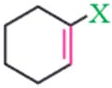
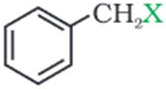
Match List-I with List-II

List-IList-II
Structure of Alkyl/Aryl HalideCommon Name
(A) Figure(I) Vinylic halide
(B) Figure(II) Benzylic halide
(C) CH3-CHCl2\mathrm{CH_3\text{-}CHCl_2}(III) Allylic halide
(D) CH2= CH-CH2Cl\mathrm{CH_2{=}\ CH\text{-}CH_2Cl}(IV) Alkylidene halide
Answer options
Option 3
Correct Answer
Explanation for 2026: 22 May Shift 2 CHE question 1

Q2:

Amines

Medium

Ammonolysis of alkyl halides is commonly used to prepare primary, secondary, and tertiary amines. Choose the correct statements .

(A) The order of reactivity of halides with amines is RI < RBr < RCl

(B) Primary amine is obtained as a the major product if ammonia is taken in large excess.

(C) The amino group replaces the halogen atom by nucleophilic substitution reaction.

(D) It is a preferred method as it yields a mixture of primary, secondary and tertiary amines.

Answer options
Option 3
Correct Answer
Explanation for 2026: 22 May Shift 2 CHE question 2

Q4:

Electrochemistry

Easy

Why is zinc coating preferred for sacrificial protection of iron?

Answer options
Option 2
Correct Answer
Explanation for 2026: 22 May Shift 2 CHE question 4

Q5:

Alcohols, Phenols & Ethers

Easy

Phenol reacts with bromine in aqueous and non-aqueous media such as CS2\mathrm{CS_2}, respectively to form following products :

Answer options
Option 3
Correct Answer
Explanation for 2026: 22 May Shift 2 CHE question 5

Q6:

Coordination Compounds

Medium

Predict the hybridization and the nature of complex in [MnCl6]3−[\mathrm{MnCl_6}]^{3-}.

Answer options
Option 3
Correct Answer
Explanation for 2026: 22 May Shift 2 CHE question 6

Q7:

Amines

Medium

Arrange the following in the increasing order of pKb\mathrm{pK_b} in aqueous phase

(A) C6H5NH2\mathrm{C_6H_5NH_2}

(B) C2H5NH2\mathrm{C_2H_5NH_2}

(C) (C2H5)2NH\mathrm{(C_2H_5)_2NH}

(D) NH3\mathrm{NH_3}

Answer options
Option 3
Correct Answer
Explanation for 2026: 22 May Shift 2 CHE question 7

Q9:

Coordination Compounds

Medium

Match List-I with List-II

List-IList-II
Coordination complex ionWavelength of light absorbed (nm)
(A) [Co(NH3)6]3+[\mathrm{Co(NH_3)_6}]^{3+}(I) 310
(B) [CoCl(NH3)5]2+[\mathrm{CoCl(NH_3)_5}]^{2+}(II) 475
(C) [Co(CN)6]3−[\mathrm{Co(CN)_6}]^{3-}(III) 500
(D) [Co(NH3)5(H2O)]3+[\mathrm{Co(NH_3)_5(H_2O)}]^{3+}(IV) 535
Answer options
Option 4
Correct Answer
Explanation for 2026: 22 May Shift 2 CHE question 9

Q10:

Electrochemistry

Easy

Which of the following are true for Daniell cell?

(A) The emf of the cell is 1.1 V when concentration of Zn2+\mathrm{Zn^{2+}} and Cu2+\mathrm{Cu^{2+}} is unity.

(B) The cell converts electrical energy into chemical energy.

(C) Current flows from anode to cathode.

(D) Oxidation takes place at the anode and reduction occurs at the cathode.

Answer options

Q11:

Haloalkanes & Haloarenes

Medium

Identify the two reagents used to convert ethanol to butane.

Answer options

Q12:

Amines

Medium

What will be product formed when ammonolysis of benzyl chloride is carried out and the amine so formed reacts with 2 moles of chloromethane?

Answer options

Q13:

Electrochemistry

Easy

Match List-I with List-II

List-IList-II
ParametersCharacteristics
(A) Conductivity(I) increases with dilution
(B) Molar conductivity(II) Redox couple is a stronger oxidizing agent than H+/H2\mathrm{H^+/H_2} couple
(C) Negative standard reduction potential(III) decreases with dilution
(D) Positive standard reduction potential(IV) Redox couple is a stronger reducing agent than H+/H2\mathrm{H^+/H_2} couple
Answer options

Q14:

Chemical Kinetics

Easy

Which of the following is true for catalysts?

Answer options

Q15:

Coordination Compounds

Medium

Arrange the following ions in the ascending order of their paramagnetic character:

(A) [Cr(H2O)6]3+[\mathrm{Cr(H_2O)_6}]^{3+}

(B) [Co(en)3]3+[\mathrm{Co(en)_3}]^{3+}

(C) [CoF6]3−[\mathrm{CoF_6}]^{3-}

(D) [Ni(H2O)6]2+[\mathrm{Ni(H_2O)_6}]^{2+}

Answer options

Q16:

Alcohols, Phenols & Ethers

Easy

Identify the product X in the following reaction.

CH3−CH2−OH→443KH2SO4X\mathrm{CH_3{-}CH_2{-}OH} \xrightarrow[443\mathrm{K}]{\mathrm{H_2SO_4}} \mathrm{X}

Answer options

Q17:

Solutions

Easy

What is the mathematical expression for Henry's law?

Answer options

Q18:

Coordination Compounds

Easy

What will be the configuration for a d4d^4 octahedral complex with a strong field ligand?

Answer options

Q19:

Solutions

Easy

What type of azeotropic mixture and the deviation from Raoult's law does the binary mixture of ethanol and water (at specific composition) show?

Answer options

Q20:

Chemical Kinetics

Easy

The half-life of a reaction is the time in which the concentration of a reactant is reduced to one half of its initial concentration. Which of the following statements are correct?

(A) It is represented as t1/2t_{1/2}.

(B). For a first order reaction, it is independent of the initial concentration of the reactant.

(C) The SI unit of half-life is second.

(D) For a zero-order reaction it is inversely proportional to the rate constant.

Answer options

Q21:

Chemical Kinetics

Medium

t75%t_{75\%} and t25%t_{25\%} are the time required for 75% and 25% completion of the reaction respectively. The correct relationship between t75%t_{75\%} and t25%t_{25\%} of a first order reaction is

Given: log 2 = 0.3010 and log 3 = 0.4771

Answer options

Q22:

Solutions

Easy

Equimolal aqueous solutions of potassium nitrate, fructose and potassium ferricyanide were prepared. The expected values for van't Hoff factor "i" are respectively

[Assume complete dissociation wherever applicable]

Answer options

Q23:

Haloalkanes & Haloarenes

Easy

Propene reacts with HI to form major product as 2-bromopropane. Suggest the rule applied / effect used for predicting the major product .

Answer options

Q24:

Solutions

Medium

A solution of 0.5 g solute 'X' in 39 g benzene records the vapor pressure as 0.845 bar. The vapour pressure of pure benzene is 0.850 bar. The molar mass of the solute 'X' in g mol−1\mathrm{mol^{-1}} is

Assume no association or dissociation takes place in solution.

Answer options

Q25:

Amines

Easy

Nitrogen containing organic compound basic in nature when added to benzenesulphonyl chloride produces a compound which is soluble in potassium hydroxide. Suggest the nature of organic compound.

Answer options

Q26:

Coordination Compounds

Medium

Which of the following isomerism is shown by [Co(NH3)4(NO2)2]NO3[\mathrm{Co(NH_3)_4(NO_2)_2}]\mathrm{NO_3}

(A) Linkage isomerism

(B) Ionisation isomerism

(C) Hydratye isomerism

(D) Geometrical isomerism

Answer options

Q27:

Biomolecules

Easy

A regular supply of vitamin C is essential through diet because

Answer options

Q28:

Biomolecules

Easy

Amino acids show higher melting points and are soluble in water because of

Answer options

Q29:

Electrochemistry

Medium

The value of log Kc_c for the given cell reaction at 298 K is

Cu(s)+2Ag+(aq)→Cu2+(aq)+2Ag(s)\mathrm{Cu(s) + 2Ag^+(aq) \rightarrow Cu^{2+}(aq) + 2Ag(s)}

E(cell)∘=0.46 VE^\circ_{(cell)} = 0.46\ \mathrm{V}

Answer options

Q30:

Biomolecules

Easy

Match List-I with List-II

List-IList-II
BiomoleculesFunctions / structural feature
(A) Sucrose(I) Non-reducing sugar
(B) Amylopectin(II) Vitamin A
(C) Secondary structure of proteins(III) C1-C6 glycosidic linkage
(D) Xerophthalmia(IV) Hydrogen bonding
Answer options

Q31:

Chemical Kinetics

Medium

Consider a first order reaction

Match List-I with List-II

List-IList-II
Plot ofType of graph
(A) [R] vs t(I) Straight line passing through origin with positive slope (k/2.303)
(B) ln [R] vs t(II) Exponential decrease
(C) ln⁡{[R]0/[R]}\ln\{[R]_0/[R]\} vs t(III) Straight line with negative slope (-k)
(D) log⁡{[R]0/[R]}\log\{[R]_0/[R]\} vs t(IV) Straight line passing through origin with positive slope (k)
Answer options

Q34:

Biomolecules

Easy

Lysine is a/an ........................... amino acid and is ................ in nature.

Answer options

Q35:

Haloalkanes & Haloarenes

Medium

Consider the following statements. Choose the correct statements

(A) p-dichlorobenzene has zero dipole moment.

(B) Amongst the polychlorocompounds of methane, chloroform has the lowest dipole moment.

(C) Alkyl halides are highly soluble in water.

(D) p-dichlorobenzene has a higher melting point than ortho and meta isomers.

Answer options

Q36:

Chemical Kinetics

Easy

Arrange the following units of rate constant in the increasing arrangement of the order of reaction:

(A) mol−1 L s−1\mathrm{mol^{-1}\ L\ s^{-1}}

(B) mol−2 L2 s−1\mathrm{mol^{-2}\ L^2\ s^{-1}}

(C) s−1\mathrm{s^{-1}}

(D) mol L−1 s−1\mathrm{mol\ L^{-1}\ s^{-1}}

Answer options

Q37:

Electrochemistry

Easy

The resistance of a conductivity cell containing 0.001 M KCl solution at 298 K is 1500 ohm. What is the cell constant if conductivity of 0.001 M KCl solution at 298 K is 0.146×10⁻³ S cm−10.146 \times 10^{-3}\ \mathrm{S\ cm^{-1}} ?

Answer options

Q38:

Haloalkanes & Haloarenes

Medium

Arrange the following in the increasing order of their reactivity towards SN1S_N1 mechanism:

(A) (CH3)2CHCH2Br\mathrm{(CH_3)_2CHCH_2Br}

(B) (CH3)3CBr\mathrm{(CH_3)_3CBr}

(C) CH3CH2CH2CH2Br\mathrm{CH_3CH_2CH_2CH_2Br}

(D) CH3CH2CH(Br)CH3\mathrm{CH_3CH_2CH(Br)CH_3}

Answer options

Q39:

Solutions

Easy

What would happen to the blood cells if they were placed in a 3% solution of sodium chloride?

Answer options

Q40:

Alcohols, Phenols & Ethers

Easy

Arrange the following sets of compounds in order of their increasing boiling points:

(A) Pentanol

(B) Butanol

(C) Ethanol

(D) Propanol

Answer options

Q41:

Aldehydes, Ketones & Carboxylic Acids

Easy

Aldol Condensation

Aldehydes and ketones undergo a number of reactions due to the acidic nature of α-hydrogen. Aldehydes and ketones having at least one α-hydrogen undergo a reaction in the presence of dilute alkali as catalyst to form β-hydroxy aldehydes or β-hydroxy ketones, respectively. This is known as aldol reaction. The aldol and ketol readily lose water to give α, β-unsaturated carbonyl compounds, which are aldol condensation products; the reaction is called aldol condensation. When aldol condensation is carried out between two different aldehydes and/or ketones, it is called cross aldol condensation. Ethanal and propanal undergo this reaction to form mixture of products. However, benzaldehyde and acetophenone react to give only one product . Moreover, aldehydes which do not have an α-hydrogen atom, undergo self oxidation and reduction ( disproportionation) reaction on heating with concentrated alkali. The reaction is known as Cannizzaro reaction. In this reaction, one molecule of the aldehyde is reduced to alcohol while another is oxidised to carboxylic acid salt.

What is the reason for the acidic nature of α-hydrogen?

Answer options

Q42:

Aldehydes, Ketones & Carboxylic Acids

Medium

Aldol Condensation

Aldehydes and ketones undergo a number of reactions due to the acidic nature of α-hydrogen. Aldehydes and ketones having at least one α-hydrogen undergo a reaction in the presence of dilute alkali as catalyst to form β-hydroxy aldehydes or β-hydroxy ketones, respectively. This is known as aldol reaction. The aldol and ketol readily lose water to give α, β-unsaturated carbonyl compounds, which are aldol condensation products; the reaction is called aldol condensation. When aldol condensation is carried out between two different aldehydes and/or ketones, it is called cross aldol condensation. Ethanal and propanal undergo this reaction to form mixture of products. However, benzaldehyde and acetophenone react to give only one product . Moreover, aldehydes which do not have an α-hydrogen atom, undergo self oxidation and reduction ( disproportionation) reaction on heating with concentrated alkali. The reaction is known as Cannizzaro reaction. In this reaction, one molecule of the aldehyde is reduced to alcohol while another is oxidised to carboxylic acid salt.

Identify the product formed during the aldol condensation reaction of acetone.

Answer options

Q43:

Aldehydes, Ketones & Carboxylic Acids

Medium

Aldol Condensation

Aldehydes and ketones undergo a number of reactions due to the acidic nature of α-hydrogen. Aldehydes and ketones having at least one α-hydrogen undergo a reaction in the presence of dilute alkali as catalyst to form β-hydroxy aldehydes or β-hydroxy ketones, respectively. This is known as aldol reaction. The aldol and ketol readily lose water to give α, β-unsaturated carbonyl compounds, which are aldol condensation products; the reaction is called aldol condensation. When aldol condensation is carried out between two different aldehydes and/or ketones, it is called cross aldol condensation. Ethanal and propanal undergo this reaction to form mixture of products. However, benzaldehyde and acetophenone react to give only one product . Moreover, aldehydes which do not have an α-hydrogen atom, undergo self oxidation and reduction ( disproportionation) reaction on heating with concentrated alkali. The reaction is known as Cannizzaro reaction. In this reaction, one molecule of the aldehyde is reduced to alcohol while another is oxidised to carboxylic acid salt.

How many products are formed during the cross aldol condensation of propionaldehyde and acetaldehyde?

Answer options

Q44:

Aldehydes, Ketones & Carboxylic Acids

Medium

Aldol Condensation

Aldehydes and ketones undergo a number of reactions due to the acidic nature of α-hydrogen. Aldehydes and ketones having at least one α-hydrogen undergo a reaction in the presence of dilute alkali as catalyst to form β-hydroxy aldehydes or β-hydroxy ketones, respectively. This is known as aldol reaction. The aldol and ketol readily lose water to give α, β-unsaturated carbonyl compounds, which are aldol condensation products; the reaction is called aldol condensation. When aldol condensation is carried out between two different aldehydes and/or ketones, it is called cross aldol condensation. Ethanal and propanal undergo this reaction to form mixture of products. However, benzaldehyde and acetophenone react to give only one product . Moreover, aldehydes which do not have an α-hydrogen atom, undergo self oxidation and reduction ( disproportionation) reaction on heating with concentrated alkali. The reaction is known as Cannizzaro reaction. In this reaction, one molecule of the aldehyde is reduced to alcohol while another is oxidised to carboxylic acid salt.

What is the IUPAC name of the product formed from the aldol reaction between benzaldehyde and acetophenone ?

Answer options

Q45:

Aldehydes, Ketones & Carboxylic Acids

Easy

Aldol Condensation

Aldehydes and ketones undergo a number of reactions due to the acidic nature of α-hydrogen. Aldehydes and ketones having at least one α-hydrogen undergo a reaction in the presence of dilute alkali as catalyst to form β-hydroxy aldehydes or β-hydroxy ketones, respectively. This is known as aldol reaction. The aldol and ketol readily lose water to give α, β-unsaturated carbonyl compounds, which are aldol condensation products; the reaction is called aldol condensation. When aldol condensation is carried out between two different aldehydes and/or ketones, it is called cross aldol condensation. Ethanal and propanal undergo this reaction to form mixture of products. However, benzaldehyde and acetophenone react to give only one product . Moreover, aldehydes which do not have an α-hydrogen atom, undergo self oxidation and reduction ( disproportionation) reaction on heating with concentrated alkali. The reaction is known as Cannizzaro reaction. In this reaction, one molecule of the aldehyde is reduced to alcohol while another is oxidised to carboxylic acid salt.

Which of the following pairs will not undergo an aldol condensation reaction?

Answer options

Q46:

d & f Block Elements

Easy

Properties of transition metals

In general, the electronic configuration of outer orbitals of transition elements is (n−1)d1−10 ns1−2(n-1)d^{1-10}\, ns^{1-2}. However, the electronic configurations of outer orbitals of Zn, Cd, Hg, and Cn are represented by the general, formula (n−1)d1−10 ns2(n-1)d^{1-10}\, ns^{2}. These metals are very hard and have low volatility due to high enthalpy of atomization. The more unpaired electrons, the higher the enthalpy of atomization. The stability of the half-filled dd subshell in Mn2+\mathrm{Mn^{2+}} and the completely filled d10d^{10} configuration in Zn2+\mathrm{Zn^{2+}} are related to their E∘E^\circ values, whereas E∘E^\circ for Ni is related to the highest negative ΔhydH∘\Delta_{hyd}H^\circ.

Identify the metal that is a dd-block element but not a transition metal.

Answer options

Q47:

d & f Block Elements

Easy

Properties of transition metals

In general, the electronic configuration of outer orbitals of transition elements is (n−1)d1−10 ns1−2(n-1)d^{1-10}\, ns^{1-2}. However, the electronic configurations of outer orbitals of Zn, Cd, Hg, and Cn are represented by the general, formula (n−1)d1−10 ns2(n-1)d^{1-10}\, ns^{2}. These metals are very hard and have low volatility due to high enthalpy of atomization. The more unpaired electrons, the higher the enthalpy of atomization. The stability of the half-filled dd subshell in Mn2+\mathrm{Mn^{2+}} and the completely filled d10d^{10} configuration in Zn2+\mathrm{Zn^{2+}} are related to their E∘E^\circ values, whereas E∘E^\circ for Ni is related to the highest negative ΔhydH∘\Delta_{hyd}H^\circ.

Transition metals show highest oxidation state in its....

Answer options

Q48:

d & f Block Elements

Medium

Properties of transition metals

In general, the electronic configuration of outer orbitals of transition elements is (n−1)d1−10 ns1−2(n-1)d^{1-10}\, ns^{1-2}. However, the electronic configurations of outer orbitals of Zn, Cd, Hg, and Cn are represented by the general, formula (n−1)d1−10 ns2(n-1)d^{1-10}\, ns^{2}. These metals are very hard and have low volatility due to high enthalpy of atomization. The more unpaired electrons, the higher the enthalpy of atomization. The stability of the half-filled dd subshell in Mn2+\mathrm{Mn^{2+}} and the completely filled d10d^{10} configuration in Zn2+\mathrm{Zn^{2+}} are related to their E∘E^\circ values, whereas E∘E^\circ for Ni is related to the highest negative ΔhydH∘\Delta_{hyd}H^\circ.

Which of the following exhibits the highest enthalpy of atomization?

Answer options

Q49:

d & f Block Elements

Medium

Properties of transition metals

In general, the electronic configuration of outer orbitals of transition elements is (n−1)d1−10 ns1−2(n-1)d^{1-10}\, ns^{1-2}. However, the electronic configurations of outer orbitals of Zn, Cd, Hg, and Cn are represented by the general, formula (n−1)d1−10 ns2(n-1)d^{1-10}\, ns^{2}. These metals are very hard and have low volatility due to high enthalpy of atomization. The more unpaired electrons, the higher the enthalpy of atomization. The stability of the half-filled dd subshell in Mn2+\mathrm{Mn^{2+}} and the completely filled d10d^{10} configuration in Zn2+\mathrm{Zn^{2+}} are related to their E∘E^\circ values, whereas E∘E^\circ for Ni is related to the highest negative ΔhydH∘\Delta_{hyd}H^\circ.

Arrange the following in the increasing order of their oxidizing power:

Cr2O72−\mathrm{Cr_2O_7^{2-}}, MnO4−\mathrm{MnO_4^-}, VO2+\mathrm{VO_2^+}

Answer options

Q50:

d & f Block Elements

Easy

Properties of transition metals

In general, the electronic configuration of outer orbitals of transition elements is (n−1)d1−10 ns1−2(n-1)d^{1-10}\, ns^{1-2}. However, the electronic configurations of outer orbitals of Zn, Cd, Hg, and Cn are represented by the general, formula (n−1)d1−10 ns2(n-1)d^{1-10}\, ns^{2}. These metals are very hard and have low volatility due to high enthalpy of atomization. The more unpaired electrons, the higher the enthalpy of atomization. The stability of the half-filled dd subshell in Mn2+\mathrm{Mn^{2+}} and the completely filled d10d^{10} configuration in Zn2+\mathrm{Zn^{2+}} are related to their E∘E^\circ values, whereas E∘E^\circ for Ni is related to the highest negative ΔhydH∘\Delta_{hyd}H^\circ.

Select the Correct statement from the following:

Answer options

CUET Chemistry 2026 22 May Shift 2 Past Year Question Paper

Every question from the CUET Chemistry 2026 22 May Shift 2 paper is here in full, with the correct answer and a step by step solution for each one. It is completely free, there is no login and no paywall, and you can read the whole paper online or download it to revise offline.

You can also attempt it instead of only reading it. Take the paper as a full length mock under exam conditions, or filter it by topic and attempt just that topic as a topic test. Both are free, and you get a breakdown of your accuracy, your timing and your weak areas once you submit.

CUET Chemistry past year questions (PYQs) are the closest thing to the real exam, so working through them is the quickest way to learn the paper pattern, the marking scheme and the level of difficulty to expect on the day.