CUET Chemistry: ChemistryBiomolecules. Free, no login required.

Q1:

2026: 7 June Shift 2

Biomolecules

Easy

Proteins are most abundant biomolecules of the living organism. The main source of proteins are milk, cheese, pulses, peanuts, fish meat etc. Amino acids are building block of proteins. Amino acids contain amino (−NH2-NH_2) and carboxyl (−COOH-COOH) functional groups. Depending upon the relative position of amino group with respect to carboxyl group, the amino acids can be classified as α\alpha, β\beta, γ\gamma, δ\delta and so on. Only alpha amino acid are obtained on hydrolysis of protein. Amino acids are classified as acidic, or basic or neutral depending upon the relative number of amino and carboxyl group in their moleucle.

Amino acids which can be synthesised in the body are known as non-essential amino acids. On the other hand, those which can not be synthesised in the body and must be obtained through diet are known as essential amino acids. Proteins are condensation product of amino acids which are linked through peptide bond or peptide linkage.

Proteins can be classified into two types on the basis of their molecular shape. (a) Fibrous and (b) Globular proteins. Proteins found in a biolgical system with unique three-dimentional structure and biological activity is called a native protein. When a protein in its native form is subjected to physical changes, such as change in temperature, or chemical changes, such as change in pH, hydrogen bonds are disturbed. As a result, globules unfold, helices uncoil, and protein loses its biological activity. This is called denaturation of protein.

Protein denaturation results in
Answer options
Option 2
Correct Answer
Explanation for 2026: 7 June Shift 2 CHE question 1

Q2:

2026: 7 June Shift 2

Biomolecules

Easy

Proteins are most abundant biomolecules of the living organism. The main source of proteins are milk, cheese, pulses, peanuts, fish meat etc. Amino acids are building block of proteins. Amino acids contain amino (−NH2-NH_2) and carboxyl (−COOH-COOH) functional groups. Depending upon the relative position of amino group with respect to carboxyl group, the amino acids can be classified as α\alpha, β\beta, γ\gamma, δ\delta and so on. Only alpha amino acid are obtained on hydrolysis of protein. Amino acids are classified as acidic, or basic or neutral depending upon the relative number of amino and carboxyl group in their moleucle.

Amino acids which can be synthesised in the body are known as non-essential amino acids. On the other hand, those which can not be synthesised in the body and must be obtained through diet are known as essential amino acids. Proteins are condensation product of amino acids which are linked through peptide bond or peptide linkage.

Proteins can be classified into two types on the basis of their molecular shape. (a) Fibrous and (b) Globular proteins. Proteins found in a biolgical system with unique three-dimentional structure and biological activity is called a native protein. When a protein in its native form is subjected to physical changes, such as change in temperature, or chemical changes, such as change in pH, hydrogen bonds are disturbed. As a result, globules unfold, helices uncoil, and protein loses its biological activity. This is called denaturation of protein.

Which among the following is a non-essential amino acid?

Answer options
Option 3
Correct Answer
Explanation for 2026: 7 June Shift 2 CHE question 2

Q3:

2026: 7 June Shift 2

Biomolecules

Easy

Proteins are most abundant biomolecules of the living organism. The main source of proteins are milk, cheese, pulses, peanuts, fish meat etc. Amino acids are building block of proteins. Amino acids contain amino (−NH2-NH_2) and carboxyl (−COOH-COOH) functional groups. Depending upon the relative position of amino group with respect to carboxyl group, the amino acids can be classified as α\alpha, β\beta, γ\gamma, δ\delta and so on. Only alpha amino acid are obtained on hydrolysis of protein. Amino acids are classified as acidic, or basic or neutral depending upon the relative number of amino and carboxyl group in their moleucle.

Amino acids which can be synthesised in the body are known as non-essential amino acids. On the other hand, those which can not be synthesised in the body and must be obtained through diet are known as essential amino acids. Proteins are condensation product of amino acids which are linked through peptide bond or peptide linkage.

Proteins can be classified into two types on the basis of their molecular shape. (a) Fibrous and (b) Globular proteins. Proteins found in a biolgical system with unique three-dimentional structure and biological activity is called a native protein. When a protein in its native form is subjected to physical changes, such as change in temperature, or chemical changes, such as change in pH, hydrogen bonds are disturbed. As a result, globules unfold, helices uncoil, and protein loses its biological activity. This is called denaturation of protein.

Secondary structure of protein refers to

Answer options
Option 2
Correct Answer
Explanation for 2026: 7 June Shift 2 CHE question 3

Q4:

2026: 7 June Shift 2

Biomolecules

Easy

Proteins are most abundant biomolecules of the living organism. The main source of proteins are milk, cheese, pulses, peanuts, fish meat etc. Amino acids are building block of proteins. Amino acids contain amino (−NH2-NH_2) and carboxyl (−COOH-COOH) functional groups. Depending upon the relative position of amino group with respect to carboxyl group, the amino acids can be classified as α\alpha, β\beta, γ\gamma, δ\delta and so on. Only alpha amino acid are obtained on hydrolysis of protein. Amino acids are classified as acidic, or basic or neutral depending upon the relative number of amino and carboxyl group in their moleucle.

Amino acids which can be synthesised in the body are known as non-essential amino acids. On the other hand, those which can not be synthesised in the body and must be obtained through diet are known as essential amino acids. Proteins are condensation product of amino acids which are linked through peptide bond or peptide linkage.

Proteins can be classified into two types on the basis of their molecular shape. (a) Fibrous and (b) Globular proteins. Proteins found in a biolgical system with unique three-dimentional structure and biological activity is called a native protein. When a protein in its native form is subjected to physical changes, such as change in temperature, or chemical changes, such as change in pH, hydrogen bonds are disturbed. As a result, globules unfold, helices uncoil, and protein loses its biological activity. This is called denaturation of protein.

The zwitterionic form of glycine is represented as

Answer options
Option 2
Correct Answer
Explanation for 2026: 7 June Shift 2 CHE question 4

Q5:

2026: 7 June Shift 2

Biomolecules

Easy

Proteins are most abundant biomolecules of the living organism. The main source of proteins are milk, cheese, pulses, peanuts, fish meat etc. Amino acids are building block of proteins. Amino acids contain amino (−NH2-NH_2) and carboxyl (−COOH-COOH) functional groups. Depending upon the relative position of amino group with respect to carboxyl group, the amino acids can be classified as α\alpha, β\beta, γ\gamma, δ\delta and so on. Only alpha amino acid are obtained on hydrolysis of protein. Amino acids are classified as acidic, or basic or neutral depending upon the relative number of amino and carboxyl group in their moleucle.

Amino acids which can be synthesised in the body are known as non-essential amino acids. On the other hand, those which can not be synthesised in the body and must be obtained through diet are known as essential amino acids. Proteins are condensation product of amino acids which are linked through peptide bond or peptide linkage.

Proteins can be classified into two types on the basis of their molecular shape. (a) Fibrous and (b) Globular proteins. Proteins found in a biolgical system with unique three-dimentional structure and biological activity is called a native protein. When a protein in its native form is subjected to physical changes, such as change in temperature, or chemical changes, such as change in pH, hydrogen bonds are disturbed. As a result, globules unfold, helices uncoil, and protein loses its biological activity. This is called denaturation of protein.

Which of the following is a fibrous protein ?

Answer options
Option 3
Correct Answer
Explanation for 2026: 7 June Shift 2 CHE question 5

Q6:

2026: 6 June Shift 1

Biomolecules

Medium

Select the correct statements related to carbohydrates :

(A) Glucose is also known as dextrose.

(B) In Glucose, an aldehydic group is present, and it gives Schiff's test.

(C) Glycogen is also known as animal starch.

(D) Lactose is a reducing sugar.

Answer options
Option 3
Correct Answer
Explanation for 2026: 6 June Shift 1 CHE question 6

Q8:

2026: 6 June Shift 1

Biomolecules

Easy

Match Reaction with Reagent Required

List-I ReactionList-II Reagent Required
(A) Glucose to n-Hexane(I) NH2OHNH_2OH
(B) Glucose to Oxime(II) HNO3HNO_3
(C) Glucose to Gluconic Acid(III) HI, Δ\Delta
(D) Glucose to Saccharic Acid(IV) Br2Br_2, H2OH_2O
Answer options
Option 1
Correct Answer
Explanation for 2026: 6 June Shift 1 CHE question 8

Q9:

2026: 6 June Shift 1

Biomolecules

Easy

What are the hydrolysis products of Maltose?

Answer options
Option 3
Correct Answer
Explanation for 2026: 6 June Shift 1 CHE question 9

Q12:

2026: 31 May Shift 2

Biomolecules

Easy

The force which does not stabilise the tertiary structure of of proteins is

Answer options

Q13:

2026: 31 May Shift 2

Biomolecules

Easy

Presence of carbonyl group in the aldehydic form in glucose is confirmed by the following reagent.

Answer options

Q14:

2026: 31 May Shift 2

Biomolecules

Easy

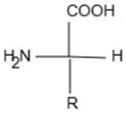
Natural amino acid is represented as

Figure

When the characteristic feature of the side chain R, is 'H' for glycine and (H3C)2CH(H_3C)_2CH- for Valine, how many peptide bonds will be present in Glycylvaline , a dipeptide?

Answer options

Q17:

2026: 30 May Shift 2

Biomolecules

Easy

Which of following linkages are present in nucleic acids?

Answer options

Q18:

2026: 30 May Shift 2

Biomolecules

Easy

The steroid hormones are produced by which of the following glands in the human body?

Answer options

Q19:

2026: 30 May Shift 2

Biomolecules

Easy

Match List-I with List-II

List-IList-II
(A) Glucose(I) Aldotriose
(B) Glyceraldehyde(II) Aldohexose
(C) Fructose(III) Ketotriose
(D) Dihydroxyacetone(IV) Ketohexose
Answer options

Q21:

2026: 30 May Shift 1

Biomolecules

Easy

Which of the following are anomers?

Answer options

Q22:

2026: 30 May Shift 1

Biomolecules

Medium

Arrange the following in increasing number of carbon atoms.

A. Ribose

B. Maltose

C. Glycogen

D. Gluconic Acid

Answer options

Q23:

2026: 30 May Shift 1

Biomolecules

Easy

Thymine and uracil are different in their structures due to the presence of

Answer options

Q24:

2026: 30 May Shift 1

Biomolecules

Easy

What is the difference between nucleosides and nucleotides formed upon hydrolysis of DNA?

Answer options

Q25:

2026: 30 May Shift 1

Biomolecules

Easy

Which pair of hormones has opposite roles in human body?

Answer options

Q26:

2026: 29 May Shift 2

Biomolecules

Easy

Which one of the following statements is incorrect regarding the chemical reactivity of Glucose?

Answer options

Q27:

2026: 29 May Shift 2

Biomolecules

Medium

Match the LIST-I with LIST-II.

LIST-I CarbohydrateLIST-II Glycosidic linkage between
A.SucroseI.C1 of α-D-glucose and C2 of β-D-fructose
B.MaltoseII.C1 of β-D-galactose and C4 of β-D-glucose
C.LactoseIII.C1 of β-D-glucose and C4 of β-D-glucose
D.CelluloseIV.C1 of α-D-glucose and C4 of α-D-glucose
Answer options

Q28:

2026: 29 May Shift 2

Biomolecules

Easy

Vitamin C and vitamin D are

Answer options

Q29:

2026: 29 May Shift 2

Biomolecules

Easy

Which one of the following statements is incorrect regarding amino acids?

Answer options

Q30:

2026: 29 May Shift 2

Biomolecules

Easy

Which one of the following is correct regarding nucleic acids?

Answer options