Q1:

Chemical Kinetics

Easy

Match the units of k for different reaction orders.`.

List-IList-II
Order of reactionUnits
(A) Zero order reaction(I) mol−2^{-2} L2^2 s−1^{-1}
(B) First order reaction(II) mol−1^{-1} L s−1^{-1}
(C) Second order reaction(III) s−1^{-1}
(D) Third order reaction(IV) mol L−1^{-1} s−1^{-1}
Answer options
Option 3
Correct Answer
Explanation for 2026: 7 June Shift 2 CHE question 1

Q2:

Coordination Compounds

Medium

Match List-I with List-II

List-IList-II
Types of complexesIsomerisms
(A) [Co(NH3)4Cl2]+[Co(NH_3)_4Cl_2]^+(I) Coordination
(B) [Co(en)3]3+[Co(en)_3]^{3+}(II) Linkage
(C) [Co(NH3)5(NO2)]Cl2[Co(NH_3)_5(NO_2)]Cl_2(III) Geometrical
(D) [Cr(NH3)6][Co(CN)6][Cr(NH_3)_6][Co(CN)_6](IV) Optical
Answer options
Option 4
Correct Answer
Explanation for 2026: 7 June Shift 2 CHE question 2

Q3:

Haloalkanes & Haloarenes

Easy

Identify the incorrect statement for nucleophilic substitution reactions of alkyl halides.

Answer options
Option 3
Correct Answer
Explanation for 2026: 7 June Shift 2 CHE question 3

Q4:

Chemical Kinetics

Medium

The decomposition of a substance R takes place according to Ist^{st} order kinetic reaction. The initial concentration is reduced to 1/8th^{th} of initial value in 24 seconds. The rate constant of the reaction is

Answer options
Option 3
Correct Answer
Explanation for 2026: 7 June Shift 2 CHE question 4

Q7:

Aldehydes, Ketones & Carboxylic Acids

Easy

The following name reaction is

2 HCHO + conc. NaOH →\rightarrow CH3OHCH_3OH + HCOONa

Answer options
Option 4
Correct Answer
Explanation for 2026: 7 June Shift 2 CHE question 7

Q8:

Alcohols, Phenols & Ethers

Medium

Match List-I with List-II

List-IList-II
ReactionsProduct
(A) Figure(I) Figure
(B) (II) Figure
(C) (III)
(D) (IV)
Answer options
Option 1
Correct Answer
Explanation for 2026: 7 June Shift 2 CHE question 8

Q9:

Alcohols, Phenols & Ethers

Medium

Among the following compounds, the increasing order of their acidic strength is

(A) m-Nitrophenol

(B) m-Cresol

(C) Phenol

(D) p-Nitrophenol

Answer options
Option 3
Correct Answer
Explanation for 2026: 7 June Shift 2 CHE question 9

Q10:

Haloalkanes & Haloarenes

Easy

The decreasing order of bond enthalpies of C-X bond in CH3CH_3-F, CH3CH_3-Br, CH3CH_3-Cl and CH3CH_3-I is

Answer options

Q11:

Electrochemistry

Medium

Which of the following statements associated with batteries are incorrect?

(A) Secondary batteries are rechargeable

(B) The cell potential of Leclanche cell is 1.5 V

(C) The cell reaction in a primary battery is reversible

(D) The efficiency of fuel cell is about 40%

Answer options

Q12:

Haloalkanes & Haloarenes

Easy

Freon 12 (CCl2F2CCl_2F_2) is one of the most common freons in industrial use. It is manufactured from tetrachloromethane by which of the following reaction?

Answer options

Q14:

Amines

Medium

Which of the following statements is correct for benzene diazonium salts ?

(A) Diazonium salt does not decomposes easily.

(B) In Gattermann reaction diazonium group is replaced by chlorine using Cu(I) ion and HCl.

(C) When Diazonium fluoroborate is heated with aqueous sodium nitrite solution in the presence of copper, the diazonium group is replaced by −NO2-NO_2.

(D) Azo dye is formed via coupling reaction of benzene diazonium salt.

Answer options

Q15:

Aldehydes, Ketones & Carboxylic Acids

Medium

Identify the correct increasing order of reactivity towards nucelophilic addition reaction of the following compounds

(A) CH3CHOCH_3CHO

(B) CH3CH2CHOCH_3CH_2CHO

(C) CH3COCH3CH_3COCH_3

(D) CH3COCH2CH3CH_3COCH_2CH_3

Answer options

Q16:

Aldehydes, Ketones & Carboxylic Acids

Medium

Identify the acid with highest pKapK_a value

Answer options

Q17:

Coordination Compounds

Medium

According to the valence bond theory, [Fe(CN)6]3−[Fe(CN)_6]^{3-} is

(A) d2sp3d^2sp^3

(B) sp3d2sp^3d^2

(C) Paramagnetic

(D) Low spin complex

Answer options

Q18:

Solutions

Easy

Match List-I with List-II

List-IList-II
Osmotic pressureProperties
(A) van't Hoff factor 'i'(I) molar concentration of solution
(B) The osmotic pressure is directly proportional to(II) dimensionless
(C) A hypertonic solution is one whose osmotic pressure is(III) lower than the other solution
(D) A hypotonic solution is one whose osmotic pressure is(IV) higher than the other solution
Answer options

Q19:

Chemical Kinetics

Medium

The correct statements about collision theory of reaction rates are

(A) The proper orientation of reactant molecules leads to bond formation

(B) In kinetic theory of gases, the reactant molecules are assumed to be soft spheres.

(C) The number of collisions per second per unit volume of the reaction mixture is known as Collision frequency (Z)

(D) In collision theory, activation energy and proper orientation of the molecules together determine the criteria for an effective collision.

Answer options

Q20:

Chemical Kinetics

Easy

A catalyst is a substance which

Answer options

Q21:

Aldehydes, Ketones & Carboxylic Acids

Medium

Arrange the following compounds in the increasing order of their boiling points.

(A) CH3CH2CH2CHOCH_3CH_2CH_2CHO,

(B) CH3CH2CH2CH2OHCH_3CH_2CH_2CH_2OH

(C) H5C2H_5C_2-O-C2H5C_2H_5

(D) CH3CH2CH2CH3CH_3CH_2CH_2CH_3

Answer options

Q22:

Solutions

Medium

Based on solute-solvent interactions, arrange the following in increasing order of their solubility in n-octane.

(A) Cyclohexane

(B) KCl

(C) CH3OHCH_3OH

(D) CH3CNCH_3CN

Answer options

Q25:

Electrochemistry

Easy

When an electrochemical cell's voltage (E) has dropped to zero it indicates:

Answer options

Q26:

Coordination Compounds

Hard

The color of the coordination compounds depends on the Crystal field splitting. What will be the correct decreasing order of absorption of wavelength of light for the given complexes ?

(A) Co(NH3)5(H2O)]3+Co(NH_3)_5(H_2O)]^{3+}

(B) [Co(NH3)6]3+[Co(NH_3)_6]^{3+}

(C) [Co(CN)6]3−[Co(CN)_6]^{3-}

(D) [CoCl(NH3)5]2+[CoCl(NH_3)_5]^{2+}

Answer options

Q27:

Solutions

Easy

Henry's constant KHK_H at a given pressure

Answer options

Q28:

Electrochemistry

Medium

Arrange the following species in increasing order of their reducing power.

(A) Cl−Cl^- E0(Cl2/Cl−)=1.36\quad E^0(Cl_2/Cl^-) = 1.36 V

(B) I−I^- E0(I2/I−)=0.54\quad E^0(I_2/I^-) = 0.54 V

(C) Cr E0(Cr3+/Cr)=−0.74\quad E^0(Cr^{3+}/Cr) = -0.74 V

(D) Ni E0(Ni2+/Ni)=−0.25\quad E^0(Ni^{2+}/Ni) = -0.25V

Answer options

Q29:

Solutions

Medium

The vapour pressure of pure benzene at a certain temperature is 0.850 bar. When a non-volatile, non-electrolyte solute weighing 1.0 g is added to 39.0 g of benzene (molar mass 78 g mol−1^{-1}), the vapour pressure of the solution becomes 0.845 bar. The molar mass of the solute is around

Answer options

Q30:

Alcohols, Phenols & Ethers

Easy

Which of the following transformation will not give phenol ?

Answer options

Q31:

Amines

Medium

Nitration of aniline with a mixture of nitric acid and sulphuric acid gives a mixture of products. This is because

Answer options

Q32:

Chemical Kinetics

Medium

The half life period of first order decomposition of NH2NO2NH_2NO_2 is 2.1 hour at 15°C. The time required (in hour) for 5.2 g of NH2NO2NH_2NO_2 to decompose 99% will be ;

NH2NO2 (aq)⟶N2O(g)+H2O(l)NH_2NO_{2\,(aq)} \longrightarrow N_2O_{(g)} + H_2O_{(l)}

Answer options

Q33:

Aldehydes, Ketones & Carboxylic Acids

Easy

Identify the following name reaction.

Figure

Answer options

Q34:

Coordination Compounds

Medium

It was found that some of the chloride ions could be precipitated as AgCl by adding excess silver nitrate solution in compound [Co(NH3)6]3+3Cl−[Co(NH_3)_6]^{3+}3Cl^-. The solution conductivity corresponds to

Answer options

Q35:

Haloalkanes & Haloarenes

Medium

Match List-I with List-II

List-IList-II
Polyhalogen CompoundApplications
(A) Iodoform(I) propellants for aerosol cans
(B) DDT(II) Antiseptic
(C) Trichloromethane(III) Insecticide
(D)Tetrachloromethane(IV) Freon refrigerant R-22
Answer options

Q36:

Haloalkanes & Haloarenes

Easy

The property which distinguishes a pair of enantiomers is

Answer options

Q38:

Aldehydes, Ketones & Carboxylic Acids

Medium

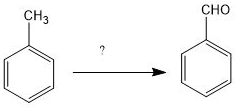
Consider the following chemical reaction and identify the reagents required for conversion.

Figure

Answer options

Q39:

Chemical Kinetics

Easy

Which of the following is an incorrect statement?

Answer options

Q41:

Biomolecules

Easy

Proteins are most abundant biomolecules of the living organism. The main source of proteins are milk, cheese, pulses, peanuts, fish meat etc. Amino acids are building block of proteins. Amino acids contain amino (−NH2-NH_2) and carboxyl (−COOH-COOH) functional groups. Depending upon the relative position of amino group with respect to carboxyl group, the amino acids can be classified as α\alpha, β\beta, γ\gamma, δ\delta and so on. Only alpha amino acid are obtained on hydrolysis of protein. Amino acids are classified as acidic, or basic or neutral depending upon the relative number of amino and carboxyl group in their moleucle.

Amino acids which can be synthesised in the body are known as non-essential amino acids. On the other hand, those which can not be synthesised in the body and must be obtained through diet are known as essential amino acids. Proteins are condensation product of amino acids which are linked through peptide bond or peptide linkage.

Proteins can be classified into two types on the basis of their molecular shape. (a) Fibrous and (b) Globular proteins. Proteins found in a biolgical system with unique three-dimentional structure and biological activity is called a native protein. When a protein in its native form is subjected to physical changes, such as change in temperature, or chemical changes, such as change in pH, hydrogen bonds are disturbed. As a result, globules unfold, helices uncoil, and protein loses its biological activity. This is called denaturation of protein.

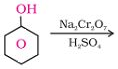
Protein denaturation results in

Answer options

Q42:

Biomolecules

Easy

Proteins are most abundant biomolecules of the living organism. The main source of proteins are milk, cheese, pulses, peanuts, fish meat etc. Amino acids are building block of proteins. Amino acids contain amino (−NH2-NH_2) and carboxyl (−COOH-COOH) functional groups. Depending upon the relative position of amino group with respect to carboxyl group, the amino acids can be classified as α\alpha, β\beta, γ\gamma, δ\delta and so on. Only alpha amino acid are obtained on hydrolysis of protein. Amino acids are classified as acidic, or basic or neutral depending upon the relative number of amino and carboxyl group in their moleucle.

Amino acids which can be synthesised in the body are known as non-essential amino acids. On the other hand, those which can not be synthesised in the body and must be obtained through diet are known as essential amino acids. Proteins are condensation product of amino acids which are linked through peptide bond or peptide linkage.

Proteins can be classified into two types on the basis of their molecular shape. (a) Fibrous and (b) Globular proteins. Proteins found in a biolgical system with unique three-dimentional structure and biological activity is called a native protein. When a protein in its native form is subjected to physical changes, such as change in temperature, or chemical changes, such as change in pH, hydrogen bonds are disturbed. As a result, globules unfold, helices uncoil, and protein loses its biological activity. This is called denaturation of protein.

Which among the following is a non-essential amino acid?

Answer options

Q43:

Biomolecules

Easy

Proteins are most abundant biomolecules of the living organism. The main source of proteins are milk, cheese, pulses, peanuts, fish meat etc. Amino acids are building block of proteins. Amino acids contain amino (−NH2-NH_2) and carboxyl (−COOH-COOH) functional groups. Depending upon the relative position of amino group with respect to carboxyl group, the amino acids can be classified as α\alpha, β\beta, γ\gamma, δ\delta and so on. Only alpha amino acid are obtained on hydrolysis of protein. Amino acids are classified as acidic, or basic or neutral depending upon the relative number of amino and carboxyl group in their moleucle.

Amino acids which can be synthesised in the body are known as non-essential amino acids. On the other hand, those which can not be synthesised in the body and must be obtained through diet are known as essential amino acids. Proteins are condensation product of amino acids which are linked through peptide bond or peptide linkage.

Proteins can be classified into two types on the basis of their molecular shape. (a) Fibrous and (b) Globular proteins. Proteins found in a biolgical system with unique three-dimentional structure and biological activity is called a native protein. When a protein in its native form is subjected to physical changes, such as change in temperature, or chemical changes, such as change in pH, hydrogen bonds are disturbed. As a result, globules unfold, helices uncoil, and protein loses its biological activity. This is called denaturation of protein.

Secondary structure of protein refers to

Answer options

Q44:

Biomolecules

Easy

Proteins are most abundant biomolecules of the living organism. The main source of proteins are milk, cheese, pulses, peanuts, fish meat etc. Amino acids are building block of proteins. Amino acids contain amino (−NH2-NH_2) and carboxyl (−COOH-COOH) functional groups. Depending upon the relative position of amino group with respect to carboxyl group, the amino acids can be classified as α\alpha, β\beta, γ\gamma, δ\delta and so on. Only alpha amino acid are obtained on hydrolysis of protein. Amino acids are classified as acidic, or basic or neutral depending upon the relative number of amino and carboxyl group in their moleucle.

Amino acids which can be synthesised in the body are known as non-essential amino acids. On the other hand, those which can not be synthesised in the body and must be obtained through diet are known as essential amino acids. Proteins are condensation product of amino acids which are linked through peptide bond or peptide linkage.

Proteins can be classified into two types on the basis of their molecular shape. (a) Fibrous and (b) Globular proteins. Proteins found in a biolgical system with unique three-dimentional structure and biological activity is called a native protein. When a protein in its native form is subjected to physical changes, such as change in temperature, or chemical changes, such as change in pH, hydrogen bonds are disturbed. As a result, globules unfold, helices uncoil, and protein loses its biological activity. This is called denaturation of protein.

The zwitterionic form of glycine is represented as

Answer options

Q45:

Biomolecules

Easy

Proteins are most abundant biomolecules of the living organism. The main source of proteins are milk, cheese, pulses, peanuts, fish meat etc. Amino acids are building block of proteins. Amino acids contain amino (−NH2-NH_2) and carboxyl (−COOH-COOH) functional groups. Depending upon the relative position of amino group with respect to carboxyl group, the amino acids can be classified as α\alpha, β\beta, γ\gamma, δ\delta and so on. Only alpha amino acid are obtained on hydrolysis of protein. Amino acids are classified as acidic, or basic or neutral depending upon the relative number of amino and carboxyl group in their moleucle.

Amino acids which can be synthesised in the body are known as non-essential amino acids. On the other hand, those which can not be synthesised in the body and must be obtained through diet are known as essential amino acids. Proteins are condensation product of amino acids which are linked through peptide bond or peptide linkage.

Proteins can be classified into two types on the basis of their molecular shape. (a) Fibrous and (b) Globular proteins. Proteins found in a biolgical system with unique three-dimentional structure and biological activity is called a native protein. When a protein in its native form is subjected to physical changes, such as change in temperature, or chemical changes, such as change in pH, hydrogen bonds are disturbed. As a result, globules unfold, helices uncoil, and protein loses its biological activity. This is called denaturation of protein.
Which of the following is a fibrous protein ?

Answer options

Q46:

d & f Block Elements

Easy

d-Block Elements

The metals of the first series with the exception of copper are relatively more reactive and are oxidised by 1M H+H^+, though the actual rate at which these metals react with oxidising agents like hydrogen ion (H+H^+) is sometimes slow. For example, titanium and vanadium, in practice, are passive to dilute non oxidising acids at room temperature. The E∘E^\circ values for M2+/MM^{2+}/M indicate a decreasing tendency to form divalent cations across the series. It is interesting to note that the E∘E^\circ values for Mn, Ni and Zn are more negative than expected from the general trend. Whereas the stabilities of half-filled d subshell (d5d^5) in Mn2+Mn^{2+} and completely filled d subshell (d10d^{10}) in zinc are related to their E∘E^\circ values; for nickel, E∘E^\circ value is related to the highest negative enthalpy of hydration.

The most stable oxidation state of Mn is;

Answer options

Q47:

d & f Block Elements

Medium

d-Block Elements

The metals of the first series with the exception of copper are relatively more reactive and are oxidised by 1M H+H^+, though the actual rate at which these metals react with oxidising agents like hydrogen ion (H+H^+) is sometimes slow. For example, titanium and vanadium, in practice, are passive to dilute non oxidising acids at room temperature. The E∘E^\circ values for M2+/MM^{2+}/M indicate a decreasing tendency to form divalent cations across the series. It is interesting to note that the E∘E^\circ values for Mn, Ni and Zn are more negative than expected from the general trend. Whereas the stabilities of half-filled d subshell (d5d^5) in Mn2+Mn^{2+} and completely filled d subshell (d10d^{10}) in zinc are related to their E∘E^\circ values; for nickel, E∘E^\circ value is related to the highest negative enthalpy of hydration.

E∘E^\circ value for the Mn3+/Mn2+Mn^{3+}/Mn^{2+} couple is much more positive than that for Cr3+/Cr2+Cr^{3+}/Cr^{2+} due to

Answer options

Q48:

d & f Block Elements

Medium

d-Block Elements

The metals of the first series with the exception of copper are relatively more reactive and are oxidised by 1M H+H^+, though the actual rate at which these metals react with oxidising agents like hydrogen ion (H+H^+) is sometimes slow. For example, titanium and vanadium, in practice, are passive to dilute non oxidising acids at room temperature. The E∘E^\circ values for M2+/MM^{2+}/M indicate a decreasing tendency to form divalent cations across the series. It is interesting to note that the E∘E^\circ values for Mn, Ni and Zn are more negative than expected from the general trend. Whereas the stabilities of half-filled d subshell (d5d^5) in Mn2+Mn^{2+} and completely filled d subshell (d10d^{10}) in zinc are related to their E∘E^\circ values; for nickel, E∘E^\circ value is related to the highest negative enthalpy of hydration.

Select the Incorrect statement from the follwoing:

Answer options

Q49:

d & f Block Elements

Medium

d-Block Elements

The metals of the first series with the exception of copper are relatively more reactive and are oxidised by 1M H+H^+, though the actual rate at which these metals react with oxidising agents like hydrogen ion (H+H^+) is sometimes slow. For example, titanium and vanadium, in practice, are passive to dilute non oxidising acids at room temperature. The E∘E^\circ values for M2+/MM^{2+}/M indicate a decreasing tendency to form divalent cations across the series. It is interesting to note that the E∘E^\circ values for Mn, Ni and Zn are more negative than expected from the general trend. Whereas the stabilities of half-filled d subshell (d5d^5) in Mn2+Mn^{2+} and completely filled d subshell (d10d^{10}) in zinc are related to their E∘E^\circ values; for nickel, E∘E^\circ value is related to the highest negative enthalpy of hydration.

The increasing oxidising power in the series VO2+<Cr2O72−<MnO4−VO_2^+ < Cr_2O_7^{2-} < MnO_4^- could be due to

Answer options

Q50:

d & f Block Elements

Medium

d-Block Elements

The metals of the first series with the exception of copper are relatively more reactive and are oxidised by 1M H+H^+, though the actual rate at which these metals react with oxidising agents like hydrogen ion (H+H^+) is sometimes slow. For example, titanium and vanadium, in practice, are passive to dilute non oxidising acids at room temperature. The E∘E^\circ values for M2+/MM^{2+}/M indicate a decreasing tendency to form divalent cations across the series. It is interesting to note that the E∘E^\circ values for Mn, Ni and Zn are more negative than expected from the general trend. Whereas the stabilities of half-filled d subshell (d5d^5) in Mn2+Mn^{2+} and completely filled d subshell (d10d^{10}) in zinc are related to their E∘E^\circ values; for nickel, E∘E^\circ value is related to the highest negative enthalpy of hydration.

V2O5V_2O_5 is ______ in nature which reacts with alkalies as well as acids to give ______ and ______ respectively.

Answer options

CUET Chemistry 2026 7 June Shift 2 Past Year Question Paper

Every question from the CUET Chemistry 2026 7 June Shift 2 paper is here in full, with the correct answer and a step by step solution for each one. It is completely free, there is no login and no paywall, and you can read the whole paper online or download it to revise offline.

You can also attempt it instead of only reading it. Take the paper as a full length mock under exam conditions, or filter it by topic and attempt just that topic as a topic test. Both are free, and you get a breakdown of your accuracy, your timing and your weak areas once you submit.

CUET Chemistry past year questions (PYQs) are the closest thing to the real exam, so working through them is the quickest way to learn the paper pattern, the marking scheme and the level of difficulty to expect on the day.