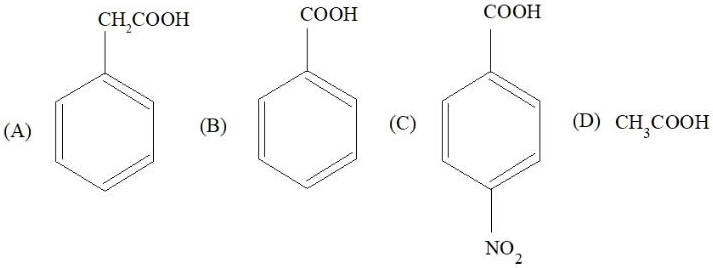
Q1:

Amines

Medium

Match the LIST-I with LIST-II.

LIST-I CompoundsLIST-II pKb\mathrm{pK_b} (aqueous phase)
A.N, N-DimethylanilineI.4.70
B.PhenylmethanamineII.3.27
C.BenzenamineIII.8.92
D.N-MethylmethanamineIV.9.38
Answer options
Option 3
Correct Answer
Explanation for 2026: 25 May Shift 1 CHE question 1

Q2:

Biomolecules

Easy

Which disease is caused by deficiency of vitamin E ?

Answer options
Option 4
Correct Answer
Explanation for 2026: 25 May Shift 1 CHE question 2

Q5:

Solutions

Medium

ppm is

Answer options
Option 3
Correct Answer
Explanation for 2026: 25 May Shift 1 CHE question 5

Q6:

Biomolecules

Easy

The glycosidic linkage present in sucrose is between

Answer options
Option 1
Correct Answer
Explanation for 2026: 25 May Shift 1 CHE question 6

Q8:

Aldehydes, Ketones & Carboxylic Acids

Easy

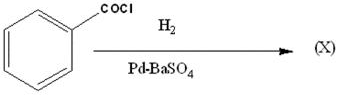
Consider the following reaction

Figure

Product (X) is

Answer options
Option 2
Correct Answer
Explanation for 2026: 25 May Shift 1 CHE question 8

Q9:

Alcohols, Phenols & Ethers

Easy

The correct IUPAC name of the compound CH2=CH−CH2OH\mathrm{CH_2{=}CH{-}CH_2OH} is

Answer options
Option 1
Correct Answer
Explanation for 2026: 25 May Shift 1 CHE question 9

Q10:

Chemical Kinetics

Easy

The activation energy of a reaction can be determined from the slope of which of the following graphs?

Answer options

Q11:

Coordination Compounds

Medium

Which of the following complexes is expected to be diamagnetic where atomic number of Fe=26, Co=27 and Ni=28 ?

Answer options

Q12:

Coordination Compounds

Easy

Which of the following is the correct IUPAC name for the compound [Co(NH3)5Cl]Cl2\mathrm{[Co(NH_3)_5Cl]Cl_2}?

Answer options

Q13:

Biomolecules

Easy

Glucose on oxidation with nitric acid results in formation of one of the following compounds which indicates the presence of a primary alcoholic group Identify the compound.

Answer options

Q17:

Biomolecules

Easy

Identify the fibrous proteins from the following.

A. Albumins

B. Keratin

C. Insulin

D. Myosin

Answer options

Q19:

Coordination Compounds

Hard

Arrange the following ions in the increasing order of their magnetic moments:

A. [Fe(CN)6]4−\mathrm{[Fe(CN)_6]^{4-}}

B. [Co(F6)]3−\mathrm{[Co(F_6)]^{3-}}

C. [Ni(H2O)6]2+\mathrm{[Ni(H_2O)_6]^{2+}}

D. [Cu(NH3)6]2+\mathrm{[Cu(NH_3)_6]^{2+}}

Answer options

Q20:

Amines

Medium

Identify the compounds containing amino group from the following compounds.

A. Novocain

B. Benadryl

C. Ephedrine

D. Adrenaline

Answer options

Q21:

Chemical Kinetics

Easy

What is the order of the reaction?

88226Ra→ 24He+ 88222Rn\mathrm{^{226}_{88}Ra \rightarrow\, ^{4}_{2}He +\, ^{222}_{88}Rn}

Answer options

Q22:

Coordination Compounds

Medium

Which of the following statements about EDTA are correct:

A. It is a hexadentate ligand.

B. It is used to treat tumors.

C. It forms chelate complexes.

D. It is used in the estimation of Mg2+\mathrm{Mg^{2+}} and Ca2+\mathrm{Ca^{2+}} ions in hard water.

Answer options

Q23:

Aldehydes, Ketones & Carboxylic Acids

Easy

Acetaldehyde is converted to ethane by Wolff-Kishner reduction. Acetaldehyde is treated with

Answer options

Q25:

Electrochemistry

Easy

The SI unit of conductance is

Answer options

Q26:

Solutions

Easy

The solubility of a solid in a liquid is significantly affected by temperature changes. This can be explained using the

Answer options

Q27:

Chemical Kinetics

Easy

Arrange the reactions, having rate expressions as given below, in the increasing arrangement of the order of reactions:

A. Rate = k[CHCl3][Cl2]1/2k[\mathrm{CHCl_3}][\mathrm{Cl_2}]^{1/2}

B. Rate= k[H2][NO]2k[\mathrm{H_2}][\mathrm{NO}]^2

C. Rate=k[N2O5]k[\mathrm{N_2O_5}]

D. Rate=k[NO2]2k[\mathrm{NO_2}]^2

Answer options

Q28:

Chemical Kinetics

Medium

Consider and interpret the Arrhenius equation given below and mark the correct option(s):

k=A e−Ea/RTk = A\, e^{-Ea/RT}

A. Rate constant increases with increase in activation energy and with decrease in temperature.

B. Rate constant decreases with decrease in activation energy and with decrease in temperature.

C. Rate constant increases with decrease in activation energy and with decrease in temperature.

D. Rate constant increases with decrease in activation energy and with increase in temperature.

Answer options

Q29:

Alcohols, Phenols & Ethers

Easy

Match the LIST-I with LIST-II.

LIST-I Conversion ofLIST-II Reagent used
A.phenol to salicylic acidI.Zn dust
B.alcohol to alkeneII.Conc. HNO3\mathrm{HNO_3}
C.phenol to picric acidIII.Conc. H2SO4\mathrm{H_2SO_4}
D.phenol to benzeneIV.NaOH, CO2\mathrm{CO_2}, H+\mathrm{H^+}
Answer options

Q30:

Electrochemistry

Medium

Arrange the following in the increasing order of conductivity values

A. Glass

B. Silver

C. Silicon

D. Iron

Answer options

Q31:

Coordination Compounds

Easy

Match the LIST-I with LIST-II.

LIST-I Compound/substance/catalystLIST-II Metal ion present
A.ChlorophyllI.Rh
B.Wilkinson catalystII.Fe
C.HaemoglobinIII.Mg
D.Vitamin B12IV.Co
Answer options

Q32:

Solutions

Easy

Which of the following are gaseous solutions?

A. Chloroform mixed with N2\mathrm{N_2} gas

B. Camphor in N2\mathrm{N_2} gas

C. Hydrogen in Palladium

D. Oxygen in water

Answer options

Q33:

Alcohols, Phenols & Ethers

Medium

What is the IUPAC name of the organic compound (X) formed in the following reaction

CH3COCH3→(ii) H2O, H+(i) C2H5MgBr, Dry ether(X)\mathrm{CH_3COCH_3} \xrightarrow[\text{(ii) } \mathrm{H_2O,\ H^+}]{\text{(i) } \mathrm{C_2H_5MgBr}, \text{ Dry ether}} \mathrm{(X)}

Answer options

Q34:

Alcohols, Phenols & Ethers

Medium

Arrange the following compounds in increasing order of boiling points.

A. Propan-1-ol

B. Butan-1-ol

C. Butan-2-ol

D. Pentan-1-ol

Answer options

Q35:

Electrochemistry

Easy

Match the LIST-I with LIST-II.

LIST-I TermsLIST-II Units
A.Cell constantI.ohm−1\mathrm{ohm^{-1}}
B.Molar conductanceII.ohm−1 cm−1\mathrm{ohm^{-1}\ cm^{-1}}
C.Specific conductanceIII.ohm−1 cm2 mol−1\mathrm{ohm^{-1}\ cm^2\ mol^{-1}}
D.ConductanceIV.cm−1\mathrm{cm^{-1}}
Answer options

Q36:

Solutions

Easy

Match the LIST-I with LIST-II.

LIST-I Concentration termsLIST-II Units
A.MolarityI.mol kg−1\mathrm{mol\ kg^{-1}}
B.Mole FractionII.mol L−1\mathrm{mol\ L^{-1}}
C.MoleIII.unitless
D.MolalityIV.mol
Answer options

Q37:

Amines

Medium

Which of the following method can be used for the synthesis of aromatic primary amine only?

Answer options

Q38:

Amines

Hard

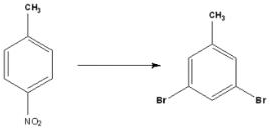
In the following conversion, the correct sequence of reagents used would be:

Figure

Answer options

Q39:

Chemical Kinetics

Easy

Rate constant of a first order reaction is 2.5×10⁻³ s−12.5 \times 10^{-3}\ \mathrm{s^{-1}}. Its half life will be

Answer options

Q40:

Aldehydes, Ketones & Carboxylic Acids

Easy

Identify the name of the following reaction from the given options.

R−CH2−COOH→ii) H2Oi) X2 / Red PhosphorousR−C∣HX−COOH\mathrm{R{-}CH_2{-}COOH} \xrightarrow[\text{ii) } \mathrm{H_2O}]{\text{i) } \mathrm{X_2} \text{ / Red Phosphorous}} \mathrm{R{-}\underset{\displaystyle X}{\underset{|}{C}H}{-}COOH}

X= Cl or Br

Answer options

Q41:

Haloalkanes & Haloarenes

Medium

Alkyl halide

The reactivity of alkyl halides is influenced by their chemical structure and the reaction conditions, leading to different mechanistic pathways. A chemist was studying the hydrolysis of the different bromo-alkanes (P) CH3Br\mathrm{CH_3Br} (Q) (CH3)2CHBr\mathrm{(CH_3)_2CHBr} and (R) (CH3)3C-Br\mathrm{(CH_3)_3C\text{-}Br}. When reacted at a low concentration of NaOH in aqueous acetone medium, the rate of reaction was found to be P>Q>R. However, when the same reaction was carried out with a high conc. NaOH in purely aqueous solution, the order of reactivity reversed, becoming R>Q>P. Furthermore, the hydrolysis of (R) resulted in the formation of a racemic mixture while (P) led to the inversion of configuration.

Methyl chloride, methyl bromide, ethyl chloride and some chlorofluoromethanes are gases at room temperature. Higher members are liquids or solids. Molecules of organic halogen compounds are generally polar. Due to greater polarity as well as higher molecular mass as compared to the parent hydrocarbon, the intermolecular forces of attraction (dipole-dipole and van der Waals) are stronger in the halogen derivatives. This is the reason , the boiling points of chlorides, bromides and iodides are considerably higher than those of the hydrocarbons of comparable molecular mass.

The attractions get stronger as the molecules get bigger in size and have more electrons. For the same alkyl group, the boiling points of alkyl halides decrease in the order: RI> RBr> RCl> RF. This is because with the increase in size and mass of halogen atom, the magnitude of van der Waal forces increases.

In the first set of conditions (low concentration NaOH in aqueous acetone) the predominant mechanism operating is

Answer options

Q42:

Haloalkanes & Haloarenes

Medium

Alkyl halide

The reactivity of alkyl halides is influenced by their chemical structure and the reaction conditions, leading to different mechanistic pathways. A chemist was studying the hydrolysis of the different bromo-alkanes (P) CH3Br\mathrm{CH_3Br} (Q) (CH3)2CHBr\mathrm{(CH_3)_2CHBr} and (R) (CH3)3C-Br\mathrm{(CH_3)_3C\text{-}Br}. When reacted at a low concentration of NaOH in aqueous acetone medium, the rate of reaction was found to be P>Q>R. However, when the same reaction was carried out with a high conc. NaOH in purely aqueous solution, the order of reactivity reversed, becoming R>Q>P. Furthermore, the hydrolysis of (R) resulted in the formation of a racemic mixture while (P) led to the inversion of configuration.

Methyl chloride, methyl bromide, ethyl chloride and some chlorofluoromethanes are gases at room temperature. Higher members are liquids or solids. Molecules of organic halogen compounds are generally polar. Due to greater polarity as well as higher molecular mass as compared to the parent hydrocarbon, the intermolecular forces of attraction (dipole-dipole and van der Waals) are stronger in the halogen derivatives. This is the reason , the boiling points of chlorides, bromides and iodides are considerably higher than those of the hydrocarbons of comparable molecular mass.

The attractions get stronger as the molecules get bigger in size and have more electrons. For the same alkyl group, the boiling points of alkyl halides decrease in the order: RI> RBr> RCl> RF. This is because with the increase in size and mass of halogen atom, the magnitude of van der Waal forces increases.

The reversal of reactivity order in high concentration of NaOH in aqueous medium is because the mechanism shifts to

Answer options

Q43:

Haloalkanes & Haloarenes

Easy

Alkyl halide

The reactivity of alkyl halides is influenced by their chemical structure and the reaction conditions, leading to different mechanistic pathways. A chemist was studying the hydrolysis of the different bromo-alkanes (P) CH3Br\mathrm{CH_3Br} (Q) (CH3)2CHBr\mathrm{(CH_3)_2CHBr} and (R) (CH3)3C-Br\mathrm{(CH_3)_3C\text{-}Br}. When reacted at a low concentration of NaOH in aqueous acetone medium, the rate of reaction was found to be P>Q>R. However, when the same reaction was carried out with a high conc. NaOH in purely aqueous solution, the order of reactivity reversed, becoming R>Q>P. Furthermore, the hydrolysis of (R) resulted in the formation of a racemic mixture while (P) led to the inversion of configuration.

Methyl chloride, methyl bromide, ethyl chloride and some chlorofluoromethanes are gases at room temperature. Higher members are liquids or solids. Molecules of organic halogen compounds are generally polar. Due to greater polarity as well as higher molecular mass as compared to the parent hydrocarbon, the intermolecular forces of attraction (dipole-dipole and van der Waals) are stronger in the halogen derivatives. This is the reason , the boiling points of chlorides, bromides and iodides are considerably higher than those of the hydrocarbons of comparable molecular mass.

The attractions get stronger as the molecules get bigger in size and have more electrons. For the same alkyl group, the boiling points of alkyl halides decrease in the order: RI> RBr> RCl> RF. This is because with the increase in size and mass of halogen atom, the magnitude of van der Waal forces increases.

Why did the hydrolysis of (R) results in racemic mixture

Answer options

Q44:

Haloalkanes & Haloarenes

Easy

Alkyl halide

The reactivity of alkyl halides is influenced by their chemical structure and the reaction conditions, leading to different mechanistic pathways. A chemist was studying the hydrolysis of the different bromo-alkanes (P) CH3Br\mathrm{CH_3Br} (Q) (CH3)2CHBr\mathrm{(CH_3)_2CHBr} and (R) (CH3)3C-Br\mathrm{(CH_3)_3C\text{-}Br}. When reacted at a low concentration of NaOH in aqueous acetone medium, the rate of reaction was found to be P>Q>R. However, when the same reaction was carried out with a high conc. NaOH in purely aqueous solution, the order of reactivity reversed, becoming R>Q>P. Furthermore, the hydrolysis of (R) resulted in the formation of a racemic mixture while (P) led to the inversion of configuration.

Methyl chloride, methyl bromide, ethyl chloride and some chlorofluoromethanes are gases at room temperature. Higher members are liquids or solids. Molecules of organic halogen compounds are generally polar. Due to greater polarity as well as higher molecular mass as compared to the parent hydrocarbon, the intermolecular forces of attraction (dipole-dipole and van der Waals) are stronger in the halogen derivatives. This is the reason , the boiling points of chlorides, bromides and iodides are considerably higher than those of the hydrocarbons of comparable molecular mass.

The attractions get stronger as the molecules get bigger in size and have more electrons. For the same alkyl group, the boiling points of alkyl halides decrease in the order: RI> RBr> RCl> RF. This is because with the increase in size and mass of halogen atom, the magnitude of van der Waal forces increases.

Which of the following will have highest boiling point?

Answer options

Q45:

Haloalkanes & Haloarenes

Easy

Alkyl halide

The reactivity of alkyl halides is influenced by their chemical structure and the reaction conditions, leading to different mechanistic pathways. A chemist was studying the hydrolysis of the different bromo-alkanes (P) CH3Br\mathrm{CH_3Br} (Q) (CH3)2CHBr\mathrm{(CH_3)_2CHBr} and (R) (CH3)3C-Br\mathrm{(CH_3)_3C\text{-}Br}. When reacted at a low concentration of NaOH in aqueous acetone medium, the rate of reaction was found to be P>Q>R. However, when the same reaction was carried out with a high conc. NaOH in purely aqueous solution, the order of reactivity reversed, becoming R>Q>P. Furthermore, the hydrolysis of (R) resulted in the formation of a racemic mixture while (P) led to the inversion of configuration.

Methyl chloride, methyl bromide, ethyl chloride and some chlorofluoromethanes are gases at room temperature. Higher members are liquids or solids. Molecules of organic halogen compounds are generally polar. Due to greater polarity as well as higher molecular mass as compared to the parent hydrocarbon, the intermolecular forces of attraction (dipole-dipole and van der Waals) are stronger in the halogen derivatives. This is the reason , the boiling points of chlorides, bromides and iodides are considerably higher than those of the hydrocarbons of comparable molecular mass.

The attractions get stronger as the molecules get bigger in size and have more electrons. For the same alkyl group, the boiling points of alkyl halides decrease in the order: RI> RBr> RCl> RF. This is because with the increase in size and mass of halogen atom, the magnitude of van der Waal forces increases.

Which compound will show the highest boiling point?

Answer options

Q46:

d & f Block Elements

Medium

Inner transition Elements

The lanthanoid contraction is a feature of ff block elements in which overall decrease in atomic radii from lanthanum to lutetium is observed. The decrease in atomic radii is not quite regular as it is regular in M3+\mathrm{M^{3+}} ions. This is because imperfect shielding of one electron by another in the same subshell. The shielding of one 4f4f electron by another is less than one dd electron by another with the increase in nuclear charge along the series. In the lanthanoid La(II) and Ln(III) are predominant species. Occasionally +2 and +4 ions in solution or in solid compounds are obtained. The formation of CeIV\mathrm{Ce^{IV}} is favored by its noble gas configuration but it acts like a strong oxidising agent reverting to the common +3 state. The E0E^0 value for CeIV/CeIII\mathrm{Ce^{IV}/Ce^{III}} is +1.74 V which refer that it can oxidise water. The Pr, Nd, Tb and Dy show +4 state in oxides only. Eu2+\mathrm{Eu^{2+}} is a strong reducing agent changing to the common +3 state. Actinoids include 14 elements from Th to Lr. There is gradual decrease in size of atoms or M3+\mathrm{M^{3+}} ions in series and referred as actinoid contraction. The contraction is greater from element to element in this series resulting from poor shielding by 5f5f electrons.

Select the INCORRECT statement from the following:

Answer options

Q47:

d & f Block Elements

Medium

Inner transition Elements

The lanthanoid contraction is a feature of ff block elements in which overall decrease in atomic radii from lanthanum to lutetium is observed. The decrease in atomic radii is not quite regular as it is regular in M3+\mathrm{M^{3+}} ions. This is because imperfect shielding of one electron by another in the same subshell. The shielding of one 4f4f electron by another is less than one dd electron by another with the increase in nuclear charge along the series. In the lanthanoid La(II) and Ln(III) are predominant species. Occasionally +2 and +4 ions in solution or in solid compounds are obtained. The formation of CeIV\mathrm{Ce^{IV}} is favored by its noble gas configuration but it acts like a strong oxidising agent reverting to the common +3 state. The E0E^0 value for CeIV/CeIII\mathrm{Ce^{IV}/Ce^{III}} is +1.74 V which refer that it can oxidise water. The Pr, Nd, Tb and Dy show +4 state in oxides only. Eu2+\mathrm{Eu^{2+}} is a strong reducing agent changing to the common +3 state. Actinoids include 14 elements from Th to Lr. There is gradual decrease in size of atoms or M3+\mathrm{M^{3+}} ions in series and referred as actinoid contraction. The contraction is greater from element to element in this series resulting from poor shielding by 5f5f electrons.

Actinoid showing highest oxidation state of +7 is.......

Answer options

Q48:

d & f Block Elements

Easy

Inner transition Elements

The lanthanoid contraction is a feature of ff block elements in which overall decrease in atomic radii from lanthanum to lutetium is observed. The decrease in atomic radii is not quite regular as it is regular in M3+\mathrm{M^{3+}} ions. This is because imperfect shielding of one electron by another in the same subshell. The shielding of one 4f4f electron by another is less than one dd electron by another with the increase in nuclear charge along the series. In the lanthanoid La(II) and Ln(III) are predominant species. Occasionally +2 and +4 ions in solution or in solid compounds are obtained. The formation of CeIV\mathrm{Ce^{IV}} is favored by its noble gas configuration but it acts like a strong oxidising agent reverting to the common +3 state. The E0E^0 value for CeIV/CeIII\mathrm{Ce^{IV}/Ce^{III}} is +1.74 V which refer that it can oxidise water. The Pr, Nd, Tb and Dy show +4 state in oxides only. Eu2+\mathrm{Eu^{2+}} is a strong reducing agent changing to the common +3 state. Actinoids include 14 elements from Th to Lr. There is gradual decrease in size of atoms or M3+\mathrm{M^{3+}} ions in series and referred as actinoid contraction. The contraction is greater from element to element in this series resulting from poor shielding by 5f5f electrons.

Zr and Hf possess almost identical radii because of

Answer options

Q49:

d & f Block Elements

Medium

Inner transition Elements

The lanthanoid contraction is a feature of ff block elements in which overall decrease in atomic radii from lanthanum to lutetium is observed. The decrease in atomic radii is not quite regular as it is regular in M3+\mathrm{M^{3+}} ions. This is because imperfect shielding of one electron by another in the same subshell. The shielding of one 4f4f electron by another is less than one dd electron by another with the increase in nuclear charge along the series. In the lanthanoid La(II) and Ln(III) are predominant species. Occasionally +2 and +4 ions in solution or in solid compounds are obtained. The formation of CeIV\mathrm{Ce^{IV}} is favored by its noble gas configuration but it acts like a strong oxidising agent reverting to the common +3 state. The E0E^0 value for CeIV/CeIII\mathrm{Ce^{IV}/Ce^{III}} is +1.74 V which refer that it can oxidise water. The Pr, Nd, Tb and Dy show +4 state in oxides only. Eu2+\mathrm{Eu^{2+}} is a strong reducing agent changing to the common +3 state. Actinoids include 14 elements from Th to Lr. There is gradual decrease in size of atoms or M3+\mathrm{M^{3+}} ions in series and referred as actinoid contraction. The contraction is greater from element to element in this series resulting from poor shielding by 5f5f electrons.

Select the Correct statement from the following:

Answer options

Q50:

d & f Block Elements

Easy

Inner transition Elements

The lanthanoid contraction is a feature of ff block elements in which overall decrease in atomic radii from lanthanum to lutetium is observed. The decrease in atomic radii is not quite regular as it is regular in M3+\mathrm{M^{3+}} ions. This is because imperfect shielding of one electron by another in the same subshell. The shielding of one 4f4f electron by another is less than one dd electron by another with the increase in nuclear charge along the series. In the lanthanoid La(II) and Ln(III) are predominant species. Occasionally +2 and +4 ions in solution or in solid compounds are obtained. The formation of CeIV\mathrm{Ce^{IV}} is favored by its noble gas configuration but it acts like a strong oxidising agent reverting to the common +3 state. The E0E^0 value for CeIV/CeIII\mathrm{Ce^{IV}/Ce^{III}} is +1.74 V which refer that it can oxidise water. The Pr, Nd, Tb and Dy show +4 state in oxides only. Eu2+\mathrm{Eu^{2+}} is a strong reducing agent changing to the common +3 state. Actinoids include 14 elements from Th to Lr. There is gradual decrease in size of atoms or M3+\mathrm{M^{3+}} ions in series and referred as actinoid contraction. The contraction is greater from element to element in this series resulting from poor shielding by 5f5f electrons.

An important alloy of lanthanoid metal is ..........

Answer options

CUET Chemistry 2026 25 May Shift 1 Past Year Question Paper

Every question from the CUET Chemistry 2026 25 May Shift 1 paper is here in full, with the correct answer and a step by step solution for each one. It is completely free, there is no login and no paywall, and you can read the whole paper online or download it to revise offline.

You can also attempt it instead of only reading it. Take the paper as a full length mock under exam conditions, or filter it by topic and attempt just that topic as a topic test. Both are free, and you get a breakdown of your accuracy, your timing and your weak areas once you submit.

CUET Chemistry past year questions (PYQs) are the closest thing to the real exam, so working through them is the quickest way to learn the paper pattern, the marking scheme and the level of difficulty to expect on the day.