Q2:

Biomolecules

Easy

The force which does not stabilise the tertiary structure of of proteins is

Answer options
Option 4
Correct Answer
Explanation for 2026: 31 May Shift 2 CHE question 2

Q3:

d & f Block Elements

Medium

The transition metals show a variety of oxidation states. Select the metal(s) from the following which shows + 5 oxidation state.

A. Mn

B. Cu

C. Cr

D. Ti

Answer options
Option 4
Correct Answer
Explanation for 2026: 31 May Shift 2 CHE question 3

Q4:

Alcohols, Phenols & Ethers

Medium

Arrange the following compounds in increasing pKapK_a values.

A. o-Nitrophenol

B. Phenol

C. Ethanol

D. m-Nitrophenol

Answer options
Option 1
Correct Answer
Explanation for 2026: 31 May Shift 2 CHE question 4

Q6:

Coordination Compounds

Easy

[Co(NH3)5(NO2)]Cl2[Co(NH_3)_5(NO_2)]Cl_2 exhibits....

Answer options
Option 3
Correct Answer
Explanation for 2026: 31 May Shift 2 CHE question 6

Q7:

Biomolecules

Easy

Presence of carbonyl group in the aldehydic form in glucose is confirmed by the following reagent.

Answer options
Option 3
Correct Answer
Explanation for 2026: 31 May Shift 2 CHE question 7

Q8:

Electrochemistry

Medium

Match the conductivity values from List I with the material given in List II.

LIST-I (Values of conductivity in S m−1S\ m^{-1} at 298 K)LIST-II (Material)
A.6.2×1036.2 \times 10^{3}I.0.01M KCl aqueous solution
B.1.0×10−161.0 \times 10^{-16}II.Glass
C.0.14III.Silicon
D.1.5×10−21.5 \times 10^{-2}IV.Silver
Answer options
Option 2
Correct Answer
Explanation for 2026: 31 May Shift 2 CHE question 8

Q10:

Alcohols, Phenols & Ethers

Medium

Consider the following reaction
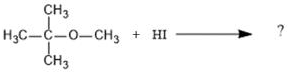
Figure

The final products are

Answer options

Q11:

Haloalkanes & Haloarenes

Medium

AgCN forms isocyanide with haloalkane because

A. AgCN is ionic in nature.

B. AgCN is covalent in nature.

C. Nitrogen is free to donate electron pair

D. Carbon is negatively charged.

Answer options

Q12:

Electrochemistry

Medium

For the reaction, Zn(s)+Cu(aq)2+→Zn(aq)2++Cu(s)Zn_{(s)} + Cu^{2+}_{(aq)} \rightarrow Zn^{2+}_{(aq)} + Cu_{(s)},

E0 cell=2.303 RT2Flog⁡[Zn2+][Cu2+]E^{0}\ cell = \frac{2.303\ RT}{2F}\log\frac{[Zn^{2+}]}{[Cu^{2+}]}. This indicates that

A. The reaction is at equilibrium.

B. The reaction is proceeding in the forward direction.

C. Voltmeter gives a positive reading.

D. Voltmeter gives a zero reading.

Answer options

Q13:

Chemical Kinetics

Easy

A reaction follows first order kinetics, its rate constant is found to be 4.794×10⁻³ min−14.794 \times 10^{-3}\ min^{-1} at 25° C. The half-life of the reaction is-

Answer options

Q14:

d & f Block Elements

Easy

Lanthanoid contraction results in almost similar radii of Zr and Hf, which respectively belong to.........

Answer options

Q15:

d & f Block Elements

Easy

An alloy which contains a lanthanoid metal and is used to produce bullets and shell is..........

Answer options

Q16:

Alcohols, Phenols & Ethers

Medium

When the vapors of a secondary alcohol and a tertiary alcohol are passed over heated copper at 573 K, separately, a secondary alcohol undergoes reaction A and forms the product X, while a tertiary alcohol undergoes reaction B and forms the product Y.

Identify the reactions A and B and the products X and Y in the above reactions.

Answer options

Q17:

Chemical Kinetics

Easy

Match the LIST-I with LIST-II.

LIST-I (Parameters)LIST-II (Definition)
A.Rate of reactionI.Rate of the reaction when the concentration of each of the reactant is unity
B.Rate constantII.Change in concentration of reactant or product per unit time
C.Order of a reactionIII.Sum of the powers to which the concentration terms are raised in the rate law.
D.MolecularityIV.Number of reacting species taking part in an elementary reaction
Answer options

Q18:

Aldehydes, Ketones & Carboxylic Acids

Medium

Phthalimide is formed when compound 'A' is treated with ammonia and the resulting compound is heated strongly. The compound 'A' is

Answer options

Q20:

Aldehydes, Ketones & Carboxylic Acids

Easy

Tollen's reagent oxidise aldehydes in a medium(A) to the corresponding compound(B).

(A) and (B) respectively are:

Answer options

Q21:

d & f Block Elements

Easy

Which of the following is Incorrect to explain catalytic activity of the transition metals and their compounds?

Answer options

Q22:

Electrochemistry

Medium

Which of the following are true for electrolysis of aqueous solution of NaCl?

A. Hydrogen is evolved at cathode.

B. Oxygen is evolved at anode.

C. The solution becomes alkaline after electrolysis.

D. The reaction with higher value of E0E^{0} (reduction potential) is preferred at cathode.

Answer options

Q23:

Aldehydes, Ketones & Carboxylic Acids

Medium

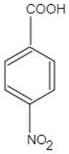
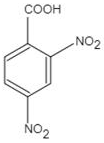
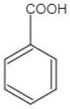
Consider the following compounds and arrange them in decreasing order of their acidity.

A. Figure
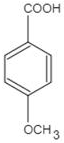
B. Figure

C. Figure

D. Figure

Answer options

Q24:

Alcohols, Phenols & Ethers

Easy

Ethanol is commercially obtained from sugar present in molasses according to the following reactions.

C12H22O11+H2O→AX+YC_{12}H_{22}O_{11} + H_2O \xrightarrow{A} X + Y

C6H12O6→BZ+2CO2C_6H_{12}O_6 \xrightarrow{B} Z + 2CO_2

Which of the following options from the table is correct?

Answer options

Q25:

Coordination Compounds

Easy

The IUPAC name of the complex [Ag(NH3)2][Ag(CN)2][Ag(NH_3)_2][Ag(CN)_2] is ............

Answer options

Q26:

Biomolecules

Easy

Natural amino acid is represented as
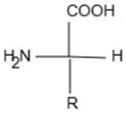
Figure

When the characteristic feature of the side chain R, is 'H' for glycine and (H3C)2CH(H_3C)_2CH- for Valine, how many peptide bonds will be present in Glycylvaline , a dipeptide?

Answer options

Q27:

Haloalkanes & Haloarenes

Medium

The reaction (CH3)3CBr+OH−→(CH3)3COH+Br−(CH_3)_3CBr + OH^{-} \rightarrow (CH_3)_3COH + Br^{-} occurs through SN1S_N1 mechanism.

Step I involves-

Answer options

Q29:

Chemical Kinetics

Easy

In the equation, k=Ae−Ea/RTk = Ae^{-E_a/RT}, A is -

A. Arrhenius factor

B. Activated factor

C. Frequency factor

D. pre-exponential factor

E. Order factor

Answer options

Q30:

Haloalkanes & Haloarenes

Easy

Match the reagent in List-I, which on reaction with alcohol (ROH) gives the product in List-II.

LIST-I (Reagents)LIST-II (Products)
A.PCl3PCl_3I.RCl+H3PO3RCl + H_3PO_3
B.PCl5PCl_5II.RBr
C.Red P/Br2Br_2III.RCl+POCl3+HClRCl + POCl_3 + HCl
D.SOCl2SOCl_2IV.RCl+SO2+HClRCl + SO_2 + HCl
Answer options

Q31:

Haloalkanes & Haloarenes

Easy

The IUPAC name of neo-Pentylbromide is

Answer options

Q32:

Aldehydes, Ketones & Carboxylic Acids

Easy

Match the LIST-I with LIST-II.

LIST-I (Reaction)LIST-II (Reagent)
A.Rosenmund reactionI.SnCl2SnCl_2, HCl
B.Stephen reactionII.H2H_2, Pd-BaSO4BaSO_4
C.Etard reactionIII.CrO2Cl2CrO_2Cl_2, CS2CS_2, H3O+H_3O^{+}
D.Friedel-Crafts reactionIV.Anhyd. AlCl3AlCl_3
Answer options

Q33:

Coordination Compounds

Medium

Match the complex ion given in List-I with the number of unpaired electrons given in List-II.

LIST-I (Complex ion)LIST-II (No. of unpaired electrons)
A.[FeF6]3−[FeF_6]^{3-}I.4
B.[Fe(CN)6]3−[Fe(CN)_6]^{3-}II.5
C.[Mn(CN)6]3−[Mn(CN)_6]^{3-}III.2
D.[MnCl6]3−[MnCl_6]^{3-}IV.1
Answer options

Q34:

d & f Block Elements

Medium

Arrange the following ions in the increasing order of their total number of bonds (σ+π\sigma + \pi):

A. MnO42−MnO_4^{2-}

B. MnO4−MnO_4^{-}

C. Cr2O72−Cr_2O_7^{2-}

D. CrO42−CrO_4^{2-}

Answer options

Q35:

Coordination Compounds

Easy

The shape of Cr(CO)6Cr(CO)_6 molecule is ...........

Answer options

Q36:

Electrochemistry

Medium

Arrange the following in the increasing order of quantity of electricity used for reduction of 1 mole of following ions:

A. Al3+Al^{3+} to Al

B. Cu2+Cu^{2+} to Cu

C. Ag+Ag^{+} to Ag

D. MnO4−MnO_4^{-} to Mn2+Mn^{2+}

Answer options

Q37:

Alcohols, Phenols & Ethers

Easy

Cumene on oxidation in the presence of air gives intermediate A which on reaction with dilute acid gives phenol and a by-product B. The intermediate A and by-product B are

Answer options

Q38:

Chemical Kinetics

Medium

For the hydrolysis of butyl chloride, the curve is plotted between the concentration of butyl chloride against time (s). Arrange the value of slope of the tangent drawn to the curve at the below given times in increasing order.

A. at t = 450 s.

B. at t = 350 s.

C. at t = 150 s.

D. at t = 250 s.

Answer options

Q39:

Electrochemistry

Easy

Weak electrolytes have

Answer options

Q40:

Aldehydes, Ketones & Carboxylic Acids

Easy

Nucleophilic addition reaction on carbonyl carbon results in change of hybridization of carbon atom from

Answer options

Q41:

Solutions

Easy

Solutions

The solution which obeys Raoult's law over the entire range of concentration are known as ideal solutions and which does not obey are known as non-ideal solution. The vapour pressure of a non ideal solution is either higher or lower than that predicted by Raoult's law equation. The colligative properties, which depend on the number of solute particles irrespective of their nature, are relative lowering of vapour pressure, depression of freezing point, elevation of boiling point and osmotic pressure. All these properties can be utilised for the determination of molar mass of the solute.

A solution is made by adding carbon disulphide to acetone. The solution shows positive deviation from Raoult's law because

Answer options

Q42:

Solutions

Easy

Solutions

The solution which obeys Raoult's law over the entire range of concentration are known as ideal solutions and which does not obey are known as non-ideal solution. The vapour pressure of a non ideal solution is either higher or lower than that predicted by Raoult's law equation. The colligative properties, which depend on the number of solute particles irrespective of their nature, are relative lowering of vapour pressure, depression of freezing point, elevation of boiling point and osmotic pressure. All these properties can be utilised for the determination of molar mass of the solute.

The elevation of boiling point of a solvent depends upon

Answer options

Q43:

Solutions

Easy

Solutions

The solution which obeys Raoult's law over the entire range of concentration are known as ideal solutions and which does not obey are known as non-ideal solution. The vapour pressure of a non ideal solution is either higher or lower than that predicted by Raoult's law equation. The colligative properties, which depend on the number of solute particles irrespective of their nature, are relative lowering of vapour pressure, depression of freezing point, elevation of boiling point and osmotic pressure. All these properties can be utilised for the determination of molar mass of the solute.

2.00 g of a non-volatile, non-electrolytic solute when dissolved in 100 g of ethanol lowered the freezing point of ethanol by 0.33 K. The freezing point depression constant of ethanol is 1.99 K kg mol−1mol^{-1}. The molar mass of the solute is-.

Answer options

Q44:

Solutions

Medium

Solutions

The solution which obeys Raoult's law over the entire range of concentration are known as ideal solutions and which does not obey are known as non-ideal solution. The vapour pressure of a non ideal solution is either higher or lower than that predicted by Raoult's law equation. The colligative properties, which depend on the number of solute particles irrespective of their nature, are relative lowering of vapour pressure, depression of freezing point, elevation of boiling point and osmotic pressure. All these properties can be utilised for the determination of molar mass of the solute.

Which of the following expressions for relative lowering of vapour pressure of a solution is incorrect?

Answer options

Q45:

Solutions

Easy

Solutions

The solution which obeys Raoult's law over the entire range of concentration are known as ideal solutions and which does not obey are known as non-ideal solution. The vapour pressure of a non ideal solution is either higher or lower than that predicted by Raoult's law equation. The colligative properties, which depend on the number of solute particles irrespective of their nature, are relative lowering of vapour pressure, depression of freezing point, elevation of boiling point and osmotic pressure. All these properties can be utilised for the determination of molar mass of the solute.

Which of the following is the widely used method to determine the molar mass of macromolecules?

Answer options

Q46:

Amines

Easy

Amines are derivatives of ammonia obtained by replacement of one, two or all the three hydrogen atoms by alkyl and / or aryl groups. Nitrogen atom of amines like ammonia is trivalent and carries an unshared pair of electrons. Orbitals of nitrogen overlap with orbitals of hydrogen or carbon depending upon the composition of the amines. The fourth orbital of nitrogen in all amines contains an unshared pair of electrons. Due to the presence of unshared pair of electrons, the angle C-N-E (where E is C or H) is less than tetrahedral angle 109.5°. Amines are classified as primary (1°), secondary (2°) and tertiary (3°) amines. All amines are basic in nature and basicity differs between primary amines, secondary amines and tertiary amines. In aryl amines, −NH2-NH_2 group is directly attached to the benzene ring. C6H5NH2C_6H_5NH_2 is simplest example of arylamine. Lower aliphatic amines are soluble in water because they can form hydrogen bonds with water molecules.

N-Methylbenzamide is formed when methanamine reacts with

Answer options

Q47:

Amines

Easy

Amines are derivatives of ammonia obtained by replacement of one, two or all the three hydrogen atoms by alkyl and / or aryl groups. Nitrogen atom of amines like ammonia is trivalent and carries an unshared pair of electrons. Orbitals of nitrogen overlap with orbitals of hydrogen or carbon depending upon the composition of the amines. The fourth orbital of nitrogen in all amines contains an unshared pair of electrons. Due to the presence of unshared pair of electrons, the angle C-N-E (where E is C or H) is less than tetrahedral angle 109.5°. Amines are classified as primary (1°), secondary (2°) and tertiary (3°) amines. All amines are basic in nature and basicity differs between primary amines, secondary amines and tertiary amines. In aryl amines, −NH2-NH_2 group is directly attached to the benzene ring. C6H5NH2C_6H_5NH_2 is simplest example of arylamine. Lower aliphatic amines are soluble in water because they can form hydrogen bonds with water molecules.

Carbylamine reaction is shown by

A. ammonium salts .

B. tertiary amines.

C. secondary amines.

D. primary amines.

Answer options

Q48:

Amines

Easy

Amines are derivatives of ammonia obtained by replacement of one, two or all the three hydrogen atoms by alkyl and / or aryl groups. Nitrogen atom of amines like ammonia is trivalent and carries an unshared pair of electrons. Orbitals of nitrogen overlap with orbitals of hydrogen or carbon depending upon the composition of the amines. The fourth orbital of nitrogen in all amines contains an unshared pair of electrons. Due to the presence of unshared pair of electrons, the angle C-N-E (where E is C or H) is less than tetrahedral angle 109.5°. Amines are classified as primary (1°), secondary (2°) and tertiary (3°) amines. All amines are basic in nature and basicity differs between primary amines, secondary amines and tertiary amines. In aryl amines, −NH2-NH_2 group is directly attached to the benzene ring. C6H5NH2C_6H_5NH_2 is simplest example of arylamine. Lower aliphatic amines are soluble in water because they can form hydrogen bonds with water molecules.

To prepare a monosubstituted aniline derivative, the activating group −NH2-NH_2 is to be controlled through acetylation with

Answer options

Q49:

Amines

Medium

Amines are derivatives of ammonia obtained by replacement of one, two or all the three hydrogen atoms by alkyl and / or aryl groups. Nitrogen atom of amines like ammonia is trivalent and carries an unshared pair of electrons. Orbitals of nitrogen overlap with orbitals of hydrogen or carbon depending upon the composition of the amines. The fourth orbital of nitrogen in all amines contains an unshared pair of electrons. Due to the presence of unshared pair of electrons, the angle C-N-E (where E is C or H) is less than tetrahedral angle 109.5°. Amines are classified as primary (1°), secondary (2°) and tertiary (3°) amines. All amines are basic in nature and basicity differs between primary amines, secondary amines and tertiary amines. In aryl amines, −NH2-NH_2 group is directly attached to the benzene ring. C6H5NH2C_6H_5NH_2 is simplest example of arylamine. Lower aliphatic amines are soluble in water because they can form hydrogen bonds with water molecules.

Arrange the following compounds in the decreasing order of their boiling points.

A. n-C4H9NH2C_4H_9NH_2

B. C2H5CH(CH3)2C_2H_5CH(CH_3)_2

C. (C2H5)2NH(C_2H_5)_2NH

D. n-C4H9OHC_4H_9OH

Answer options

Q50:

Amines

Easy

Amines are derivatives of ammonia obtained by replacement of one, two or all the three hydrogen atoms by alkyl and / or aryl groups. Nitrogen atom of amines like ammonia is trivalent and carries an unshared pair of electrons. Orbitals of nitrogen overlap with orbitals of hydrogen or carbon depending upon the composition of the amines. The fourth orbital of nitrogen in all amines contains an unshared pair of electrons. Due to the presence of unshared pair of electrons, the angle C-N-E (where E is C or H) is less than tetrahedral angle 109.5°. Amines are classified as primary (1°), secondary (2°) and tertiary (3°) amines. All amines are basic in nature and basicity differs between primary amines, secondary amines and tertiary amines. In aryl amines, −NH2-NH_2 group is directly attached to the benzene ring. C6H5NH2C_6H_5NH_2 is simplest example of arylamine. Lower aliphatic amines are soluble in water because they can form hydrogen bonds with water molecules.

Among the following, which amines is least basic in aqueous phase?

Answer options

CUET Chemistry 2026 31 May Shift 2 Past Year Question Paper

Every question from the CUET Chemistry 2026 31 May Shift 2 paper is here in full, with the correct answer and a step by step solution for each one. It is completely free, there is no login and no paywall, and you can read the whole paper online or download it to revise offline.

You can also attempt it instead of only reading it. Take the paper as a full length mock under exam conditions, or filter it by topic and attempt just that topic as a topic test. Both are free, and you get a breakdown of your accuracy, your timing and your weak areas once you submit.

CUET Chemistry past year questions (PYQs) are the closest thing to the real exam, so working through them is the quickest way to learn the paper pattern, the marking scheme and the level of difficulty to expect on the day.