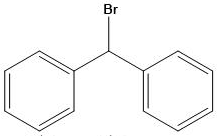
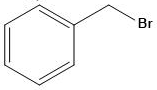
Q2:

Amines

Medium

The correct increasing order of basicity of following amines in water is

A. methanamine

B. N-methylmethanamine

C. N, N-dimethylmethanamine

D. benzenamine

Answer options
Option 2
Correct Answer
Explanation for 2026: 20 May Shift 2 CHE question 2

Q3:

Alcohols, Phenols & Ethers

Medium

Arrange the following compounds in increasing order of their pKapK_a values.

A. m-Nitrophenol

B. o-Nitrophenol

C. Ethanol

D. o-Cresol

Answer options
Option 3
Correct Answer
Explanation for 2026: 20 May Shift 2 CHE question 3

Q4:

Biomolecules

Easy

Match the LIST-I with LIST-II.

LIST-I (Vitamin)LIST-II (Deficiency disease)
A.Vitamin AI.Convulsions
B.Vitamin B2B_2II.Xerophthalmia
C.Vitamin B6B_6III.Pernicious anaemia
D.Vitamin B12B_{12}IV.Cheilosis
Answer options
Option 2
Correct Answer
Explanation for 2026: 20 May Shift 2 CHE question 4

Q5:

Solutions

Easy

Which of the following relations does not represent colligative property?

Answer options
Option 3
Correct Answer
Explanation for 2026: 20 May Shift 2 CHE question 5

Q8:

d & f Block Elements

Medium

Which of the following is colourless?

A. [Sc(H2O)6]3+[Sc(H_2O)_6]^{3+}

B. [Zn(H2O)6]2+[Zn(H_2O)_6]^{2+}

C. [Fe(H2O)6]2+[Fe(H_2O)_6]^{2+}

D. [Ti(H2O)6]4+[Ti(H_2O)_6]^{4+}

Answer options
Option 1
Correct Answer
Explanation for 2026: 20 May Shift 2 CHE question 8

Q9:

Electrochemistry

Easy

The free energy change (ΔG\Delta G) is related to the emf of the cell (E) by the relation

Answer options
Option 2
Correct Answer
Explanation for 2026: 20 May Shift 2 CHE question 9

Q10:

Electrochemistry

Easy

The standard potential of the given half cell (as per convention) at 298 K is

H+(aq)+e−→12H2(g)H^+(aq) + e^- \rightarrow \frac{1}{2}H_2(g)

Answer options

Q11:

Chemical Kinetics

Easy

A catalyst

Answer options

Q12:

Aldehydes, Ketones & Carboxylic Acids

Easy

Fehling solution B is

Answer options

Q13:

d & f Block Elements

Hard

Arrange the following actinoid ions in increasing order of unpaired electrons:

A. Am3+Am^{3+}

B. Cm3+Cm^{3+}

C. Lr3+Lr^{3+}

D. Cf3+Cf^{3+}

Answer options

Q14:

Aldehydes, Ketones & Carboxylic Acids

Easy

Match the LIST-I with LIST-II.

LIST-I (Common /Latin Name)LIST-II (Natural sources)
A.ButyrumI.Formalin
B.AcetumII.Red Ants
C.FormicaIII.Rancid Butter
D.CH2OCH_2OIV.Vineger
Answer options

Q15:

Solutions

Easy

Which of the following statements are correct for non-ideal solution ?

A. Change in enthalpy of mixing is zero

B. Change in volume of mixing is not equal to zero

C. They follow Raoult's law over the entire range of concentration.

D. Mixture of ethanol & acetone forms a non-ideal solution

Answer options

Q17:

Amines

Medium

The decreasing order of basic strength of the following amines in aqueous solution is

A. EtNH2EtNH_2

B. NH3NH_3

C. (Et)2NH(Et)_2NH

D. (Et)3N(Et)_3N

Answer options

Q18:

Electrochemistry

Medium

For a cell with the reaction, 2Ag++Cu⟶2Ag+Cu2+2Ag^+ + Cu \longrightarrow 2Ag + Cu^{2+} the standard cell potential is +0.46 V at 25°C. The value of standard Gibbs energy is

(F=96500 C mol−1F = 96500\ C\ mol^{-1})

Answer options

Q19:

Amines

Easy

Benzenediazonium chloride reacts with phenol in the presence of NaOH to form

Answer options

Q20:

d & f Block Elements

Easy

What is the correct electronic configuration of Palladium (Pd, Atomic No 46) ?

Answer options

Q24:

Aldehydes, Ketones & Carboxylic Acids

Medium

In the following reaction, identify A and B.
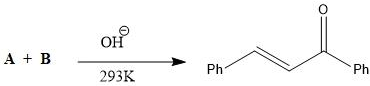
Figure

Answer options

Q25:

Chemical Kinetics

Medium

Which of the following are pseudo first order reactions ?

A. C12H22O11+H2O→H+C6H12O6+C6H12O6C_{12}H_{22}O_{11} + H_2O \xrightarrow{H^+} C_6H_{12}O_6 + C_6H_{12}O_6

B. CH3COOC2H5+H2O→H+CH3COOH+C2H5OHCH_3COOC_2H_5 + H_2O \xrightarrow{H^+} CH_3COOH + C_2H_5OH

C. C2H4(g)+H2(g)→H+C2H6(g)C_2H_4(g) + H_2(g) \xrightarrow{H^+} C_2H_6(g)

D. 2NH3(g)→Pt catalyst1130KN2(g)+3H2(g)2NH_3(g) \xrightarrow[\text{Pt catalyst}]{1130K} N_2(g) + 3H_2(g)

Answer options

Q26:

Chemical Kinetics

Easy

Match the LIST-I with LIST-II.

LIST-I Expression / unitLIST-II Explanation
A.0.693/k0.693/kI.Half-life time of zero order reaction
B.mol L−1 s−1mol\ L^{-1}\ s^{-1}II.Units of activation energy
C.[A]0/2k[A]_0/2kIII.Half-life time of first order reaction
D.J mol−1J\ mol^{-1}IV.Unit of rate constant for zero order reaction
Answer options

Q27:

Coordination Compounds

Medium

Match the LIST-I with LIST-II.

LIST-I (Complex ions)LIST-II (Magnetic Moment)
A.[Fe(H2O)6]2+[Fe(H_2O)_6]^{2+}I.2.84 BM
B.[Mn(H2O)6]2+[Mn(H_2O)_6]^{2+}II.3.87 BM
C.[Ni(H2O)6]2+[Ni(H_2O)_6]^{2+}III.4.90 BM
D.[Co(H2O)6]2+[Co(H_2O)_6]^{2+}IV.5.92 BM
Answer options

Q29:

Chemical Kinetics

Medium

Arrange the orders of the reactions, whose unit of rate constants are given below, in increasing arrangement.

A. s−1s^{-1}

B. mol L−1 s−1mol\ L^{-1}\ s^{-1}

C. mol−1 L s−1mol^{-1}\ L\ s^{-1}

D. mol−2 L2 s−1mol^{-2}\ L^2\ s^{-1}

Answer options

Q30:

Electrochemistry

Easy

Calculate Λmo\Lambda_m^o for acetic acid if Λmo\Lambda_m^o for NaCl, HCl and CH3COONaCH_3COONa are 126.5, 426.9 & 95.0 S cm2 mol−1S\ cm^2\ mol^{-1} , respectively.

Answer options

Q31:

Alcohols, Phenols & Ethers

Easy

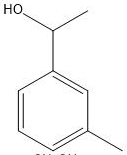
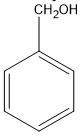
In the following reaction, major products A & B are, respectively

Figure

Answer options

Q32:

Alcohols, Phenols & Ethers

Easy

In the following reaction, the major products [A] and [B], respectively, are
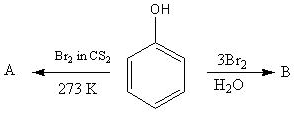
Figure

Answer options

Q33:

Chemical Kinetics

Easy

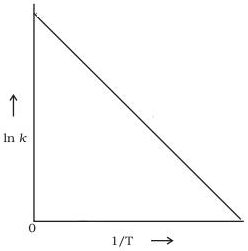
The figure below represents the graph between ln k vs 1/T. The slope of the straight line will be
Figure

Answer options

Q35:

Solutions

Easy

The relative lowering of vapor pressure of a dilute solution can be expressed as

Answer options

Q36:

Alcohols, Phenols & Ethers

Medium

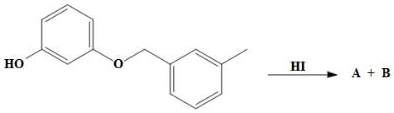
In the following reaction, the major products A and B respectively, are
Figure

Answer options

Q38:

Solutions

Medium

Match the LIST-I with LIST-II.

LIST-I (Salt/ Complex)LIST-II (Van't Hoff factor)
A.K3[Fe(CN)6]K_3[Fe(CN)_6]I.5
B.Al2(SO4)3Al_2(SO_4)_3II.3
C.MgSO4MgSO_4III.4
D.K2SO4K_2SO_4IV.2
Answer options

Q39:

Electrochemistry

Easy

The units of molar conductivity is

Answer options

Q40:

d & f Block Elements

Medium

Which of the following is the INCORRECT statement for dichromate ion?

Answer options

Q41:

Coordination Compounds

Easy

Coordination Chemistry

In the IUPAC nomenclature of coordination compounds, the groups that surround the central atom must be identified in the name. They are listed as prefixes to the name of the central atom along with any appropriate multipliers. Isomerism in Coordination Compounds are mainly of 2 types (A) Stereoisomerism viz: (i) Geometrical isomerism (ii) Optical isomerism and (B) Structural isomerism viz: (i) Linkage isomerism (ii) Coordination isomerism (iii) Ionisation isomerism (iv) Solvate isomerism. Many approaches have been put forth to explain the nature of bonding in coordination compounds viz. Valence Bond Theory (VBT), Crystal Field Theory (CFT), Ligand Field Theory (LFT) and Molecular Orbital Theory (MOT). The magnetic properties of coordination compounds can be measured by the magnetic susceptibility experiments. The results can be used to obtain information about the number of unpaired electrons and hence, structures adopted by metal complexes.

The formula of Hexaamminecobalt(III) sulphate is........

Answer options

Q42:

Coordination Compounds

Easy

Coordination Chemistry

In the IUPAC nomenclature of coordination compounds, the groups that surround the central atom must be identified in the name. They are listed as prefixes to the name of the central atom along with any appropriate multipliers. Isomerism in Coordination Compounds are mainly of 2 types (A) Stereoisomerism viz: (i) Geometrical isomerism (ii) Optical isomerism and (B) Structural isomerism viz: (i) Linkage isomerism (ii) Coordination isomerism (iii) Ionisation isomerism (iv) Solvate isomerism. Many approaches have been put forth to explain the nature of bonding in coordination compounds viz. Valence Bond Theory (VBT), Crystal Field Theory (CFT), Ligand Field Theory (LFT) and Molecular Orbital Theory (MOT). The magnetic properties of coordination compounds can be measured by the magnetic susceptibility experiments. The results can be used to obtain information about the number of unpaired electrons and hence, structures adopted by metal complexes.

Which of the following will show linkage Isomerism?

Answer options

Q43:

Coordination Compounds

Medium

Coordination Chemistry

In the IUPAC nomenclature of coordination compounds, the groups that surround the central atom must be identified in the name. They are listed as prefixes to the name of the central atom along with any appropriate multipliers. Isomerism in Coordination Compounds are mainly of 2 types (A) Stereoisomerism viz: (i) Geometrical isomerism (ii) Optical isomerism and (B) Structural isomerism viz: (i) Linkage isomerism (ii) Coordination isomerism (iii) Ionisation isomerism (iv) Solvate isomerism. Many approaches have been put forth to explain the nature of bonding in coordination compounds viz. Valence Bond Theory (VBT), Crystal Field Theory (CFT), Ligand Field Theory (LFT) and Molecular Orbital Theory (MOT). The magnetic properties of coordination compounds can be measured by the magnetic susceptibility experiments. The results can be used to obtain information about the number of unpaired electrons and hence, structures adopted by metal complexes.

Na2[Ni(CN)4]Na_2[Ni(CN)_4] is...........

Answer options

Q44:

Coordination Compounds

Easy

Coordination Chemistry

In the IUPAC nomenclature of coordination compounds, the groups that surround the central atom must be identified in the name. They are listed as prefixes to the name of the central atom along with any appropriate multipliers. Isomerism in Coordination Compounds are mainly of 2 types (A) Stereoisomerism viz: (i) Geometrical isomerism (ii) Optical isomerism and (B) Structural isomerism viz: (i) Linkage isomerism (ii) Coordination isomerism (iii) Ionisation isomerism (iv) Solvate isomerism. Many approaches have been put forth to explain the nature of bonding in coordination compounds viz. Valence Bond Theory (VBT), Crystal Field Theory (CFT), Ligand Field Theory (LFT) and Molecular Orbital Theory (MOT). The magnetic properties of coordination compounds can be measured by the magnetic susceptibility experiments. The results can be used to obtain information about the number of unpaired electrons and hence, structures adopted by metal complexes.

Which of the following ligands shows the highest field strength?

Answer options

Q45:

Coordination Compounds

Medium

Coordination Chemistry

In the IUPAC nomenclature of coordination compounds, the groups that surround the central atom must be identified in the name. They are listed as prefixes to the name of the central atom along with any appropriate multipliers. Isomerism in Coordination Compounds are mainly of 2 types (A) Stereoisomerism viz: (i) Geometrical isomerism (ii) Optical isomerism and (B) Structural isomerism viz: (i) Linkage isomerism (ii) Coordination isomerism (iii) Ionisation isomerism (iv) Solvate isomerism. Many approaches have been put forth to explain the nature of bonding in coordination compounds viz. Valence Bond Theory (VBT), Crystal Field Theory (CFT), Ligand Field Theory (LFT) and Molecular Orbital Theory (MOT). The magnetic properties of coordination compounds can be measured by the magnetic susceptibility experiments. The results can be used to obtain information about the number of unpaired electrons and hence, structures adopted by metal complexes.

What is the oxidation state and d orbital occupation of the cis-[CrCl2(en)2]Cl[CrCl_2(en)_2]Cl?

Answer options

Q46:

Haloalkanes & Haloarenes

Easy

Method of preparation of haloalkanes

The hydroxyl group of an alcohol is replaced by halogen on reaction with concentrated halogen acids, phosphorus halides, or thionyl chloride. Thionyl chloride is preferred because in this reaction alkyl halide is formed along with gases SO2SO_2 and HCl. The two gaseous products are escapable, hence, the reaction gives pure alkyl halides. The reactions of primary and secondary alcohols with HCl require the presence of a catalyst, ZnCl2ZnCl_2 . With tertiary alcohols, the reaction is conducted by simply shaking the alcohol with concentrated HCl at room temperature. Constant boiling with HBr (48%) is used for preparing alkyl bromide. Good yields of R-I may be obtained by heating alcohols with sodium or potassium iodide in 95% orthophosphoric acid.

An alkene is converted to corresponding alkyl halide by reaction with hydrogen chloride, hydrogen bromide. Further, addition of bromine in CCl4CCl_4 to an alkene resulting in discharge of reddish brown colour of bromine constitutes, an important method for the detection of double bond in a molecule.

Alkyl iodides are often prepared by the reaction of alkyl chlorides/ bromides with NaI in dry acetone.

The alkyl fluorides are best prepared by heating an alkyl chlorides/bromides in the presence of a metallic fluoride.

The primary aromatic amine, dissolved or suspended in cold aqueous mineral acid, is treated with sodium nitrite, a diazonium salt is formed. Mixing the solution of freshly prepared diazonium salt with cuprous chloride or cuprous bromide results in the replacement of the diazonium group by -Cl or -Br .

The reactions of haloalkanes may be divided into the following categories: 1. Nucleophilic substitution 2. Elimination reactions 3. Reaction with metals.

In the given reactions, identify A & B :

3ROH+PBr3→3RBr+A3ROH + PBr_3 \rightarrow 3RBr + A

ROH+PCl5→RCl+POCl3+BROH + PCl_5 \rightarrow RCl + POCl_3 + B

Answer options

Q47:

Haloalkanes & Haloarenes

Easy

Method of preparation of haloalkanes

The hydroxyl group of an alcohol is replaced by halogen on reaction with concentrated halogen acids, phosphorus halides, or thionyl chloride. Thionyl chloride is preferred because in this reaction alkyl halide is formed along with gases SO2SO_2 and HCl. The two gaseous products are escapable, hence, the reaction gives pure alkyl halides. The reactions of primary and secondary alcohols with HCl require the presence of a catalyst, ZnCl2ZnCl_2 . With tertiary alcohols, the reaction is conducted by simply shaking the alcohol with concentrated HCl at room temperature. Constant boiling with HBr (48%) is used for preparing alkyl bromide. Good yields of R-I may be obtained by heating alcohols with sodium or potassium iodide in 95% orthophosphoric acid.

An alkene is converted to corresponding alkyl halide by reaction with hydrogen chloride, hydrogen bromide. Further, addition of bromine in CCl4CCl_4 to an alkene resulting in discharge of reddish brown colour of bromine constitutes, an important method for the detection of double bond in a molecule.

Alkyl iodides are often prepared by the reaction of alkyl chlorides/ bromides with NaI in dry acetone.

The alkyl fluorides are best prepared by heating an alkyl chlorides/bromides in the presence of a metallic fluoride.

The primary aromatic amine, dissolved or suspended in cold aqueous mineral acid, is treated with sodium nitrite, a diazonium salt is formed. Mixing the solution of freshly prepared diazonium salt with cuprous chloride or cuprous bromide results in the replacement of the diazonium group by -Cl or -Br .

The reactions of haloalkanes may be divided into the following categories: 1. Nucleophilic substitution 2. Elimination reactions 3. Reaction with metals.

The reaction of alkyl chlorides/ bromides with NaI in dry acetone is known as

Answer options

Q48:

Haloalkanes & Haloarenes

Medium

Method of preparation of haloalkanes

The hydroxyl group of an alcohol is replaced by halogen on reaction with concentrated halogen acids, phosphorus halides, or thionyl chloride. Thionyl chloride is preferred because in this reaction alkyl halide is formed along with gases SO2SO_2 and HCl. The two gaseous products are escapable, hence, the reaction gives pure alkyl halides. The reactions of primary and secondary alcohols with HCl require the presence of a catalyst, ZnCl2ZnCl_2 . With tertiary alcohols, the reaction is conducted by simply shaking the alcohol with concentrated HCl at room temperature. Constant boiling with HBr (48%) is used for preparing alkyl bromide. Good yields of R-I may be obtained by heating alcohols with sodium or potassium iodide in 95% orthophosphoric acid.

An alkene is converted to corresponding alkyl halide by reaction with hydrogen chloride, hydrogen bromide. Further, addition of bromine in CCl4CCl_4 to an alkene resulting in discharge of reddish brown colour of bromine constitutes, an important method for the detection of double bond in a molecule.

Alkyl iodides are often prepared by the reaction of alkyl chlorides/ bromides with NaI in dry acetone.

The alkyl fluorides are best prepared by heating an alkyl chlorides/bromides in the presence of a metallic fluoride.

The primary aromatic amine, dissolved or suspended in cold aqueous mineral acid, is treated with sodium nitrite, a diazonium salt is formed. Mixing the solution of freshly prepared diazonium salt with cuprous chloride or cuprous bromide results in the replacement of the diazonium group by -Cl or -Br .

The reactions of haloalkanes may be divided into the following categories: 1. Nucleophilic substitution 2. Elimination reactions 3. Reaction with metals.

In the following reaction, major product A is

Figure

Answer options

Q49:

Haloalkanes & Haloarenes

Hard

Method of preparation of haloalkanes

The hydroxyl group of an alcohol is replaced by halogen on reaction with concentrated halogen acids, phosphorus halides, or thionyl chloride. Thionyl chloride is preferred because in this reaction alkyl halide is formed along with gases SO2SO_2 and HCl. The two gaseous products are escapable, hence, the reaction gives pure alkyl halides. The reactions of primary and secondary alcohols with HCl require the presence of a catalyst, ZnCl2ZnCl_2 . With tertiary alcohols, the reaction is conducted by simply shaking the alcohol with concentrated HCl at room temperature. Constant boiling with HBr (48%) is used for preparing alkyl bromide. Good yields of R-I may be obtained by heating alcohols with sodium or potassium iodide in 95% orthophosphoric acid.

An alkene is converted to corresponding alkyl halide by reaction with hydrogen chloride, hydrogen bromide. Further, addition of bromine in CCl4CCl_4 to an alkene resulting in discharge of reddish brown colour of bromine constitutes, an important method for the detection of double bond in a molecule.

Alkyl iodides are often prepared by the reaction of alkyl chlorides/ bromides with NaI in dry acetone.

The alkyl fluorides are best prepared by heating an alkyl chlorides/bromides in the presence of a metallic fluoride.

The primary aromatic amine, dissolved or suspended in cold aqueous mineral acid, is treated with sodium nitrite, a diazonium salt is formed. Mixing the solution of freshly prepared diazonium salt with cuprous chloride or cuprous bromide results in the replacement of the diazonium group by -Cl or -Br .

The reactions of haloalkanes may be divided into the following categories: 1. Nucleophilic substitution 2. Elimination reactions 3. Reaction with metals.

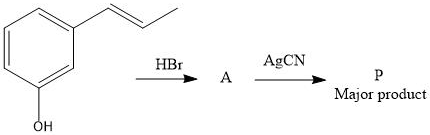
In the following reaction, identify the major product P.
Figure

Answer options

Q50:

Haloalkanes & Haloarenes

Medium

Method of preparation of haloalkanes

The hydroxyl group of an alcohol is replaced by halogen on reaction with concentrated halogen acids, phosphorus halides, or thionyl chloride. Thionyl chloride is preferred because in this reaction alkyl halide is formed along with gases SO2SO_2 and HCl. The two gaseous products are escapable, hence, the reaction gives pure alkyl halides. The reactions of primary and secondary alcohols with HCl require the presence of a catalyst, ZnCl2ZnCl_2 . With tertiary alcohols, the reaction is conducted by simply shaking the alcohol with concentrated HCl at room temperature. Constant boiling with HBr (48%) is used for preparing alkyl bromide. Good yields of R-I may be obtained by heating alcohols with sodium or potassium iodide in 95% orthophosphoric acid.

An alkene is converted to corresponding alkyl halide by reaction with hydrogen chloride, hydrogen bromide. Further, addition of bromine in CCl4CCl_4 to an alkene resulting in discharge of reddish brown colour of bromine constitutes, an important method for the detection of double bond in a molecule.

Alkyl iodides are often prepared by the reaction of alkyl chlorides/ bromides with NaI in dry acetone.

The alkyl fluorides are best prepared by heating an alkyl chlorides/bromides in the presence of a metallic fluoride.

The primary aromatic amine, dissolved or suspended in cold aqueous mineral acid, is treated with sodium nitrite, a diazonium salt is formed. Mixing the solution of freshly prepared diazonium salt with cuprous chloride or cuprous bromide results in the replacement of the diazonium group by -Cl or -Br .

The reactions of haloalkanes may be divided into the following categories: 1. Nucleophilic substitution 2. Elimination reactions 3. Reaction with metals.

Which of the following compounds undergoes SN2S_N2 reaction most rapidly?

A. Figure

B. Figure

C. Figure

D. Figure

Answer options

CUET Chemistry 2026 20 May Shift 2 Past Year Question Paper

Every question from the CUET Chemistry 2026 20 May Shift 2 paper is here in full, with the correct answer and a step by step solution for each one. It is completely free, there is no login and no paywall, and you can read the whole paper online or download it to revise offline.

You can also attempt it instead of only reading it. Take the paper as a full length mock under exam conditions, or filter it by topic and attempt just that topic as a topic test. Both are free, and you get a breakdown of your accuracy, your timing and your weak areas once you submit.

CUET Chemistry past year questions (PYQs) are the closest thing to the real exam, so working through them is the quickest way to learn the paper pattern, the marking scheme and the level of difficulty to expect on the day.