Q1:

Chemical Kinetics

Easy

Select the correct option(s) from the following statements:

A. A catalyst lowers the activation energy of a chemical reaction.

B. A catalyst does not alter the Gibbs energy (ΔG\Delta G) of a chemical reaction.

C. A catalyst can catalyze a non-spontaneous reaction.

D. A catalyst changes the equilibrium constant (K), by helping the attainment of equilibrium faster.

Answer options
Option 4
Correct Answer
Explanation for 2026: 26 May Shift 2 CHE question 1

Q2:

Alcohols, Phenols & Ethers

Easy

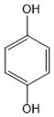
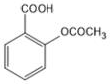
Match the LIST-I with LIST-II.

LIST-I (Structures)LIST-II (Name of the compounds)
A.FigureI.Resorcinol
B.FigureII.Quinol
C.FigureIII.Aspirin
D.FigureIV.Catechol
Answer options
Option 2
Correct Answer
Explanation for 2026: 26 May Shift 2 CHE question 2

Q3:

Solutions

Medium

If a 500 mL solution contains 2 g of protein at 400 K has an osmotic pressure of 1.66×10−31.66 \times 10^{-3} bar. What is the molar mass of the protein ?

Answer options
Option 1
Correct Answer
Explanation for 2026: 26 May Shift 2 CHE question 3

Q4:

d & f Block Elements

Medium

In the following oxidising reaction of KMnO4_4, the equivalent weight of KMnO4_4 will be (Mol. wt. of KMnO4_4 = M):

5SO32−+2MnO4−+6H+⟶2Mn2++3H2O+5SO42−\mathrm{5SO_3^{2-} + 2MnO_4^{-} + 6H^{+} \longrightarrow 2Mn^{2+} + 3H_2O + 5SO_4^{2-}}

Answer options
Option 3
Correct Answer
Explanation for 2026: 26 May Shift 2 CHE question 4

Q5:

Chemical Kinetics

Easy

Match the LIST-I with LIST-II.

LIST-I UnitsLIST-II Order of reaction
A.s−1\mathrm{s^{-1}}I.Zero
B.mol L−1 s−1\mathrm{mol\ L^{-1}\ s^{-1}}II.First
C.mol−1 L s−1\mathrm{mol^{-1}\ L\ s^{-1}}III.Third
D.mol−2 L2 s−1\mathrm{mol^{-2}\ L^{2}\ s^{-1}}IV.Second
Answer options
Option 2
Correct Answer
Explanation for 2026: 26 May Shift 2 CHE question 5

Q6:

d & f Block Elements

Medium

Choose the Incorrect statement from the options given below:

Answer options
Option 3
Correct Answer
Explanation for 2026: 26 May Shift 2 CHE question 6

Q7:

Coordination Compounds

Medium

Which of the following is a correct statement about [NiCl4_4]2−^{2-} and [Ni(CO)4_4]?

Answer options
Option 2
Correct Answer
Explanation for 2026: 26 May Shift 2 CHE question 7

Q8:

Solutions

Medium

Which of the following solutions will exhibit the same elevation in their boiling points?

A. 0.03 M NaCl solution

B. 0.06 M Glucose solution

C. 0.01 M Aluminum Sulfate Solution

D. 0.02 M Calcium Chloride Solution

Answer options
Option 2
Correct Answer
Explanation for 2026: 26 May Shift 2 CHE question 8

Q9:

Amines

Easy

Which substrate from the following will give the foul smell on heating with chloroform and ethanolic potassium hydroxide ?

Answer options
Option 1
Correct Answer
Explanation for 2026: 26 May Shift 2 CHE question 9

Q10:

Chemical Kinetics

Easy

Select the correct option in regard to the hydrolysis of the cane sugar.

Answer options

Q12:

Haloalkanes & Haloarenes

Easy

Consider the following alkyl halides. Choose the correct answer from the options given below for the decreasing order of the ease of the nucleophilic substitution reaction.

A. Methyl Bromide

B. Methyl Chloride

C. Methyl Iodide

D. Methyl Fluoride

Answer options

Q13:

Aldehydes, Ketones & Carboxylic Acids

Medium

When mixture of Ethanal and Propanal are treated with NaOH solution, followed by heat, which among the following is not obtained as a product ?

Answer options

Q14:

Amines

Medium

Which of the following is not associated with the coupling reaction of benzene diazonium chloride?

Answer options

Q15:

Solutions

Hard

Arrange the following aqueous solutions in increasing order of their boiling points.

Given: Molar mass (in g mol−1^{-1}) of H, C, N, O, S and K respectively are 1, 12, 14, 16, 32 and 39.

A. 5% K2_2SO4_4

B. 10 % Urea

C. 5% Urea

D. 10% K2_2SO4_4

Answer options

Q16:

Amines

Easy

Hinsberg's reagent can distinguish which of the following set of compounds?

Answer options

Q17:

Coordination Compounds

Easy

The coordination complex that gives white precipitate of molar mass 143.5 g with the excess of AgNO3_3 solution, is.....

Answer options

Q18:

Haloalkanes & Haloarenes

Medium

Arrange the following alkyl halides in the order of increasing reactivity towards SN1\mathrm{S_N1} reaction.

A. C6_6H5_5CH2_2Br

B. C6_6H5_5CH(C6_6H5_5)Br

C. C6_6H5_5CH(CH3_3)Br

D. C6_6H5_5C(CH3_3)(C6_6H5_5)Br

Answer options

Q19:

Amines

Medium

For the nitration of aniline, select the incorrect option.

Answer options

Q20:

Aldehydes, Ketones & Carboxylic Acids

Easy

Arrange the following compounds in order of their increasing boiling points .

A. Pentan-1-ol

B. n-butane

C. Pentanal

D. Ethoxyethane

Answer options

Q22:

Chemical Kinetics

Medium

A first order reaction N2O5(g)→2NO2(g)+12O2(g)\mathrm{N_2O_5(g) \rightarrow 2NO_2(g) + \frac{1}{2}O_2(g)} started with 1.2×10−21.2 \times 10^{-2} mol L−1^{-1} of N2_2O5_5 at 313 K. The concentration of N2_2O5_5 is found to be 0.3×10−20.3 \times 10^{-2} mol L−1^{-1} after 23 minutes. The rate constant of the reaction at this temperature is

(Given: log 2 = 0.3010)

Answer options

Q23:

Haloalkanes & Haloarenes

Medium

Hydrolysis of optically active 2-bromobutane results in formation of

A. (+) Butan-2-ol

B. (–) Butan-2-ol

C. but-2-ene

D. but-1-ene

Answer options

Q24:

Aldehydes, Ketones & Carboxylic Acids

Easy

Arrange the following compounds in increasing order of their reactivity towards nucleophilic addition reactions :

A. Ethanal

B. Propanal

C. Propanone

D. Butanone

Answer options

Q25:

Coordination Compounds

Medium

Among the following coordination compounds, the complexes which can show the linkage isomerism are:

A. Co(NH3_3)5_5(CH3_3COO)2_2

B. [Co(H2_2O)5_5(SCN)]Br2_2

C. [Co(CH3_3NH2_2)5_5(NO2_2)]Br2_2

D. Co(CH3_3NH2_2)5_5(Br)2_2

Answer options

Q28:

Aldehydes, Ketones & Carboxylic Acids

Medium

Match the LIST-I with LIST-II.

LIST-I ConversionLIST-II Reagents
A.Hexan-1-ol to HexanalI.Anhydrous CrO3_3
B.Cyclohexanol to cyclohexanoneII.O3_3/H2_2O-Zn dust
C.But-2-ene to ethanalIII.(Diisobutyl)aluminiumhydride(DIBAL-H)
D.Ethanenitrile to ethanalIV.C5_5H5_5NH+^{+}CrO3_3Cl−^{-} (PCC)
Answer options

Q30:

Chemical Kinetics

Medium

Select the incorrect statement with reference to Arrhenius theory.

Answer options

Q31:

d & f Block Elements

Easy

Arrange the following elements in increasing order of their highest possible oxidation states:

A. V

B. Cr

C. Mn

D. Ti

Answer options

Q32:

d & f Block Elements

Easy

Which of the following will show the highest value of spin only magnetic moment (calculated)?

Answer options

Q33:

Alcohols, Phenols & Ethers

Easy

Match the LIST-I with LIST-II.

LIST-I Compound/useLIST-II Common Names
A.Carbolic acidI.Aspirin
B.Wood SpiritII.Diethyl ether
C.AnaestheticIII.Methanol
D.Acetylsalicylic AcidIV.Phenol
Answer options

Q34:

Solutions

Easy

Among the following, the correct option is

Answer options

Q35:

Coordination Compounds

Medium

Match the LIST-I with LIST-II.

LIST-I (Coordination Complex)LIST-II (Characteristic)
A.[Co(NH3_3)6_6]Cl3_3I.Square Planar
B.[Ni(CO)4_4]II.t2g4eg2t_{2g}^{4} e_g^{2}
C.[CoF6_6]Br3_3III.Tetrahedral
D.[Ni(CN)4_4]Cl2_2IV.t2g6t_{2g}^{6}
Answer options

Q36:

Aldehydes, Ketones & Carboxylic Acids

Easy

Iodoform test is given by which one of the following compounds?

Answer options

Q38:

Alcohols, Phenols & Ethers

Easy

Bromination of anisole in the presence of ethanoic acid does not require the Lewis acid because

Answer options

Q39:

Amines

Medium

For diazonium salts, select the incorrect statement.

Answer options

Q40:

Haloalkanes & Haloarenes

Easy

Which of the following reactions involves preparation of alkyl fluoride ?

Answer options

Q41:

Biomolecules

Medium

Biomolecules

Sugars are the carbohydrates which are sweet in nature and one such example is sucrose. Carbohydrates are classified based on their behavior towards hydrolysis. Carbohydrates can also be classified as reducing or non-reducing sugars based on their behavior towards Fehling's reagent and Tollens' reagent. Monosaccharides can also be classified based on the number of carbon atoms as well as the functional group present in the structure. The two monosaccharides are joined through a special linkage. Carbohydrates are optically active compounds which contain polyhydroxy aldehyde groups or ketones or the compounds which produce such units on hydrolysis.

The number of known monosaccharides that exist in nature are

Answer options

Q42:

Biomolecules

Easy

Biomolecules

Sugars are the carbohydrates which are sweet in nature and one such example is sucrose. Carbohydrates are classified based on their behavior towards hydrolysis. Carbohydrates can also be classified as reducing or non-reducing sugars based on their behavior towards Fehling's reagent and Tollens' reagent. Monosaccharides can also be classified based on the number of carbon atoms as well as the functional group present in the structure. The two monosaccharides are joined through a special linkage. Carbohydrates are optically active compounds which contain polyhydroxy aldehyde groups or ketones or the compounds which produce such units on hydrolysis.

Among the following carbohydrates, the non-reducing sugar is

Answer options

Q43:

Biomolecules

Easy

Biomolecules

Sugars are the carbohydrates which are sweet in nature and one such example is sucrose. Carbohydrates are classified based on their behavior towards hydrolysis. Carbohydrates can also be classified as reducing or non-reducing sugars based on their behavior towards Fehling's reagent and Tollens' reagent. Monosaccharides can also be classified based on the number of carbon atoms as well as the functional group present in the structure. The two monosaccharides are joined through a special linkage. Carbohydrates are optically active compounds which contain polyhydroxy aldehyde groups or ketones or the compounds which produce such units on hydrolysis.

The two monosaccharide units in Lactose are joined by

Answer options

Q44:

Biomolecules

Easy

Biomolecules

Sugars are the carbohydrates which are sweet in nature and one such example is sucrose. Carbohydrates are classified based on their behavior towards hydrolysis. Carbohydrates can also be classified as reducing or non-reducing sugars based on their behavior towards Fehling's reagent and Tollens' reagent. Monosaccharides can also be classified based on the number of carbon atoms as well as the functional group present in the structure. The two monosaccharides are joined through a special linkage. Carbohydrates are optically active compounds which contain polyhydroxy aldehyde groups or ketones or the compounds which produce such units on hydrolysis.

The carbon atoms involved in the glycosidic linkage present in one of the starch components (water-soluble) are

Answer options

Q45:

Biomolecules

Easy

Biomolecules

Sugars are the carbohydrates which are sweet in nature and one such example is sucrose. Carbohydrates are classified based on their behavior towards hydrolysis. Carbohydrates can also be classified as reducing or non-reducing sugars based on their behavior towards Fehling's reagent and Tollens' reagent. Monosaccharides can also be classified based on the number of carbon atoms as well as the functional group present in the structure. The two monosaccharides are joined through a special linkage. Carbohydrates are optically active compounds which contain polyhydroxy aldehyde groups or ketones or the compounds which produce such units on hydrolysis.

The water insoluble component of starch is known as :

Answer options

Q46:

Electrochemistry

Medium

Electrolysis

In the electrolysis process, the nature of material being electrolyzed, and the electrodes nature are the important factors in predicting the products of electrolysis. The electrode material, whether acting as a source or sink or itself, is not inert will also decides the nature of the product of the electrolysis. The standard electrode potentials of the various oxidizing and reducing species present in the electrolytic mixture also decides the product of electrolysis. The voltage applied also decides the product of electrolysis since some of the reactions which are feasible are so slow kinetically that they are not seem to take place at lower voltage. The quantitative aspects of electrolysis was described by Faraday law of electrolysis.

What is observed during the electrolysis of the NaCl(s)?

Answer options

Q47:

Electrochemistry

Medium

Electrolysis

In the electrolysis process, the nature of material being electrolyzed, and the electrodes nature are the important factors in predicting the products of electrolysis. The electrode material, whether acting as a source or sink or itself, is not inert will also decides the nature of the product of the electrolysis. The standard electrode potentials of the various oxidizing and reducing species present in the electrolytic mixture also decides the product of electrolysis. The voltage applied also decides the product of electrolysis since some of the reactions which are feasible are so slow kinetically that they are not seem to take place at lower voltage. The quantitative aspects of electrolysis was described by Faraday law of electrolysis.

During the electrolysis of the aqueous NaCl, which of the following is not observed?

Answer options

Q48:

Electrochemistry

Easy

Electrolysis

In the electrolysis process, the nature of material being electrolyzed, and the electrodes nature are the important factors in predicting the products of electrolysis. The electrode material, whether acting as a source or sink or itself, is not inert will also decides the nature of the product of the electrolysis. The standard electrode potentials of the various oxidizing and reducing species present in the electrolytic mixture also decides the product of electrolysis. The voltage applied also decides the product of electrolysis since some of the reactions which are feasible are so slow kinetically that they are not seem to take place at lower voltage. The quantitative aspects of electrolysis was described by Faraday law of electrolysis.

Which of the following statements is incorrect with reference to electrolysis?

Answer options

Q49:

Electrochemistry

Easy

Electrolysis

In the electrolysis process, the nature of material being electrolyzed, and the electrodes nature are the important factors in predicting the products of electrolysis. The electrode material, whether acting as a source or sink or itself, is not inert will also decides the nature of the product of the electrolysis. The standard electrode potentials of the various oxidizing and reducing species present in the electrolytic mixture also decides the product of electrolysis. The voltage applied also decides the product of electrolysis since some of the reactions which are feasible are so slow kinetically that they are not seem to take place at lower voltage. The quantitative aspects of electrolysis was described by Faraday law of electrolysis.

How much charge is required to deposit 21 g of Copper from a solution of CuSO4_4?

(atomic mass of Cu = 63 g mol−1^{-1}).

Answer options

Q50:

Electrochemistry

Easy

Electrolysis

In the electrolysis process, the nature of material being electrolyzed, and the electrodes nature are the important factors in predicting the products of electrolysis. The electrode material, whether acting as a source or sink or itself, is not inert will also decides the nature of the product of the electrolysis. The standard electrode potentials of the various oxidizing and reducing species present in the electrolytic mixture also decides the product of electrolysis. The voltage applied also decides the product of electrolysis since some of the reactions which are feasible are so slow kinetically that they are not seem to take place at lower voltage. The quantitative aspects of electrolysis was described by Faraday law of electrolysis.

Which of the following does not affect the products formed during electrolysis?

Answer options

CUET Chemistry 2026 26 May Shift 2 Past Year Question Paper

Every question from the CUET Chemistry 2026 26 May Shift 2 paper is here in full, with the correct answer and a step by step solution for each one. It is completely free, there is no login and no paywall, and you can read the whole paper online or download it to revise offline.

You can also attempt it instead of only reading it. Take the paper as a full length mock under exam conditions, or filter it by topic and attempt just that topic as a topic test. Both are free, and you get a breakdown of your accuracy, your timing and your weak areas once you submit.

CUET Chemistry past year questions (PYQs) are the closest thing to the real exam, so working through them is the quickest way to learn the paper pattern, the marking scheme and the level of difficulty to expect on the day.