CUET Chemistry: ChemistryAldehydes, Ketones & Carboxylic Acids. Free, no login required.

Q1:

2026: 7 June Shift 2

Aldehydes, Ketones & Carboxylic Acids

Easy

The following name reaction is

2 HCHO + conc. NaOH →\rightarrow CH3OHCH_3OH + HCOONa

Answer options
Option 4
Correct Answer
Explanation for 2026: 7 June Shift 2 CHE question 1

Q2:

2026: 7 June Shift 2

Aldehydes, Ketones & Carboxylic Acids

Medium

Identify the correct increasing order of reactivity towards nucelophilic addition reaction of the following compounds

(A) CH3CHOCH_3CHO

(B) CH3CH2CHOCH_3CH_2CHO

(C) CH3COCH3CH_3COCH_3

(D) CH3COCH2CH3CH_3COCH_2CH_3

Answer options
Option 1
Correct Answer
Explanation for 2026: 7 June Shift 2 CHE question 2

Q3:

2026: 7 June Shift 2

Aldehydes, Ketones & Carboxylic Acids

Medium

Identify the acid with highest pKapK_a value

Answer options
Option 1
Correct Answer
Explanation for 2026: 7 June Shift 2 CHE question 3

Q4:

2026: 7 June Shift 2

Aldehydes, Ketones & Carboxylic Acids

Medium

Arrange the following compounds in the increasing order of their boiling points.

(A) CH3CH2CH2CHOCH_3CH_2CH_2CHO,

(B) CH3CH2CH2CH2OHCH_3CH_2CH_2CH_2OH

(C) H5C2H_5C_2-O-C2H5C_2H_5

(D) CH3CH2CH2CH3CH_3CH_2CH_2CH_3

Answer options
Option 4
Correct Answer
Explanation for 2026: 7 June Shift 2 CHE question 4

Q5:

2026: 7 June Shift 2

Aldehydes, Ketones & Carboxylic Acids

Easy

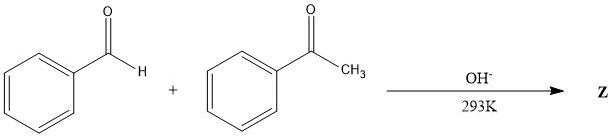
Identify the following name reaction.

Figure

Answer options
Option 3
Correct Answer
Explanation for 2026: 7 June Shift 2 CHE question 5

Q6:

2026: 7 June Shift 2

Aldehydes, Ketones & Carboxylic Acids

Medium

Consider the following chemical reaction and identify the reagents required for conversion.
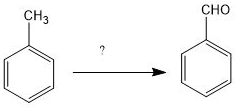
Figure

Answer options
Option 4
Correct Answer
Explanation for 2026: 7 June Shift 2 CHE question 6

Q7:

2026: 6 June Shift 1

Aldehydes, Ketones & Carboxylic Acids

Easy

Which of the following compounds does not undergo Cannizzaro reaction?

Answer options
Option 4
Correct Answer
Explanation for 2026: 6 June Shift 1 CHE question 7

Q8:

2026: 6 June Shift 1

Aldehydes, Ketones & Carboxylic Acids

Medium

Which of the following reaction will not result in the formation of C-C bonds?

Answer options
Option 4
Correct Answer
Explanation for 2026: 6 June Shift 1 CHE question 8

Q9:

2026: 6 June Shift 1

Aldehydes, Ketones & Carboxylic Acids

Easy

What is the final product X in the following reaction?

CH3−CH2−CH2−CHO→H3O+Ammonical AgNO3XCH_3-CH_2-CH_2-CHO \xrightarrow[H_3O^+]{\text{Ammonical } AgNO_3} X

Answer options
Option 2
Correct Answer
Explanation for 2026: 6 June Shift 1 CHE question 9

Q10:

2026: 6 June Shift 1

Aldehydes, Ketones & Carboxylic Acids

Easy

The reagent used in the Stephen reaction is

Answer options

Q12:

2026: 31 May Shift 2

Aldehydes, Ketones & Carboxylic Acids

Medium

Phthalimide is formed when compound 'A' is treated with ammonia and the resulting compound is heated strongly. The compound 'A' is

Answer options

Q13:

2026: 31 May Shift 2

Aldehydes, Ketones & Carboxylic Acids

Easy

Tollen's reagent oxidise aldehydes in a medium(A) to the corresponding compound(B).

(A) and (B) respectively are:

Answer options

Q14:

2026: 31 May Shift 2

Aldehydes, Ketones & Carboxylic Acids

Medium

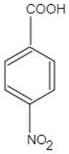
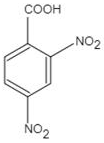
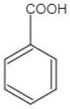
Consider the following compounds and arrange them in decreasing order of their acidity.

A. Figure
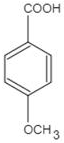
B. Figure

C. Figure

D. Figure

Answer options

Q15:

2026: 31 May Shift 2

Aldehydes, Ketones & Carboxylic Acids

Easy

Match the LIST-I with LIST-II.

LIST-I (Reaction)LIST-II (Reagent)
A.Rosenmund reactionI.SnCl2SnCl_2, HCl
B.Stephen reactionII.H2H_2, Pd-BaSO4BaSO_4
C.Etard reactionIII.CrO2Cl2CrO_2Cl_2, CS2CS_2, H3O+H_3O^{+}
D.Friedel-Crafts reactionIV.Anhyd. AlCl3AlCl_3
Answer options

Q16:

2026: 31 May Shift 2

Aldehydes, Ketones & Carboxylic Acids

Easy

Nucleophilic addition reaction on carbonyl carbon results in change of hybridization of carbon atom from

Answer options

Q17:

2026: 30 May Shift 2

Aldehydes, Ketones & Carboxylic Acids

Medium

Nucleophilic Addition Reactions

Organic compounds containing carbon-oxygen double bond (>C=O ) are called carbonyl group, which is one of the most important functional group in organic chemistry. In aldehydes, the carbonyl group is bonded to a carbon and hydrogen while in ketones, it is bonded to two carbon atoms.The carbonyl compounds in which carbon of carbonyl group is bonded to carbon or hydrogen and oxygen of hydroxyl moiety (-OH) are known as carboxylic acids , while in compounds where carbon is attached to carbon or hydrogen and nitrogen of −NH2-\mathrm{NH_2} moiety or to halogens are called amides and acyl halides respectively. Aldehydes, ketones, and carboxylic acids are widespeard in plants and animal kingdom. They add fragrance and flavour to nature, for example, vanillin ( from vanilla bean), salicylaldehyde ( from meadow sweet ) and cinnamaldehye ( cinnamon) have pleasant fragrances.

The carbonyl carbon atom is sp2-hybridised and forms three sigma ( σ\sigma ) bonds. The fourth valence electron of carbon remains in its p-orbital and forms a π\pi-bond with oxygen by overlap with p-orbital of an oxygen. In addition , the oxygen atom also has two non bonding electron pairs. Thus, the carbonyl carbon and the three atoms attached to it lie in the same plane and the π\pi-electron cloud is above and below this plane. The bond angles are approximately 1200120^0 and trigonal coplanar structure.

The carbon-oygen double bond is polarised due to higher electronegativity of oxygen relative to carbon. Hence, the carbonyl carbon is an electrophilic (Lewis acid), and carbonyl oxygen , a nucleophilic (Lewis base) centre. Carbonyl compounds have substantial dipole moments and are polar than ethers. Aldehydye and ketone can be prepared by by oxidation of alcohols, dehydrogenation of alcohols, and ozonolysis of alkenes etc.

The structure of vanillin is

Answer options

Q18:

2026: 30 May Shift 2

Aldehydes, Ketones & Carboxylic Acids

Easy

Nucleophilic Addition Reactions

Organic compounds containing carbon-oxygen double bond (>C=O ) are called carbonyl group, which is one of the most important functional group in organic chemistry. In aldehydes, the carbonyl group is bonded to a carbon and hydrogen while in ketones, it is bonded to two carbon atoms.The carbonyl compounds in which carbon of carbonyl group is bonded to carbon or hydrogen and oxygen of hydroxyl moiety (-OH) are known as carboxylic acids , while in compounds where carbon is attached to carbon or hydrogen and nitrogen of −NH2-\mathrm{NH_2} moiety or to halogens are called amides and acyl halides respectively. Aldehydes, ketones, and carboxylic acids are widespeard in plants and animal kingdom. They add fragrance and flavour to nature, for example, vanillin ( from vanilla bean), salicylaldehyde ( from meadow sweet ) and cinnamaldehye ( cinnamon) have pleasant fragrances.

The carbonyl carbon atom is sp2-hybridised and forms three sigma ( σ\sigma ) bonds. The fourth valence electron of carbon remains in its p-orbital and forms a π\pi-bond with oxygen by overlap with p-orbital of an oxygen. In addition , the oxygen atom also has two non bonding electron pairs. Thus, the carbonyl carbon and the three atoms attached to it lie in the same plane and the π\pi-electron cloud is above and below this plane. The bond angles are approximately 1200120^0 and trigonal coplanar structure.

The carbon-oygen double bond is polarised due to higher electronegativity of oxygen relative to carbon. Hence, the carbonyl carbon is an electrophilic (Lewis acid), and carbonyl oxygen , a nucleophilic (Lewis base) centre. Carbonyl compounds have substantial dipole moments and are polar than ethers. Aldehydye and ketone can be prepared by by oxidation of alcohols, dehydrogenation of alcohols, and ozonolysis of alkenes etc.

Identify the product in the following chemical reaction.
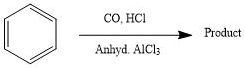
2 CH3−CHO→ii) Heati) dil. NaOHProduct2\ \mathrm{CH_3{-}CHO} \xrightarrow[\text{ii) Heat}]{\text{i) dil. NaOH}} \text{Product}

Answer options

Q19:

2026: 30 May Shift 2

Aldehydes, Ketones & Carboxylic Acids

Medium

Nucleophilic Addition Reactions

Organic compounds containing carbon-oxygen double bond (>C=O ) are called carbonyl group, which is one of the most important functional group in organic chemistry. In aldehydes, the carbonyl group is bonded to a carbon and hydrogen while in ketones, it is bonded to two carbon atoms.The carbonyl compounds in which carbon of carbonyl group is bonded to carbon or hydrogen and oxygen of hydroxyl moiety (-OH) are known as carboxylic acids , while in compounds where carbon is attached to carbon or hydrogen and nitrogen of −NH2-\mathrm{NH_2} moiety or to halogens are called amides and acyl halides respectively. Aldehydes, ketones, and carboxylic acids are widespeard in plants and animal kingdom. They add fragrance and flavour to nature, for example, vanillin ( from vanilla bean), salicylaldehyde ( from meadow sweet ) and cinnamaldehye ( cinnamon) have pleasant fragrances.

The carbonyl carbon atom is sp2-hybridised and forms three sigma ( σ\sigma ) bonds. The fourth valence electron of carbon remains in its p-orbital and forms a π\pi-bond with oxygen by overlap with p-orbital of an oxygen. In addition , the oxygen atom also has two non bonding electron pairs. Thus, the carbonyl carbon and the three atoms attached to it lie in the same plane and the π\pi-electron cloud is above and below this plane. The bond angles are approximately 1200120^0 and trigonal coplanar structure.

The carbon-oygen double bond is polarised due to higher electronegativity of oxygen relative to carbon. Hence, the carbonyl carbon is an electrophilic (Lewis acid), and carbonyl oxygen , a nucleophilic (Lewis base) centre. Carbonyl compounds have substantial dipole moments and are polar than ethers. Aldehydye and ketone can be prepared by by oxidation of alcohols, dehydrogenation of alcohols, and ozonolysis of alkenes etc.

Which of the following compounds will exhibit slowest rate of reaction with HCN in the presence of NaOH?

Answer options

Q20:

2026: 30 May Shift 2

Aldehydes, Ketones & Carboxylic Acids

Easy

Nucleophilic Addition Reactions

Organic compounds containing carbon-oxygen double bond (>C=O ) are called carbonyl group, which is one of the most important functional group in organic chemistry. In aldehydes, the carbonyl group is bonded to a carbon and hydrogen while in ketones, it is bonded to two carbon atoms.The carbonyl compounds in which carbon of carbonyl group is bonded to carbon or hydrogen and oxygen of hydroxyl moiety (-OH) are known as carboxylic acids , while in compounds where carbon is attached to carbon or hydrogen and nitrogen of −NH2-\mathrm{NH_2} moiety or to halogens are called amides and acyl halides respectively. Aldehydes, ketones, and carboxylic acids are widespeard in plants and animal kingdom. They add fragrance and flavour to nature, for example, vanillin ( from vanilla bean), salicylaldehyde ( from meadow sweet ) and cinnamaldehye ( cinnamon) have pleasant fragrances.

The carbonyl carbon atom is sp2-hybridised and forms three sigma ( σ\sigma ) bonds. The fourth valence electron of carbon remains in its p-orbital and forms a π\pi-bond with oxygen by overlap with p-orbital of an oxygen. In addition , the oxygen atom also has two non bonding electron pairs. Thus, the carbonyl carbon and the three atoms attached to it lie in the same plane and the π\pi-electron cloud is above and below this plane. The bond angles are approximately 1200120^0 and trigonal coplanar structure.

The carbon-oygen double bond is polarised due to higher electronegativity of oxygen relative to carbon. Hence, the carbonyl carbon is an electrophilic (Lewis acid), and carbonyl oxygen , a nucleophilic (Lewis base) centre. Carbonyl compounds have substantial dipole moments and are polar than ethers. Aldehydye and ketone can be prepared by by oxidation of alcohols, dehydrogenation of alcohols, and ozonolysis of alkenes etc.

Identify the name reaction and product in the following chemical reaction.

Figure

Answer options

Q21:

2026: 30 May Shift 2

Aldehydes, Ketones & Carboxylic Acids

Medium

Nucleophilic Addition Reactions

Organic compounds containing carbon-oxygen double bond (>C=O ) are called carbonyl group, which is one of the most important functional group in organic chemistry. In aldehydes, the carbonyl group is bonded to a carbon and hydrogen while in ketones, it is bonded to two carbon atoms.The carbonyl compounds in which carbon of carbonyl group is bonded to carbon or hydrogen and oxygen of hydroxyl moiety (-OH) are known as carboxylic acids , while in compounds where carbon is attached to carbon or hydrogen and nitrogen of −NH2-\mathrm{NH_2} moiety or to halogens are called amides and acyl halides respectively. Aldehydes, ketones, and carboxylic acids are widespeard in plants and animal kingdom. They add fragrance and flavour to nature, for example, vanillin ( from vanilla bean), salicylaldehyde ( from meadow sweet ) and cinnamaldehye ( cinnamon) have pleasant fragrances.

The carbonyl carbon atom is sp2-hybridised and forms three sigma ( σ\sigma ) bonds. The fourth valence electron of carbon remains in its p-orbital and forms a π\pi-bond with oxygen by overlap with p-orbital of an oxygen. In addition , the oxygen atom also has two non bonding electron pairs. Thus, the carbonyl carbon and the three atoms attached to it lie in the same plane and the π\pi-electron cloud is above and below this plane. The bond angles are approximately 1200120^0 and trigonal coplanar structure.

The carbon-oygen double bond is polarised due to higher electronegativity of oxygen relative to carbon. Hence, the carbonyl carbon is an electrophilic (Lewis acid), and carbonyl oxygen , a nucleophilic (Lewis base) centre. Carbonyl compounds have substantial dipole moments and are polar than ethers. Aldehydye and ketone can be prepared by by oxidation of alcohols, dehydrogenation of alcohols, and ozonolysis of alkenes etc.

Which of the following represents Hell-Volhard-Zelinsky reaction?

Answer options

Q22:

2026: 30 May Shift 1

Aldehydes, Ketones & Carboxylic Acids

Medium

Organic synthesis and applications

In aldehydes, carbonyl group is bonded to carbon and hydrogen while in ketones, it is bonded to two carbon atoms. The carbonyl carbon atom is sp2sp^2-hybridised. The bond angles are approximately 120° and a trigonal coplanar structure. Methanal is gas at room temepratrure. Ethanal is a volatitle liquid. Other aldehydes and ketones are liquid or solid at room temperature. The boiling points of aldehydes and ketones are higher than hydrocarbons and ether of comparable molecular masses. It is due to weak molecular association in aldehydes and ketones arising out of the dipole-dipole interactions. Their boiling points are lower than those of alcohols of similar molecular masess due to absence of intermolecular hydrogen bonding. The lower members of aldehydes and ketones are miscible with water because they form hydrogen bonding with water. However, the solubility of aldehydes and ketones decreases rapidly on increasing the length of alkyl chain.

Aldehydes are generally more reactive than ketones in the nucleophilic addition reactions due to steric and electronic reasons. An organic compound (A) with molecular formula C8H8OC_8H_8O forms an orange-red precipitate with 2,4-DNP reagent and gives yellow precipitate on heating with iodine in the presence of sodium hydroxide. It neither reduces Tollens' or Fehlings' reagent , nor does it decolourise bromine water or Baeyer's reagent. On drastic oxidation with chromic acid, it gives a carboxylic acid (B) having molecular formula C7H6O2C_7H_6O_2.

Identify the compounds (A), and (B), in the above reaction.

Answer options

Q23:

2026: 30 May Shift 1

Aldehydes, Ketones & Carboxylic Acids

Easy

Organic synthesis and applications

In aldehydes, carbonyl group is bonded to carbon and hydrogen while in ketones, it is bonded to two carbon atoms. The carbonyl carbon atom is sp2sp^2-hybridised. The bond angles are approximately 120° and a trigonal coplanar structure. Methanal is gas at room temepratrure. Ethanal is a volatitle liquid. Other aldehydes and ketones are liquid or solid at room temperature. The boiling points of aldehydes and ketones are higher than hydrocarbons and ether of comparable molecular masses. It is due to weak molecular association in aldehydes and ketones arising out of the dipole-dipole interactions. Their boiling points are lower than those of alcohols of similar molecular masess due to absence of intermolecular hydrogen bonding. The lower members of aldehydes and ketones are miscible with water because they form hydrogen bonding with water. However, the solubility of aldehydes and ketones decreases rapidly on increasing the length of alkyl chain.

Aldehydes are generally more reactive than ketones in the nucleophilic addition reactions due to steric and electronic reasons. An organic compound (A) with molecular formula C8H8OC_8H_8O forms an orange-red precipitate with 2,4-DNP reagent and gives yellow precipitate on heating with iodine in the presence of sodium hydroxide. It neither reduces Tollens' or Fehlings' reagent , nor does it decolourise bromine water or Baeyer's reagent. On drastic oxidation with chromic acid, it gives a carboxylic acid (B) having molecular formula C7H6O2C_7H_6O_2.

What is the name of the orange-red solid?

Answer options

Q24:

2026: 30 May Shift 1

Aldehydes, Ketones & Carboxylic Acids

Easy

Organic synthesis and applications

In aldehydes, carbonyl group is bonded to carbon and hydrogen while in ketones, it is bonded to two carbon atoms. The carbonyl carbon atom is sp2sp^2-hybridised. The bond angles are approximately 120° and a trigonal coplanar structure. Methanal is gas at room temepratrure. Ethanal is a volatitle liquid. Other aldehydes and ketones are liquid or solid at room temperature. The boiling points of aldehydes and ketones are higher than hydrocarbons and ether of comparable molecular masses. It is due to weak molecular association in aldehydes and ketones arising out of the dipole-dipole interactions. Their boiling points are lower than those of alcohols of similar molecular masess due to absence of intermolecular hydrogen bonding. The lower members of aldehydes and ketones are miscible with water because they form hydrogen bonding with water. However, the solubility of aldehydes and ketones decreases rapidly on increasing the length of alkyl chain.

Aldehydes are generally more reactive than ketones in the nucleophilic addition reactions due to steric and electronic reasons. An organic compound (A) with molecular formula C8H8OC_8H_8O forms an orange-red precipitate with 2,4-DNP reagent and gives yellow precipitate on heating with iodine in the presence of sodium hydroxide. It neither reduces Tollens' or Fehlings' reagent , nor does it decolourise bromine water or Baeyer's reagent. On drastic oxidation with chromic acid, it gives a carboxylic acid (B) having molecular formula C7H6O2C_7H_6O_2.

The characteristic reactions of carbonyl compounds are:

Answer options

Q25:

2026: 30 May Shift 1

Aldehydes, Ketones & Carboxylic Acids

Easy

Organic synthesis and applications

In aldehydes, carbonyl group is bonded to carbon and hydrogen while in ketones, it is bonded to two carbon atoms. The carbonyl carbon atom is sp2sp^2-hybridised. The bond angles are approximately 120° and a trigonal coplanar structure. Methanal is gas at room temepratrure. Ethanal is a volatitle liquid. Other aldehydes and ketones are liquid or solid at room temperature. The boiling points of aldehydes and ketones are higher than hydrocarbons and ether of comparable molecular masses. It is due to weak molecular association in aldehydes and ketones arising out of the dipole-dipole interactions. Their boiling points are lower than those of alcohols of similar molecular masess due to absence of intermolecular hydrogen bonding. The lower members of aldehydes and ketones are miscible with water because they form hydrogen bonding with water. However, the solubility of aldehydes and ketones decreases rapidly on increasing the length of alkyl chain.

Aldehydes are generally more reactive than ketones in the nucleophilic addition reactions due to steric and electronic reasons. An organic compound (A) with molecular formula C8H8OC_8H_8O forms an orange-red precipitate with 2,4-DNP reagent and gives yellow precipitate on heating with iodine in the presence of sodium hydroxide. It neither reduces Tollens' or Fehlings' reagent , nor does it decolourise bromine water or Baeyer's reagent. On drastic oxidation with chromic acid, it gives a carboxylic acid (B) having molecular formula C7H6O2C_7H_6O_2.

Identify the catalyst used in Rosenmund reduction.

Answer options

Q26:

2026: 30 May Shift 1

Aldehydes, Ketones & Carboxylic Acids

Easy

Organic synthesis and applications

In aldehydes, carbonyl group is bonded to carbon and hydrogen while in ketones, it is bonded to two carbon atoms. The carbonyl carbon atom is sp2sp^2-hybridised. The bond angles are approximately 120° and a trigonal coplanar structure. Methanal is gas at room temepratrure. Ethanal is a volatitle liquid. Other aldehydes and ketones are liquid or solid at room temperature. The boiling points of aldehydes and ketones are higher than hydrocarbons and ether of comparable molecular masses. It is due to weak molecular association in aldehydes and ketones arising out of the dipole-dipole interactions. Their boiling points are lower than those of alcohols of similar molecular masess due to absence of intermolecular hydrogen bonding. The lower members of aldehydes and ketones are miscible with water because they form hydrogen bonding with water. However, the solubility of aldehydes and ketones decreases rapidly on increasing the length of alkyl chain.

Aldehydes are generally more reactive than ketones in the nucleophilic addition reactions due to steric and electronic reasons. An organic compound (A) with molecular formula C8H8OC_8H_8O forms an orange-red precipitate with 2,4-DNP reagent and gives yellow precipitate on heating with iodine in the presence of sodium hydroxide. It neither reduces Tollens' or Fehlings' reagent , nor does it decolourise bromine water or Baeyer's reagent. On drastic oxidation with chromic acid, it gives a carboxylic acid (B) having molecular formula C7H6O2C_7H_6O_2.

The name of the reaction of two molecules of benzaldehyde with conc. NaOH on heating, is

Answer options

Q27:

2026: 29 May Shift 2

Aldehydes, Ketones & Carboxylic Acids

Easy

Bromination of benzoic acid with Br2\mathrm{Br_2} water in the presence of catalytic amounts of FeBr3\mathrm{FeBr_3} will give

Answer options

Q28:

2026: 29 May Shift 2

Aldehydes, Ketones & Carboxylic Acids

Medium

Acid-catalyzed esterification of carboxylic acids with alcohols proceeds through number of steps in a sequential manner. Choose the correct sequence of steps from the following :

A. Nucleophilic addition of alcohol on the protonated carbonyl in carboxylic acid

B. Elimination of a water molecule

C. De-protonation

D. Proton transfer in the tetrahedral intermediate, converting OH to +OH2^{+}\mathrm{OH_2}.

Answer options

Q29:

2026: 29 May Shift 2

Aldehydes, Ketones & Carboxylic Acids

Easy

Which one of the following reagents will selectively convert methyl propanoate to propanal?

Answer options

Q30:

2026: 29 May Shift 2

Aldehydes, Ketones & Carboxylic Acids

Medium

Aspirin is a commonly used non-steroidal anti-inflammatory drug which reduces fever, relieves mild pain and decreases swelling. It is prepared by numerous synthetic methods; of which the acetylation of Compound A with acetyl chloride is one of the easiest methods. However, Compound A itself needs to be prepared from Compound B under basic conditions by using carbon dioxide as a reagent. Interestingly, Compound B along with Compound C can be obtained by the air oxidation of Compound D. Compound C is a commonly used industrial solvent and gives a positive iodoform test and a negative Tollen's test. Compound C easily forms 2,4-DNP derivative (Compound E). Compound C on reaction with Ba(OH)2\mathrm{Ba(OH)_2} under heating conditions produces Compound F whose molecular formula is C6H10O\mathrm{C_6H_{10}O}.

The structures of Compound C and Compound E are

Answer options