Q1:
Chemistry
Aldehydes, Ketones & Carboxylic Acids
Easy
Which of the following compounds does not undergo Cannizzaro reaction?
Correct Answer
Option 4
Correct Answer

Chemistry
Aldehydes, Ketones & Carboxylic Acids
Easy
Which of the following compounds does not undergo Cannizzaro reaction?
Chemistry
Chemical Kinetics
Easy
For the following reaction choose the incorrect expression of rate of reaction.
Chemistry
Coordination Compounds
Easy
IUPAC name of
Chemistry
Alcohols, Phenols & Ethers
Medium
Consider the following statments and choose the correct statements
(A) The bond angle in methanol is slightly higher than the tetrahedral angle.
(B) The reaction of Grignard reagent with methanal produces a secondary alcohol.
(C) The boiling point of ethanol is higher than methoxymethane.
(D) Acetylation of Salicylic acid produces Aspirin.
Chemistry
Haloalkanes & Haloarenes
Medium
What would be the major product A ?
Chemistry
Electrochemistry
Medium
Limiting Molar conductivities for some ions in water at 298 K is
| Ion | / (S m mol) |
|---|---|
| 349.6 | |
| 50.1 | |
| 119.0 | |
| 106.0 | |
| 76.3 | |
| 160 |
Choose the correct decreasing order of for NaCl, HCl, CaCl, and MgSO from the options given below:
Chemistry
d & f Block Elements
Easy
The following reaction can be best described as:
Chemistry
Electrochemistry
Easy
Standard electrode potentials () of four metals A, B, C and D are given below:
(A) - 1.2 V
(B) + 0.5 V
(C) + 1.2 V
(D) - 3.0 V
The correct increasing order for the reducing power of these metals will be:
Chemistry
d & f Block Elements
Medium
Arrange the following 3d-series elements in decreasing order of their 2 ionisation enthalpy
(A) Ti (Z=22)
(B) V (Z=23)
(C) Cr (Z=24)
(D) Mn (Z=25)
Chemistry
d & f Block Elements
Medium
Match Ion given in List I with their Magnetic moment (Calculated) given in List II
| List I Ion | List II Magnetic moment (Calculated) |
|---|---|
| (A) | (I) 3.87 |
| (B) | (II) 1.73 |
| (C) | (III) 5.92 |
| (D) | (IV) 0 |
Chemistry
Alcohols, Phenols & Ethers
Medium
What would be the product X in the following chemical reaction?
Chemistry
Haloalkanes & Haloarenes
Medium
Arrange the compounds in order of their increasing boiling points.
(A) 1-bromoethane
(B) 1-bromobutane
(C) 2-bromo-2-methylpropane
(D) 2-bromobutane
Chemistry
d & f Block Elements
Easy
Choose the symbol of a lanthanoid metal which is well known to exhibit +4 oxidation state.
Chemistry
Alcohols, Phenols & Ethers
Easy
What is the product Y in the following chemical reaction?
Chemistry
Coordination Compounds
Medium
What would be the geometrical shape of and compounds?
Chemistry
Alcohols, Phenols & Ethers
Easy
What would be the major product when propene reacts with water in presence of acid catalyst?
Chemistry
Biomolecules
Medium
Select the correct statements related to carbohydrates :
(A) Glucose is also known as dextrose.
(B) In Glucose, an aldehydic group is present, and it gives Schiff's test.
(C) Glycogen is also known as animal starch.
(D) Lactose is a reducing sugar.
Chemistry
Chemical Kinetics
Medium
Choose the correct statements
(A) For a gaseous reaction, if the concentration of gas is expressed in terms of their partial pressure 'atm' and time in 'minutes' then unit of rate are atm min.
(B) The sum of power of the concentration of the reactants in the rate law expression is called order of that reaction.
(C) The thermal decomposition of HI on gold surface is an example of second order reaction.
(D) The overall rate of the reaction is controlled by the slowest step in a reaction called the rate determining step.
Chemistry
Coordination Compounds
Medium
Choose the Incorrect option regarding valence bond theory of coordination compound.
Chemistry
Haloalkanes & Haloarenes
Medium
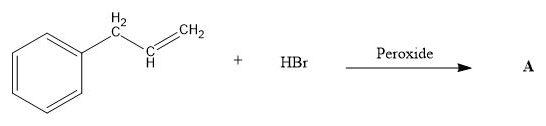
Write the major product A in the following chemical reaction.
Chemistry
Coordination Compounds
Medium
Select the correct assumptions in Crystal Field Theory (CFT) from the fololowing:
(A) Ligands are treated as point charge or point dipole.
(B) The five d orbitals in an isolated gaseous metal atom are non-degenerate
(C) Degeneracy of the d orbitals is restored with the approach of ligand towards metal
(D) Metal-ligand bond is ionic arising purely from electrostatic interactions
Chemistry
Biomolecules
Medium
What would be the correct structure of thymine base?
Chemistry
Aldehydes, Ketones & Carboxylic Acids
Medium
Which of the following reaction will not result in the formation of C-C bonds?
Chemistry
Haloalkanes & Haloarenes
Easy
The major products A and B formed in the following reaction are :
Chemistry
Electrochemistry
Easy
Match List-I with List-II
| List-I Quantity | List-II Units |
|---|---|
| (A) Conductivity | (I) ohm |
| (B) Molar Conductivity | (II) S |
| (C) Resistance | (III) S cm |
| (D) Conductance | (IV) S cm mol |
Chemistry
Aldehydes, Ketones & Carboxylic Acids
Easy
What is the final product X in the following reaction?
Chemistry
Electrochemistry
Medium
Which of the following statements are incorrect for thermodynamic properties?
(A) Both and of reaction are extensive properties.
(B) Both and of reaction are intensive properties.
(C) is an intensive property while of reaction is an extensive property.
(D) is an extensive property while of reaction is an intensive property.
Chemistry
Electrochemistry
Easy
The standard Gibbs energy for the reaction is -212.27 kJ mol.
The standard electrode potential for the Daniell cell is:
Chemistry
Alcohols, Phenols & Ethers
Medium
Arrange the following compounds in increasing order of their acid strength.
(A) Phenol
(B) m-Nitrophenol
(C) p-Nitrophenol
(D) p-Cresol
Chemistry
Chemical Kinetics
Easy
The order of a reaction whose rate constant k = L mol s is
Chemistry
Coordination Compounds
Easy
The complex is
Chemistry
Haloalkanes & Haloarenes
Easy
Match Structure with their Common Name
| List I Structure | List-II Common Name |
|---|---|
(A) 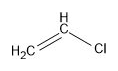 | (I) Allyl chloride |
(B) 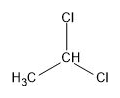 | (II) Ethylene dichloride |
(C) 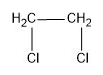 | (III) Vinyl chloride |
(D) 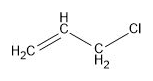 | (IV) Ethylidene chloride |
Chemistry
Chemical Kinetics
Easy
Match List-I with List-II
| List-I | List-II |
|---|---|
| (A) Collision Theory | (I) |
| (B) Arrhenius Equation | (II) |
| (C) Rate constant for zero order | (III) |
| (D) Rate constant for first order | (IV) Rate |
Chemistry
Biomolecules
Easy
Match Reaction with Reagent Required
| List-I Reaction | List-II Reagent Required |
|---|---|
| (A) Glucose to n-Hexane | (I) |
| (B) Glucose to Oxime | (II) |
| (C) Glucose to Gluconic Acid | (III) HI, |
| (D) Glucose to Saccharic Acid | (IV) , |
Chemistry
Aldehydes, Ketones & Carboxylic Acids
Easy
The reagent used in the Stephen reaction is
Chemistry
d & f Block Elements
Easy
Choose the transition element which exhibit least number of variable oxidation states.
Chemistry
Biomolecules
Easy
What are the hydrolysis products of Maltose?
Chemistry
Chemical Kinetics
Easy
75% of a first order reaction was completed in 32 minutes. How long will it take to undergo 50% completion?
Given: log 2 = 0.3010
Chemistry
Aldehydes, Ketones & Carboxylic Acids
Medium
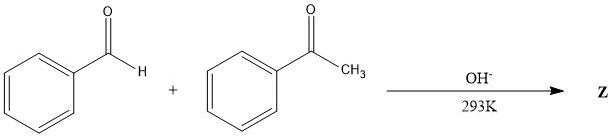
The major product Z in the following chemical reaction is
Chemistry
Biomolecules
Easy
Choose the optically inactive amino acid from the following.
Chemistry
Solutions
Easy
Chemistry
Solutions
Easy
Chemistry
Solutions
Easy
Chemistry
Solutions
Easy
Chemistry
Solutions
Medium
Chemistry
Amines
Easy
Chemistry
Amines
Medium
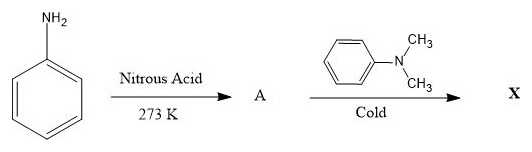
What would be the structure of final product X in the following chemical reaction?
Chemistry
Amines
Easy
Chemistry
Amines
Easy
Chemistry
Amines
Medium
Every question from the CUET Chemistry 2026 6 June Shift 1 paper is here in full, with the correct answer and a step by step solution for each one. It is completely free, there is no login and no paywall, and you can read the whole paper online or download it to revise offline.
You can also attempt it instead of only reading it. Take the paper as a full length mock under exam conditions, or filter it by topic and attempt just that topic as a topic test. Both are free, and you get a breakdown of your accuracy, your timing and your weak areas once you submit.
CUET Chemistry past year questions (PYQs) are the closest thing to the real exam, so working through them is the quickest way to learn the paper pattern, the marking scheme and the level of difficulty to expect on the day.