Q1:
Chemistry
Biomolecules
Easy
Glucose is correctly named as D-(+)-glucose. 'D' before the name of glucose represents the
Correct Answer
Option 3
Correct Answer

Chemistry
Biomolecules
Easy
Glucose is correctly named as D-(+)-glucose. 'D' before the name of glucose represents the
Chemistry
Aldehydes, Ketones & Carboxylic Acids
Easy
Match List-I compounds with their structures in List-II.
| LIST-I (Name of the compound) | LIST-II (Structure) | ||
|---|---|---|---|
| A. | Acetophenone | I. | 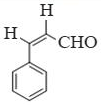 |
| B. | Vanillin | II. |  |
| C. | Salicylaldehyde | III. | 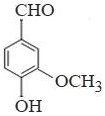 |
| D. | Cinnamaldehyde | IV. | 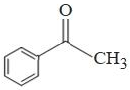 |
Chemistry
Amines
Easy
What is the best suitable condition for the preparation of diazonium salts?
Chemistry
Chemical Kinetics
Easy
Which of the following is correct in regard to the rate determining step of the reaction?
Chemistry
Solutions
Easy
What is the molality of 2.5 g of ethanoic acid in 75 g of benzene?
Chemistry
Solutions
Easy
The Henry's law states that at a constant temperature
Chemistry
Electrochemistry
Easy
The conductivity of the electrolytic solutions depends on:-
A. The nature of the electrolyte
B. The surface area of the cell
C. Concentration of the electrolyte
D. The nature of the solvent and its viscosity
Chemistry
Electrochemistry
Easy
Match the LIST-I with LIST-II.
| LIST-I (Type of cells/process) | LIST-II (Explanation) | ||
|---|---|---|---|
| A. | Electrolytic cell | I. | Potential difference develops between the electrode and the electrolyte |
| B. | Galvanic cell | II. | Device in which chemical energy of the spontaneous redox reaction is converted into electrical energy. |
| C. | Electrolysis | III. | Device in which electrical energy is used to carry non-spontaneous chemical reaction. |
| D. | Electrode potential | IV. | Dissociation of salt by passing current |
Chemistry
Electrochemistry
Easy
Arrange the below given cells/batteries into following order:-
Dry Cell; battery commonly used in watches; battery has longer life but more expensive to manufacture and battery commonly used in automobiles but comparatively less expensive.
A. Nickel-cadmium cell
B. Mercury cell
C. Leclanche cell
D. Lead storage battery
Chemistry
Haloalkanes & Haloarenes
Easy
Friedel-Crafts reaction is an example of
Chemistry
Haloalkanes & Haloarenes
Easy
Which compound is least reactive towards nucleophilic substitution reaction ?
Chemistry
Biomolecules
Medium
Which is the correct statement regarding Amylopectin?
Chemistry
Chemical Kinetics
Easy
What are the units of rate constant for a second order reaction?
Chemistry
Solutions
Medium
18 g of glucose, , is dissolved in 1 kg of water in a saucepan. At what temperature will water boil at 1.013 bar?
for water is
Chemistry
Chemical Kinetics
Easy
With a rise in temperature, the rate constant of a reaction
Chemistry
Aldehydes, Ketones & Carboxylic Acids
Medium
Arrange the following compounds in decreasing order of the reactivity towards nucleophilic addition reaction.
A. 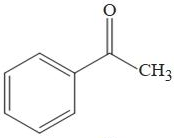
B. 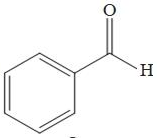
C. 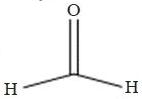
D. 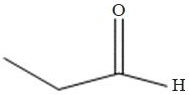
Chemistry
Amines
Easy
Match List-I (Name reaction) with List-II corresponding substrates.
| LIST-I Name Reaction | LIST-II Substrates | ||
|---|---|---|---|
| A. | Carbylamine reaction | I. | |
| B. | Hoffmann bromamide degradation reaction | II. | |
| C. | Reimer- Tiemann reaction | III. | |
| D. | Kolbe's reaction | IV. |
Chemistry
Coordination Compounds
Medium
Which of the following is the correct statement about the Valence Bond Theory?
Chemistry
Biomolecules
Easy
Deficiency of Vitamin causes the disease
Chemistry
Amines
Medium
Arrange the following in decreasing order of their basic strength in aqueous solution:
A.
B.
C.
D.
Chemistry
Amines
Easy
Which of the following amines cannot be prepared by Gabriel phthalimide synthesis ?
Chemistry
Coordination Compounds
Easy
Match the LIST-I with LIST-II.
| LIST-I | LIST-II | ||
|---|---|---|---|
| A. | Crystal Field Splitting | I. | In coordination compounds metals show two types of linkages (valencies)-primary and secondary |
| B. | Werner Theory | II. | Metal atom or ion use its orbitals for hybridisation to yield a set of equivalent orbitals of definite geometry |
| C. | Valence Bond Theory | III. | Degeneracy of the d-orbitals removed due to ligand -metal interactions |
| D. | Crystal Field Theory | IV. | Electrostatic model which considers the metal-ligand bond as ionic |
Chemistry
Aldehydes, Ketones & Carboxylic Acids
Easy
The reagents used in the Gatterman-Koch reaction for the synthesis of benzaldehyde from benzene are
Chemistry
Electrochemistry
Easy
for NaCl, HCl and NaAc are 126.4, 425.9 and 91.0 , respectively. What is the value of for HAc ?
Chemistry
Coordination Compounds
Easy
Select the correct statements about double salts:
A. is an example of double salt.
B. is an example of double salt.
C. Double salts dissociate completely into simple ions when dissolved in water.
D. Double salts are non-stoichiometric compounds
Chemistry
Solutions
Easy
Match the LIST-I with LIST-II.
| LIST-I (Type of Solutions) | LIST-II (Explanation) | ||
|---|---|---|---|
| A. | Isotonic solutions | I. | A solution in which no more solute can be dissolved at the same temperature and pressure |
| B. | Ideal solution | II. | Two solutions having the same osmotic pressure at a given temperature |
| C. | Binary solution | III. | A solution following Raoult's law over the entire range of concentration. |
| D. | Saturated solution | IV. | A solution consisting of two components |
Chemistry
Coordination Compounds
Easy
Which is the correct IUPAC name of the complex ?
Chemistry
Biomolecules
Easy
What is the chemical composition of nucleotide?
Chemistry
Coordination Compounds
Medium
Arrange the following ligand in order of increasing field strength on the basis of spectrochemical series.
A.
B. CO
C.
D.
Chemistry
Haloalkanes & Haloarenes
Easy
IUPAC name of the following compound is
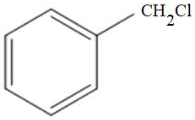
Chemistry
Biomolecules
Easy
Which of the following statements is correct about sucrose?
A. It belongs to the class of polysaccharides.
B. It belongs to class of disaccharides.
C. It is a reducing sugar.
D. It is a non-reducing sugar.
Chemistry
Chemical Kinetics
Medium
The rate constants of a reaction at 500 K and 700 K are and , respectively. What is the value of ?
(Given: & )
Chemistry
Chemical Kinetics
Easy
The half life period of a reaction does not depend upon the initial concentration of the reactant. The order of the reaction is
Chemistry
Amines
Easy
Which of the following can be prepared by Sandmeyer reaction ?
A. ArCl
B. ArF
C. ArBr
D. ArCN
Chemistry
Haloalkanes & Haloarenes
Medium
Predict the order of decreasing reactivity of the following compounds towards reaction:
A.
B.
C.
D.
Chemistry
Aldehydes, Ketones & Carboxylic Acids
Easy
Reaction of toluene with in followed by acidic hydrolysis gave compound A . The structure of compound A is
Chemistry
Haloalkanes & Haloarenes
Medium
Which are the correct statements for DDT?
A. DDT was the first chlorinated organic insecticide.
B. DDT is metabolized very rapidly by animals.
C. The use of DDT was banned in the United States in 1973.
D. There are total 6 chlorine atoms in DDT.
Chemistry
Electrochemistry
Easy
What is the standard Gibbs energy for the reaction?
The standard electrode potential for the Daniell cell is 1.1 V.
Chemistry
Solutions
Easy
Which of the following is not an example of ideal solution?
Chemistry
Aldehydes, Ketones & Carboxylic Acids
Easy
What are the suitable conditions for the Cannizzaro reaction?
Chemistry
Alcohols, Phenols & Ethers
Easy
Chemistry
Alcohols, Phenols & Ethers
Easy
Chemistry
Alcohols, Phenols & Ethers
Easy
Chemistry
Alcohols, Phenols & Ethers
Medium
Chemistry
Alcohols, Phenols & Ethers
Medium
Chemistry
d & f Block Elements
Easy
Chemistry
d & f Block Elements
Easy
Chemistry
d & f Block Elements
Easy
Chemistry
d & f Block Elements
Medium
Chemistry
d & f Block Elements
Easy
Every question from the CUET Chemistry 2026 11 May Shift 1 paper is here in full, with the correct answer and a step by step solution for each one. It is completely free, there is no login and no paywall, and you can read the whole paper online or download it to revise offline.
You can also attempt it instead of only reading it. Take the paper as a full length mock under exam conditions, or filter it by topic and attempt just that topic as a topic test. Both are free, and you get a breakdown of your accuracy, your timing and your weak areas once you submit.
CUET Chemistry past year questions (PYQs) are the closest thing to the real exam, so working through them is the quickest way to learn the paper pattern, the marking scheme and the level of difficulty to expect on the day.