Q1:

Solutions

Medium

Arrange the following aqueous solutions of equal mole fraction of solute in the increasing order of vapor pressure.

A. NaCl

B. Urea

C. Fe(NO3)3Fe(NO_3)_3

D. CaCl2CaCl_2

Answer options
Option 4
Correct Answer
Explanation for 2026: 30 May Shift 1 CHE question 1

Q2:

Chemical Kinetics

Easy

For the reaction

2N2O5(g)⟶4NO2(g)+O2(g)2N_2O_5(g)\longrightarrow 4NO_2(g)+O_2(g)

The rate is expressed as:

Answer options
Option 1
Correct Answer
Explanation for 2026: 30 May Shift 1 CHE question 2

Q3:

Haloalkanes & Haloarenes

Easy

Which of the following are not polyhalogen compounds?

  1. DDT
  2. Freons
  3. Chloroform
  4. Chloromethane
  5. 2-bromobutane
Answer options
Option 3
Correct Answer
Explanation for 2026: 30 May Shift 1 CHE question 3

Q4:

Amines

Easy

What would be the product of alkylation of aniline in the presence anhydrous AlCl3AlCl_3 as catalyst?

Answer options
Option 4
Correct Answer
Explanation for 2026: 30 May Shift 1 CHE question 4

Q5:

Chemical Kinetics

Medium

The rate constant of a nuclear decay is k=6.5×10⁻¹⁴ s−1k = 6.5\times10^{-14}\ s^{-1}. Which of the following statements is true for the half-life of the reaction and the time taken for the reaction to go to completion?

Answer options
Option 3
Correct Answer
Explanation for 2026: 30 May Shift 1 CHE question 5

Q6:

Biomolecules

Easy

Which of the following are anomers?

Answer options
Option 1
Correct Answer
Explanation for 2026: 30 May Shift 1 CHE question 6

Q7:

Coordination Compounds

Medium

Select the Correct statement about the nature of bonding in [FeCl6]4−[FeCl_6]^{4-} :

Answer options
Option 1
Correct Answer
Explanation for 2026: 30 May Shift 1 CHE question 7

Q8:

Solutions

Medium

Arrange the following equimolal aqueous solutions in increasing order of their boiling points.

A. Potassium sulphate

B. Sodium chloride

C. Potash alum

D. Urea

Answer options
Option 4
Correct Answer
Explanation for 2026: 30 May Shift 1 CHE question 8

Q9:

Alcohols, Phenols & Ethers

Easy

What is the decreasing order of boiling point of the following and why?

CH3CH2OH(a)\underset{(a)}{CH_3CH_2OH} OHCH2CH2OH(b)\underset{(b)}{OHCH_2CH_2OH} OHCH2CH(OH)CH2OH(c)\underset{(c)}{OHCH_2CH(OH)CH_2OH}

Answer options
Option 1
Correct Answer
Explanation for 2026: 30 May Shift 1 CHE question 9

Q10:

Coordination Compounds

Medium

Select the Incorrect statement from the following for [Ti(H2O)6]Cl3[Ti(H_2O)_6]Cl_3.

Answer options

Q11:

Haloalkanes & Haloarenes

Easy

What will happen in the following reaction if −NO2-NO_2 group is introduced at para position to -Cl?
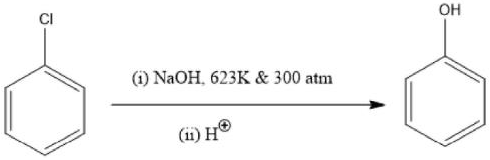
Figure

Answer options

Q12:

Haloalkanes & Haloarenes

Easy

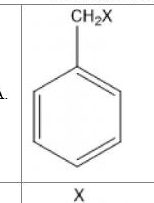
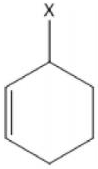
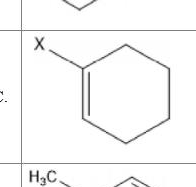
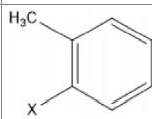
Match the LIST-I with LIST-II.

LIST-I Structure of CompoundLIST-II Name of the compound
A. FigureI. Allyl Halide
B. FigureII. Aryl Halide
C. FigureIII. Benzyl Halide
D. FigureIV. Vinyl Halide
Answer options

Q13:

d & f Block Elements

Easy

The electronic configuration of Curium (Cm, Z = 96) is.........

Answer options

Q14:

Coordination Compounds

Medium

Which of the following statements are correct?

A. Carnallite, Mohr's salt, and potash alum are double salts.

B. Double salts dissociate into simple ions completely when dissolved in water

C. Double salts are non-stoichiometric compounds.

D. Double salts have both primary and secondary valences.

Answer options

Q15:

Alcohols, Phenols & Ethers

Easy

Which of the following statements is not true for Picric Acid?

Answer options

Q16:

d & f Block Elements

Easy

Match the LIST-I with LIST-II.

LIST-I MetalLIST-II Highest oxidation state
A. MnI. +2
B. CrII. +5
C. VIII. +7
D. CuIV. +6
Answer options

Q17:

d & f Block Elements

Easy

What is the reason for lanthanoid contraction?

Answer options

Q18:

Alcohols, Phenols & Ethers

Easy

How will you differentiate between a primary alcohol and a tertiary alcohol?

Answer options

Q19:

Chemical Kinetics

Medium

Match the LIST-I with LIST-II.

LIST-I ReactionLIST-II Most appropriate reaction order
A. 2NH3(g)→Pt catalyst1130KN2(g)+3H2(g)2NH_3(g)\xrightarrow[\text{Pt catalyst}]{1130K}N_2(g)+3H_2(g)I. First-order Reaction
B. 88226Ra→24He+86222Rn{}^{226}_{88}Ra\rightarrow{}^{4}_{2}He+{}^{222}_{86}RnII. Second-order Reaction
C. KClO3+6FeSO4+3H2SO4→KCl+3Fe2(SO4)3+3H2OKClO_3+6FeSO_4+3H_2SO_4\rightarrow KCl+3Fe_2(SO_4)_3+3H_2OIII. Zero-order Reaction
D. C12H22O11+H2O→H+C6O12O6+C6O12O6C_{12}H_{22}O_{11}+H_2O\xrightarrow{H^+}C_6O_{12}O_6+C_6O_{12}O_6IV. Pseudo first-order Reaction
Answer options

Q20:

Biomolecules

Medium

Arrange the following in increasing number of carbon atoms.

A. Ribose

B. Maltose

C. Glycogen

D. Gluconic Acid

Answer options

Q21:

Biomolecules

Easy

Thymine and uracil are different in their structures due to the presence of

Answer options

Q22:

d & f Block Elements

Easy

Choose the Incorrect statement from the following:

Answer options

Q23:

Chemical Kinetics

Medium

Which of the following statements are correct?

A. The rate constant of a chemical reaction is nearly doubled with a 10°C rise in temperature.

B. A second-order reaction will obey first-order rate law if one of the reactant is taken in excess.

C. Inversion of cane sugar is a pseudo first order reaction.

D. In the concentration of reactant vs time graph of a zero-order reaction, the slope gives the value of the initial concentration of reactant.

Answer options

Q24:

Biomolecules

Easy

What is the difference between nucleosides and nucleotides formed upon hydrolysis of DNA?

Answer options

Q25:

Coordination Compounds

Easy

Which coordination complex ion is formed during the development of black and white photographic films?

Answer options

Q26:

Amines

Easy

What would be the major product of ammonolysis of an alkyl halide if large excess of ammonia was taken?

Answer options

Q27:

Alcohols, Phenols & Ethers

Easy

How will you prepare phenol from cumene?

Answer options

Q28:

Solutions

Easy

The molality of 2.4 g of acetic acid in 60 g of benzene is

Answer options

Q29:

Biomolecules

Easy

Which pair of hormones has opposite roles in human body?

Answer options

Q30:

Alcohols, Phenols & Ethers

Medium

Which of the following statements are correct?

A. p-nitrophenol is more acidic than m-nitrophenol.

B. Greater the pKapK_a value, weaker is the the acid.

C. Tertiary alcohols are more acidic than primary alcohols.

D. Phenol is more acidic than cresols.

Answer options

Q31:

Solutions

Easy

Match the LIST-I with LIST-II.

LIST-I Osmotic phenomenonLIST-II Characteristics
A. EdemaI. Pressure larger than the osmotic pressure when applied to the solution side
B. Preservation of food items by saltingII. When placed in fresh water
C. Wilted flowers reviveIII. Protects against bacterial action due to osmosis.
D. Desalination of seawaterIV. Water retention in tissue cells due to high salt consumption.
Answer options

Q32:

Coordination Compounds

Medium

Arrange the following complex ions in increasing order of number of unpaired electrons:

A. [CoF6]3−[CoF_6]^{3-}

B. [NiCl4]2−[NiCl_4]^{2-}

C. [Co(NH3)6]3+[Co(NH_3)_6]^{3+}

D. [Fe(H2O)6]3+[Fe(H_2O)_6]^{3+}

Answer options

Q33:

Solutions

Medium

Which of the following statements is/are incorrect?

A. Azeotropes are binary mixtures of liquids having the same compositions in liquid and vapor phase and boil at a constant temperature.

B. Osmotic pressure is not a colligative property; elevation in boiling point is a colligative property.

C. Minimum boiling azeotropes show a large negative deviation from Raoult's law at specific compositions.

D. Solution of n-hexane and n-heptane show negative deviation from Raoult's law.

Answer options

Q34:

Haloalkanes & Haloarenes

Easy

In which reaction, the inversion of configuration usually takes place?

Answer options

Q35:

Amines

Easy

How do you differentiate between primary, secondary and tertiary amines?

A. Reaction with Br2Br_2 water.

B. Reaction with sulfonamide.

C. Reaction with Hinsberg's reagent followed by alkali.

D. Reaction with acetic anhydride.

Answer options

Q36:

d & f Block Elements

Easy

Melting points for transition metals of 3dd, 4dd and 5dd series in general follows the order as ............

Answer options

Q37:

Amines

Easy

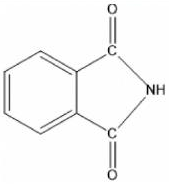
Compound (A) on reaction with NaNO2NaNO_2 and HCl at low temperature forms compound (B,) which on reaction with phenol in mild alkaline medium followed by acidification forms an orange dye (C). Identify compounds A, B, and C.

Answer options

Q38:

Chemical Kinetics

Easy

According to the following graph, the given reaction is a
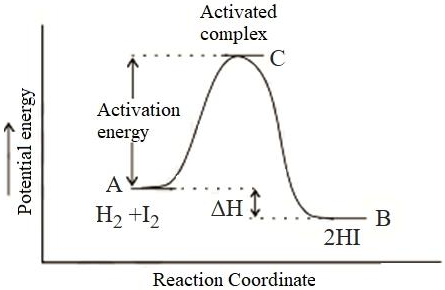
Figure

Answer options

Q39:

Amines

Easy

Match the LIST-I with LIST-II.

LIST-I ReactionLIST-II Name of the Reaction/Test
A. Figure + KOH and R-XI. Gatterman reaction
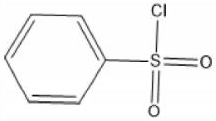
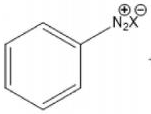
B. RNH2+CHCl3+KOHRNH_2 + CHCl_3 + KOHII. Hinsberg's test
C. Figure +C2H5NH2+ C_2H_5NH_2III. Gabriel phthalimide synthesis
D. Figure + Cu/HClIV. Isocyanide test
Answer options

Q40:

Haloalkanes & Haloarenes

Easy

What would be the major product in the following reaction, and which rule would explain the formation of the major product?

CH3CH=CH2+HI⟶CH3CH2CH2I(a)+CH3CIHCH3(b)CH_3CH{=}CH_2 + HI \longrightarrow \underset{(a)}{CH_3CH_2CH_2I} + \underset{(b)}{CH_3\overset{I}{C}HCH_3}

Answer options

Q41:

Aldehydes, Ketones & Carboxylic Acids

Medium

Organic synthesis and applications

In aldehydes, carbonyl group is bonded to carbon and hydrogen while in ketones, it is bonded to two carbon atoms. The carbonyl carbon atom is sp2sp^2-hybridised. The bond angles are approximately 120° and a trigonal coplanar structure. Methanal is gas at room temepratrure. Ethanal is a volatitle liquid. Other aldehydes and ketones are liquid or solid at room temperature. The boiling points of aldehydes and ketones are higher than hydrocarbons and ether of comparable molecular masses. It is due to weak molecular association in aldehydes and ketones arising out of the dipole-dipole interactions. Their boiling points are lower than those of alcohols of similar molecular masess due to absence of intermolecular hydrogen bonding. The lower members of aldehydes and ketones are miscible with water because they form hydrogen bonding with water. However, the solubility of aldehydes and ketones decreases rapidly on increasing the length of alkyl chain.

Aldehydes are generally more reactive than ketones in the nucleophilic addition reactions due to steric and electronic reasons. An organic compound (A) with molecular formula C8H8OC_8H_8O forms an orange-red precipitate with 2,4-DNP reagent and gives yellow precipitate on heating with iodine in the presence of sodium hydroxide. It neither reduces Tollens' or Fehlings' reagent , nor does it decolourise bromine water or Baeyer's reagent. On drastic oxidation with chromic acid, it gives a carboxylic acid (B) having molecular formula C7H6O2C_7H_6O_2.

Identify the compounds (A), and (B), in the above reaction.

Answer options

Q42:

Aldehydes, Ketones & Carboxylic Acids

Easy

Organic synthesis and applications

In aldehydes, carbonyl group is bonded to carbon and hydrogen while in ketones, it is bonded to two carbon atoms. The carbonyl carbon atom is sp2sp^2-hybridised. The bond angles are approximately 120° and a trigonal coplanar structure. Methanal is gas at room temepratrure. Ethanal is a volatitle liquid. Other aldehydes and ketones are liquid or solid at room temperature. The boiling points of aldehydes and ketones are higher than hydrocarbons and ether of comparable molecular masses. It is due to weak molecular association in aldehydes and ketones arising out of the dipole-dipole interactions. Their boiling points are lower than those of alcohols of similar molecular masess due to absence of intermolecular hydrogen bonding. The lower members of aldehydes and ketones are miscible with water because they form hydrogen bonding with water. However, the solubility of aldehydes and ketones decreases rapidly on increasing the length of alkyl chain.

Aldehydes are generally more reactive than ketones in the nucleophilic addition reactions due to steric and electronic reasons. An organic compound (A) with molecular formula C8H8OC_8H_8O forms an orange-red precipitate with 2,4-DNP reagent and gives yellow precipitate on heating with iodine in the presence of sodium hydroxide. It neither reduces Tollens' or Fehlings' reagent , nor does it decolourise bromine water or Baeyer's reagent. On drastic oxidation with chromic acid, it gives a carboxylic acid (B) having molecular formula C7H6O2C_7H_6O_2.

What is the name of the orange-red solid?

Answer options

Q43:

Aldehydes, Ketones & Carboxylic Acids

Easy

Organic synthesis and applications

In aldehydes, carbonyl group is bonded to carbon and hydrogen while in ketones, it is bonded to two carbon atoms. The carbonyl carbon atom is sp2sp^2-hybridised. The bond angles are approximately 120° and a trigonal coplanar structure. Methanal is gas at room temepratrure. Ethanal is a volatitle liquid. Other aldehydes and ketones are liquid or solid at room temperature. The boiling points of aldehydes and ketones are higher than hydrocarbons and ether of comparable molecular masses. It is due to weak molecular association in aldehydes and ketones arising out of the dipole-dipole interactions. Their boiling points are lower than those of alcohols of similar molecular masess due to absence of intermolecular hydrogen bonding. The lower members of aldehydes and ketones are miscible with water because they form hydrogen bonding with water. However, the solubility of aldehydes and ketones decreases rapidly on increasing the length of alkyl chain.

Aldehydes are generally more reactive than ketones in the nucleophilic addition reactions due to steric and electronic reasons. An organic compound (A) with molecular formula C8H8OC_8H_8O forms an orange-red precipitate with 2,4-DNP reagent and gives yellow precipitate on heating with iodine in the presence of sodium hydroxide. It neither reduces Tollens' or Fehlings' reagent , nor does it decolourise bromine water or Baeyer's reagent. On drastic oxidation with chromic acid, it gives a carboxylic acid (B) having molecular formula C7H6O2C_7H_6O_2.

The characteristic reactions of carbonyl compounds are:

Answer options

Q44:

Aldehydes, Ketones & Carboxylic Acids

Easy

Organic synthesis and applications

In aldehydes, carbonyl group is bonded to carbon and hydrogen while in ketones, it is bonded to two carbon atoms. The carbonyl carbon atom is sp2sp^2-hybridised. The bond angles are approximately 120° and a trigonal coplanar structure. Methanal is gas at room temepratrure. Ethanal is a volatitle liquid. Other aldehydes and ketones are liquid or solid at room temperature. The boiling points of aldehydes and ketones are higher than hydrocarbons and ether of comparable molecular masses. It is due to weak molecular association in aldehydes and ketones arising out of the dipole-dipole interactions. Their boiling points are lower than those of alcohols of similar molecular masess due to absence of intermolecular hydrogen bonding. The lower members of aldehydes and ketones are miscible with water because they form hydrogen bonding with water. However, the solubility of aldehydes and ketones decreases rapidly on increasing the length of alkyl chain.

Aldehydes are generally more reactive than ketones in the nucleophilic addition reactions due to steric and electronic reasons. An organic compound (A) with molecular formula C8H8OC_8H_8O forms an orange-red precipitate with 2,4-DNP reagent and gives yellow precipitate on heating with iodine in the presence of sodium hydroxide. It neither reduces Tollens' or Fehlings' reagent , nor does it decolourise bromine water or Baeyer's reagent. On drastic oxidation with chromic acid, it gives a carboxylic acid (B) having molecular formula C7H6O2C_7H_6O_2.

Identify the catalyst used in Rosenmund reduction.

Answer options

Q45:

Aldehydes, Ketones & Carboxylic Acids

Easy

Organic synthesis and applications

In aldehydes, carbonyl group is bonded to carbon and hydrogen while in ketones, it is bonded to two carbon atoms. The carbonyl carbon atom is sp2sp^2-hybridised. The bond angles are approximately 120° and a trigonal coplanar structure. Methanal is gas at room temepratrure. Ethanal is a volatitle liquid. Other aldehydes and ketones are liquid or solid at room temperature. The boiling points of aldehydes and ketones are higher than hydrocarbons and ether of comparable molecular masses. It is due to weak molecular association in aldehydes and ketones arising out of the dipole-dipole interactions. Their boiling points are lower than those of alcohols of similar molecular masess due to absence of intermolecular hydrogen bonding. The lower members of aldehydes and ketones are miscible with water because they form hydrogen bonding with water. However, the solubility of aldehydes and ketones decreases rapidly on increasing the length of alkyl chain.

Aldehydes are generally more reactive than ketones in the nucleophilic addition reactions due to steric and electronic reasons. An organic compound (A) with molecular formula C8H8OC_8H_8O forms an orange-red precipitate with 2,4-DNP reagent and gives yellow precipitate on heating with iodine in the presence of sodium hydroxide. It neither reduces Tollens' or Fehlings' reagent , nor does it decolourise bromine water or Baeyer's reagent. On drastic oxidation with chromic acid, it gives a carboxylic acid (B) having molecular formula C7H6O2C_7H_6O_2.

The name of the reaction of two molecules of benzaldehyde with conc. NaOH on heating, is

Answer options

Q46:

Electrochemistry

Easy

Electrochemical Cell

A galvanic cell is an electrochemical cell that converts chemical energy of a spontaneous redox reaction into electrical energy. It consists of two half cells, the half cell in which oxidation takes place is called as anode and the other half cell where reduction takes place is called as cathode. Anode has negative potential with respect to the solution whereas cathode has positive potential with respect to the solution. As soon as the switch is in the on position, the electrons flow from the negative electrode to positive electrode and the direction of current flow is opposite to that of electron flow. The potential difference between two electrodes is called cell potential and is measured in volts. When no current is drawn from the cell, then cell potential is termed as cell electromotive force. The cell potential is given by Nernst equation.

In the Daniell cell,

Answer options

Q47:

Electrochemistry

Easy

Electrochemical Cell

A galvanic cell is an electrochemical cell that converts chemical energy of a spontaneous redox reaction into electrical energy. It consists of two half cells, the half cell in which oxidation takes place is called as anode and the other half cell where reduction takes place is called as cathode. Anode has negative potential with respect to the solution whereas cathode has positive potential with respect to the solution. As soon as the switch is in the on position, the electrons flow from the negative electrode to positive electrode and the direction of current flow is opposite to that of electron flow. The potential difference between two electrodes is called cell potential and is measured in volts. When no current is drawn from the cell, then cell potential is termed as cell electromotive force. The cell potential is given by Nernst equation.

Which of the given statements is true about the given cell reaction?

Cu(s)+2Ag+(aq)⟶Cu2+(aq)+2 Ag(s)Cu(s) + 2Ag^+(aq) \longrightarrow Cu^{2+}(aq) + 2\,Ag(s)

Answer options

Q48:

Electrochemistry

Easy

Electrochemical Cell

A galvanic cell is an electrochemical cell that converts chemical energy of a spontaneous redox reaction into electrical energy. It consists of two half cells, the half cell in which oxidation takes place is called as anode and the other half cell where reduction takes place is called as cathode. Anode has negative potential with respect to the solution whereas cathode has positive potential with respect to the solution. As soon as the switch is in the on position, the electrons flow from the negative electrode to positive electrode and the direction of current flow is opposite to that of electron flow. The potential difference between two electrodes is called cell potential and is measured in volts. When no current is drawn from the cell, then cell potential is termed as cell electromotive force. The cell potential is given by Nernst equation.

Arrange the following metals in the decreasing order of their reducing strength (the reduction potential values in volts, for the corresponding redox couples are given with metals)

A. Li(s)Li_{(s)} (Li++e−→Li(s)Li^+ + e^- \rightarrow Li_{(s)}; E0=−3.05E^0 = -3.05)

B. Mg(s)Mg_{(s)} (Mg2++2e−→Mg(s)Mg^{2+} + 2e^- \rightarrow Mg_{(s)}; E0=−2.36E^0 = -2.36)

C. Cr(s)Cr_{(s)} (Cr3++3e−→Cr(s)Cr^{3+} + 3e^- \rightarrow Cr_{(s)}; E0=−0.74E^0 = -0.74)

D. Au(s)Au_{(s)} (Au3++3e−→Au(s)Au^{3+} + 3e^- \rightarrow Au_{(s)}; E0=1.40E^0 = 1.40)

Answer options

Q49:

Electrochemistry

Easy

Electrochemical Cell

A galvanic cell is an electrochemical cell that converts chemical energy of a spontaneous redox reaction into electrical energy. It consists of two half cells, the half cell in which oxidation takes place is called as anode and the other half cell where reduction takes place is called as cathode. Anode has negative potential with respect to the solution whereas cathode has positive potential with respect to the solution. As soon as the switch is in the on position, the electrons flow from the negative electrode to positive electrode and the direction of current flow is opposite to that of electron flow. The potential difference between two electrodes is called cell potential and is measured in volts. When no current is drawn from the cell, then cell potential is termed as cell electromotive force. The cell potential is given by Nernst equation.

The Nernst equation for the Daniell cell can be written as

Answer options

Q50:

Electrochemistry

Easy

Electrochemical Cell

A galvanic cell is an electrochemical cell that converts chemical energy of a spontaneous redox reaction into electrical energy. It consists of two half cells, the half cell in which oxidation takes place is called as anode and the other half cell where reduction takes place is called as cathode. Anode has negative potential with respect to the solution whereas cathode has positive potential with respect to the solution. As soon as the switch is in the on position, the electrons flow from the negative electrode to positive electrode and the direction of current flow is opposite to that of electron flow. The potential difference between two electrodes is called cell potential and is measured in volts. When no current is drawn from the cell, then cell potential is termed as cell electromotive force. The cell potential is given by Nernst equation.

The standard electrode potential for the Daniell cell is 1.1 V. Calculate the standard Gibbs energy at 298 K.

Given: Faraday Constant = 96500 C mol−1mol^{-1}

Answer options

CUET Chemistry 2026 30 May Shift 1 Past Year Question Paper

Every question from the CUET Chemistry 2026 30 May Shift 1 paper is here in full, with the correct answer and a step by step solution for each one. It is completely free, there is no login and no paywall, and you can read the whole paper online or download it to revise offline.

You can also attempt it instead of only reading it. Take the paper as a full length mock under exam conditions, or filter it by topic and attempt just that topic as a topic test. Both are free, and you get a breakdown of your accuracy, your timing and your weak areas once you submit.

CUET Chemistry past year questions (PYQs) are the closest thing to the real exam, so working through them is the quickest way to learn the paper pattern, the marking scheme and the level of difficulty to expect on the day.