Q1:

Chemical Kinetics

Easy

The rate constant of a reaction is given as k=3.3×10⁻⁵k = 3.3 \times 10^{-5} L mol−1mol^{-1} s−1s^{-1}. What is the order of the reaction?

Answer options
Option 1
Correct Answer
Explanation for 2026: 22 May Shift 1 CHE question 1

Q2:

Electrochemistry

Easy

What is the role of salt bridge in Daniell cell?

(A) Maintain electrical neutrality

(B) Allow the flow of ions without mixing of the two half cell solutions.

(C) Oxidize all the species involved.

(D) Reduce all the species involved.

Answer options
Option 2
Correct Answer
Explanation for 2026: 22 May Shift 1 CHE question 2

Q3:

Coordination Compounds

Easy

Match List-I with List-II

List-I (Compound)List-II (Use/Application)
(A) Na2EDTANa_2EDTA(I) Hydrogenation of alkenes
(B) [(Ph3P)3RhCl][(Ph_3P)_3RhCl](II) Estimation of hardness of water
(C) [Au(CN)2]−[Au(CN)_2]^-(III) Photography
(D) [Ag(S2O3)2]3−[Ag(S_2O_3)_2]^{3-}(IV) Separation of gold
Answer options
Option 1
Correct Answer
Explanation for 2026: 22 May Shift 1 CHE question 3

Q4:

Haloalkanes & Haloarenes

Easy

Arrange the following compounds in order of increasing boiling points.

(A) Bromomethane

(B) Bromoform

(C) Chloromethane

(D) Dibromomethane

Answer options
Option 2
Correct Answer
Explanation for 2026: 22 May Shift 1 CHE question 4

Q5:

Alcohols, Phenols & Ethers

Medium

Ethanol is dehydrated in the presence of conc.Sulphuric acid at ______ by ____ mechanism, to produce ethoxyethane as the main product.

Answer options
Option 1
Correct Answer
Explanation for 2026: 22 May Shift 1 CHE question 5

Q6:

Alcohols, Phenols & Ethers

Medium

Arrange the following compounds in increasing order of their acid strength.

(A) Propan-1-ol

(B) Picric Acid

(C) 4-methylphenol

(D) Phenol

Answer options
Option 2
Correct Answer
Explanation for 2026: 22 May Shift 1 CHE question 6

Q7:

Aldehydes, Ketones & Carboxylic Acids

Easy

Which class of follwing compound react with 2,4-DNP reagent to form an orange-red precipitate?

Answer options
Option 4
Correct Answer
Explanation for 2026: 22 May Shift 1 CHE question 7

Q9:

Chemical Kinetics

Easy

Consider the following first order reaction:

A→Product\mathrm{A \rightarrow Product}

The values of the initial concentration of the reactant A are given below:

(A) 0.2 M

(B) 0.3 M

(C) 0.4 M

(D) 0.5 M

The initial rate of the given reaction in increasing order is

Answer options
Option 1
Correct Answer
Explanation for 2026: 22 May Shift 1 CHE question 9

Q10:

Electrochemistry

Easy

How does conductivity and molar conductivity vary with decrease in concentration of solution?

Answer options

Q11:

Haloalkanes & Haloarenes

Easy

Which haloform was used as a general anaesthetic in surgery earlier but now has been replaced by less toxic substances?

Answer options

Q12:

Alcohols, Phenols & Ethers

Easy

An organic compound on oxidation with KMnO4KMnO_4 gives carboxylic acid but produces an aldehyde with PCC. The compound used in the reaction is a/an

Answer options

Q13:

Coordination Compounds

Medium

Arrange following ligands in their increasing order of field strength

(A) NCS−NCS^-

(B) OH−OH^-

(C) edta4−edta^{4-}

(D) en

Answer options

Q15:

Haloalkanes & Haloarenes

Easy

Among the following halogen compounds, which would undergo an SN2S_N2 reaction faster?

Answer options

Q16:

Aldehydes, Ketones & Carboxylic Acids

Medium

Match List-I with List-II

Organic CompoundsPositive Tests
(A) Formaldehyde(I) Bromine water test
(B) Phenol(II) Tollen's test
(C) 3° Alcohol(III) Iodoform test
(D) Acetophenone(IV) Lucas test
Answer options

Q19:

Solutions

Easy

Which of the following are true for solutions that obey Raoult's law over the entire range of concentration?

(A) ΔmixH=0\Delta_{mix}H = 0,

(B) ΔmixV=0\Delta_{mix}V = 0

(C) They are called ideal solutions.

(D) They are called non-ideal solutions.

Answer options

Q20:

Electrochemistry

Easy

Match List-I with List-II

List-I ExpressionList-II Known as
(A) ΔrGo=nFE(cell)o\Delta_r G^o = nFE^o_{(cell)}(I) Cell constant
(B) G∗=lA=R kG^* = \frac{l}{A} = R\,k(II) Standard Gibbs energy
(C) Λm=kc\Lambda_m = \frac{k}{c}(III) Conductivity
(D) κ=1ρ\kappa = \frac{1}{\rho}(IV) Molar conductivity
Answer options

Q21:

Solutions

Easy

What will happen when red blood cells (RBCs) are kept in more than 0.9% (mass/ volume) sodium chloride solution?

Answer options

Q22:

Chemical Kinetics

Medium

Which of the following is true for complex reactions?

Answer options

Q23:

Solutions

Easy

The tanks used by scuba divers are filled with air diluted with helium to ____.

Answer options

Q24:

Coordination Compounds

Easy

Isomers are......

Answer options

Q25:

Chemical Kinetics

Easy

A reaction is found to have a rate constant, k=5.5×10⁻¹⁴k = 5.5 \times 10^{-14} s−1s^{-1}. The half life of this reaction is:

Answer options

Q26:

Solutions

Easy

Match List-I with List-II

List-I CharacteristicsList-II Name
(A) Depends on the number of solute particles(I) Azeotrope
(B) Binary mixtures having the same composition in liquid and vapour phase and boiling at constant temperature(II) Colligative properties
(C) Pure solvent flows out of the solution when pressure larger than the osmotic pressure is applied to the solution side, separated from pure solvent through a semi-permeable membrane.(III) Isotonic solutions
(D) Solutions having the same osmotic pressure at a given temperature.(IV) Reverse osmosis
Answer options

Q28:

Haloalkanes & Haloarenes

Easy

Haloalkanes react with KCN to form alkyl cyanides as main product because

Answer options

Q29:

Coordination Compounds

Easy

An example of ligand which has two different donor atoms and either of the two ligetes in the complex is _____

Answer options

Q30:

Coordination Compounds

Medium

Select the Incorrect statements about coordination compounds from the following:

(A) The primary valence is equal to the coordination number of metal ion

(B) The secondary valence is equal to the oxidation number of metal ion

(C) The central metal atoms/ions act as Lewis acids

(D) C2O42−C_2O_4^{2-} is a bidentate and ambidentate ligand.

Answer options

Q31:

Aldehydes, Ketones & Carboxylic Acids

Medium

Arrange the following compounds in increasing order of their reactivity towards nucleophilic addition reaction.

(A) Ethanal

(B) Propanal

(C) Propanone

(D) Butanone

Answer options

Q32:

Amines

Easy

Consider the following reaction and choose the correct statements corresponding to the reaction..

R/Ar-NH2+3KOH+CHCl3→R/Ar-NC+3KCl+3H2OR/Ar\text{-}NH_2 + 3KOH + CHCl_3 \rightarrow R/Ar\text{-}NC + 3KCl + 3H_2O

(A) carbylamine reaction.

(B) isocyanide test.

(C) used as a test for primary amines.

(D) used as a test for secondary amines.

Answer options

Q34:

Electrochemistry

Medium

The standard electrode potential values are as follows:

(A). K K+/K=−2.93V\quad K^+/K = -2.93V,

(B). Ag Ag+/Ag=0.80V\quad Ag^+/Ag = 0.80V.

(C). Br−Br^- Br2/Br−=1.09V\quad Br_2/Br^- = 1.09V.

(D). Co2+Co^{2+} Co3+/Co2+=1.81V\quad Co^{3+}/Co^{2+} = 1.81V.

Arrange the given species in the increasing order of their reducing strength.

Answer options

Q35:

Chemical Kinetics

Easy

For a reaction, A + B ⟶\longrightarrow Product; the rate law is given by, Rate = k [A]3/2[B]−1k\,[A]^{3/2}[B]^{-1}. What is the order of the reaction?

Answer options

Q36:

Amines

Medium

Match List-I with List-II

List-I REACTIONSList-II PRODUCTS
(A) C6H5NH2+(CH3CO)2OC_6H_5NH_2 + (CH_3CO)_2O in pyridine(I) C6H5N2+Cl−+NaCl+2H2OC_6H_5N_2^+Cl^- + NaCl + 2H_2O
(B) C6H5N2+Cl−+C6H5OH+OH−C_6H_5N_2^+Cl^- + C_6H_5OH + OH^-(II) C6H5NHCOCH3+CH3COOHC_6H_5NHCOCH_3 + CH_3COOH
(C) Figure(III) Figure
(D) C6H5NH2+NaNO2+2HCl→273−278KC_6H_5NH_2 + NaNO_2 + 2HCl \xrightarrow{273-278K}(IV) Figure
Answer options

Q38:

Electrochemistry

Medium

A solution of CuSO4CuSO_4 is electrolysed for 10 minutes with a current of 1.5 amperes. What is the mass of copper deposited at the cathode? (Molar mass of Cu is 63 g mol−1mol^{-1}).

Answer options

Q40:

Alcohols, Phenols & Ethers

Easy

What will be the product in the following reaction ?
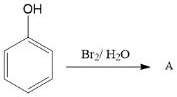
Figure

Answer options

Q41:

d & f Block Elements

Easy

TRANSITION METALS

All the transition elements display typical metallic properties such as high tensile strength, ductility, malleability, high thermal and electrical conductivity and metallic lustre. With the exceptions of Zn, Cd, Hg and Mn, they have one or more typical metallic structures at normal temperatures.

The transition metals (with the exception of Zn, Cd and Hg) are very hard and have low volatility. Their melting and boiling points are high. The high melting points of these metals are attributed to the involvement of greater number of electrons from (n−1)d(n-1)d in addition to the nsns electrons in the interatomic metallic bonding. In any row the melting points of these metals rise to a maximum at d5d^5 except for anomalous values of Mn and Tc and fall regularly as the atomic number increases.

The maxima at about the middle of each series indicate that one unpaired electron per dd orbital is particularly favourable for strong interatomic interaction. In general, greater the number of valence electrons, stronger is the resultant bonding. Since the enthalpy of atomisation is an important factor in determining the standard electrode potential of a metal, metals with very high enthalpy of atomisation (i.e., very high boiling point) tend to be noble in their reactions.

Which of the following transition metals is not very hard?

Answer options

Q42:

d & f Block Elements

Easy

TRANSITION METALS

All the transition elements display typical metallic properties such as high tensile strength, ductility, malleability, high thermal and electrical conductivity and metallic lustre. With the exceptions of Zn, Cd, Hg and Mn, they have one or more typical metallic structures at normal temperatures.

The transition metals (with the exception of Zn, Cd and Hg) are very hard and have low volatility. Their melting and boiling points are high. The high melting points of these metals are attributed to the involvement of greater number of electrons from (n−1)d(n-1)d in addition to the nsns electrons in the interatomic metallic bonding. In any row the melting points of these metals rise to a maximum at d5d^5 except for anomalous values of Mn and Tc and fall regularly as the atomic number increases.

The maxima at about the middle of each series indicate that one unpaired electron per dd orbital is particularly favourable for strong interatomic interaction. In general, greater the number of valence electrons, stronger is the resultant bonding. Since the enthalpy of atomisation is an important factor in determining the standard electrode potential of a metal, metals with very high enthalpy of atomisation (i.e., very high boiling point) tend to be noble in their reactions.

Which of the 3d series transition metal exhibits maximum number of oxidation states?

Answer options

Q43:

d & f Block Elements

Easy

TRANSITION METALS

All the transition elements display typical metallic properties such as high tensile strength, ductility, malleability, high thermal and electrical conductivity and metallic lustre. With the exceptions of Zn, Cd, Hg and Mn, they have one or more typical metallic structures at normal temperatures.

The transition metals (with the exception of Zn, Cd and Hg) are very hard and have low volatility. Their melting and boiling points are high. The high melting points of these metals are attributed to the involvement of greater number of electrons from (n−1)d(n-1)d in addition to the nsns electrons in the interatomic metallic bonding. In any row the melting points of these metals rise to a maximum at d5d^5 except for anomalous values of Mn and Tc and fall regularly as the atomic number increases.

The maxima at about the middle of each series indicate that one unpaired electron per dd orbital is particularly favourable for strong interatomic interaction. In general, greater the number of valence electrons, stronger is the resultant bonding. Since the enthalpy of atomisation is an important factor in determining the standard electrode potential of a metal, metals with very high enthalpy of atomisation (i.e., very high boiling point) tend to be noble in their reactions.

Why do transition elements exhibit higher enthalpies of atomisation?

Answer options

Q44:

d & f Block Elements

Easy

TRANSITION METALS

All the transition elements display typical metallic properties such as high tensile strength, ductility, malleability, high thermal and electrical conductivity and metallic lustre. With the exceptions of Zn, Cd, Hg and Mn, they have one or more typical metallic structures at normal temperatures.

The transition metals (with the exception of Zn, Cd and Hg) are very hard and have low volatility. Their melting and boiling points are high. The high melting points of these metals are attributed to the involvement of greater number of electrons from (n−1)d(n-1)d in addition to the nsns electrons in the interatomic metallic bonding. In any row the melting points of these metals rise to a maximum at d5d^5 except for anomalous values of Mn and Tc and fall regularly as the atomic number increases.

The maxima at about the middle of each series indicate that one unpaired electron per dd orbital is particularly favourable for strong interatomic interaction. In general, greater the number of valence electrons, stronger is the resultant bonding. Since the enthalpy of atomisation is an important factor in determining the standard electrode potential of a metal, metals with very high enthalpy of atomisation (i.e., very high boiling point) tend to be noble in their reactions.

Why transition metal ions are colored?

Answer options

Q45:

d & f Block Elements

Easy

TRANSITION METALS

All the transition elements display typical metallic properties such as high tensile strength, ductility, malleability, high thermal and electrical conductivity and metallic lustre. With the exceptions of Zn, Cd, Hg and Mn, they have one or more typical metallic structures at normal temperatures.

The transition metals (with the exception of Zn, Cd and Hg) are very hard and have low volatility. Their melting and boiling points are high. The high melting points of these metals are attributed to the involvement of greater number of electrons from (n−1)d(n-1)d in addition to the nsns electrons in the interatomic metallic bonding. In any row the melting points of these metals rise to a maximum at d5d^5 except for anomalous values of Mn and Tc and fall regularly as the atomic number increases.

The maxima at about the middle of each series indicate that one unpaired electron per dd orbital is particularly favourable for strong interatomic interaction. In general, greater the number of valence electrons, stronger is the resultant bonding. Since the enthalpy of atomisation is an important factor in determining the standard electrode potential of a metal, metals with very high enthalpy of atomisation (i.e., very high boiling point) tend to be noble in their reactions.

Identify the general electronic configuration of d-block elements?

Answer options

Q46:

Biomolecules

Easy

VITAMINS

In living organism, some of organic compounds are required in small amounts in our diet but their deficiency causes specific diseases. These compounds are called vitamins. Most of the vitamins cannot be synthesized in our body but plants can synthesise almost all of them, so they are considered as essential food factors. However, the bacteria of the gut can produce some of the vitamins required by us. All the vitamins are generally available in our diet. Different vitamins belong to various chemical classes and it is difficult to define them on the basis of structure. They are generally regarded as organic compounds required in the diet in small amounts to perform specific biological functions for normal maintenance of optimum growth and health of the organism. Vitamins are designated by alphabets A, B, C, D, etc. Some of them are further named as sub-groups e.g. B1B_1, B2B_2, B6B_6, B12B_{12}, etc. Excess of vitamins is also harmful and vitamin pills should not be taken without the advice of doctor. Vitamins are classified into two groups depending upon their solubility in water or fat.

Vitamin responsible for the coagulation of blood is

Answer options

Q47:

Biomolecules

Easy

VITAMINS

In living organism, some of organic compounds are required in small amounts in our diet but their deficiency causes specific diseases. These compounds are called vitamins. Most of the vitamins cannot be synthesized in our body but plants can synthesise almost all of them, so they are considered as essential food factors. However, the bacteria of the gut can produce some of the vitamins required by us. All the vitamins are generally available in our diet. Different vitamins belong to various chemical classes and it is difficult to define them on the basis of structure. They are generally regarded as organic compounds required in the diet in small amounts to perform specific biological functions for normal maintenance of optimum growth and health of the organism. Vitamins are designated by alphabets A, B, C, D, etc. Some of them are further named as sub-groups e.g. B1B_1, B2B_2, B6B_6, B12B_{12}, etc. Excess of vitamins is also harmful and vitamin pills should not be taken without the advice of doctor. Vitamins are classified into two groups depending upon their solubility in water or fat.

Among the followings, vitamin stored in liver and adipose tissues is

Answer options

Q48:

Biomolecules

Easy

VITAMINS

In living organism, some of organic compounds are required in small amounts in our diet but their deficiency causes specific diseases. These compounds are called vitamins. Most of the vitamins cannot be synthesized in our body but plants can synthesise almost all of them, so they are considered as essential food factors. However, the bacteria of the gut can produce some of the vitamins required by us. All the vitamins are generally available in our diet. Different vitamins belong to various chemical classes and it is difficult to define them on the basis of structure. They are generally regarded as organic compounds required in the diet in small amounts to perform specific biological functions for normal maintenance of optimum growth and health of the organism. Vitamins are designated by alphabets A, B, C, D, etc. Some of them are further named as sub-groups e.g. B1B_1, B2B_2, B6B_6, B12B_{12}, etc. Excess of vitamins is also harmful and vitamin pills should not be taken without the advice of doctor. Vitamins are classified into two groups depending upon their solubility in water or fat.

Ascorbic acid is also known as

Answer options

Q49:

Biomolecules

Easy

VITAMINS

In living organism, some of organic compounds are required in small amounts in our diet but their deficiency causes specific diseases. These compounds are called vitamins. Most of the vitamins cannot be synthesized in our body but plants can synthesise almost all of them, so they are considered as essential food factors. However, the bacteria of the gut can produce some of the vitamins required by us. All the vitamins are generally available in our diet. Different vitamins belong to various chemical classes and it is difficult to define them on the basis of structure. They are generally regarded as organic compounds required in the diet in small amounts to perform specific biological functions for normal maintenance of optimum growth and health of the organism. Vitamins are designated by alphabets A, B, C, D, etc. Some of them are further named as sub-groups e.g. B1B_1, B2B_2, B6B_6, B12B_{12}, etc. Excess of vitamins is also harmful and vitamin pills should not be taken without the advice of doctor. Vitamins are classified into two groups depending upon their solubility in water or fat.

Fissuring at corners of mouth and lips are symtoms of :

Answer options

Q50:

Biomolecules

Easy

VITAMINS

In living organism, some of organic compounds are required in small amounts in our diet but their deficiency causes specific diseases. These compounds are called vitamins. Most of the vitamins cannot be synthesized in our body but plants can synthesise almost all of them, so they are considered as essential food factors. However, the bacteria of the gut can produce some of the vitamins required by us. All the vitamins are generally available in our diet. Different vitamins belong to various chemical classes and it is difficult to define them on the basis of structure. They are generally regarded as organic compounds required in the diet in small amounts to perform specific biological functions for normal maintenance of optimum growth and health of the organism. Vitamins are designated by alphabets A, B, C, D, etc. Some of them are further named as sub-groups e.g. B1B_1, B2B_2, B6B_6, B12B_{12}, etc. Excess of vitamins is also harmful and vitamin pills should not be taken without the advice of doctor. Vitamins are classified into two groups depending upon their solubility in water or fat.

Deficiency of which vitamin causes bleeding of gums?

Answer options

CUET Chemistry 2026 22 May Shift 1 Past Year Question Paper

Every question from the CUET Chemistry 2026 22 May Shift 1 paper is here in full, with the correct answer and a step by step solution for each one. It is completely free, there is no login and no paywall, and you can read the whole paper online or download it to revise offline.

You can also attempt it instead of only reading it. Take the paper as a full length mock under exam conditions, or filter it by topic and attempt just that topic as a topic test. Both are free, and you get a breakdown of your accuracy, your timing and your weak areas once you submit.

CUET Chemistry past year questions (PYQs) are the closest thing to the real exam, so working through them is the quickest way to learn the paper pattern, the marking scheme and the level of difficulty to expect on the day.