Q2:

Aldehydes, Ketones & Carboxylic Acids

Easy

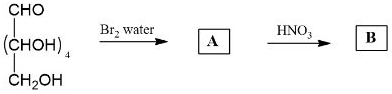
The product of the following reaction is /are
Figure

Answer options
Option 2
Correct Answer
Explanation for 2026: 29 May Shift 1 CHE question 2

Q3:

Electrochemistry

Medium

Given: Limiting molar conductivity λ∘\lambda^\circ

H+^+ = 349.6 S cm2^2 mol−1^{-1}

Na+^+ = 50.1 S cm2^2 mol−1^{-1}

Ca2+^{2+} = 119 S cm2^2 mol−1^{-1}

Mg2+^{2+} = 106 S cm2^2 mol−1^{-1}

Cl−^- = 76.3 S cm2^2 mol−1^{-1}

Match List-I with List-II

List-IList-II
ElectrolytesLimiting Molar Conductivity
(A) NaCl(I) 425.9 S cm2^2 mol−1^{-1}
(B) CaCl2_2(II) 126.4 S cm2^2 mol−1^{-1}
(C) HCl(III) 271.6 S cm2^2 mol−1^{-1}
(D) MgCl2_2(IV) 258.6 S cm2^2 mol−1^{-1}
Answer options
Option 2
Correct Answer
Explanation for 2026: 29 May Shift 1 CHE question 3

Q4:

Aldehydes, Ketones & Carboxylic Acids

Easy

In Etard reaction, benzaldehyde can be synthesized by using

Answer options
Option 2
Correct Answer
Explanation for 2026: 29 May Shift 1 CHE question 4

Q5:

Chemical Kinetics

Easy

Match List-I with List-II

List-IList-II
Reaction/ ConstantUnit
(A) Zero order reaction(I) mol−1^{-1} L s−1^{-1}
(B) First order reaction(II) cal K−1^{-1} mol−1^{-1}
(C) R (Gas constant)(III) mol L−1^{-1} s−1^{-1}
(D) Second Order reaction(IV) s−1^{-1}
Answer options
Option 2
Correct Answer
Explanation for 2026: 29 May Shift 1 CHE question 5

Q6:

Chemical Kinetics

Medium

2N2O5(g)→4NO2(g)+O2(g)\mathrm{2N_2O_5(g) \rightarrow 4NO_2(g) + O_2(g)}

The value of rate constant (k) for the above reaction was determined at several temperatures. A plot of ln k versus 1/T gave a straight line with slope −1.2×10⁴-1.2 \times 10^4 K. The activation energy of the reaction will be

Answer options
Option 1
Correct Answer
Explanation for 2026: 29 May Shift 1 CHE question 6

Q10:

Haloalkanes & Haloarenes

Easy

Consider the statements for Substitution Nucleophilic Bimolecular (SN2\mathrm{S_N2}) reaction.

(A) The nucleophile approaches the carbon bearing the leaving group from the back side.

(B) Nucleophilic displacement of the leaving group causes retention of configuration.

(C) Nucleophilic displacement of the leaving group causes inversion of configuration.

(D) In case of alkyl halides, 3∘^\circ alkyl halides undergo SN2\mathrm{S_N2} reaction faster.

Choose the incorrect statements from the options given below:

Answer options

Q11:

Coordination Compounds

Medium

Select the Correct statements about the magnetic nature of the following compounds:

(A) [Cr(NH3_3)6_6]3+^{3+} is paramagnetic

(B) [Ni(Cl)4_4]2−^{2-} is diamagnetic

(C) [Ni(CN)4_4]2−^{2-} is diamagnetic

(D) [Co(NH3_3)6_6]3+^{3+}is paramagnetic

Answer options

Q12:

Coordination Compounds

Easy

The complex [CoF6_6]3−^{3-} can be characterized as........

Answer options

Q13:

Alcohols, Phenols & Ethers

Easy

The IUPAC name of the product formed by the reaction of propanone with methylmagnesium bromide followed by hydrolysis is

Answer options

Q14:

d & f Block Elements

Medium

Which of the following statements is Incorrect regarding f-block elements?

Answer options

Q16:

Aldehydes, Ketones & Carboxylic Acids

Medium

Arrange the following compounds in increasing order of their boiling points.

(A) Pentan-1-ol

(B) n-butane

(C) pentanal

(D) ethoxyethane

Answer options

Q17:

Electrochemistry

Medium

The increasing order of the electrical resistance of the copper wires A, B, C and D will be

(A) Copper wire A: diameter 1 cm, length 50 cm

(B) Copper wire B: diameter 2 cm, length 50 cm

(C) Copper wire C: diameter 1 cm, length 100 cm

(D) Copper wire D: diameter 2 cm, length 100 cm

Conductivity of copper is 5.9×1035.9 \times 10^3 S m−1^{-1}

Answer options

Q18:

Electrochemistry

Easy

The cell for the following reaction can be represented as

Mg(s)+2Ag+(aq)→Mg2+(aq)+2Ag(s)\mathrm{Mg(s) + 2Ag^+(aq) \rightarrow Mg^{2+}(aq) + 2Ag(s)}

Answer options

Q21:

Alcohols, Phenols & Ethers

Medium

Arrange the following compounds in increasing order of acidity.

(A) o-Nitrophenol

(B) p-Nitrophenol

(C) m-Nitrophenol

(D) Phenol

Answer options

Q22:

Coordination Compounds

Easy

IUPAC name of K3_3[Cr(C2_2O4_4)3_3] is

Answer options

Q23:

Aldehydes, Ketones & Carboxylic Acids

Easy

Match List-I with List-II

List-IList-II
Name reactionReagnet
(A) Wolff Kishner reaction(I) Zn-Hg/HCl
(B) Clemmensen reduction reaction(II) NH2_2NH2_2, KOH / ethylene glycol, heat
(C) Jones Reagent(III) H2_2, Pd-BaSO4_4
(D) Rosenmund reagent(IV) CrO3_3-H2_2SO4_4
Answer options

Q24:

Haloalkanes & Haloarenes

Easy

Match List-I with List-II

List-IList-II
Reagents and SubstratesName Reaction
(A) Alkyl chloride + NaI + dry acetone(I) Wurtz reaction
(B) Alkyl halide + Na(II) Friedel-Crafts reaction
(C) Aryl halide + methyl chloride + anhyd. AlCl3_3(III) Finkelstein reaction
(D) Aryl halide + Na(IV) Fittig reaction
Answer options

Q25:

Chemical Kinetics

Medium

Which of the following are not true for order of a chemical reaction ?

(A) It is the sum of powers of the concentration terms in the rate law expression.

(B) It is the sum of stoichiometric coefficients of a chemical reaction.

(C) It is an experimentally determined value.

(D) It is always a whole number.

(E) It can not have zero value.

Answer options

Q26:

Chemical Kinetics

Easy

Which factors affect the rate of a chemical reaction?

(A) Temperature

(B) Pressure

(C) Product concentration.

(D) Reactant Concentration

(E) Shape of container

(F) Catalyst

Answer options

Q27:

Biomolecules

Easy

Maltose on hydrolysis gives

Answer options

Q28:

Alcohols, Phenols & Ethers

Easy

Which of the following reactions is not given by phenols ?

Answer options

Q29:

Coordination Compounds

Easy

Select the Incorrect statement from the following:

Answer options

Q30:

Coordination Compounds

Hard

Match List-I with List-II

List-IList-II
COORDINATION COMPOUNDOxidation state, Coordination number, and orbital configuration
(A) K3_3[Co(C2_2O4_4)3_3](I) O.S.= +3, C.N.= 6, t2g3t_{2g}^3
(B) cis-[CrCl2_2(en)2_2]Cl(II) O.S.= +3, C.N.= 6, t2g6eg0t_{2g}^6 e_g^0
(C) K3_3[Fe(CN)6_6](III) O.S.= +2, C.N.= 6, t2g3eg2t_{2g}^3 e_g^2
(D) [Mn(H2_2O)6_6]SO4_4(IV) O.S.= +3, C.N.= 6, t2g5eg0t_{2g}^5 e_g^0
Answer options

Q31:

Coordination Compounds

Medium

__________ is chiral (optically active) compound.

Answer options

Q32:

d & f Block Elements

Medium

Arrange the following metals in decreasing order of their melting points:

(A) Molybdenum

(B) Copper

(C) Tungsten

(D) Manganese

Answer options

Q34:

Electrochemistry

Easy

Standard electrode potentials of four metals (Mn+^{n+}/M) are given below. Arrange them in decreasing order of their reducing power.

(A) Zn (-0.76V)

(B) Fe (-0.44V)

(C) Cu (0.33V)

(D) Ca (-2.8 V)

Answer options

Q35:

Electrochemistry

Easy

The standard electrode potential for the Daniell cell is 1.1 V. The standard Gibbs energy for the given below reaction will be:

Zn(s)+Cu2+(aq)→Zn2+(aq)+Cu(s)\mathrm{Zn(s) + Cu^{2+}(aq) \rightarrow Zn^{2+}(aq) + Cu(s)}

Answer options

Q38:

Haloalkanes & Haloarenes

Medium

Choose the correct statements for Markovnikov's rule.

(A) An alkene is converted to corresponding alkyl halide by reaction with HCl, HBr and HI.

(B) But-1-ene on reaction with HCl gives 2-chlorobutane as major product.

(C) But-1-ene on reaction with HCl gives 1-chlorobutane as major product.

(D) Addition of hydrogen takes place to the doubly bonded carbon atom which is more substituted.

Answer options

Q39:

Chemical Kinetics

Easy

For a reaction, the rate = k[A]2^2[B], when the initial concentration of A is doubled, the initial rate will

Answer options

Q40:

Haloalkanes & Haloarenes

Medium

Consider the following reactions.

CH3Cl→KNO2Product A\mathrm{CH_3Cl} \xrightarrow{\mathrm{KNO_2}} \text{Product A}

CH3Cl→AgNO2Product B\mathrm{CH_3Cl} \xrightarrow{\mathrm{AgNO_2}} \text{Product B}

In the above mentioned reactions, the reaction of chloromethane with KNO2_2 and AgNO2_2 afford two products: Products A and B, respectively. The Products A and B are:

Answer options

Q41:

Solutions

Medium

Solutions

Let us consider a binary solution of two volatile liquids and denote the two components as 1 and 2. When taken in a closed vessel, both the components would evaporate and eventually an equilibrium would be established between vapour phase and the liquid phase. Let the total vapour pressure at this stage be ptotalp_{total} and p1p_1 and p2p_2 be the partial vapour pressures of the two components 1 and 2 respectively. These partial pressures are related to the mole fractions x1x_1 and x2x_2 of the two components 1 and 2 respectively. The French chemist, Francois Marte Raoult (1886) gave the quantitative relationship between them. The relationship is known as the Raoult's law which states that for a solution of volatile liquids the partial vapour pressure of each component of the solution is directly proportional to its mole fraction (x1x_1) present in solution.

On mixing, benzene and toluene form an ideal solution. At 88 °C, the vapour pressure of the two liquid components (benzene and toluene) are 957 mm Hg and 379.5 mm Hg respectively. The vapour pressure of the solution obtained by mixing 19.5 g of benzene and 46 g of toluene will be approximately: (molar mass of benzene = 78 g mol−1^{-1} and toluene = 92 g mol−1^{-1})

Answer options

Q42:

Solutions

Easy

Solutions

Let us consider a binary solution of two volatile liquids and denote the two components as 1 and 2. When taken in a closed vessel, both the components would evaporate and eventually an equilibrium would be established between vapour phase and the liquid phase. Let the total vapour pressure at this stage be ptotalp_{total} and p1p_1 and p2p_2 be the partial vapour pressures of the two components 1 and 2 respectively. These partial pressures are related to the mole fractions x1x_1 and x2x_2 of the two components 1 and 2 respectively. The French chemist, Francois Marte Raoult (1886) gave the quantitative relationship between them. The relationship is known as the Raoult's law which states that for a solution of volatile liquids the partial vapour pressure of each component of the solution is directly proportional to its mole fraction (x1x_1) present in solution.

The change in enthalpy of mixing and the volume of mixing for the ideal solution which obeys Raoult's law will be

Answer options

Q43:

Solutions

Medium

Solutions

Let us consider a binary solution of two volatile liquids and denote the two components as 1 and 2. When taken in a closed vessel, both the components would evaporate and eventually an equilibrium would be established between vapour phase and the liquid phase. Let the total vapour pressure at this stage be ptotalp_{total} and p1p_1 and p2p_2 be the partial vapour pressures of the two components 1 and 2 respectively. These partial pressures are related to the mole fractions x1x_1 and x2x_2 of the two components 1 and 2 respectively. The French chemist, Francois Marte Raoult (1886) gave the quantitative relationship between them. The relationship is known as the Raoult's law which states that for a solution of volatile liquids the partial vapour pressure of each component of the solution is directly proportional to its mole fraction (x1x_1) present in solution.

At constant temperature, 250 mL of nitrogen under 720 mm pressure and 380 mL of oxygen under 650 mm pressure were put into a one liter flask. The final pressure of the mixture will be;

Answer options

Q44:

Solutions

Easy

Solutions

Let us consider a binary solution of two volatile liquids and denote the two components as 1 and 2. When taken in a closed vessel, both the components would evaporate and eventually an equilibrium would be established between vapour phase and the liquid phase. Let the total vapour pressure at this stage be ptotalp_{total} and p1p_1 and p2p_2 be the partial vapour pressures of the two components 1 and 2 respectively. These partial pressures are related to the mole fractions x1x_1 and x2x_2 of the two components 1 and 2 respectively. The French chemist, Francois Marte Raoult (1886) gave the quantitative relationship between them. The relationship is known as the Raoult's law which states that for a solution of volatile liquids the partial vapour pressure of each component of the solution is directly proportional to its mole fraction (x1x_1) present in solution.

When phenol and aniline are mixed, their boiling points become greater than both of them. The mixture is :

Answer options

Q45:

Solutions

Medium

Solutions

Let us consider a binary solution of two volatile liquids and denote the two components as 1 and 2. When taken in a closed vessel, both the components would evaporate and eventually an equilibrium would be established between vapour phase and the liquid phase. Let the total vapour pressure at this stage be ptotalp_{total} and p1p_1 and p2p_2 be the partial vapour pressures of the two components 1 and 2 respectively. These partial pressures are related to the mole fractions x1x_1 and x2x_2 of the two components 1 and 2 respectively. The French chemist, Francois Marte Raoult (1886) gave the quantitative relationship between them. The relationship is known as the Raoult's law which states that for a solution of volatile liquids the partial vapour pressure of each component of the solution is directly proportional to its mole fraction (x1x_1) present in solution.

The vapour pressure of pure liquids P and R are 957 and 379.5 mm Hg, respectively at 350 K. The composition of the P and R mixture if total vapour pressure is 760 mm Hg will be

Answer options

Q46:

Amines

Easy

Physical and Chemical properties of Amines

Like ammonia, nitrogen atom of amines is trivalent and carries an unshared pair of electrons. Nitrogen orbitals in amines are therefore, sp3^3 hybridised. Each of the three sp3^3 hybridised orbitals of nitrogen overlap with orbitals of hydrogen or carbon depending upon the composition of the amines. The fourth orbital of nitrogen in all amines contains an unshared pair of electrons. Amines have an unshared pair of electrons on nitrogen atom due to which they behave as Lewis base as well as act as a nucleophile. Lower aliphatic amines are soluble in water because they form hydrogen bond with water molecules and also form strong intermolecular hydrogen bonding. Solvation, +I and +R groups affect the electron density over nitrogen atom. Their pkb_b value lies in the range of 3 to 4.22. The most widely used method for preparing amines involves the reduction of nitro group, nitriles, amides, etc. using different reagents like H2_2/Pd, Sn+HCl, H2_2/Ni, LiAlH4_4+H2_2O, Br2_2+NaOH etc. Primary amines can be easily detected by the carbylamines test and Hinsberg's reagent. Diazonium salt can be synthesized from amines easily for synthesis of variety of new compounds..

Trimethylamine has

Answer options

Q47:

Amines

Medium

Physical and Chemical properties of Amines

Like ammonia, nitrogen atom of amines is trivalent and carries an unshared pair of electrons. Nitrogen orbitals in amines are therefore, sp3^3 hybridised. Each of the three sp3^3 hybridised orbitals of nitrogen overlap with orbitals of hydrogen or carbon depending upon the composition of the amines. The fourth orbital of nitrogen in all amines contains an unshared pair of electrons. Amines have an unshared pair of electrons on nitrogen atom due to which they behave as Lewis base as well as act as a nucleophile. Lower aliphatic amines are soluble in water because they form hydrogen bond with water molecules and also form strong intermolecular hydrogen bonding. Solvation, +I and +R groups affect the electron density over nitrogen atom. Their pkb_b value lies in the range of 3 to 4.22. The most widely used method for preparing amines involves the reduction of nitro group, nitriles, amides, etc. using different reagents like H2_2/Pd, Sn+HCl, H2_2/Ni, LiAlH4_4+H2_2O, Br2_2+NaOH etc. Primary amines can be easily detected by the carbylamines test and Hinsberg's reagent. Diazonium salt can be synthesized from amines easily for synthesis of variety of new compounds..

Which of the following compounds on reduction with H2_2 + Ni / Na (Hg) / C2_2H5_5OH yield a primary amine?

Answer options

Q48:

Amines

Easy

Physical and Chemical properties of Amines

Like ammonia, nitrogen atom of amines is trivalent and carries an unshared pair of electrons. Nitrogen orbitals in amines are therefore, sp3^3 hybridised. Each of the three sp3^3 hybridised orbitals of nitrogen overlap with orbitals of hydrogen or carbon depending upon the composition of the amines. The fourth orbital of nitrogen in all amines contains an unshared pair of electrons. Amines have an unshared pair of electrons on nitrogen atom due to which they behave as Lewis base as well as act as a nucleophile. Lower aliphatic amines are soluble in water because they form hydrogen bond with water molecules and also form strong intermolecular hydrogen bonding. Solvation, +I and +R groups affect the electron density over nitrogen atom. Their pkb_b value lies in the range of 3 to 4.22. The most widely used method for preparing amines involves the reduction of nitro group, nitriles, amides, etc. using different reagents like H2_2/Pd, Sn+HCl, H2_2/Ni, LiAlH4_4+H2_2O, Br2_2+NaOH etc. Primary amines can be easily detected by the carbylamines test and Hinsberg's reagent. Diazonium salt can be synthesized from amines easily for synthesis of variety of new compounds..

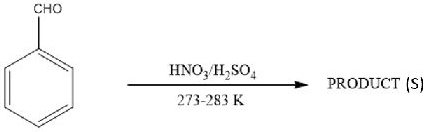
The product (A) for the given reaction will be

Figure

Answer options

Q49:

Amines

Easy

Physical and Chemical properties of Amines

Like ammonia, nitrogen atom of amines is trivalent and carries an unshared pair of electrons. Nitrogen orbitals in amines are therefore, sp3^3 hybridised. Each of the three sp3^3 hybridised orbitals of nitrogen overlap with orbitals of hydrogen or carbon depending upon the composition of the amines. The fourth orbital of nitrogen in all amines contains an unshared pair of electrons. Amines have an unshared pair of electrons on nitrogen atom due to which they behave as Lewis base as well as act as a nucleophile. Lower aliphatic amines are soluble in water because they form hydrogen bond with water molecules and also form strong intermolecular hydrogen bonding. Solvation, +I and +R groups affect the electron density over nitrogen atom. Their pkb_b value lies in the range of 3 to 4.22. The most widely used method for preparing amines involves the reduction of nitro group, nitriles, amides, etc. using different reagents like H2_2/Pd, Sn+HCl, H2_2/Ni, LiAlH4_4+H2_2O, Br2_2+NaOH etc. Primary amines can be easily detected by the carbylamines test and Hinsberg's reagent. Diazonium salt can be synthesized from amines easily for synthesis of variety of new compounds..

The final product formed when aniline is treated with NaNO2_2 and HCl at 273-278K is

Answer options

Q50:

Amines

Easy

Physical and Chemical properties of Amines

Like ammonia, nitrogen atom of amines is trivalent and carries an unshared pair of electrons. Nitrogen orbitals in amines are therefore, sp3^3 hybridised. Each of the three sp3^3 hybridised orbitals of nitrogen overlap with orbitals of hydrogen or carbon depending upon the composition of the amines. The fourth orbital of nitrogen in all amines contains an unshared pair of electrons. Amines have an unshared pair of electrons on nitrogen atom due to which they behave as Lewis base as well as act as a nucleophile. Lower aliphatic amines are soluble in water because they form hydrogen bond with water molecules and also form strong intermolecular hydrogen bonding. Solvation, +I and +R groups affect the electron density over nitrogen atom. Their pkb_b value lies in the range of 3 to 4.22. The most widely used method for preparing amines involves the reduction of nitro group, nitriles, amides, etc. using different reagents like H2_2/Pd, Sn+HCl, H2_2/Ni, LiAlH4_4+H2_2O, Br2_2+NaOH etc. Primary amines can be easily detected by the carbylamines test and Hinsberg's reagent. Diazonium salt can be synthesized from amines easily for synthesis of variety of new compounds..

Which of the following compounds is least basic ?

Answer options

CUET Chemistry 2026 29 May Shift 1 Past Year Question Paper

Every question from the CUET Chemistry 2026 29 May Shift 1 paper is here in full, with the correct answer and a step by step solution for each one. It is completely free, there is no login and no paywall, and you can read the whole paper online or download it to revise offline.

You can also attempt it instead of only reading it. Take the paper as a full length mock under exam conditions, or filter it by topic and attempt just that topic as a topic test. Both are free, and you get a breakdown of your accuracy, your timing and your weak areas once you submit.

CUET Chemistry past year questions (PYQs) are the closest thing to the real exam, so working through them is the quickest way to learn the paper pattern, the marking scheme and the level of difficulty to expect on the day.