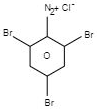
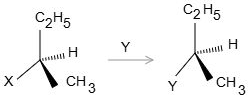
Q1:

Aldehydes, Ketones & Carboxylic Acids

Easy

Which of the following reagent/test can distinguish methanal from ethanal?

Answer options
Option 4
Correct Answer
Explanation for 2026: 21 May Shift 1 CHE question 1

Q2:

Haloalkanes & Haloarenes

Easy

Which of the following combination of reagents can directly convert chlorobenzene into toluene in a single step?

Answer options
Option 4
Correct Answer
Explanation for 2026: 21 May Shift 1 CHE question 2

Q3:

Chemical Kinetics

Easy

The half life of the reaction having rate constant, k=3.8×10⁻⁶ s−1k = 3.8 \times 10^{-6}\ \mathrm{s^{-1}} is

Answer options
Option 4
Correct Answer
Explanation for 2026: 21 May Shift 1 CHE question 3

Q4:

Chemical Kinetics

Medium

Find the correct statements for a complex reaction

(A) Molecularity has no meaning for a complex reaction

(B) Molecularity can be zero or non-integer

(C) Molecularity of the slowest step is same as the order of overall reaction

(D) Molecularity is an experimental quantity

Answer options
Option 2
Correct Answer
Explanation for 2026: 21 May Shift 1 CHE question 4

Q6:

Aldehydes, Ketones & Carboxylic Acids

Medium

Match List-I with List-II

List-I
Conversion
List-II
Reagents
(A) Aldehyde to Carboxylic acid(I) Zn - Hg/conc. HCl
(B) Benzophenone to Diphenyl methane(II) dil NaOH, Δ\Delta
(C) Ethanal to But-2-en-1-al(III) Na2Cr2O7/ H2SO4\mathrm{Na_2Cr_2O_7/\ H_2SO_4}
(D) Propionic acid to α\alpha-Bromopropionic acid(IV) Br2\mathrm{Br_2}/Red P, H2O\mathrm{H_2O}
Answer options
Option 1
Correct Answer
Explanation for 2026: 21 May Shift 1 CHE question 6

Q7:

Solutions

Hard

Arrange the following aqueous solutions in increasing order of their boiling point.

Given: Molar mass of H, C, N, O, S and K are 1, 12, 14, 16, 32 and 39 g mol−1\mathrm{mol^{-1}} respectively.

(A) 5% K2SO4\mathrm{K_2SO_4}

(B) 10% Urea

(C) 5% Urea

(D) 10% K2SO4\mathrm{K_2SO_4}

Answer options
Option 2
Correct Answer
Explanation for 2026: 21 May Shift 1 CHE question 7

Q8:

Amines

Medium

Match List-I with List-II

List-I
Reactants
List-II
Products
(A) C6H5NH2+(CH3CO)2O\mathrm{C_6H_5NH_2 + (CH_3CO)_2O} + Pyridine(I) C6H5NH2\mathrm{C_6H_5NH_2}
(B) C6H5NO2+H2/Pd\mathrm{C_6H_5NO_2 + H_2/Pd} (Ethanol)(II) Figure
(C) Figure + H3PO2+H2O\mathrm{H_3PO_2 + H_2O}(III) C6H5CH2NH2\mathrm{C_6H_5CH_2NH_2}
(D) C6H5CONH2+LiAlH4+H2O\mathrm{C_6H_5CONH_2 + LiAlH_4 + H_2O}(IV) C6H5NHCOCH3\mathrm{C_6H_5NHCOCH_3}
Answer options
Option 4
Correct Answer
Explanation for 2026: 21 May Shift 1 CHE question 8

Q9:

Coordination Compounds

Medium

Match List-I with List-II

List-IList-II
(A) K2SO4 Al2(SO4)3.24H2O\mathrm{K_2SO_4\, Al_2(SO_4)_3.24H_2O}(I) Coordination isomerism
(B) Hg [Co(SCN)4]\mathrm{[Co(SCN)_4]}(II) Optical isomerism
(C) [CrCl2(Ox)2]3−\mathrm{[CrCl_2(Ox)_2]^{3-}}(III) Linkage isomerism
(D) [Cr(NH3)6] [CoCl6]\mathrm{[Cr(NH_3)_6]\ [CoCl_6]}(IV) Double salt
Answer options
Option 4
Correct Answer
Explanation for 2026: 21 May Shift 1 CHE question 9

Q11:

Solutions

Easy

Match List-I with List-II

List-I
Observations
List-II
Law/solution
(A) Solutions which obey Raoult's law over the entire range of concentration(I) Gaseous solution
(B) Solubility of a gas in a liquid is directly proportional to the partial pressure of the gas(II) Liquid solution
(C) Oxygen dissolved in water(III) Ideal solution
(D) Chloroform mixed with nitrogen gas(IV) Henry's law
Answer options

Q12:

Alcohols, Phenols & Ethers

Medium

What are the major products formed in the following reaction?

Figure + HI ⟶\longrightarrow

Answer options

Q14:

Aldehydes, Ketones & Carboxylic Acids

Easy

An unknown organic compound X on treatment with tollen's regent gave a silver mirror. Further, the compound X on oxidation with K2Cr2O7\mathrm{K_2Cr_2O_7} produces a carboxylic acid Y. What is the functional group present in compound X?

Answer options

Q15:

Alcohols, Phenols & Ethers

Medium

Arrange the following compounds in increasing order of their ease of cleavage of O-H bond.

(A) Phenol

(B) Water

(C) Propan-1-ol

(D) Propan-2-ol

Answer options

Q18:

d & f Block Elements

Medium

E° values for the couples Cr3+/Cr2+\mathrm{Cr^{3+}/Cr^{2+}} , Fe3+/Fe2+\mathrm{Fe^{3+}/Fe^{2+}} and Mn3+/Mn2+\mathrm{Mn^{3+}/Mn^{2+}} are -0.4 V, + 0.8 V and +1.51 V respectively. Select the correct statement from the following:

Answer options

Q19:

d & f Block Elements

Easy

Which of the following cation does not give a coloured aqueous solution?

Answer options

Q20:

Amines

Easy

What is the formula of Hinsberg's reagent?

Answer options

Q21:

Coordination Compounds

Easy

What is the formula of the coordination compound potassium trioxalatoaluminate (III) ?

Answer options

Q22:

Haloalkanes & Haloarenes

Easy

The reaction between aryl halides and sodium metal in the presence of dry ether is
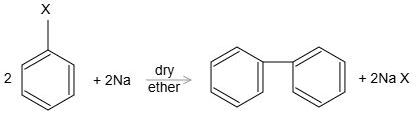
Figure

Answer options

Q23:

Chemical Kinetics

Easy

Match List-I with List-II

List-I
Theory / Rate constant
List-II
Expressions
(A) Collision Theory(I) k=[R]0−[R]tk = \dfrac{[\mathrm{R}]_0 - [\mathrm{R}]}{t}
(B) Arrhenius Equation(II) k=A e−Ea/RTk = A\, e^{-E_a/RT}
(C) Rate constant for zero order reaction(III) k=1tln⁡[R]0[R]k = \dfrac{1}{t} \ln \dfrac{[\mathrm{R}]_0}{[\mathrm{R}]}
(D) Rate constant for first order reaction(IV) Rate=PZABe−Ea/RT\text{Rate} = PZ_{AB}e^{-E_a/RT}
Answer options

Q24:

Alcohols, Phenols & Ethers

Easy

Phenol is more acidic than ethanol because

Answer options

Q25:

Solutions

Medium

Which of the following statements are correct?

(A) Osmotic pressure is proportional to the molarity of the solution at a given temperature.

(B) Higher the value of Henry law constant, KHK_H at a given pressure, the lower is the solubility of the gas in liquid.

(C) Expression for van't Hoff factor is, i=calculated colligative propertyObserved colligative propertyi = \dfrac{\text{calculated colligative property}}{\text{Observed colligative property}}

(D) Two solutions having same osmotic pressure at a given temperature are called isobaric solutions.

Answer options

Q26:

Aldehydes, Ketones & Carboxylic Acids

Medium

The compound with the lowest pKa value is

Answer options

Q27:

Coordination Compounds

Easy

Which of the following does not explain bonding in coordination compounds?

Answer options

Q28:

Solutions

Easy

What is the unit of cryoscopic constant?

Answer options

Q29:

Haloalkanes & Haloarenes

Medium

Read the following statements. Choose the correct statements

(A) During the electrophilic substitution reaction of haloarenes , meta substituted derivative is the major product.

(B) Enantiomers are the optical isomers which exists as a pair of non-superimposable mirror images.

(C) The conversion of an alkyl halide into an alcohol by aqueous NaOH is a substitution reaction.

(D) C-Cl bond length in CH3−Cl\mathrm{CH_3{-}Cl} is shorter than C-Cl bond length in chlorobenzene.

Answer options

Q30:

Chemical Kinetics

Medium

The elementary reaction 2NO(g)+O2(g)→2NO2(g)\mathrm{2NO(g) + O_2(g) \rightarrow 2NO_2(g)} is carried out taking different initial concentrations of reactant species. Arrange the following in decreasing order of initial rate of formation of NO2\mathrm{NO_2} in the reaction,

(A) In first experiment value of initial [NO]/mol L−1\mathrm{L^{-1}} is 0.40 and initial [O2][\mathrm{O_2}]/mol L−1\mathrm{L^{-1}} is 0.40

(B) In second experiment value of initial [NO]/mol L−1\mathrm{L^{-1}} is 0.80 and initial [O2][\mathrm{O_2}]/mol L−1\mathrm{L^{-1}} is 0.40

(C) In third experiment value of initial [NO]/mol L−1\mathrm{L^{-1}} is 0.40 and initial [O2][\mathrm{O_2}]/mol L−1\mathrm{L^{-1}} is 0.80

(D) In fourth experiment value of initial [NO]/mol L−1\mathrm{L^{-1}} is 0.80 and initial [O2][\mathrm{O_2}]/mol L−1\mathrm{L^{-1}} is 0.80

Answer options

Q31:

d & f Block Elements

Medium

Arrange the following elements in increasing order of ionic radii ?

(A) Ni2+\mathrm{Ni^{2+}}

(B) Co2+\mathrm{Co^{2+}}

(C) Cr2+\mathrm{Cr^{2+}}

(D) Fe2+\mathrm{Fe^{2+}}

Answer options

Q32:

Aldehydes, Ketones & Carboxylic Acids

Medium

Arrange the following compounds in increasing order of their boiling points.

(A) Propanone

(B) Propanal

(C) Butanol

(D) Butanone

Answer options

Q33:

Haloalkanes & Haloarenes

Medium

Consider the following statements and choose the correct statements

(A) Ethyl chloride reacts with KCN to form ethyl cyanide as main product.

(B) AgCN is mainly ionic in nature.

(C) Ethyl chloride reacts with AgCN to form isocyanide as the main product.

(D) KCN is predominantly covalent in nature.

Answer options

Q34:

Coordination Compounds

Easy

Consider the following statements and select the correct statements

(A) Haemoglobin is an iron containing coordination compound.

(B) cis-platin is a coordination compound of lead which inhibits the growth of tumours.

(C) The pigment responsible for photosynthesis, chlorophyll is a coordination compound of Mn.

(D) Wilkinson catalyst is used for the hydrogenation of alkenes.

Answer options

Q35:

Amines

Easy

In the Hoffmann bromamide reaction, the product formed has

Answer options

Q39:

Alcohols, Phenols & Ethers

Easy

Reaction of phenol with chloroform in the presence of sodium hydroxide to form salicylaldehyde represents

Answer options

Q40:

d & f Block Elements

Medium

Which of the following statements is incorrect?

Answer options

Q41:

Biomolecules

Easy

Biomolecules

Carbohydrates, lipids, protein and nucleic acids are four macromolecules which are commonly found in all living organism. Carbohydrates are primarily produced by plants and form a large group of naturally occuring organic compounds. Most of the carbohydrates have a general formula , Cx(H2O)y\mathrm{C_x(H_2O)_y} . The carbohydrates are optically active polyhydroxy aldehydes or ketones or the compounds which produce such units on hydrolysis. The common table sugar is sucrose whereas sugar present in milk is lactose. The carbohydrates are also called saccharides. Carbohydrates are classified into three groups mainly monosaccharides, oligosaccharides and polysaccahrides. Unlike monosaccharides and disaccharides , polysaccharides are not sweet in taste, hence they are also called non-sugars.

Proteins are the most abundant biomolecules in living organism. Protein is commonly found in milk, cheese, pulses, peanuts, fish, meat etc. They require for growth and maintenace of body. Amino acids contain amino (−NH2-\mathrm{NH_2}) and carboxyl (−-COOH) functional group. Only alpha amino acids are obtained on hydrolysis of protein. The amino acids which can be synthesized in the body are known as non-essential amino acids. On the other hand , those which cannot be synthesized in the body and must be obtained through diet are known as essential amino acids.

Vitamins are organic compounds which require in small amounts in our diet but deficiency causes specific diseases. Vitamins are represented by alphabets A, B,C, D etc. Some of them are further named as sub-groups . e.g.B1\mathrm{B_1}, B2\mathrm{B_2}, B6\mathrm{B_6}, B12\mathrm{B_{12}} etc. Vitamins are classified in two groups depending upon their solubility in water and fat.

Amino acids in zwitterion ionic form are

Answer options

Q42:

Biomolecules

Easy

Biomolecules

Carbohydrates, lipids, protein and nucleic acids are four macromolecules which are commonly found in all living organism. Carbohydrates are primarily produced by plants and form a large group of naturally occuring organic compounds. Most of the carbohydrates have a general formula , Cx(H2O)y\mathrm{C_x(H_2O)_y} . The carbohydrates are optically active polyhydroxy aldehydes or ketones or the compounds which produce such units on hydrolysis. The common table sugar is sucrose whereas sugar present in milk is lactose. The carbohydrates are also called saccharides. Carbohydrates are classified into three groups mainly monosaccharides, oligosaccharides and polysaccahrides. Unlike monosaccharides and disaccharides , polysaccharides are not sweet in taste, hence they are also called non-sugars.

Proteins are the most abundant biomolecules in living organism. Protein is commonly found in milk, cheese, pulses, peanuts, fish, meat etc. They require for growth and maintenace of body. Amino acids contain amino (−NH2-\mathrm{NH_2}) and carboxyl (−-COOH) functional group. Only alpha amino acids are obtained on hydrolysis of protein. The amino acids which can be synthesized in the body are known as non-essential amino acids. On the other hand , those which cannot be synthesized in the body and must be obtained through diet are known as essential amino acids.

Vitamins are organic compounds which require in small amounts in our diet but deficiency causes specific diseases. Vitamins are represented by alphabets A, B,C, D etc. Some of them are further named as sub-groups . e.g.B1\mathrm{B_1}, B2\mathrm{B_2}, B6\mathrm{B_6}, B12\mathrm{B_{12}} etc. Vitamins are classified in two groups depending upon their solubility in water and fat.

Glucose and fructose are

Answer options

Q43:

Biomolecules

Easy

Biomolecules

Carbohydrates, lipids, protein and nucleic acids are four macromolecules which are commonly found in all living organism. Carbohydrates are primarily produced by plants and form a large group of naturally occuring organic compounds. Most of the carbohydrates have a general formula , Cx(H2O)y\mathrm{C_x(H_2O)_y} . The carbohydrates are optically active polyhydroxy aldehydes or ketones or the compounds which produce such units on hydrolysis. The common table sugar is sucrose whereas sugar present in milk is lactose. The carbohydrates are also called saccharides. Carbohydrates are classified into three groups mainly monosaccharides, oligosaccharides and polysaccahrides. Unlike monosaccharides and disaccharides , polysaccharides are not sweet in taste, hence they are also called non-sugars.

Proteins are the most abundant biomolecules in living organism. Protein is commonly found in milk, cheese, pulses, peanuts, fish, meat etc. They require for growth and maintenace of body. Amino acids contain amino (−NH2-\mathrm{NH_2}) and carboxyl (−-COOH) functional group. Only alpha amino acids are obtained on hydrolysis of protein. The amino acids which can be synthesized in the body are known as non-essential amino acids. On the other hand , those which cannot be synthesized in the body and must be obtained through diet are known as essential amino acids.

Vitamins are organic compounds which require in small amounts in our diet but deficiency causes specific diseases. Vitamins are represented by alphabets A, B,C, D etc. Some of them are further named as sub-groups . e.g.B1\mathrm{B_1}, B2\mathrm{B_2}, B6\mathrm{B_6}, B12\mathrm{B_{12}} etc. Vitamins are classified in two groups depending upon their solubility in water and fat.

The bond linking two amino acids in a protein molecule is called a

Answer options

Q44:

Biomolecules

Easy

Biomolecules

Carbohydrates, lipids, protein and nucleic acids are four macromolecules which are commonly found in all living organism. Carbohydrates are primarily produced by plants and form a large group of naturally occuring organic compounds. Most of the carbohydrates have a general formula , Cx(H2O)y\mathrm{C_x(H_2O)_y} . The carbohydrates are optically active polyhydroxy aldehydes or ketones or the compounds which produce such units on hydrolysis. The common table sugar is sucrose whereas sugar present in milk is lactose. The carbohydrates are also called saccharides. Carbohydrates are classified into three groups mainly monosaccharides, oligosaccharides and polysaccahrides. Unlike monosaccharides and disaccharides , polysaccharides are not sweet in taste, hence they are also called non-sugars.

Proteins are the most abundant biomolecules in living organism. Protein is commonly found in milk, cheese, pulses, peanuts, fish, meat etc. They require for growth and maintenace of body. Amino acids contain amino (−NH2-\mathrm{NH_2}) and carboxyl (−-COOH) functional group. Only alpha amino acids are obtained on hydrolysis of protein. The amino acids which can be synthesized in the body are known as non-essential amino acids. On the other hand , those which cannot be synthesized in the body and must be obtained through diet are known as essential amino acids.

Vitamins are organic compounds which require in small amounts in our diet but deficiency causes specific diseases. Vitamins are represented by alphabets A, B,C, D etc. Some of them are further named as sub-groups . e.g.B1\mathrm{B_1}, B2\mathrm{B_2}, B6\mathrm{B_6}, B12\mathrm{B_{12}} etc. Vitamins are classified in two groups depending upon their solubility in water and fat.

Lactose sugar present in milk is composed of

Answer options

Q45:

Biomolecules

Easy

Biomolecules

Carbohydrates, lipids, protein and nucleic acids are four macromolecules which are commonly found in all living organism. Carbohydrates are primarily produced by plants and form a large group of naturally occuring organic compounds. Most of the carbohydrates have a general formula , Cx(H2O)y\mathrm{C_x(H_2O)_y} . The carbohydrates are optically active polyhydroxy aldehydes or ketones or the compounds which produce such units on hydrolysis. The common table sugar is sucrose whereas sugar present in milk is lactose. The carbohydrates are also called saccharides. Carbohydrates are classified into three groups mainly monosaccharides, oligosaccharides and polysaccahrides. Unlike monosaccharides and disaccharides , polysaccharides are not sweet in taste, hence they are also called non-sugars.

Proteins are the most abundant biomolecules in living organism. Protein is commonly found in milk, cheese, pulses, peanuts, fish, meat etc. They require for growth and maintenace of body. Amino acids contain amino (−NH2-\mathrm{NH_2}) and carboxyl (−-COOH) functional group. Only alpha amino acids are obtained on hydrolysis of protein. The amino acids which can be synthesized in the body are known as non-essential amino acids. On the other hand , those which cannot be synthesized in the body and must be obtained through diet are known as essential amino acids.

Vitamins are organic compounds which require in small amounts in our diet but deficiency causes specific diseases. Vitamins are represented by alphabets A, B,C, D etc. Some of them are further named as sub-groups . e.g.B1\mathrm{B_1}, B2\mathrm{B_2}, B6\mathrm{B_6}, B12\mathrm{B_{12}} etc. Vitamins are classified in two groups depending upon their solubility in water and fat.

Which vitamin deficiency causes Rickets in children?

Answer options

Q46:

Electrochemistry

Easy

Electrochemistry

Electrochemistry is the study of production of electricity from energy released during spontaneous chemical reactions and the use of electrical energy to bring about non-spontaneous chemical transformations. The subject is of importance both for theoretical and practical considerations. A large number of metals, sodium hydroxide, chlorine, fluorine and many other chemicals are produced by electrochemical methods. Batteries and fuel cells convert chemical energy into electrical energy and are used on a large scale in various instruments and devices. The reactions carried out electrochemically can be energy efficient and less polluting. Therefore, study of electrochemistry is important for creating new technologies that are ecofriendly.

MnO2+NH4++e−⟶MnO(OH)+NH3\mathrm{MnO_2 + NH_4^{+} + e^{-} \longrightarrow MnO(OH) + NH_3}

is the cathodic cell reaction occuring in

Answer options

Q47:

Electrochemistry

Easy

Electrochemistry

Electrochemistry is the study of production of electricity from energy released during spontaneous chemical reactions and the use of electrical energy to bring about non-spontaneous chemical transformations. The subject is of importance both for theoretical and practical considerations. A large number of metals, sodium hydroxide, chlorine, fluorine and many other chemicals are produced by electrochemical methods. Batteries and fuel cells convert chemical energy into electrical energy and are used on a large scale in various instruments and devices. The reactions carried out electrochemically can be energy efficient and less polluting. Therefore, study of electrochemistry is important for creating new technologies that are ecofriendly.

For the given reaction Zn(s)+Cu2+(aq)→Zn2+(aq)+Cu(s)\mathrm{Zn(s) + Cu^{2+}(aq) \rightarrow Zn^{2+}(aq) + Cu(s)} choose the correct option from the following

Answer options

Q48:

Electrochemistry

Easy

Electrochemistry

Electrochemistry is the study of production of electricity from energy released during spontaneous chemical reactions and the use of electrical energy to bring about non-spontaneous chemical transformations. The subject is of importance both for theoretical and practical considerations. A large number of metals, sodium hydroxide, chlorine, fluorine and many other chemicals are produced by electrochemical methods. Batteries and fuel cells convert chemical energy into electrical energy and are used on a large scale in various instruments and devices. The reactions carried out electrochemically can be energy efficient and less polluting. Therefore, study of electrochemistry is important for creating new technologies that are ecofriendly.

For the reaction Zn(s)+Cu2+(aq)→Zn2+(aq)+Cu(s)\mathrm{Zn(s) + Cu^{2+}(aq) \rightarrow Zn^{2+}(aq) + Cu(s)}

Ecell=0E_{\text{cell}} = 0 when

Answer options

Q49:

Electrochemistry

Easy

Electrochemistry

Electrochemistry is the study of production of electricity from energy released during spontaneous chemical reactions and the use of electrical energy to bring about non-spontaneous chemical transformations. The subject is of importance both for theoretical and practical considerations. A large number of metals, sodium hydroxide, chlorine, fluorine and many other chemicals are produced by electrochemical methods. Batteries and fuel cells convert chemical energy into electrical energy and are used on a large scale in various instruments and devices. The reactions carried out electrochemically can be energy efficient and less polluting. Therefore, study of electrochemistry is important for creating new technologies that are ecofriendly.

Choose the correct statement from the following:

Answer options

Q50:

Electrochemistry

Easy

Electrochemistry

Electrochemistry is the study of production of electricity from energy released during spontaneous chemical reactions and the use of electrical energy to bring about non-spontaneous chemical transformations. The subject is of importance both for theoretical and practical considerations. A large number of metals, sodium hydroxide, chlorine, fluorine and many other chemicals are produced by electrochemical methods. Batteries and fuel cells convert chemical energy into electrical energy and are used on a large scale in various instruments and devices. The reactions carried out electrochemically can be energy efficient and less polluting. Therefore, study of electrochemistry is important for creating new technologies that are ecofriendly.

Which of the following redox couples, is the strongest oxidizing agent ?

Answer options

CUET Chemistry 2026 21 May Shift 1 Past Year Question Paper

Every question from the CUET Chemistry 2026 21 May Shift 1 paper is here in full, with the correct answer and a step by step solution for each one. It is completely free, there is no login and no paywall, and you can read the whole paper online or download it to revise offline.

You can also attempt it instead of only reading it. Take the paper as a full length mock under exam conditions, or filter it by topic and attempt just that topic as a topic test. Both are free, and you get a breakdown of your accuracy, your timing and your weak areas once you submit.

CUET Chemistry past year questions (PYQs) are the closest thing to the real exam, so working through them is the quickest way to learn the paper pattern, the marking scheme and the level of difficulty to expect on the day.