Q2:

Solutions

Easy

Match List-I with List-II

List-IList-II
(A) Osmotic pressure(I) Formation of bubbles of nitrogen in the blood
(B) Anoxia(II) Pressure applied on the solution side that just stops the flow of solvent
(C) Bends(III) Impermeable to impurities
(D) Cellulose acetate(IV) Low blood oxygen causes climbers to become weak
Answer options
Option 3
Correct Answer
Explanation for 2026: 24 May Shift 1 CHE question 2

Q3:

d & f Block Elements

Hard

Potassium dichromate (K2Cr2O7K_2Cr_2O_7) is a strong oxidizing agent. Select the correct statements from the following:

(A) It is used for preparation of many azo compounds.

(B) With the decreasing pH of the solution, dichromates changes into chromates.

(C) In acidified solution equivalent weight of dichromate is M/5

(D) The bond angle between Cr-O-Cr is 126°.

Answer options
Option 3
Correct Answer
Explanation for 2026: 24 May Shift 1 CHE question 3

Q4:

Aldehydes, Ketones & Carboxylic Acids

Medium

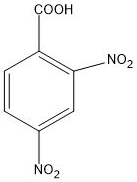
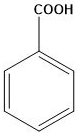
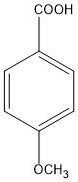
The correct increasing order of acidity of the following molecules is
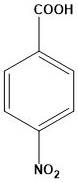
Figure

Figure

Figure

Figure

Answer options
Option 2
Correct Answer
Explanation for 2026: 24 May Shift 1 CHE question 4

Q6:

Biomolecules

Easy

Fibrous protein is characterized by the presence of hydrogen and disulfide bonds. Examples of fibrous protein are

(A) Keratin

(B) Myosin

(C) Insulin

(D) Albumins

Answer options
Option 2
Correct Answer
Explanation for 2026: 24 May Shift 1 CHE question 6

Q7:

Solutions

Easy

Which of the following statements are true for the elevation of boiling point?

(A) The boiling point of a solution is always higher than the boiling point of the pure solvent in which the solution is prepared.

(B) The boiling point of a solution is always lower than the boiling point of the pure solvent in which the solution is prepared.

(C) The elevation of boiling point is directly proportional to the molal concentration of the solute in solution.

(D) Unit of KbK_b = K kg mol−1K\ kg\ mol^{-1}

Answer options
Option 4
Correct Answer
Explanation for 2026: 24 May Shift 1 CHE question 7

Q8:

Chemical Kinetics

Easy

Hydrogenation of ethene represented by ,

C2H4 (g)+H2 (g)→C2H6 (g)C_2H_4\ (g) + H_2\ (g) \rightarrow C_2H_6\ (g)

is an example of

Answer options
Option 2
Correct Answer
Explanation for 2026: 24 May Shift 1 CHE question 8

Q9:

Amines

Medium

Amongst the following, the strongest base in the aqueous medium is :

Answer options
Option 3
Correct Answer
Explanation for 2026: 24 May Shift 1 CHE question 9

Q11:

Chemical Kinetics

Medium

Among the following, which are examples of first-order reactions?

(A) 88226Ra→24He+86222Rn{}_{88}^{226}Ra \rightarrow {}_{2}^{4}He + {}_{86}^{222}Rn

(B) 2NH3→Pt catalyst1130KN2 (g)+3H2 (g)2NH_3 \xrightarrow[\text{Pt catalyst}]{1130K} N_2\ (g) + 3H_2\ (g)

(C) 2N2O5 (g)→2N2O4 (g)+O2 (g)2N_2O_5\ (g) \rightarrow 2N_2O_4\ (g) + O_2\ (g)

(D) C2H4 (g)+H2→C2H6 (g)C_2H_4\ (g) + H_2 \rightarrow C_2H_6\ (g)

Answer options

Q12:

Aldehydes, Ketones & Carboxylic Acids

Easy

In nucleophilic addition reaction of HCN to ethanal, the hybridisation of the carbonyl carbon in the final product is

Answer options

Q15:

Coordination Compounds

Medium

Which of the following hybridisation is correct for [FeF6]3−[FeF_6]^{3-}?

Answer options

Q16:

Solutions

Medium

Which of the following salts would have the same value of the van't Hoff factor as that of Al(NO3)3Al(NO_3)_3 in aqueous solution?

Assume complete dissociation of electrolytes.

(A) K2SO4K_2SO_4

(B) KCl

(C)Al2(SO4)3Al_2(SO_4)_3

(D) K3[Fe(CN)6]K_3[Fe(CN)_6]

Answer options

Q18:

Coordination Compounds

Easy

Which of the following is the correct IUPAC name for the [Pt(NH3)2Cl(NO2)][Pt(NH_3)_2Cl(NO_2)] coordination compound?

Answer options

Q19:

Amines

Medium

Which of the following reagents will bring out the following transformation ?
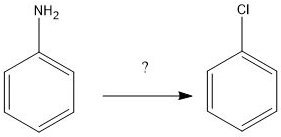
Figure

(A) NaNO2/HClNaNO_2/HCl and Cu/HClCu/HCl

(B) NaNO2/NaOHNaNO_2/NaOH and Cu/HClCu/HCl

(C) NaNO2/HClNaNO_2/HCl and Cu2Cl2/HClCu_2Cl_2/HCl

(D) NaNO2/NaOHNaNO_2/NaOH and Cu2Cl2/HClCu_2Cl_2/HCl

Answer options

Q20:

Solutions

Medium

Match List-I with List-II

List-IList-II
Type of solutionExample
(A) Ideal solution(I) 95% by volume of ethanol
(B) Positive deviation from Raoult's law(II) Bromoethane and chloroethane
(C) Negative deviation from Raoult's law(III) Ethanol and acetone
(D) Azeotrope(IV) Phenol and aniline
Answer options

Q21:

Aldehydes, Ketones & Carboxylic Acids

Medium

Iodoform reaction with sodium hypoiodite is used for detection of .

Answer options

Q22:

Chemical Kinetics

Medium

Arrange the following rate expressions (of hypothetical reactions) in the increasing arrangement of their order of reaction:

Assume the concentrations of A and B in all the rate expressions is same.

(A) Rate = k [A]1/2 [B]3/2k\ [A]^{1/2}\ [B]^{3/2}

(B) Rate = k [A]1/2 [B]1/2k\ [A]^{1/2}\ [B]^{1/2}

(C) Rate = k [A]3/2 [B]−1k\ [A]^{3/2}\ [B]^{-1}

(D) Rate = k [A]2 [B]1k\ [A]^{2}\ [B]^{1}

Answer options

Q23:

Haloalkanes & Haloarenes

Medium

Match List-I with List -II

List-IList-II
(Chemical Reactions)(Characteristic Feature )
(A) Substitution nucleophilic unimolecular(I) Anti- Markovnikov's product
(B) Electrophilic addition of HX to unsymmetrical alkene(II) Inversion
(C) Substitution nucelophilic bimolecular(III) Racemization
(D) Hydroboration oxidation(IV) Markovnikov's product
Answer options

Q24:

Coordination Compounds

Easy

Which one of the following compounds does not show geometrical isomerism?

Answer options

Q27:

Solutions

Easy

Water movement from soil into plant roots and subsequently into upper portion of the plant is partly due to phenomenon of

Answer options

Q28:

d & f Block Elements

Medium

Choose the Incorrect statement from the following:

Answer options

Q29:

Aldehydes, Ketones & Carboxylic Acids

Easy

Conversion of carboxylic acid to hydrocarbon is carried out using

Answer options

Q30:

Amines

Hard

Select the correct set of reagents required for conversion of the following chemical reactions
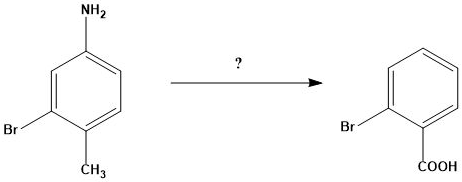
Figure

Answer options

Q31:

Haloalkanes & Haloarenes

Medium

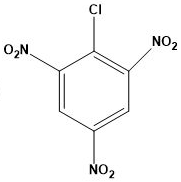
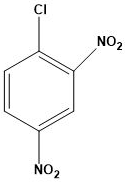
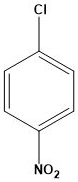
Arrange the following compounds in increasing order towards nucleophilic substitution reaction .
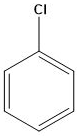
Figure

Figure

Figure

Figure

Answer options

Q32:

Coordination Compounds

Medium

Arrange the following complex ions in increasing order of their wavelength of light absorbed:

(A) [Co(CN)6]3−[Co(CN)_6]^{3-}

(B) [Co(NH3)6]3+[Co(NH_3)_6]^{3+}

(C) [Co(F6)]3−[Co(F_6)]^{3-}

(D) [Co(C2O4)]3−[Co(C_2O_4)]^{3-}

Answer options

Q33:

Chemical Kinetics

Easy

Species that are formed in one step of reaction mechanism and used up in another step are called

Answer options

Q34:

Coordination Compounds

Easy

Match List-I with List-II

List-IList-II
(A) ion or molecule having two different donor atoms and either of the two ligetes in the complex(I) central atom or ion
(B) In a coordination entity, the atom/ion to which a fixed number of ions/groups are bound in a definite geometrical arrangement(II) Chelate ligand
(C) ion or molecule using its two or more donor atoms simultaneously to bind a single metal ion(III) Ambidentate ligand
(D) ion or molecule bound to the central atom/ion through two donor atoms(IV) Didentate ligand
Answer options

Q35:

d & f Block Elements

Easy

The electronic configuration of Co3+Co^{3+} metal ion is........

Answer options

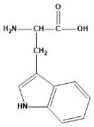
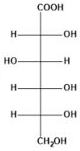
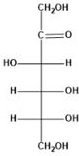
Q36:

Biomolecules

Medium

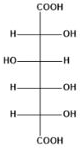
Match List-I with List-II

List-IList-II
(Name of the Compounds)(Chemical Structures)
(A) Gluconic acid(I) Figure
(B) Fructose(II) Figure
(C) Tryptophan(III) Figure
(D) Saccharic acid(IV) Figure
Answer options

Q37:

Amines

Medium

The first step in conversion of aniline to 4-bromoaniline involves
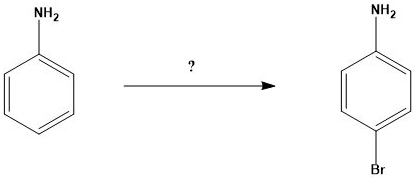
Figure

Answer options

Q39:

Chemical Kinetics

Easy

The constant 'k' in a rate law expression of a reaction is

Answer options

Q40:

d & f Block Elements

Medium

When Manganeses (II) reacts with peroxodisulphate, the respective products obtained are:

Answer options

Q41:

Electrochemistry

Easy

Electrochemical cells

We can construct innumerable number of galvanic cells on the pattern of Daniell cell by taking combinations of different half-cells. Each half-cell consists of a metallic electrode dipped into an electrolyte. The two half-cells are connected by a metallic wire through a voltmeter and a switch externally. The electrolytes of the two half-cells are connected internally through a salt bridge. Sometimes, both the electrodes dip in the same electrolyte solution and in such cases we do not require a salt bridge.

For the cell

Ni(s)∣Ni2+(aq)∥Ag+(aq)∣AgNi(s) \mid Ni^{2+}(aq) \Vert Ag^{+}(aq) \mid Ag

The cell reaction is Ni(s)+2Ag+(aq)→Ni2+(aq)+2Ag(s)Ni(s) + 2Ag^{+}(aq) \rightarrow Ni^{2+}(aq) + 2Ag(s).

Nernst equation relates the emf of the cell with standard emf and the concentration of reduced and oxidized species.

The Nernst equation for the given reaction

Ni(s)+2Ag+(aq)→Ni2+(aq)+2Ag(s)Ni(s) + 2Ag^{+}(aq) \rightarrow Ni^{2+}(aq) + 2Ag(s) ; is

Answer options

Q42:

Electrochemistry

Medium

Electrochemical cells

We can construct innumerable number of galvanic cells on the pattern of Daniell cell by taking combinations of different half-cells. Each half-cell consists of a metallic electrode dipped into an electrolyte. The two half-cells are connected by a metallic wire through a voltmeter and a switch externally. The electrolytes of the two half-cells are connected internally through a salt bridge. Sometimes, both the electrodes dip in the same electrolyte solution and in such cases we do not require a salt bridge.

For the cell

Ni(s)∣Ni2+(aq)∥Ag+(aq)∣AgNi(s) \mid Ni^{2+}(aq) \Vert Ag^{+}(aq) \mid Ag

The cell reaction is Ni(s)+2Ag+(aq)→Ni2+(aq)+2Ag(s)Ni(s) + 2Ag^{+}(aq) \rightarrow Ni^{2+}(aq) + 2Ag(s).

Nernst equation relates the emf of the cell with standard emf and the concentration of reduced and oxidized species.

The standard electrode potential for the cell

Ni(s)+2Ag+(aq)→Ni2+(aq)+2Ag(s)Ni(s) + 2Ag^{+}(aq) \rightarrow Ni^{2+}(aq) + 2Ag(s)

is 0.80 V. The standard Gibbs energy for the reaction is:

Answer options

Q43:

Electrochemistry

Easy

Electrochemical cells

We can construct innumerable number of galvanic cells on the pattern of Daniell cell by taking combinations of different half-cells. Each half-cell consists of a metallic electrode dipped into an electrolyte. The two half-cells are connected by a metallic wire through a voltmeter and a switch externally. The electrolytes of the two half-cells are connected internally through a salt bridge. Sometimes, both the electrodes dip in the same electrolyte solution and in such cases we do not require a salt bridge.

For the cell

Ni(s)∣Ni2+(aq)∥Ag+(aq)∣AgNi(s) \mid Ni^{2+}(aq) \Vert Ag^{+}(aq) \mid Ag

The cell reaction is Ni(s)+2Ag+(aq)→Ni2+(aq)+2Ag(s)Ni(s) + 2Ag^{+}(aq) \rightarrow Ni^{2+}(aq) + 2Ag(s).

Nernst equation relates the emf of the cell with standard emf and the concentration of reduced and oxidized species.

The relationship between the equilibrium constant of the reaction and the standard electrode potential of the cell in which that reaction takes place is given by

Answer options

Q44:

Electrochemistry

Easy

Electrochemical cells

We can construct innumerable number of galvanic cells on the pattern of Daniell cell by taking combinations of different half-cells. Each half-cell consists of a metallic electrode dipped into an electrolyte. The two half-cells are connected by a metallic wire through a voltmeter and a switch externally. The electrolytes of the two half-cells are connected internally through a salt bridge. Sometimes, both the electrodes dip in the same electrolyte solution and in such cases we do not require a salt bridge.

For the cell

Ni(s)∣Ni2+(aq)∥Ag+(aq)∣AgNi(s) \mid Ni^{2+}(aq) \Vert Ag^{+}(aq) \mid Ag

The cell reaction is Ni(s)+2Ag+(aq)→Ni2+(aq)+2Ag(s)Ni(s) + 2Ag^{+}(aq) \rightarrow Ni^{2+}(aq) + 2Ag(s).

Nernst equation relates the emf of the cell with standard emf and the concentration of reduced and oxidized species.

In the given cell,

Ni(s)+2Ag+(aq)→Ni2+(aq)+2Ag(s)Ni(s) + 2Ag^{+}(aq) \rightarrow Ni^{2+}(aq) + 2Ag(s)

which of the given species is the reducing agent?

Answer options

Q45:

Electrochemistry

Easy

Electrochemical cells

We can construct innumerable number of galvanic cells on the pattern of Daniell cell by taking combinations of different half-cells. Each half-cell consists of a metallic electrode dipped into an electrolyte. The two half-cells are connected by a metallic wire through a voltmeter and a switch externally. The electrolytes of the two half-cells are connected internally through a salt bridge. Sometimes, both the electrodes dip in the same electrolyte solution and in such cases we do not require a salt bridge.

For the cell

Ni(s)∣Ni2+(aq)∥Ag+(aq)∣AgNi(s) \mid Ni^{2+}(aq) \Vert Ag^{+}(aq) \mid Ag

The cell reaction is Ni(s)+2Ag+(aq)→Ni2+(aq)+2Ag(s)Ni(s) + 2Ag^{+}(aq) \rightarrow Ni^{2+}(aq) + 2Ag(s).

Nernst equation relates the emf of the cell with standard emf and the concentration of reduced and oxidized species.

Which of the following is the anodic half cell reaction?

Ni(s)+2Ag+(aq)→Ni2+(aq)+2Ag(s)Ni(s) + 2Ag^{+}(aq) \rightarrow Ni^{2+}(aq) + 2Ag(s)

Answer options

Q46:

Alcohols, Phenols & Ethers

Easy

Alcohols, Phenols and Ethers

Alcohols and phenols are formed when a hydrogen atom in a hydrocarbon, aliphatic and aromatic respectively, is replaced by –OH group. These classes of compounds find wide applications in industry as well as in day-to-day life. For instance, have you ever noticed that ordinary spirit used for polishing wooden furniture is chiefly a compound containing hydroxyl group, ethanol. The sugar we eat, the cotton used for fabrics, the paper we use for writing, are all made up of compounds containing –OH groups. The common name of an alcohol is derived from the common name of the alkyl group and adding the word alcohol to it. For example, CH3OHCH_3OH is methyl alcohol. The simplest hydroxy derivative of benzene is phenol. It is its common name and also an accepted IUPAC name. As structure of phenol involves a benzene ring, in its substituted compounds the terms ortho (1,2-disubstituted), meta (1,3-disubstituted) and para (1,4-disubstituted) are often used in the common names.

In ethers, the four electron pairs, i.e., the two bond pairs and two lone pairs of electrons on oxygen are arranged approximately in a tetrahedral arrangement. The bond angle is slightly greater than the tetrahedral angle due to the repulsive interaction between the two bulky (–R) groups.

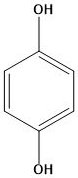
What is the common name for the following structure given below?
Figure

Answer options

Q47:

Alcohols, Phenols & Ethers

Easy

Alcohols, Phenols and Ethers

Alcohols and phenols are formed when a hydrogen atom in a hydrocarbon, aliphatic and aromatic respectively, is replaced by –OH group. These classes of compounds find wide applications in industry as well as in day-to-day life. For instance, have you ever noticed that ordinary spirit used for polishing wooden furniture is chiefly a compound containing hydroxyl group, ethanol. The sugar we eat, the cotton used for fabrics, the paper we use for writing, are all made up of compounds containing –OH groups. The common name of an alcohol is derived from the common name of the alkyl group and adding the word alcohol to it. For example, CH3OHCH_3OH is methyl alcohol. The simplest hydroxy derivative of benzene is phenol. It is its common name and also an accepted IUPAC name. As structure of phenol involves a benzene ring, in its substituted compounds the terms ortho (1,2-disubstituted), meta (1,3-disubstituted) and para (1,4-disubstituted) are often used in the common names.

In ethers, the four electron pairs, i.e., the two bond pairs and two lone pairs of electrons on oxygen are arranged approximately in a tetrahedral arrangement. The bond angle is slightly greater than the tetrahedral angle due to the repulsive interaction between the two bulky (–R) groups.

The catalyst involved in the production of methanol through hydrogenation of carbon monoxide is

Answer options

Q48:

Alcohols, Phenols & Ethers

Medium

Alcohols, Phenols and Ethers

Alcohols and phenols are formed when a hydrogen atom in a hydrocarbon, aliphatic and aromatic respectively, is replaced by –OH group. These classes of compounds find wide applications in industry as well as in day-to-day life. For instance, have you ever noticed that ordinary spirit used for polishing wooden furniture is chiefly a compound containing hydroxyl group, ethanol. The sugar we eat, the cotton used for fabrics, the paper we use for writing, are all made up of compounds containing –OH groups. The common name of an alcohol is derived from the common name of the alkyl group and adding the word alcohol to it. For example, CH3OHCH_3OH is methyl alcohol. The simplest hydroxy derivative of benzene is phenol. It is its common name and also an accepted IUPAC name. As structure of phenol involves a benzene ring, in its substituted compounds the terms ortho (1,2-disubstituted), meta (1,3-disubstituted) and para (1,4-disubstituted) are often used in the common names.

In ethers, the four electron pairs, i.e., the two bond pairs and two lone pairs of electrons on oxygen are arranged approximately in a tetrahedral arrangement. The bond angle is slightly greater than the tetrahedral angle due to the repulsive interaction between the two bulky (–R) groups.

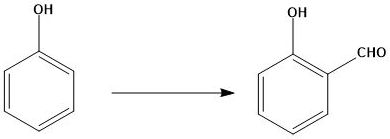
Consider the following chemical reaction and identify the intermediate involved in the reaction.
Figure

Answer options

Q49:

Alcohols, Phenols & Ethers

Easy

Alcohols, Phenols and Ethers

Alcohols and phenols are formed when a hydrogen atom in a hydrocarbon, aliphatic and aromatic respectively, is replaced by –OH group. These classes of compounds find wide applications in industry as well as in day-to-day life. For instance, have you ever noticed that ordinary spirit used for polishing wooden furniture is chiefly a compound containing hydroxyl group, ethanol. The sugar we eat, the cotton used for fabrics, the paper we use for writing, are all made up of compounds containing –OH groups. The common name of an alcohol is derived from the common name of the alkyl group and adding the word alcohol to it. For example, CH3OHCH_3OH is methyl alcohol. The simplest hydroxy derivative of benzene is phenol. It is its common name and also an accepted IUPAC name. As structure of phenol involves a benzene ring, in its substituted compounds the terms ortho (1,2-disubstituted), meta (1,3-disubstituted) and para (1,4-disubstituted) are often used in the common names.

In ethers, the four electron pairs, i.e., the two bond pairs and two lone pairs of electrons on oxygen are arranged approximately in a tetrahedral arrangement. The bond angle is slightly greater than the tetrahedral angle due to the repulsive interaction between the two bulky (–R) groups.

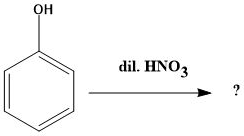
Consider the following chemical reaction and identify the final product(s)
Figure

The final product(s) of the above reaction is

Answer options

Q50:

Alcohols, Phenols & Ethers

Easy

Alcohols, Phenols and Ethers

Alcohols and phenols are formed when a hydrogen atom in a hydrocarbon, aliphatic and aromatic respectively, is replaced by –OH group. These classes of compounds find wide applications in industry as well as in day-to-day life. For instance, have you ever noticed that ordinary spirit used for polishing wooden furniture is chiefly a compound containing hydroxyl group, ethanol. The sugar we eat, the cotton used for fabrics, the paper we use for writing, are all made up of compounds containing –OH groups. The common name of an alcohol is derived from the common name of the alkyl group and adding the word alcohol to it. For example, CH3OHCH_3OH is methyl alcohol. The simplest hydroxy derivative of benzene is phenol. It is its common name and also an accepted IUPAC name. As structure of phenol involves a benzene ring, in its substituted compounds the terms ortho (1,2-disubstituted), meta (1,3-disubstituted) and para (1,4-disubstituted) are often used in the common names.

In ethers, the four electron pairs, i.e., the two bond pairs and two lone pairs of electrons on oxygen are arranged approximately in a tetrahedral arrangement. The bond angle is slightly greater than the tetrahedral angle due to the repulsive interaction between the two bulky (–R) groups.

The final product for the following reaction is

CH3CH2OH→573KCu?CH_3CH_2OH \xrightarrow[573K]{Cu} ?

Answer options

CUET Chemistry 2026 24 May Shift 1 Past Year Question Paper

Every question from the CUET Chemistry 2026 24 May Shift 1 paper is here in full, with the correct answer and a step by step solution for each one. It is completely free, there is no login and no paywall, and you can read the whole paper online or download it to revise offline.

You can also attempt it instead of only reading it. Take the paper as a full length mock under exam conditions, or filter it by topic and attempt just that topic as a topic test. Both are free, and you get a breakdown of your accuracy, your timing and your weak areas once you submit.

CUET Chemistry past year questions (PYQs) are the closest thing to the real exam, so working through them is the quickest way to learn the paper pattern, the marking scheme and the level of difficulty to expect on the day.