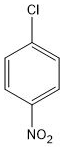
Consider the following reactions.
In the above mentioned reactions, the reaction of chloromethane with KNO and AgNO afford two products: Products A and B, respectively. The Products A and B are:
Consider the following reactions.
In the above mentioned reactions, the reaction of chloromethane with KNO and AgNO afford two products: Products A and B, respectively. The Products A and B are:
Solution
The nitrite ion, , is an ambidentate nucleophile and can attack through either O or N.
KNO is ionic, so free ions attack through the O atom (the more electronegative, negatively charged site). This gives the alkyl nitrite: , so Product A is .
AgNO is covalent, so the N atom, which has a lone pair, attacks the carbon. This gives the nitroalkane: , so Product B is .
Option 3 reverses the two products. The reagent that is ionic (KNO) gives the nitrite, not the nitro compound.
The same pattern holds for KCN (alkyl cyanide) and AgCN (alkyl isocyanide): the ionic salt attacks through the more electronegative atom, and the covalent salt attacks through the lone pair on the less electronegative atom.
Related questions:
2025: 24 May Shift 2
2026: 6 June Shift 1
2026: 26 May Shift 2
2025: 26 May Shift 2