
1-Chloro-4-nitro-benzene reacts with NaOH at 443K to form
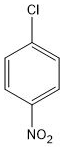
1-Chloro-4-nitro-benzene reacts with NaOH at 443K to form
Solution
Chlorobenzene is normally very unreactive toward nucleophiles, but the group at the para position changes this. It withdraws electrons by the and effects and stabilises the negatively charged intermediate formed when attacks the carbon bearing Cl. This intermediate is a resonance-stabilised carbanion, with the charge delocalised onto the nitro group.
So at 443 K, nucleophilic aromatic substitution occurs: is replaced by , giving sodium 4-nitrophenoxide. Acidification then gives 4-nitrophenol.
Option 2 (4-chlorophenol) and Option 4 (2-chlorophenol): these would need the nitro group to be lost. is an activating group for the substitution, not the leaving group.
Option 3: would end up at the wrong position, with Cl retained, which is not what happens in this substitution.
The more nitro groups at ortho and para positions to Cl, the easier the substitution. For example, 2,4,6-trinitrochlorobenzene reacts even with warm water.
Related questions:
2026: 31 May Shift 2
2025: 22 May Shift 1
2026: 29 May Shift 2
2025: 28 May Shift 1
2026: 26 May Shift 1