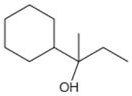
Williamson synthesis is an important method for the preparation of ethers.
Consider the following statments and identify the correct statements
(A) This method is not applicable for preparation of symmetrical ethers.
(B) This method is used for the preparation of both symmetrical and unsymmetrical ethers .
(C) This involves attack of an alkoxide on primary alkyl halide.
(D) Ethers containing substituted alkyl groups (secondary or tertiary ) can also be prepared by this method.
Solution
Statement (B) is correct: the Williamson synthesis gives symmetrical ethers (e.g. ) and unsymmetrical ethers (different R and R').
Statement (D) is correct: the alkoxide can be primary, secondary or tertiary, so ethers with substituted (secondary or tertiary) alkyl groups can be made. For example, .
(A): wrong, because symmetrical ethers are easily made by this method.
(C): wrong, because the reaction is an S2 attack of the alkoxide on the alkyl halide, not S1.
The alkyl halide must be primary. Secondary or tertiary alkyl halides undergo elimination to give alkenes, so the bulky group should come from the alkoxide.
Related questions:
2026: 29 May Shift 2
2026: 30 May Shift 2
2025: 29 May Shift 1
2026: 15 May Shift 1