Method of preparation of haloalkanes
The hydroxyl group of an alcohol is replaced by halogen on reaction with concentrated halogen acids, phosphorus halides, or thionyl chloride. Thionyl chloride is preferred because in this reaction alkyl halide is formed along with gases SO2 and HCl. The two gaseous products are escapable, hence, the reaction gives pure alkyl halides. The reactions of primary and secondary alcohols with HCl require the presence of a catalyst, ZnCl2 . With tertiary alcohols, the reaction is conducted by simply shaking the alcohol with concentrated HCl at room temperature. Constant boiling with HBr (48%) is used for preparing alkyl bromide. Good yields of R-I may be obtained by heating alcohols with sodium or potassium iodide in 95% orthophosphoric acid.
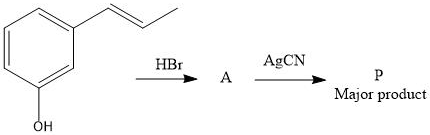
An alkene is converted to corresponding alkyl halide by reaction with hydrogen chloride, hydrogen bromide. Further, addition of bromine in CCl4 to an alkene resulting in discharge of reddish brown colour of bromine constitutes, an important method for the detection of double bond in a molecule.
Alkyl iodides are often prepared by the reaction of alkyl chlorides/ bromides with NaI in dry acetone.
The alkyl fluorides are best prepared by heating an alkyl chlorides/bromides in the presence of a metallic fluoride.
The primary aromatic amine, dissolved or suspended in cold aqueous mineral acid, is treated with sodium nitrite, a diazonium salt is formed. Mixing the solution of freshly prepared diazonium salt with cuprous chloride or cuprous bromide results in the replacement of the diazonium group by -Cl or -Br .
The reactions of haloalkanes may be divided into the following categories: 1. Nucleophilic substitution 2. Elimination reactions 3. Reaction with metals.