
Complete the following reaction given below
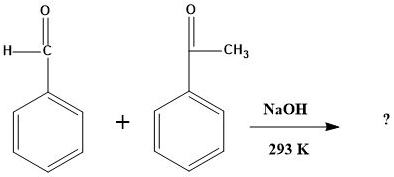
Complete the following reaction given below
Solution
This is a crossed aldol (Claisen-Schmidt) condensation. NaOH removes an alpha hydrogen from the of acetophenone to form an enolate. The enolate attacks the carbonyl carbon of benzaldehyde, which has no alpha hydrogen and so acts only as the electrophile. The aldol product then loses water readily, because the new C=C is conjugated with both the phenyl ring and the C=O.
The product is benzalacetophenone (chalcone), which is the structure in Option 1.
Options 2, 3 and 4: these contain -OH groups or reduced carbons. NaOH is not a reducing agent, so no alcohol forms, and the C=O of the ketone stays intact.
Related questions:
2025: 28 May Shift 2
2025: 15 May Shift 1
2025: 23 May Shift 2
2025: 19 May Shift 2
2025: 15 May Shift 2
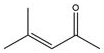
2026: 30 May Shift 1