
The correct product in the following reaction is
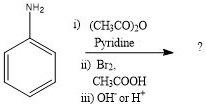
The correct product in the following reaction is
Solution
Acetic anhydride with pyridine converts aniline to acetanilide, . The nitrogen lone pair is now partly delocalised onto the C=O group, so the ring is only moderately activated and does not undergo polybromination.
The bulky group also blocks the ortho positions, so in substitutes mainly at the para position. Hydrolysis with or then removes the acetyl group and gives p-bromoaniline.
Option 2: 2,4,6-tribromoaniline forms only when free aniline reacts with bromine water. The acetyl protection is there to prevent this.
Option 3: ortho bromination is hindered by the bulky acetamido group, so the major product is the para isomer.
Option 1: bromine substitutes on the ring, not on nitrogen.
Related questions:
2026: 14 May Shift 2
2025: 15 May Shift 1
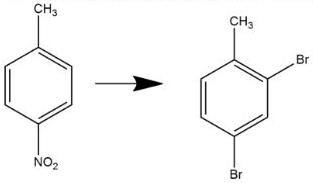
2025: 30 May Shift 2
2026: 19 May Shift 2
2026: 31 May Shift 2