
Rank the following amines in increasing order of tendency for ease of formation of cation by accepting a proton from acid.
A. 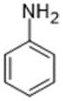
B. 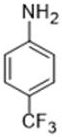
C. 
D. 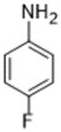
Rank the following amines in increasing order of tendency for ease of formation of cation by accepting a proton from acid.
A.
B.
C.
D.
Solution
Ease of accepting a proton depends on how available the lone pair on nitrogen is, so it follows basic strength.
C (cyclohexylamine) is an aliphatic amine. Its lone pair is not delocalised, and the alkyl ring is electron-donating (+I), so it is the strongest base.
A (aniline) has its lone pair delocalised into the benzene ring, so it is much weaker than C.
D (4-fluoroaniline) has fluorine, which withdraws electrons by -I but donates by +R. The net effect is a small drop in basicity compared with aniline.
B (4-trifluoromethylaniline) has the strongly electron-withdrawing group (-I only). It pulls electron density away from nitrogen the most, so B is the weakest base.
Options 1, 2 and 4: each puts the aliphatic amine C or the strongly deactivated amine B in the wrong position. C must be last, since a lone pair that is not delocalised is always more available than one conjugated with a ring.
Extra: electron-withdrawing groups on the ring lower the basicity of aniline, and electron-donating groups raise it.
Related questions:
2025: 19 May Shift 2
2025: 30 May Shift 1
2026: 29 May Shift 2
2025: 27 May Shift 2
2026: 19 May Shift 2