
The most suitable synthetic procedure involving various reactions to convert benzene to p-bromoaniline will be
The most suitable synthetic procedure involving various reactions to convert benzene to p-bromoaniline will be
Solution
Direct bromination of aniline is too fast: the group strongly activates the ring and gives 2,4,6-tribromoaniline. To get only the para product, the amino group is first converted to acetanilide, whose group is a weaker activator. Its bulk also blocks the ortho positions, so bromination gives mainly p-bromoacetanilide. Hydrolysis then removes the acetyl group to give p-bromoaniline.
The sequence is:
Option 1: deprotects before bromination, so the protection is wasted and tribromoaniline forms.
Options 2 and 3: direct bromination of aniline gives 2,4,6-tribromoaniline, not the p-bromo product. Option 3 is also not a practical step, as benzene cannot be directly aminated in a simple lab step.
Related questions:
2026: 24 May Shift 1
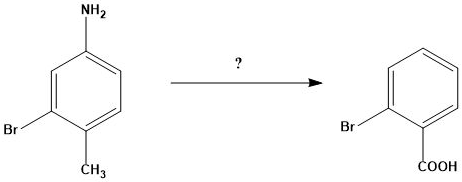
2025: 15 May Shift 1
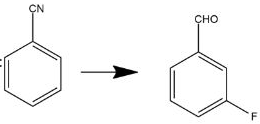
2026: 26 May Shift 2