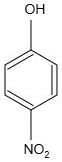
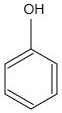
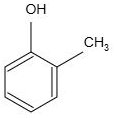
Arrange the following in decreasing order of their acidic strength?
(A) Phenol
(B) o-Nitrophenol
(C) m-Nitrophenol
(D) p-Nitrophenol
Arrange the following in decreasing order of their acidic strength?
(A) Phenol
(B) o-Nitrophenol
(C) m-Nitrophenol
(D) p-Nitrophenol
Solution
Nitro groups stabilise the phenoxide ion by pulling electron density away from the negatively charged oxygen, so they increase acidity. The effect differs by position.
(D) p-Nitrophenol: the nitro group acts through both -M and -I effects, giving the strongest stabilisation of the phenoxide ion.
(B) o-Nitrophenol: -M and -I both operate, but intramolecular hydrogen bonding between the -OH and the -NO group makes the proton harder to release, so it is slightly weaker than the para isomer.
(C) m-Nitrophenol: only the -I effect operates, since -M does not act from the meta position.
(A) Phenol: no electron-withdrawing group, so its phenoxide ion is the least stabilised.
Option 1: assumes the ortho isomer is stronger because the nitro group is closer, but intramolecular hydrogen bonding in o-nitrophenol lowers its acidity below that of the para isomer.
Approximate values: p-nitrophenol 7.1, o-nitrophenol 7.2, m-nitrophenol 8.4, phenol 10.0. A lower means a stronger acid.
Related questions:
2026: 29 May Shift 1

2026: 29 May Shift 1
2026: 19 May Shift 1
2026: 19 May Shift 2
2026: 30 May Shift 2