
The most suitable substrates for preparation of following alcohol is
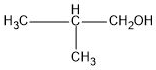
The most suitable substrates for preparation of following alcohol is
Solution
The target alcohol is 2-methylpropan-1-ol, , which is a primary alcohol. A Grignard reagent gives a primary alcohol only when it reacts with formaldehyde, followed by acid hydrolysis.
Here, supplies the carbon, and isopropylmagnesium bromide, , supplies the part. This is the combination shown in Option 3.
Option 1: an aldehyde other than HCHO gives a secondary alcohol. Here, gives butan-2-ol.
Option 2: a ketone gives a tertiary alcohol. Here, gives 2-methylpropan-2-ol.
Option 4: also gives butan-2-ol, a secondary alcohol.
Memory trick: HCHO gives primary, other RCHO give secondary, and ketones give tertiary alcohols.
Related questions:
2026: 20 May Shift 2
2026: 18 May Shift 2
2026: 29 May Shift 2
2026: 21 May Shift 1
2025: 21 May Shift 2