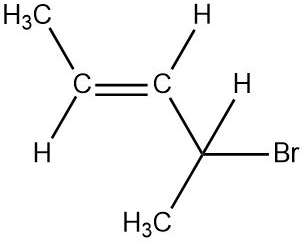
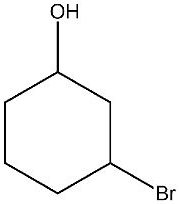
Q1:

Alcohols, Phenols & Ethers

Easy

Which of the following compounds comprise of a phenolic group?

(A) Salicylic acid

(B) Salicylaldehyde

(C) Cresol

(D) Catechol

Answer options
Option 2
Correct Answer
Explanation for 2025: 27 May Shift 2 CHE question 1

Q2:

Electrochemistry

Medium

For the cell represented by the following reaction

Mg(s)+2Ag+(0.0001M)⟶Mg2+(0.2M)+2Ag(s)\mathrm{Mg(s) + 2Ag^+(0.0001M) \longrightarrow Mg^{2+}(0.2M) + 2Ag(s)}

If E(cell)∘=3.17E^\circ_{(cell)} = 3.17 V, its E(cell)E_{(cell)} at 298 K will be :

(Given: log⁡102=0.301\log_{10} 2 = 0.301)

Answer options
Option 1
Correct Answer
Explanation for 2025: 27 May Shift 2 CHE question 2

Q3:

Electrochemistry

Medium

Arrange the following in increasing order of their conductivity

(A) Silicon

(B) Germanium

(C) Sodium

(D) Glass

Answer options
Option 1
Correct Answer
Explanation for 2025: 27 May Shift 2 CHE question 3

Q4:

Biomolecules

Easy

Identify the essential amino acids from the following.

(A) Threonine

(B) Serine

(C) Histidine

(D) Lysine

Answer options
Option 4
Correct Answer
Explanation for 2025: 27 May Shift 2 CHE question 4

Q6:

Biomolecules

Easy

Match List-I with List-II

List-IList-II
SourcesVitamin name
(A) Fish liver oil(I) Vitamin C
(B) Citrus fruits(II) Vitamin A
(C) Exposure to sunlight(III) Vitamin B12\mathrm{B_{12}}
(D) Curd(IV) Vitamin D
Answer options
Option 2
Correct Answer
Explanation for 2025: 27 May Shift 2 CHE question 6

Q7:

Coordination Compounds

Medium

Which of the following properties are related to the complex [Fe(H2O)6]3+\mathrm{[Fe(H_2O)_6]^{3+}} ?

(A) Paramagnetic

(B) number of unpaired electrons are five

(C) d2sp3d^2sp^3 hybridisation

(D) H2O\mathrm{H_2O} is a strong field ligand

Answer options
Option 2
Correct Answer
Explanation for 2025: 27 May Shift 2 CHE question 7

Q9:

Solutions

Easy

The molality of solution obtained by dissolving 1.5 g of ethanoic acid (CH3COOH\mathrm{CH_3COOH}) in 25g of benzene is:

Answer options
Option 3
Correct Answer
Explanation for 2025: 27 May Shift 2 CHE question 9

Q10:

Haloalkanes & Haloarenes

Easy

Match List-I with List-II

List-IList-II
(A) SN2\mathrm{S_N}^2(I) Racemization
(B) Iodoform(II) Ozone depletion
(C) SN1\mathrm{S_N}^1(III) Antiseptic
(D) Carbon tetrachloride(IV) Inversion
Answer options

Q11:

Solutions

Medium

The vapour pressure of pure water at 25 °C is 23.75 mmHg. The vapor pressure of the solution obtained by dissolving 34.2 g of sucrose (C12H22O11\mathrm{C_{12}H_{22}O_{11}}) in 100 g of water will be:

Answer options

Q12:

Biomolecules

Medium

Match List-I (amino acid) with List-II (Characteristic Side Chain )

List-IList-II
Amino acidCharacteristic Side Chain
(A) Phenylalanine(I) (CH3)2CHCH2\mathrm{(CH_3)_2CHCH_2}-
(B) Leucine(II) C6H5CH2\mathrm{C_6H_5CH_2}-
(C) Lysine(III) CH3\mathrm{CH_3}-CH2\mathrm{CH_2}-CH(CH3)\mathrm{CH(CH_3)}-
(D) Isoleucine(IV) H2N\mathrm{H_2N}-(CH2)4\mathrm{(CH_2)_4}-
Answer options

Q13:

Coordination Compounds

Easy

Which of the following is a heteroleptic complex?

Answer options

Q15:

Alcohols, Phenols & Ethers

Medium

Identify the correct structure of the compounds whose IUPAC names are respectively as follows:

(i) 4-Chloro-3-ethylbutan-1-ol and (ii) Cyclopent-3-en-1-ol

Answer options

Q16:

Chemical Kinetics

Medium

Arrange the following reactions in increasing order of the value of the ratio of rate constants (k310/k300k_{310}/k_{300})

(A) A + B → C: EaE_a = 70 kJ

(B) P + Q → R: EaE_a = 45 kJ

(C) G + H → I: EaE_a = 95 kJ

(D) X + Y → Z: EaE_a = 100 kJ

Answer options

Q18:

Amines

Medium

The decreasing order of basicity of following amines in aqueous phase;

(A) N, N-Dimethylmethamine

(B) Methanamine

(C) N-Ethylethanamine

(D) Phenylmethanamine

Answer options

Q19:

Amines

Medium

Which of the following set of reagents will convert aniline to p-nitroaniline ?

Answer options

Q21:

Solutions

Easy

Match List-I with List-II

List-IList-II
(Type of solution)(Examples)
(A) Gas in liquid(I) Brass
(B) liquid in liquid(II) Benzene in Toluene
(C) liquid in solid(III) Aerated drinks
(D) solid in solid(IV) Mercury in gold
Answer options

Q22:

Coordination Compounds

Easy

What is the formula for the Tetraammineaquachloridocobalt (III) chloride coordination compound?

Answer options

Q23:

Solutions

Medium

A solution containing 10 g/dm3\mathrm{dm^3} of urea (NH2CONH2\mathrm{NH_2CONH_2}) is isotonic with a 10% solution of a non-volatile solute. The molecular mass of the solute is:

Answer options

Q24:

Chemical Kinetics

Easy

Match the statement given in List-I with statements given in List-II

List-IList-II
(A) Catalysts alter the rate of reaction(I) cannot be fraction or zero
(B) Molecularity(II) by lowering the activation energy
(C) Second half life of a first order reaction(III) is the same as the first
(D) e−Ea/RTe^{-Ea/RT}(IV) refers to the fraction of molecules with energy equal to or greater than activation energy
Answer options

Q26:

Haloalkanes & Haloarenes

Medium

Arrange the following alkyl halides in increasing order of reactivity towards SN2\mathrm{S_N2} reaction:

(A) 1-Bromobutane

(B) 1-Bromo-2,2-dimethylpropane

(C) 1-Bromo-2-methylbutane

(D) 1-Bromo-3-methylbutane

Answer options

Q27:

Alcohols, Phenols & Ethers

Easy

In the conversion of ethanol to ethene , the first step of the reaction involves the formation of

Answer options

Q28:

Alcohols, Phenols & Ethers

Easy

The reagent involved in Lucas test is

Answer options

Q29:

Haloalkanes & Haloarenes

Easy

The major product in the following reaction is

C6H5CH=CH2+HI→?\mathrm{C_6H_5CH{=}CH_2 + HI \rightarrow ?}

Answer options

Q30:

Solutions

Medium

The degree of dissociation (α\alpha) of a weak electrolyte AxBy\mathrm{A_xB_y} is related to van't Hoff factor (ii) by the expression:

Answer options

Q31:

Biomolecules

Easy

Which of the following vitamins are water soluble ?

(A) Thiamine

(B) Riboflavin

(C) Pyridoxine

(D) Ascorbic acid

Answer options

Q32:

Coordination Compounds

Easy

What is the hybridisation of metal ion in [Ni(CO)4]\mathrm{[Ni(CO)_4]} compound?

Answer options

Q33:

Chemical Kinetics

Easy

A reaction is second order with respect to a reactant. If the concentration of the reactant is increased by 1.5 times, the rate of the reaction

Answer options

Q34:

Chemical Kinetics

Easy

The correct expression of the rate of the reaction according to the collision theory is

Answer options

Q37:

Electrochemistry

Medium

Among the given statements about electronic conductance, the correct statements are

(A) The electronic conductance depends on the nature and structure of the metal

(B) The electronic conductance depends on temperature (it decreases with increase in temperature)

(C) The composition of the metallic conductor remains unchanged during electronic conductance.

(D) The electronic conduction depends on the number of valence electrons per atom.

Answer options

Q38:

Amines

Medium

Arrange the following compounds in increasing order of their solubility in water :

(A) n-butanol

(B) Butan-1-amine

(C) Methanamine

(D) Aniline

Answer options

Q39:

Amines

Medium

Identify the final product (C) in the reaction given below;

CH3CH2I+NaCN→A→\mathrm{CH_3CH_2I + NaCN \rightarrow A \rightarrow} (Partial hydrolysis/OH−\mathrm{OH^-}) →B+NaOH+Br2→C\mathrm{\rightarrow B + NaOH + Br_2 \rightarrow C} ?

Answer options

Q41:

Aldehydes, Ketones & Carboxylic Acids

Easy

Carboxylic acids are the organic compounds which comprise of carboxyl functional group, -COOH. These are generally found in nature, some higher members are known as fatty acids as they occur in natural fats as esters of glycerol. They can be prepared from oxidation of alcohols and aldehydes, hydrolysis of nitriles and amides and Grignard reagents. They are stronger acids than simple phenols and alcohols. but weaker than mineral acids. Substituents affect the acidity of aliphatic and aromatic carboxylic acids. They undergo reactions involving cleavage of -OH and C-OH bond. Carboxylic acids having an alpha hydrogen get halogenated in the presence of red phosphorus to form alpha halo carboxylic acids. The reaction is known as Hell Volhard Zelinsky reaction. Besides these aromatic carboxylic acids undergo electrophilic substitution reactions. They are versatile and are employed in the manufacture of various useful compounds. For example, methanoic acid is used in rubber, textile, dyeing, leather and electroplating industries. Higher fatty acids are used in the manufacture of soaps and detergents. Esters of Benzoic acid are used in perfumery.

Which carboxylic acid will not undergo HVZ reaction?

Answer options

Q42:

Aldehydes, Ketones & Carboxylic Acids

Medium

Carboxylic acids are the organic compounds which comprise of carboxyl functional group, -COOH. These are generally found in nature, some higher members are known as fatty acids as they occur in natural fats as esters of glycerol. They can be prepared from oxidation of alcohols and aldehydes, hydrolysis of nitriles and amides and Grignard reagents. They are stronger acids than simple phenols and alcohols. but weaker than mineral acids. Substituents affect the acidity of aliphatic and aromatic carboxylic acids. They undergo reactions involving cleavage of -OH and C-OH bond. Carboxylic acids having an alpha hydrogen get halogenated in the presence of red phosphorus to form alpha halo carboxylic acids. The reaction is known as Hell Volhard Zelinsky reaction. Besides these aromatic carboxylic acids undergo electrophilic substitution reactions. They are versatile and are employed in the manufacture of various useful compounds. For example, methanoic acid is used in rubber, textile, dyeing, leather and electroplating industries. Higher fatty acids are used in the manufacture of soaps and detergents. Esters of Benzoic acid are used in perfumery.

Identify the strongest acid

Answer options

Q43:

Aldehydes, Ketones & Carboxylic Acids

Easy

Carboxylic acids are the organic compounds which comprise of carboxyl functional group, -COOH. These are generally found in nature, some higher members are known as fatty acids as they occur in natural fats as esters of glycerol. They can be prepared from oxidation of alcohols and aldehydes, hydrolysis of nitriles and amides and Grignard reagents. They are stronger acids than simple phenols and alcohols. but weaker than mineral acids. Substituents affect the acidity of aliphatic and aromatic carboxylic acids. They undergo reactions involving cleavage of -OH and C-OH bond. Carboxylic acids having an alpha hydrogen get halogenated in the presence of red phosphorus to form alpha halo carboxylic acids. The reaction is known as Hell Volhard Zelinsky reaction. Besides these aromatic carboxylic acids undergo electrophilic substitution reactions. They are versatile and are employed in the manufacture of various useful compounds. For example, methanoic acid is used in rubber, textile, dyeing, leather and electroplating industries. Higher fatty acids are used in the manufacture of soaps and detergents. Esters of Benzoic acid are used in perfumery.

The reagents needed for the preparation of Benzoic acid from ethyl benzene is

Answer options

Q44:

Aldehydes, Ketones & Carboxylic Acids

Easy

Carboxylic acids are the organic compounds which comprise of carboxyl functional group, -COOH. These are generally found in nature, some higher members are known as fatty acids as they occur in natural fats as esters of glycerol. They can be prepared from oxidation of alcohols and aldehydes, hydrolysis of nitriles and amides and Grignard reagents. They are stronger acids than simple phenols and alcohols. but weaker than mineral acids. Substituents affect the acidity of aliphatic and aromatic carboxylic acids. They undergo reactions involving cleavage of -OH and C-OH bond. Carboxylic acids having an alpha hydrogen get halogenated in the presence of red phosphorus to form alpha halo carboxylic acids. The reaction is known as Hell Volhard Zelinsky reaction. Besides these aromatic carboxylic acids undergo electrophilic substitution reactions. They are versatile and are employed in the manufacture of various useful compounds. For example, methanoic acid is used in rubber, textile, dyeing, leather and electroplating industries. Higher fatty acids are used in the manufacture of soaps and detergents. Esters of Benzoic acid are used in perfumery.

Benzoic acid in the presence of conc. HNO3\mathrm{HNO_3} and conc. H2SO4\mathrm{H_2SO_4} give major product as

Answer options

Q45:

Aldehydes, Ketones & Carboxylic Acids

Easy

Carboxylic acids are the organic compounds which comprise of carboxyl functional group, -COOH. These are generally found in nature, some higher members are known as fatty acids as they occur in natural fats as esters of glycerol. They can be prepared from oxidation of alcohols and aldehydes, hydrolysis of nitriles and amides and Grignard reagents. They are stronger acids than simple phenols and alcohols. but weaker than mineral acids. Substituents affect the acidity of aliphatic and aromatic carboxylic acids. They undergo reactions involving cleavage of -OH and C-OH bond. Carboxylic acids having an alpha hydrogen get halogenated in the presence of red phosphorus to form alpha halo carboxylic acids. The reaction is known as Hell Volhard Zelinsky reaction. Besides these aromatic carboxylic acids undergo electrophilic substitution reactions. They are versatile and are employed in the manufacture of various useful compounds. For example, methanoic acid is used in rubber, textile, dyeing, leather and electroplating industries. Higher fatty acids are used in the manufacture of soaps and detergents. Esters of Benzoic acid are used in perfumery.

Esterification of carboxylic acid with alcohols or phenols is which type of reaction ?

Answer options

Q46:

d & f Block Elements

Easy

Sodium dichromate Na2Cr2O7\mathrm{Na_2Cr_2O_7} and Potassium dichromate K2Cr2O7\mathrm{K_2Cr_2O_7}, are strong oxidizing agents; in acidic solution, its oxidising action can be represented as follows:

Cr2O72−+14H++6e−→2Cr3++7H2O\mathrm{Cr_2O_7^{2-} + 14H^+ + 6e^- \rightarrow 2Cr^{3+} + 7H_2O} (E∘=1.33VE^\circ = 1.33\mathrm{V})

The chromates and dichromates are interconvertible in aqueous solution depending upon pH of the solution. The chromate ion is tetrahedral whereas the dichromate ion consists of two tetrahedra sharing one corner with Cr–O–Cr bond angle of 126°

Potassium permanganate is prepared by fusion of MnO2\mathrm{MnO_2} with an alkali metal hydroxide and an oxidising agent like KNO3\mathrm{KNO_3}. This produces the dark green K2MnO4\mathrm{K_2MnO_4} which disproportionates in a neutral or acidic solution to give permanganate. It is a strong oxidizing agent. Hydrogen ion concentration of the solution plays an important part in the reduction of permanganate to manganate, manganese dioxide and manganese(II) salt.

Potassium permanganate forms dark purple (almost black) crystals which are isostructural with those of KClO4\mathrm{KClO_4}. The salt is not very soluble in water (6.4 g/100 g of water at 293 K), but when heated it decomposes at 513 K.

Potassium dichromate is used in the leather industry because of its nature as

Answer options

Q47:

d & f Block Elements

Medium

Sodium dichromate Na2Cr2O7\mathrm{Na_2Cr_2O_7} and Potassium dichromate K2Cr2O7\mathrm{K_2Cr_2O_7}, are strong oxidizing agents; in acidic solution, its oxidising action can be represented as follows:

Cr2O72−+14H++6e−→2Cr3++7H2O\mathrm{Cr_2O_7^{2-} + 14H^+ + 6e^- \rightarrow 2Cr^{3+} + 7H_2O} (E∘=1.33VE^\circ = 1.33\mathrm{V})

The chromates and dichromates are interconvertible in aqueous solution depending upon pH of the solution. The chromate ion is tetrahedral whereas the dichromate ion consists of two tetrahedra sharing one corner with Cr–O–Cr bond angle of 126°

Potassium permanganate is prepared by fusion of MnO2\mathrm{MnO_2} with an alkali metal hydroxide and an oxidising agent like KNO3\mathrm{KNO_3}. This produces the dark green K2MnO4\mathrm{K_2MnO_4} which disproportionates in a neutral or acidic solution to give permanganate. It is a strong oxidizing agent. Hydrogen ion concentration of the solution plays an important part in the reduction of permanganate to manganate, manganese dioxide and manganese(II) salt.

Potassium permanganate forms dark purple (almost black) crystals which are isostructural with those of KClO4\mathrm{KClO_4}. The salt is not very soluble in water (6.4 g/100 g of water at 293 K), but when heated it decomposes at 513 K.

Choose the correct statement from the options given below:

Answer options

Q48:

d & f Block Elements

Medium

Sodium dichromate Na2Cr2O7\mathrm{Na_2Cr_2O_7} and Potassium dichromate K2Cr2O7\mathrm{K_2Cr_2O_7}, are strong oxidizing agents; in acidic solution, its oxidising action can be represented as follows:

Cr2O72−+14H++6e−→2Cr3++7H2O\mathrm{Cr_2O_7^{2-} + 14H^+ + 6e^- \rightarrow 2Cr^{3+} + 7H_2O} (E∘=1.33VE^\circ = 1.33\mathrm{V})

The chromates and dichromates are interconvertible in aqueous solution depending upon pH of the solution. The chromate ion is tetrahedral whereas the dichromate ion consists of two tetrahedra sharing one corner with Cr–O–Cr bond angle of 126°

Potassium permanganate is prepared by fusion of MnO2\mathrm{MnO_2} with an alkali metal hydroxide and an oxidising agent like KNO3\mathrm{KNO_3}. This produces the dark green K2MnO4\mathrm{K_2MnO_4} which disproportionates in a neutral or acidic solution to give permanganate. It is a strong oxidizing agent. Hydrogen ion concentration of the solution plays an important part in the reduction of permanganate to manganate, manganese dioxide and manganese(II) salt.

Potassium permanganate forms dark purple (almost black) crystals which are isostructural with those of KClO4\mathrm{KClO_4}. The salt is not very soluble in water (6.4 g/100 g of water at 293 K), but when heated it decomposes at 513 K.

The number of moles of KMnO4\mathrm{KMnO_4} required to react with one mole of sulphide ion in acidic solution is

Answer options

Q49:

d & f Block Elements

Medium

Sodium dichromate Na2Cr2O7\mathrm{Na_2Cr_2O_7} and Potassium dichromate K2Cr2O7\mathrm{K_2Cr_2O_7}, are strong oxidizing agents; in acidic solution, its oxidising action can be represented as follows:

Cr2O72−+14H++6e−→2Cr3++7H2O\mathrm{Cr_2O_7^{2-} + 14H^+ + 6e^- \rightarrow 2Cr^{3+} + 7H_2O} (E∘=1.33VE^\circ = 1.33\mathrm{V})

The chromates and dichromates are interconvertible in aqueous solution depending upon pH of the solution. The chromate ion is tetrahedral whereas the dichromate ion consists of two tetrahedra sharing one corner with Cr–O–Cr bond angle of 126°

Potassium permanganate is prepared by fusion of MnO2\mathrm{MnO_2} with an alkali metal hydroxide and an oxidising agent like KNO3\mathrm{KNO_3}. This produces the dark green K2MnO4\mathrm{K_2MnO_4} which disproportionates in a neutral or acidic solution to give permanganate. It is a strong oxidizing agent. Hydrogen ion concentration of the solution plays an important part in the reduction of permanganate to manganate, manganese dioxide and manganese(II) salt.

Potassium permanganate forms dark purple (almost black) crystals which are isostructural with those of KClO4\mathrm{KClO_4}. The salt is not very soluble in water (6.4 g/100 g of water at 293 K), but when heated it decomposes at 513 K.

Alkaline/neutral KMnO4\mathrm{KMnO_4} oxidizes iodide (I−\mathrm{I^-}) ion to

Answer options

Q50:

d & f Block Elements

Easy

Sodium dichromate Na2Cr2O7\mathrm{Na_2Cr_2O_7} and Potassium dichromate K2Cr2O7\mathrm{K_2Cr_2O_7}, are strong oxidizing agents; in acidic solution, its oxidising action can be represented as follows:

Cr2O72−+14H++6e−→2Cr3++7H2O\mathrm{Cr_2O_7^{2-} + 14H^+ + 6e^- \rightarrow 2Cr^{3+} + 7H_2O} (E∘=1.33VE^\circ = 1.33\mathrm{V})

The chromates and dichromates are interconvertible in aqueous solution depending upon pH of the solution. The chromate ion is tetrahedral whereas the dichromate ion consists of two tetrahedra sharing one corner with Cr–O–Cr bond angle of 126°

Potassium permanganate is prepared by fusion of MnO2\mathrm{MnO_2} with an alkali metal hydroxide and an oxidising agent like KNO3\mathrm{KNO_3}. This produces the dark green K2MnO4\mathrm{K_2MnO_4} which disproportionates in a neutral or acidic solution to give permanganate. It is a strong oxidizing agent. Hydrogen ion concentration of the solution plays an important part in the reduction of permanganate to manganate, manganese dioxide and manganese(II) salt.

Potassium permanganate forms dark purple (almost black) crystals which are isostructural with those of KClO4\mathrm{KClO_4}. The salt is not very soluble in water (6.4 g/100 g of water at 293 K), but when heated it decomposes at 513 K.

When KMnO4\mathrm{KMnO_4} is added to Oxalic acid solution, the decolourisation is slow in the beginning but becomes faster after some time because

Answer options

CUET Chemistry 2025 27 May Shift 2 Past Year Question Paper

Every question from the CUET Chemistry 2025 27 May Shift 2 paper is here in full, with the correct answer and a step by step solution for each one. It is completely free, there is no login and no paywall, and you can read the whole paper online or download it to revise offline.

You can also attempt it instead of only reading it. Take the paper as a full length mock under exam conditions, or filter it by topic and attempt just that topic as a topic test. Both are free, and you get a breakdown of your accuracy, your timing and your weak areas once you submit.

CUET Chemistry past year questions (PYQs) are the closest thing to the real exam, so working through them is the quickest way to learn the paper pattern, the marking scheme and the level of difficulty to expect on the day.