Q1:

Amines

Easy

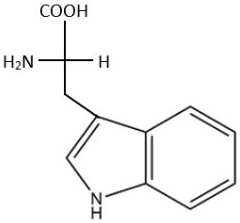
Aniline reacts with bromine water at room temperature and forms a compound X. Identify X.

Answer options
Option 3
Correct Answer
Explanation for 2025: 22 May Shift 1 CHE question 1

Q2:

Amines

Easy

The common name and IUPAC name of the following compound, respectively, are
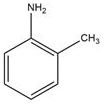
Figure

Answer options
Option 2
Correct Answer
Explanation for 2025: 22 May Shift 1 CHE question 2

Q3:

Chemical Kinetics

Easy

The rate of decomposition of gaseous ammonia on a hot platinum surface at a high pressure does not change when the initial concentration of ammonia is doubled. This is an example of ________

Answer options
Option 3
Correct Answer
Explanation for 2025: 22 May Shift 1 CHE question 3

Q4:

Aldehydes, Ketones & Carboxylic Acids

Easy

Sodium salts of carboxylic acids (RCOONa) when heated with sodalime, yield _______

Answer options
Option 1
Correct Answer
Explanation for 2025: 22 May Shift 1 CHE question 4

Q5:

Coordination Compounds

Medium

Match the complexes given in List-I with the geometry given in List-II

List-IList-II
ComplexGeometry
(A) [NiCl4]2−[NiCl_4]^{2-}(I) Tetrahedral, paramagnetic
(B) [Ni(CN)4]2−[Ni(CN)_4]^{2-}(II) Square planer, diamagnetic
(C) [CoF6]3−[CoF_6]^{3-}(III) Octahedral, diamagnetic
(D) [Co(NH3)6]3+[Co(NH_3)_6]^{3+}(IV) Octahedral, paramagnetic
Answer options
Option 4
Correct Answer
Explanation for 2025: 22 May Shift 1 CHE question 5

Q6:

Biomolecules

Medium

Milk sugar, a disaccharide, is composed of

Answer options
Option 1
Correct Answer
Explanation for 2025: 22 May Shift 1 CHE question 6

Q7:

Solutions

Easy

The decreasing order of value of van't Hoff factor for the following in aqueous medium is ________

(A) K3[Fe(CN)6]K_3[Fe(CN)_6]

(B) NaCl

(C) K2SO4K_2SO_4

(D) C6H12O6C_6H_{12}O_6

Answer options
Option 1
Correct Answer
Explanation for 2025: 22 May Shift 1 CHE question 7

Q8:

Chemical Kinetics

Easy

Consider the following statements and select the correct statements:

(A) The energy required to form the activated complex is known as activation energy.

(B) The Arrhenius equation explains the temperature dependence of the rate of chemical reaction.

(C) The number of collisions per second per unit volume of the reaction mixture is known as collision frequency.

(D) Lower the value of activation energy, lower will be the rate of reaction.

Answer options
Option 2
Correct Answer
Explanation for 2025: 22 May Shift 1 CHE question 8

Q9:

Solutions

Easy

If some blood cells are placed in a solution containing more than 0.9% (m/v) NaCl, then the water inside the cells will flow out of the cells and they will shrink. Such a solution is known as ________

Answer options
Option 2
Correct Answer
Explanation for 2025: 22 May Shift 1 CHE question 9

Q10:

Biomolecules

Easy

The product of the following chemical reaction is

Glucose→Br2 water\text{Glucose} \xrightarrow{Br_2 \text{ water}}

Answer options

Q12:

Coordination Compounds

Easy

Isomerism shown by the complex pair [Cr(H2O)6]Cl3[Cr(H_2O)_6]Cl_3 and [Cr(H2O)5Cl]Cl2.H2O[Cr(H_2O)_5Cl]Cl_2.H_2O is ______

Answer options

Q13:

d & f Block Elements

Easy

Match the catalysts given in List-I with the process catalyzed by them given in List-II

List-IList-II
CatalystProcess
(A) Ni in presence of Hydrogen(I) Ziegler Natta Catalyst
(B) Finely divided iron(II) Vegetable oil to ghee
(C) TiCl4+Al(CH3)3TiCl_4 + Al(CH_3)_3(III) Sandmeyer reaction
(D) Cu2Cl2Cu_2Cl_2(IV) Haber's process
Answer options

Q14:

Chemical Kinetics

Easy

It was found that 0.1 mol L−1^{-1} of ammonia took 200 s to be decomposed to half the initial concentration. If the decomposition follows zero order reaction, then the rate constant is

Answer options

Q15:

Coordination Compounds

Medium

Match the complex given in List-I with the number of unpaired electrons given in List-II

List-IList-II
ComplexNumber of unpaired electrons (n)
(A) [NiCl4]2−[NiCl_4]^{2-}(I) 5
(B) [Co(NH3)6]3+[Co(NH_3)_6]^{3+}(II) 1
(C) [FeF6]3−[FeF_6]^{3-}(III) 2
(D) [Fe(CN)6]3−[Fe(CN)_6]^{3-}(IV) 0
Answer options

Q16:

Aldehydes, Ketones & Carboxylic Acids

Easy

What is the product of the following reaction?

R-CH2-COOH→(ii) H2O(i) X2/Red phosphorus (X=Cl,Br)R\text{-}CH_2\text{-}COOH \xrightarrow[\text{(ii) } H_2O]{\text{(i) } X_2/\text{Red phosphorus } (X = Cl, Br)}

Answer options

Q17:

Amines

Easy

When benzene diazonium chloride reacts with phenol, it results in the formation of an orange colored compound (X); and when benzene diazonium chloride reacts with aniline, it results in the formation of a yellow colored compound (Y). What are X and Y?

Answer options

Q18:

Solutions

Easy

Arrange the following in increasing order of their molarity when their equal weights are dissolved in 250 mL of water.

(A) glucose (180 g mol−1^{-1})

(B) sodium carbonate (106 g mol−1^{-1})

(C) sodium hydroxide (40 g mol−1^{-1})

(D) acetic acid (60 g mol−1^{-1})

Answer options

Q21:

Haloalkanes & Haloarenes

Medium

What is the IUPAC name of the following compound?
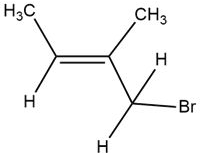
Figure

Answer options

Q22:

Biomolecules

Easy

Match List-I with List-II

List-IList-II
(A) Vitamin B1B_1(I) Ascorbic Acid
(B) Vitamin B2B_2(II) Pyridoxine
(C) Vitamin B6B_6(III) Riboflavin
(D) Vitamin C(IV) Thiamine
Answer options

Q23:

Aldehydes, Ketones & Carboxylic Acids

Easy

Which of the following represents Fehling solution B?

Answer options

Q24:

Aldehydes, Ketones & Carboxylic Acids

Medium

Give IUPAC name of the following compound:

CH3-CH2-CH2-CH(Br)-CH(CH3)-CH2-CHOCH_3\text{-}CH_2\text{-}CH_2\text{-}CH(Br)\text{-}CH(CH_3)\text{-}CH_2\text{-}CHO

Answer options

Q25:

Amines

Easy

R-CO-NH2+Br2+4NaOH⟶R-NH2+Na2CO3+2NaBr+2H2OR\text{-}CO\text{-}NH_2 + Br_2 + 4NaOH \longrightarrow R\text{-}NH_2 + Na_2CO_3 + 2NaBr + 2H_2O

The reaction shown above is known as

Answer options

Q26:

Solutions

Easy

In the amalgam of mercury with sodium, the correct option for the physical states of solute and solvent is________

Answer options

Q27:

Chemical Kinetics

Medium

Choose the statements that are valid for the molecularity of a reaction

(A) Molecularity is equal to the number of reacting species involved in the overall reaction

(B) Decomposition of ammonium nitrite is an example of unimolecular reaction

(C) Reactions with the molecularity three are very rare

(D) Molecularity can only be determined experimentally

Answer options

Q28:

Chemical Kinetics

Easy

Choose the correct statement for the collision theory of chemical reactions

Answer options

Q29:

Coordination Compounds

Medium

Arrange the following complexes in decreasing order of absorption of wavelength of light in the visible region:

(A) [Co(CN)6]3−[Co(CN)_6]^{3-}

(B) [CoF6]3−[CoF_6]^{3-}

(C) [Co(H2O)6]3+[Co(H_2O)_6]^{3+}

(D) [Co(NH3)6]3+[Co(NH_3)_6]^{3+}

Answer options

Q31:

d & f Block Elements

Hard

Arrange the following oxidation states in increasing order

(A) characteristic oxidation state of lanthanoids

(B) most stable oxidation state of Mn in its oxides

(C) most stable oxidation state of Mn

(D) oxidation state of Mn in MnO2MnO_2

Answer options

Q32:

Amines

Easy

Name the following reaction.

ArN2+X−→Cu/HBrArBr+N2+CuXArN_2^+X^- \xrightarrow{Cu/HBr} ArBr + N_2 + CuX

Answer options

Q33:

Solutions

Easy

Intermolecular hydrogen bonding is observed between chloroform and acetone. Therefore, their binary solution will_____

(A) Show positive deviation from Raoult's law

(B) Show negative deviation from Raoult's law

(C) Obey Raoult's law

(D) Show decrease in vapor pressure

Answer options

Q34:

Haloalkanes & Haloarenes

Easy

Which of the following reagents convert an alcohol into an alkyl chloride?

A) Conc. Hydrogen Chloride

(B) Phosphorus trichloride

(C) Phosphorus pentachloride

(D) Thionyl Chloride

Answer options

Q35:

Haloalkanes & Haloarenes

Easy

The synthesis of an alkyl fluoride is best achieved through

Answer options

Q37:

d & f Block Elements

Easy

Consider the following statements about the physical and chemical characteristics of interstitial compounds and identify the correct statements

(A) They have high melting points.

(B) They are very hard.

(C) They retain metallic conductivity.

(D) They are chemically very reactive.

Answer options

Q38:

d & f Block Elements

Medium

Match the elements given in List-I with electronic configuration given in List-II

List-IList-II
ElementElectronic configuration
(A) Cerium(I) [Xe] 4f12 6s2[Xe]\,4f^{12}\,6s^2
(B) Erbium(II) [Rn] 5f7 6d1 7s2[Rn]\,5f^7\,6d^1\,7s^2
(C) Uranium(III) [Xe] 4f1 5d1 6s2[Xe]\,4f^1\,5d^1\,6s^2
(D) Curium(IV) [Rn] 5f3 6d1 7s2[Rn]\,5f^3\,6d^1\,7s^2
Answer options

Q39:

Aldehydes, Ketones & Carboxylic Acids

Easy

What is the product of the following reaction?
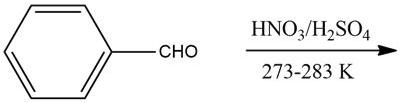
Figure

Answer options

Q40:

Haloalkanes & Haloarenes

Medium

Arrange the following compounds in increasing order of their reactivity towards SN2S_N2 reaction:

(A) CH3CH2CH2CH2BrCH_3CH_2CH_2CH_2Br

(B) (CH3)2CHCH2Br(CH_3)_2CHCH_2Br

(C) CH3CH2CH(Br)CH3CH_3CH_2CH(Br)CH_3

(D) (CH3)3CBr(CH_3)_3CBr

Answer options

Q41:

Electrochemistry

Easy

The resistance (RR) of an object is given by the expression ρlA\rho\frac{l}{A}. The inverse of RR is called conductance and the inverse of ρ\rho is called conductivity or specific conductance represented by κ\kappa. The conductivity depends upon the nature of the material (insulator, semiconductor or conductor) and the temperature of the substance. Similarly, the conductance due to the ions present in the solution (ionic conductance) depends upon the nature of the electrolyte, size of the ions produced, the nature of the solvent and the temperature. Molar conductivity (Λm\Lambda_m) of a solution at a given concentration is the conductance of the volume VV of solution containing one mole of electrolyte kept between two electrodes with area of cross-section AA and the distance of unit length. It is given by the expression, Λm=κV\Lambda_m = \kappa V. Molar conductivity increases with the decrease in concentration and when the concentration approaches zero, it is called limiting molar conductivity. The decrease is linear in the case of a strong electrolyte. However, in the case of a weak electrolyte, the change in molar conductivity is gradual in the higher concentration range and there is a sharp increase in molar conductivity as the concentration approaches zero. From the limiting molar conductivity values of a strong electrolyte, we can find the limiting molar conductivity of a weak electrolyte containing the common ions using the Kohlrausch law of independent migration of ions. From molar conductivity and limiting molar conductivity, we can determine the degree of dissociation (ΛmΛm0\frac{\Lambda_m}{\Lambda_m^0}) and ionization constant of a weak acid.

Select the correct statement.

Answer options

Q42:

Electrochemistry

Easy

The resistance (RR) of an object is given by the expression ρlA\rho\frac{l}{A}. The inverse of RR is called conductance and the inverse of ρ\rho is called conductivity or specific conductance represented by κ\kappa. The conductivity depends upon the nature of the material (insulator, semiconductor or conductor) and the temperature of the substance. Similarly, the conductance due to the ions present in the solution (ionic conductance) depends upon the nature of the electrolyte, size of the ions produced, the nature of the solvent and the temperature. Molar conductivity (Λm\Lambda_m) of a solution at a given concentration is the conductance of the volume VV of solution containing one mole of electrolyte kept between two electrodes with area of cross-section AA and the distance of unit length. It is given by the expression, Λm=κV\Lambda_m = \kappa V. Molar conductivity increases with the decrease in concentration and when the concentration approaches zero, it is called limiting molar conductivity. The decrease is linear in the case of a strong electrolyte. However, in the case of a weak electrolyte, the change in molar conductivity is gradual in the higher concentration range and there is a sharp increase in molar conductivity as the concentration approaches zero. From the limiting molar conductivity values of a strong electrolyte, we can find the limiting molar conductivity of a weak electrolyte containing the common ions using the Kohlrausch law of independent migration of ions. From molar conductivity and limiting molar conductivity, we can determine the degree of dissociation (ΛmΛm0\frac{\Lambda_m}{\Lambda_m^0}) and ionization constant of a weak acid.

Limiting molar conductivity values for HCl, NaCl and CH3COONaCH_3COONa are 425.9, 126.4 and 91.0 S cm2^2 mol−1^{-1}, respectively. Calculate the limiting molar conductivity value for acetic acid.

Answer options

Q43:

Electrochemistry

Medium

The resistance (RR) of an object is given by the expression ρlA\rho\frac{l}{A}. The inverse of RR is called conductance and the inverse of ρ\rho is called conductivity or specific conductance represented by κ\kappa. The conductivity depends upon the nature of the material (insulator, semiconductor or conductor) and the temperature of the substance. Similarly, the conductance due to the ions present in the solution (ionic conductance) depends upon the nature of the electrolyte, size of the ions produced, the nature of the solvent and the temperature. Molar conductivity (Λm\Lambda_m) of a solution at a given concentration is the conductance of the volume VV of solution containing one mole of electrolyte kept between two electrodes with area of cross-section AA and the distance of unit length. It is given by the expression, Λm=κV\Lambda_m = \kappa V. Molar conductivity increases with the decrease in concentration and when the concentration approaches zero, it is called limiting molar conductivity. The decrease is linear in the case of a strong electrolyte. However, in the case of a weak electrolyte, the change in molar conductivity is gradual in the higher concentration range and there is a sharp increase in molar conductivity as the concentration approaches zero. From the limiting molar conductivity values of a strong electrolyte, we can find the limiting molar conductivity of a weak electrolyte containing the common ions using the Kohlrausch law of independent migration of ions. From molar conductivity and limiting molar conductivity, we can determine the degree of dissociation (ΛmΛm0\frac{\Lambda_m}{\Lambda_m^0}) and ionization constant of a weak acid.

For a weak acid like Acetic acid, the correct expression for the ionization constant at concentration cc is _______

Answer options

Q44:

Electrochemistry

Easy

The resistance (RR) of an object is given by the expression ρlA\rho\frac{l}{A}. The inverse of RR is called conductance and the inverse of ρ\rho is called conductivity or specific conductance represented by κ\kappa. The conductivity depends upon the nature of the material (insulator, semiconductor or conductor) and the temperature of the substance. Similarly, the conductance due to the ions present in the solution (ionic conductance) depends upon the nature of the electrolyte, size of the ions produced, the nature of the solvent and the temperature. Molar conductivity (Λm\Lambda_m) of a solution at a given concentration is the conductance of the volume VV of solution containing one mole of electrolyte kept between two electrodes with area of cross-section AA and the distance of unit length. It is given by the expression, Λm=κV\Lambda_m = \kappa V. Molar conductivity increases with the decrease in concentration and when the concentration approaches zero, it is called limiting molar conductivity. The decrease is linear in the case of a strong electrolyte. However, in the case of a weak electrolyte, the change in molar conductivity is gradual in the higher concentration range and there is a sharp increase in molar conductivity as the concentration approaches zero. From the limiting molar conductivity values of a strong electrolyte, we can find the limiting molar conductivity of a weak electrolyte containing the common ions using the Kohlrausch law of independent migration of ions. From molar conductivity and limiting molar conductivity, we can determine the degree of dissociation (ΛmΛm0\frac{\Lambda_m}{\Lambda_m^0}) and ionization constant of a weak acid.

SI units of conductance and conductivity, respectively, are ______

Answer options

Q45:

Electrochemistry

Easy

The resistance (RR) of an object is given by the expression ρlA\rho\frac{l}{A}. The inverse of RR is called conductance and the inverse of ρ\rho is called conductivity or specific conductance represented by κ\kappa. The conductivity depends upon the nature of the material (insulator, semiconductor or conductor) and the temperature of the substance. Similarly, the conductance due to the ions present in the solution (ionic conductance) depends upon the nature of the electrolyte, size of the ions produced, the nature of the solvent and the temperature. Molar conductivity (Λm\Lambda_m) of a solution at a given concentration is the conductance of the volume VV of solution containing one mole of electrolyte kept between two electrodes with area of cross-section AA and the distance of unit length. It is given by the expression, Λm=κV\Lambda_m = \kappa V. Molar conductivity increases with the decrease in concentration and when the concentration approaches zero, it is called limiting molar conductivity. The decrease is linear in the case of a strong electrolyte. However, in the case of a weak electrolyte, the change in molar conductivity is gradual in the higher concentration range and there is a sharp increase in molar conductivity as the concentration approaches zero. From the limiting molar conductivity values of a strong electrolyte, we can find the limiting molar conductivity of a weak electrolyte containing the common ions using the Kohlrausch law of independent migration of ions. From molar conductivity and limiting molar conductivity, we can determine the degree of dissociation (ΛmΛm0\frac{\Lambda_m}{\Lambda_m^0}) and ionization constant of a weak acid.

Which of the following is an insulator?

Answer options

Q46:

Alcohols, Phenols & Ethers

Easy

Alcohols and phenols are formed when a hydrogen atom in a hydrocarbon, aliphatic and aromatic respectively is replaced by -OH group. These are further classified on the basis of number of hydroxy groups and according to the hybridization of the carbon atom sp2^2 or sp3^3 to which the -OH group is attached. They find applications in industry as well as in day-to-day life. One of the most commercially obtained alcohol also known as wood spirit is obtained by destructive distillation of wood. Both alcohols and phenols are acidic in nature. The acidity of alcohols and phenols vary according to the nature of substituent(s) attached to them. Alcohols and phenols react with carboxylic acids, acid chlorides and acid anhydrides to form esters. Introduction of acetyl group in alcohols and phenols is called acetylation. Phenol undergo electrophilic aromatic substitution reaction because the -OH activates the benzene ring. It undergoes nitration, halogenation and sulphonation reactions.

The final product of the following reaction is:
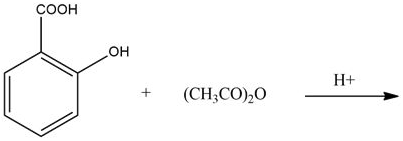
Figure

Answer options

Q47:

Alcohols, Phenols & Ethers

Easy

Alcohols and phenols are formed when a hydrogen atom in a hydrocarbon, aliphatic and aromatic respectively is replaced by -OH group. These are further classified on the basis of number of hydroxy groups and according to the hybridization of the carbon atom sp2^2 or sp3^3 to which the -OH group is attached. They find applications in industry as well as in day-to-day life. One of the most commercially obtained alcohol also known as wood spirit is obtained by destructive distillation of wood. Both alcohols and phenols are acidic in nature. The acidity of alcohols and phenols vary according to the nature of substituent(s) attached to them. Alcohols and phenols react with carboxylic acids, acid chlorides and acid anhydrides to form esters. Introduction of acetyl group in alcohols and phenols is called acetylation. Phenol undergo electrophilic aromatic substitution reaction because the -OH activates the benzene ring. It undergoes nitration, halogenation and sulphonation reactions.

Which compound is also known as 'wood spirit'?

Answer options

Q48:

Alcohols, Phenols & Ethers

Easy

Alcohols and phenols are formed when a hydrogen atom in a hydrocarbon, aliphatic and aromatic respectively is replaced by -OH group. These are further classified on the basis of number of hydroxy groups and according to the hybridization of the carbon atom sp2^2 or sp3^3 to which the -OH group is attached. They find applications in industry as well as in day-to-day life. One of the most commercially obtained alcohol also known as wood spirit is obtained by destructive distillation of wood. Both alcohols and phenols are acidic in nature. The acidity of alcohols and phenols vary according to the nature of substituent(s) attached to them. Alcohols and phenols react with carboxylic acids, acid chlorides and acid anhydrides to form esters. Introduction of acetyl group in alcohols and phenols is called acetylation. Phenol undergo electrophilic aromatic substitution reaction because the -OH activates the benzene ring. It undergoes nitration, halogenation and sulphonation reactions.

Which of the following compound lacks a phenolic group?

Answer options

Q49:

Alcohols, Phenols & Ethers

Easy

Alcohols and phenols are formed when a hydrogen atom in a hydrocarbon, aliphatic and aromatic respectively is replaced by -OH group. These are further classified on the basis of number of hydroxy groups and according to the hybridization of the carbon atom sp2^2 or sp3^3 to which the -OH group is attached. They find applications in industry as well as in day-to-day life. One of the most commercially obtained alcohol also known as wood spirit is obtained by destructive distillation of wood. Both alcohols and phenols are acidic in nature. The acidity of alcohols and phenols vary according to the nature of substituent(s) attached to them. Alcohols and phenols react with carboxylic acids, acid chlorides and acid anhydrides to form esters. Introduction of acetyl group in alcohols and phenols is called acetylation. Phenol undergo electrophilic aromatic substitution reaction because the -OH activates the benzene ring. It undergoes nitration, halogenation and sulphonation reactions.

Identiify the strongest acidic compound

Answer options

Q50:

Alcohols, Phenols & Ethers

Medium

Alcohols and phenols are formed when a hydrogen atom in a hydrocarbon, aliphatic and aromatic respectively is replaced by -OH group. These are further classified on the basis of number of hydroxy groups and according to the hybridization of the carbon atom sp2^2 or sp3^3 to which the -OH group is attached. They find applications in industry as well as in day-to-day life. One of the most commercially obtained alcohol also known as wood spirit is obtained by destructive distillation of wood. Both alcohols and phenols are acidic in nature. The acidity of alcohols and phenols vary according to the nature of substituent(s) attached to them. Alcohols and phenols react with carboxylic acids, acid chlorides and acid anhydrides to form esters. Introduction of acetyl group in alcohols and phenols is called acetylation. Phenol undergo electrophilic aromatic substitution reaction because the -OH activates the benzene ring. It undergoes nitration, halogenation and sulphonation reactions.

When phenol is treated with concentrated sulphuric acid, then it gets converted into phenol-2,4-disulphonic acid (X). On further treatment of X with conc. nitric acid, product Y is formed. Identify Y.

Answer options

CUET Chemistry 2025 22 May Shift 1 Past Year Question Paper

Every question from the CUET Chemistry 2025 22 May Shift 1 paper is here in full, with the correct answer and a step by step solution for each one. It is completely free, there is no login and no paywall, and you can read the whole paper online or download it to revise offline.

You can also attempt it instead of only reading it. Take the paper as a full length mock under exam conditions, or filter it by topic and attempt just that topic as a topic test. Both are free, and you get a breakdown of your accuracy, your timing and your weak areas once you submit.

CUET Chemistry past year questions (PYQs) are the closest thing to the real exam, so working through them is the quickest way to learn the paper pattern, the marking scheme and the level of difficulty to expect on the day.