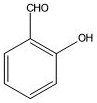
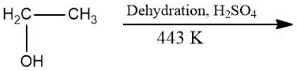
Q1:

Aldehydes, Ketones & Carboxylic Acids

Easy

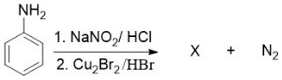
The following reaction is an example of
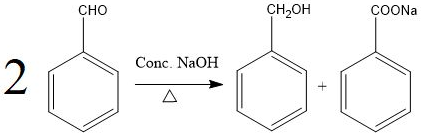
Figure

Answer options
Option 1
Correct Answer
Explanation for 2025: 2 June Shift 1 CHE question 1

Q2:

d & f Block Elements

Easy

The magnetic moment in transition metals is calculated using the formula..........

Answer options
Option 1
Correct Answer
Explanation for 2025: 2 June Shift 1 CHE question 2

Q3:

Chemical Kinetics

Easy

Inversion of cane sugar is a pseudo first order reaction

C12H22O11+H2O→H+C6H12O6+C6H12O6\mathrm{C_{12}H_{22}O_{11} + H_2O \xrightarrow{H^+} C_6H_{12}O_6 + C_6H_{12}O_6}

Choose the correct reason from the statements given below

Answer options
Option 2
Correct Answer
Explanation for 2025: 2 June Shift 1 CHE question 3

Q4:

Aldehydes, Ketones & Carboxylic Acids

Medium

The correct IUPAC name for the following structure is
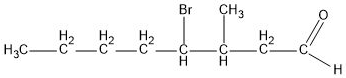
Figure

Answer options
Option 4
Correct Answer
Explanation for 2025: 2 June Shift 1 CHE question 4

Q5:

Biomolecules

Easy

During denaturation of proteins which structure of proteins remain intact ?

Answer options
Option 1
Correct Answer
Explanation for 2025: 2 June Shift 1 CHE question 5

Q6:

d & f Block Elements

Medium

Interstitial transition metal compounds

(A) have higher melting points than those of pure metals.

(B) have more reactivity than those of pure metals.

(C) are non-stoichiometric compounds.

(D) formed when small atoms like H, C or N are trapped inside the crystal lattice of the metals.

Answer options
Option 1
Correct Answer
Explanation for 2025: 2 June Shift 1 CHE question 6

Q7:

Chemical Kinetics

Medium

Based on their rate laws, arrange the following reactions in the decreasing sequence of the reaction order.

(A) Rate = k [A]3/2[B]−1[\mathrm{A}]^{3/2}[\mathrm{B}]^{-1}

(B) Rate = k [CHCl3][Cl2]1/2[\mathrm{CHCl_3}][\mathrm{Cl_2}]^{1/2}

(C) Rate = k [CH3COOC2H5][H2O]0[\mathrm{CH_3COOC_2H_5}][\mathrm{H_2O}]^0

(D) ) Rate = k [A]1/2[B]3/2[\mathrm{A}]^{1/2}[\mathrm{B}]^{3/2}

Answer options
Option 3
Correct Answer
Explanation for 2025: 2 June Shift 1 CHE question 7

Q8:

Electrochemistry

Easy

Match List-I with List-II

List-IList-II
(Items)(Properties)
(A) Primary batteries(I) Pollution free energy converter
(B) Secondary batteries(II) Takes place in the presence of air, moisture and H+\mathrm{H^+}
(C) Fuel Cells(III) Large number of charging/discharging and long-lasting
(D) Corrosion(IV) Mercury cell is used in hearing aids.
Answer options
Option 1
Correct Answer
Explanation for 2025: 2 June Shift 1 CHE question 8

Q9:

Amines

Medium

Arrange the following amines in order of their increasing basic strength
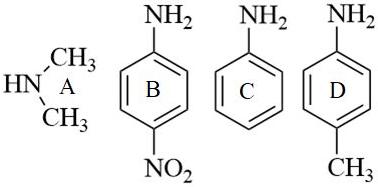
Figure

Answer options
Option 3
Correct Answer
Explanation for 2025: 2 June Shift 1 CHE question 9

Q10:

Coordination Compounds

Easy

Arrange the following complexes in increasing order of conductivity of their solution:

(A) [Co(NH3)3Cl3]\mathrm{[Co(NH_3)_3Cl_3]}

(B) [Co(NH3)4Cl2]Cl\mathrm{[Co(NH_3)_4Cl_2]Cl}

(C) [Co(NH3)6]Cl3\mathrm{[Co(NH_3)_6]Cl_3}

(D) [Co(NH3)5Cl]Cl2\mathrm{[Co(NH_3)_5Cl]Cl_2}

Answer options

Q12:

Electrochemistry

Medium

Λmo\Lambda^o_m values for electrolytes AB, HB and AD are 120.5, 300.9 and 80.0 S cm2^2 mol−1^{-1}, respectively. Λmo\Lambda^o_m value for HD is

Answer options

Q15:

Haloalkanes & Haloarenes

Easy

Which of the following reactions is used to prepare Haloarenes ?

Answer options

Q17:

Coordination Compounds

Medium

Geometry of [Ni(CN)4]2−\mathrm{[Ni(CN)_4]^{2-}} and [NiCl4]2−\mathrm{[NiCl_4]^{2-}} are.....

Answer options

Q18:

Chemical Kinetics

Easy

The unit of rate constant for first order reaction is

Answer options

Q19:

Electrochemistry

Easy

Specific conductance (κ\kappa) is related to resistivity as

Answer options

Q21:

Biomolecules

Easy

Match List-I ( vitamins) with List-II (Deficiency diseases)

List-IList-II
Name of vitaminsDeficiency disease
(A) Vitamin C(I) Night blindness
(B) Vitamin K(II) Rickets
(C) Vitamin D(III) Increased blood clotting time
(D) Vitamin A(IV) Scurvy
Answer options

Q22:

Biomolecules

Medium

Lactose on hydrolysis gives

Answer options

Q23:

Amines

Medium

The major product formed when acetanilide undergoes bromination in presence of acetic acid is

Answer options

Q24:

Haloalkanes & Haloarenes

Easy

Arrange the following alkyl halides in increasing order of reactivity towards SN2^2 reaction ?

(A) CH3-Cl\mathrm{CH_3\text{-}Cl}

(B) CH3-Br\mathrm{CH_3\text{-}Br}

(C) CH3-F\mathrm{CH_3\text{-}F}

(D) CH3-I\mathrm{CH_3\text{-}I}

Answer options

Q25:

d & f Block Elements

Medium

Match the properties given in List-I with the metals given in List-II

List-IList-II
(Property)(Metal)
(A) An element which can show +8 oxidation state(I) V
(B) 3d block element that can show upto +7 oxidation state(II) Cr
(C) 3d block element with the highest melting point(III) Os
(D) 3d block element with the highest enthalpy of atomization(IV) Mn
Answer options

Q26:

Aldehydes, Ketones & Carboxylic Acids

Easy

The composition of Fehling solution A and Fehling solution B respectively are

Answer options

Q27:

Chemical Kinetics

Easy

For a chemical reaction

(A) The order of a reaction is the sum of powers of the concentration of the reactants.

(B) The order of a reaction may be zero, an integer or a fractional value.

(C) Molecularity of an elementary reaction is equal to the number of reacting species.

(D) The molecularity of a reaction may be zero or a fractional value.

Answer options

Q28:

Chemical Kinetics

Medium

The rate constant, activation energy and the Arrhenius parameter at 27 °C are 2.0×10−52.0 \times 10^{-5} s−1^{-1}, 100 kJ mol−1^{-1} and 6.0×10146.0 \times 10^{14} s−1^{-1}, respectively. The value of the rate constant at a very high temperature (T→∞T \to \infty) approaches to:

Answer options

Q29:

Haloalkanes & Haloarenes

Medium

Aryl Halides are less reactive towards nucleophilic substitution reactions because of

(A) Resonance Effect

(B) Stability of phenyl cation

(C) Presence of sp2^2 Carbon attached to halogen

(D) Repulsion between benzene ring and incoming nucleophile

Answer options

Q30:

Electrochemistry

Easy

The standard reduction potential (EoE^o) values of Ag+∣Ag\mathrm{Ag^+}\mid\mathrm{Ag}, K+∣K\mathrm{K^+}\mid\mathrm{K}, Mg2+∣Mg\mathrm{Mg^{2+}}\mid\mathrm{Mg} and Cr3+∣Cr\mathrm{Cr^{3+}}\mid\mathrm{Cr} are 0.80V, -2.93V, -2.37 V and - 0.74 V, respectively. The decreasing order of reducing power of the following metals is

(A) Ag

(B) K

(C) Mg

(D) Cr

Answer options

Q31:

d & f Block Elements

Medium

Curium (Cm) belongs to 5f series. Its atomic number is 96. Which of the following is the correct electronic configuration of Curium?

Answer options

Q34:

Coordination Compounds

Medium

Match the complex species given in List-I with the possible isomerism given in List-II

List-IList-II
(Complex species)(Isomerism)
(A) [Co(NH3)4Cl2]+\mathrm{[Co(NH_3)_4Cl_2]^+}(I) optical
(B) cis- [Co(en)2Cl2]+\mathrm{[Co(en)_2Cl_2]^+}(II) ionization
(C) [Co(NH3)5(NO2)]Cl2\mathrm{[Co(NH_3)_5(NO_2)]Cl_2}(III) coordination
(D) [Co(NH3)6][Cr(CN)6]\mathrm{[Co(NH_3)_6][Cr(CN)_6]}(IV) geometrical
Answer options

Q35:

Biomolecules

Easy

Which of following statement(s) are correct for Glucose ?

(A) Glucose is a monosaccharide sugar

(B) Glucose is an aldohexose and is also known as dextrose.

(C) Glucose can be hydrolyzed.

(D) Glucose is a reducing sugar.

Answer options

Q36:

Aldehydes, Ketones & Carboxylic Acids

Easy

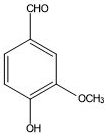
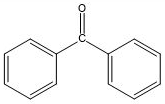
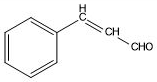
Match List-I (Name) with List-II (Structure)

List-IList-II
(Name)(Structure)
(A) Cinnamaldehyde(I) Figure
(B) Vanillin(II) Figure
(C) Salicylaldehyde(III) Figure
(D) Benzophenone(IV) Figure
Answer options

Q38:

Aldehydes, Ketones & Carboxylic Acids

Medium

Identify the interrmediate (Y) in the following reaction for the commercial method of manufacturing of benzaldehyde?
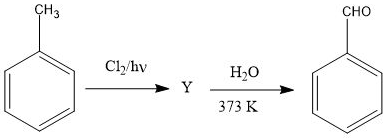
Figure

Answer options

Q39:

Coordination Compounds

Easy

Which among the following are coordination complexes?

(A) Mohr's salt

(B) Tetraamminediaquacobalt (II) ion

(C) Carnallite

(D) Potassium ferricyanide

Answer options

Q40:

Coordination Compounds

Medium

A coordination compound CrCl3.4H2O\mathrm{CrCl_3.4H_2O} precipitates silver chloride when treated with silver nitrate. The molar conductance of its solution corresponds to a total of two ions. What is the formula of the compound?

Answer options

Q41:

Solutions

Easy

A homogeneous mixture of two or more than two components has uniform composition and properties. The binary solutions have two components, which may be solid, liquid or gas. The resultant solution has a larger amount of solvent and a smaller amount of solute. The amount of solute in a given amount of solvent decides the concentration of the resulting solution. The concentration can be expressed in various ways, like molarity, molality, normality and mole fraction.

Which of the following property is independent of temperature?

Answer options

Q42:

Solutions

Easy

A homogeneous mixture of two or more than two components has uniform composition and properties. The binary solutions have two components, which may be solid, liquid or gas. The resultant solution has a larger amount of solvent and a smaller amount of solute. The amount of solute in a given amount of solvent decides the concentration of the resulting solution. The concentration can be expressed in various ways, like molarity, molality, normality and mole fraction.

Parts per million (ppm) is represented as

Answer options

Q43:

Solutions

Medium

A homogeneous mixture of two or more than two components has uniform composition and properties. The binary solutions have two components, which may be solid, liquid or gas. The resultant solution has a larger amount of solvent and a smaller amount of solute. The amount of solute in a given amount of solvent decides the concentration of the resulting solution. The concentration can be expressed in various ways, like molarity, molality, normality and mole fraction.

The molality of a 1 liter aqueous solution of 93% H2SO4\mathrm{H_2SO_4} (mass/volume) is:

(Given: density of the solution = 1.84 g mL−1^{-1}, molar mass of H2SO4\mathrm{H_2SO_4} = 98 g mol−1^{-1})

Answer options

Q44:

Solutions

Easy

A homogeneous mixture of two or more than two components has uniform composition and properties. The binary solutions have two components, which may be solid, liquid or gas. The resultant solution has a larger amount of solvent and a smaller amount of solute. The amount of solute in a given amount of solvent decides the concentration of the resulting solution. The concentration can be expressed in various ways, like molarity, molality, normality and mole fraction.

Glucose dissolved in water and ethanol dissolved in water are examples of

Answer options

Q45:

Solutions

Easy

A homogeneous mixture of two or more than two components has uniform composition and properties. The binary solutions have two components, which may be solid, liquid or gas. The resultant solution has a larger amount of solvent and a smaller amount of solute. The amount of solute in a given amount of solvent decides the concentration of the resulting solution. The concentration can be expressed in various ways, like molarity, molality, normality and mole fraction.

Molarity of a solution containing 8 grams NaOH in one liter of water is

Answer options

Q46:

Alcohols, Phenols & Ethers

Easy

Alcohols and phenols are obtained when a hydrogen atom in aliphatic and aromatic hydrocarbons respectively, is replaced by –OH group. These compounds find wide applications in industry as well as in our daily life. You may notice that ordinary spirit is used for polishing wooden furniture which is chiefly a compound containing hydroxyl group. An alcohol contains one or more hydroxyl (OH) group(s) directly attached to carbon atom(s), of an aliphatic system (CH3OH\mathrm{CH_3OH}) while a phenol contains –OH group(s) directly attached to carbon atom(s) of an aromatic system (C6H5OH\mathrm{C_6H_5OH}). Alcohols are prepared by the hydration of alkenes, fermentation of glucose, and reduction of carbonyl compounds. Alcohols produce alkenes upon dehydration whereas alkenes on acid catalyzed hydration convert into alcohols.

An alkyl halide can be converted into alcohol through

Answer options

Q47:

Alcohols, Phenols & Ethers

Easy

Alcohols and phenols are obtained when a hydrogen atom in aliphatic and aromatic hydrocarbons respectively, is replaced by –OH group. These compounds find wide applications in industry as well as in our daily life. You may notice that ordinary spirit is used for polishing wooden furniture which is chiefly a compound containing hydroxyl group. An alcohol contains one or more hydroxyl (OH) group(s) directly attached to carbon atom(s), of an aliphatic system (CH3OH\mathrm{CH_3OH}) while a phenol contains –OH group(s) directly attached to carbon atom(s) of an aromatic system (C6H5OH\mathrm{C_6H_5OH}). Alcohols are prepared by the hydration of alkenes, fermentation of glucose, and reduction of carbonyl compounds. Alcohols produce alkenes upon dehydration whereas alkenes on acid catalyzed hydration convert into alcohols.

Which of the following compounds lacks phenolic group ?

Answer options

Q48:

Alcohols, Phenols & Ethers

Easy

Alcohols and phenols are obtained when a hydrogen atom in aliphatic and aromatic hydrocarbons respectively, is replaced by –OH group. These compounds find wide applications in industry as well as in our daily life. You may notice that ordinary spirit is used for polishing wooden furniture which is chiefly a compound containing hydroxyl group. An alcohol contains one or more hydroxyl (OH) group(s) directly attached to carbon atom(s), of an aliphatic system (CH3OH\mathrm{CH_3OH}) while a phenol contains –OH group(s) directly attached to carbon atom(s) of an aromatic system (C6H5OH\mathrm{C_6H_5OH}). Alcohols are prepared by the hydration of alkenes, fermentation of glucose, and reduction of carbonyl compounds. Alcohols produce alkenes upon dehydration whereas alkenes on acid catalyzed hydration convert into alcohols.

Chemical formula of spirit used in polishing wooden furniture is

Answer options

Q49:

Alcohols, Phenols & Ethers

Easy

Alcohols and phenols are obtained when a hydrogen atom in aliphatic and aromatic hydrocarbons respectively, is replaced by –OH group. These compounds find wide applications in industry as well as in our daily life. You may notice that ordinary spirit is used for polishing wooden furniture which is chiefly a compound containing hydroxyl group. An alcohol contains one or more hydroxyl (OH) group(s) directly attached to carbon atom(s), of an aliphatic system (CH3OH\mathrm{CH_3OH}) while a phenol contains –OH group(s) directly attached to carbon atom(s) of an aromatic system (C6H5OH\mathrm{C_6H_5OH}). Alcohols are prepared by the hydration of alkenes, fermentation of glucose, and reduction of carbonyl compounds. Alcohols produce alkenes upon dehydration whereas alkenes on acid catalyzed hydration convert into alcohols.

The product of the following reaction is

Figure

Answer options

Q50:

Alcohols, Phenols & Ethers

Easy

Alcohols and phenols are obtained when a hydrogen atom in aliphatic and aromatic hydrocarbons respectively, is replaced by –OH group. These compounds find wide applications in industry as well as in our daily life. You may notice that ordinary spirit is used for polishing wooden furniture which is chiefly a compound containing hydroxyl group. An alcohol contains one or more hydroxyl (OH) group(s) directly attached to carbon atom(s), of an aliphatic system (CH3OH\mathrm{CH_3OH}) while a phenol contains –OH group(s) directly attached to carbon atom(s) of an aromatic system (C6H5OH\mathrm{C_6H_5OH}). Alcohols are prepared by the hydration of alkenes, fermentation of glucose, and reduction of carbonyl compounds. Alcohols produce alkenes upon dehydration whereas alkenes on acid catalyzed hydration convert into alcohols.

Product of the following reaction is

Figure

Answer options

CUET Chemistry 2025 2 June Shift 1 Past Year Question Paper

Every question from the CUET Chemistry 2025 2 June Shift 1 paper is here in full, with the correct answer and a step by step solution for each one. It is completely free, there is no login and no paywall, and you can read the whole paper online or download it to revise offline.

You can also attempt it instead of only reading it. Take the paper as a full length mock under exam conditions, or filter it by topic and attempt just that topic as a topic test. Both are free, and you get a breakdown of your accuracy, your timing and your weak areas once you submit.

CUET Chemistry past year questions (PYQs) are the closest thing to the real exam, so working through them is the quickest way to learn the paper pattern, the marking scheme and the level of difficulty to expect on the day.