Q1:

Chemical Kinetics

Easy

A first order reaction is found to have rate constant, k=3.0×10⁻¹ s−1k = 3.0 \times 10^{-1}\ \text{s}^{-1}. The half life of the reaction will be:

Answer options
Option 3
Correct Answer
Explanation for 2025: 15 May Shift 1 CHE question 1

Q2:

d & f Block Elements

Easy

Mischmetall consists of

Answer options
Option 1
Correct Answer
Explanation for 2025: 15 May Shift 1 CHE question 2

Q3:

Chemical Kinetics

Medium

The rate constant of a reaction increases from 0.02 s−1^{-1} to 0.04 s−1^{-1} by increasing the temperature from 500 K to 600 K. The activation energy (EaE_a) of the reaction is (given log⁡102=0.3010\log_{10} 2 = 0.3010)

Answer options
Option 2
Correct Answer
Explanation for 2025: 15 May Shift 1 CHE question 3

Q4:

Solutions

Easy

The mass percentage of a component of a solution is defined as:

Answer options
Option 2
Correct Answer
Explanation for 2025: 15 May Shift 1 CHE question 4

Q5:

Solutions

Easy

Which of the following statements is/ are correct

(A) For an ideal solution, the enthalpy and volume of mixing of pure components are zero.

(B) The inter-molecular attractive forces between A-A and B-B are greater than those between A-B for an ideal binary solution.

(C) The inter-molecular attractive forces between A-A and B-B are of the same order as those between A-B for an ideal binary solution

(D) For an ideal solution, the enthalpy and volume of mixing of pure components to form the solution are positive.

Answer options
Option 3
Correct Answer
Explanation for 2025: 15 May Shift 1 CHE question 5

Q7:

Solutions

Easy

Minimum boiling azeotropes show ___________deviation from Raoult's Law at a specific composition.

Answer options
Option 3
Correct Answer
Explanation for 2025: 15 May Shift 1 CHE question 7

Q9:

Electrochemistry

Easy

Λmo\Lambda_m^o for NaCl, HCl and CH3_3COONa are 126.4, 425.9 and 91.0 S cm2^2 mol−1^{-1} respectively. Calculate Λmo\Lambda_m^o for CH3_3COOH

Answer options
Option 4
Correct Answer
Explanation for 2025: 15 May Shift 1 CHE question 9

Q10:

d & f Block Elements

Medium

Which of the following statements is not correct?

Answer options

Q11:

Haloalkanes & Haloarenes

Easy

Arrange the following compounds in the decreasing order of their reactivity towards Nucleophilic substitution reaction:

(A) Bromobenzene

(B) 4-Nitrobromobenzene

(C) 2,4,6-Trinitrobromobenzene

(D) 2,4-Dinitrobromobenzene

Answer options

Q12:

Solutions

Easy

Match List-I with List-II

List-IList-II
(Types of solutions)(Examples)
(A) Gas in Gas solution(I) Oxygen dissolved in water
(B) Gas in Liquid solution(II) Copper dissolved in gold
(C) Liquid in Solid solution(III) Mixture of oxygen and nitrogen gases
(D) Solid in Solid solution(IV) Amalgam of mercury with sodium
Answer options

Q13:

Aldehydes, Ketones & Carboxylic Acids

Medium

An organic compound(A), C9_9H10_{10}O, gives a 2,4-DNP reaction, negative Tollens' test and iodoform test. On drastic oxidation with chromic acid, it forms B, having molecular formulae, C7_7H6_6O2_2. Identify A and B.

Answer options

Q14:

Amines

Hard

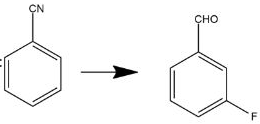
The correct sequence of reagents to carry out the following conversion is: Figure
Answer options

Q15:

Solutions

Easy

Edema is caused by

Answer options

Q16:

Aldehydes, Ketones & Carboxylic Acids

Easy

Carbonyl carbon in acetone is sp2^2 hybridized. The C-O-C bond angle and the geometry of acetone is.......

Answer options

Q19:

Aldehydes, Ketones & Carboxylic Acids

Easy

Match List-I with List-II

List-IList-II
(Reaction)(Name)
(A) CH3_3CHO + Dil NaOH ⟶\longrightarrow CH3_3CHOHCH2_2CHO(I) Aldol Reaction
(B) CH3_3CH2_2CH2_2COOH + Br2_2 →(ii) H2O(i)Red P\xrightarrow[\text{(ii) H}_2\text{O}]{\text{(i)Red P}} CH2_2CH2_2CHBrCOOH(II) Cannizzaro Reaction
(C) C6_6H5_5CHO + Conc. KOH ⟶\longrightarrow C6_6H5_5COONa + C6_6H5_5CH2_2OH(III) Haloform Reaction
(D) CH3_3COCH3_3 →NaOCl\xrightarrow{\text{NaOCl}} CH3_3COONa + CHCl3_3(IV) Hell Volhard Zelinski Reaction
Answer options

Q20:

d & f Block Elements

Medium

Choose the correct products formed in acidic medium.

5SO_3$$^{2-} + 2MnO_4$$^- + 6H+^+ ——>?

Answer options

Q21:

Electrochemistry

Easy

The limiting molar conductivities for H+^+, Na+^+, Cl−^-, CH3_3COO−^- are 349.6, 50.1, 76.3, 40.9 S cm2^2 mol−1^{-1}, respectively, in water at 298 K.

Match List-I with List-II

List-IList-II
ElectrolyteΛmo\Lambda_m^o
(A) HCl(I) 390.5 S cm2^2 mol−1^{-1}
(B) NaCl(II) 126.4 S cm2^2 mol−1^{-1}
(C) CH3_3COONa(III) 425.9 S cm2^2 mol−1^{-1}
(D) CH3_3COOH(IV) 91.0 S cm2^2 mol−1^{-1}
Answer options

Q22:

d & f Block Elements

Medium

The increasing order of the melting points of following transition metals is

(A) Fe

(B) Mn

(C) Cr

(D) V

Answer options

Q23:

Amines

Medium

Predict the % of nitration products when aniline is subjected to nitration with Conc. HNO3_3/Conc. H2_2SO4_4.

Answer options

Q24:

Amines

Easy

Nitrogen in trimethylamine is sp3^3 hybridized.The C-N-C bond angle is 108°. The geometry of trimethylamine is

Answer options

Q25:

Alcohols, Phenols & Ethers

Medium

Arrange the following compounds in increasing order of their acidic character.

(A) mm-nitrophenol

(B) pp-nitrophenol

(C) Phenol

(D) pp-methoxyphenol

Answer options

Q26:

Electrochemistry

Medium

Calculate the emf of the following cell at 298 K if ECello=1.10E^o_{Cell} = 1.10 V:

Ni(s)+2Ag+(0.2M)→Ni2+(0.04M)+2Ag(s)Ni(s) + 2Ag^+(0.2M) \rightarrow Ni^{2+}(0.04M) + 2Ag(s)

Answer options

Q27:

d & f Block Elements

Medium

The characteristic oxidation state of Lanthanoids is +3 but Ce shows +4 oxidation state because...........

(A) it has variable ionization enthalpy

(B) it has a tendency to attain noble gas configuration

(C) it has a tendency to attain f0f^0 configuration

(D) it resembles Pb4+^{4+}

Answer options

Q30:

Electrochemistry

Medium

The resistance of 1N solution of four different electrolytes are given below. Arrange them in increasing order of their equivalent conductance values if the same conductivity cell was used to measure the resistance of all the electrolytic solutions:

(A) 250 ohm

(B) 150 ohm

(C) 50 ohm

(D) 280 ohm

Answer options

Q31:

Chemical Kinetics

Easy

Which of the following statements are true?

(A) Decomposition of gaseous ammonia on a hot platinum surface is a zero order reaction.

(B) The rate of a reaction increases with the passage of time.

(C) A catalyst does not change the equillibrium of a reaction.

(D) The molecularity of a reaction can be zero, fraction and negative.

Answer options

Q32:

Alcohols, Phenols & Ethers

Medium

Consider the following reaction and identify A and B.
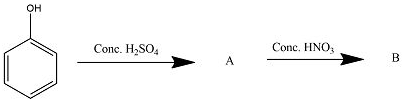
Figure

Answer options

Q33:

Amines

Hard

Predict the correct sequence of reagents to carry out the following conversion:
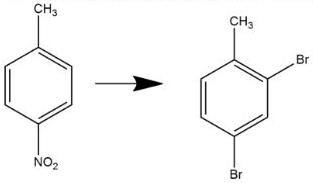
Figure

Answer options

Q34:

Haloalkanes & Haloarenes

Medium

Choose the correct IUPAC name of the following compound:
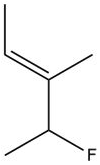
Figure

Answer options

Q36:

Electrochemistry

Medium

The conductivity of 0.001 mol L−1^{-1} solution of a weak monobasic acid is 4.0×10−54.0 \times 10^{-5} S cm−1^{-1}. Calculate its dissociation constant if Λmo\Lambda_m^o for weak acid is 400.0 S cm2^2 mol−1^{-1}.

Answer options

Q37:

Aldehydes, Ketones & Carboxylic Acids

Easy

Match List-I with List-II

List-IList-II
ReagentCharacteristic of Compound
(A) Tollen's Reagent(I) Aliphatic aldehyde
(B) Iodoform test(II) Tertiary alcohol
(C) Lucas Reagent(III) Methyl ketone
(D) Fehling's Reagent(IV) Aliphatic and aromatic aldehydes
Answer options

Q38:

Aldehydes, Ketones & Carboxylic Acids

Medium

Arrange the following compounds in the decreasing order of their boiling points:

(A) Butyraldehyde

(B) n-Butyl alcohol

(C) Sec-butyl alcohol

(D) n-butane

Answer options

Q39:

Alcohols, Phenols & Ethers

Easy

Match List-I with List-II

List-IList-II
(Name reaction.)(Reaction)
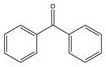
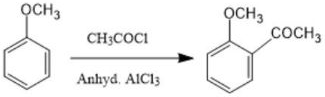
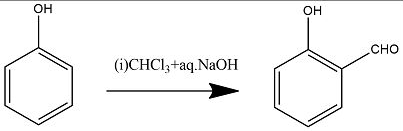
(A) Williamson ether synthesis(I) Figure
(B) Hydroboration oxidation(II) Figure
(C) Reimer-Tiemann reaction(III) Figure
(D) Friedel Craft Acylation reaction(IV) Figure
Answer options

Q40:

Chemical Kinetics

Medium

Given below are four statements with reference to a catalyst. Choose the incorrect statement(s)

(A) A catalyst lowers the potential energy barrier, thus decreasing the activation energy.

(B) A catalyst lowers the Gibbs energy (ΔG\Delta G) of the reaction.

(C) A small amount of catalyst converts a large amount of reactants into products.

(D) A catalyst can catalyze non-spontaneous reactions also.

Answer options

Q41:

Coordination Compounds

Easy

The crystal field theory (CFT) is an electrostatic model which considers the metal-ligand bond to be ionic arising purely from electrostatic interactions between the metal ion and the ligand. Ligands are treated as point charges in case of anions or dipoles in case of neutral molecules. The five dd orbitals in an isolated gaseous metal atom/ion have same energy, i.e., they are degenerate. This degeneracy is maintained if a spherically symmetrical field of negative charges surrounds the metal atom/ion. However, when this negative field is due to ligands (either anions or the negative ends of dipolar molecules like NH3_3 and H2_2O) in a complex, it becomes asymmetrical and the degeneracy of the dd orbitals is lifted. It results in splitting of the dd orbitals. The pattern of splitting depends upon the nature of the crystal field.

The colour of coordination compounds is attributed to

Answer options

Q42:

Coordination Compounds

Easy

The crystal field theory (CFT) is an electrostatic model which considers the metal-ligand bond to be ionic arising purely from electrostatic interactions between the metal ion and the ligand. Ligands are treated as point charges in case of anions or dipoles in case of neutral molecules. The five dd orbitals in an isolated gaseous metal atom/ion have same energy, i.e., they are degenerate. This degeneracy is maintained if a spherically symmetrical field of negative charges surrounds the metal atom/ion. However, when this negative field is due to ligands (either anions or the negative ends of dipolar molecules like NH3_3 and H2_2O) in a complex, it becomes asymmetrical and the degeneracy of the dd orbitals is lifted. It results in splitting of the dd orbitals. The pattern of splitting depends upon the nature of the crystal field.

If the fourth electron in dd subshell enters one of the ege_g orbitals in octahedral complexes, it indicates that

Answer options

Q43:

Coordination Compounds

Easy

The crystal field theory (CFT) is an electrostatic model which considers the metal-ligand bond to be ionic arising purely from electrostatic interactions between the metal ion and the ligand. Ligands are treated as point charges in case of anions or dipoles in case of neutral molecules. The five dd orbitals in an isolated gaseous metal atom/ion have same energy, i.e., they are degenerate. This degeneracy is maintained if a spherically symmetrical field of negative charges surrounds the metal atom/ion. However, when this negative field is due to ligands (either anions or the negative ends of dipolar molecules like NH3_3 and H2_2O) in a complex, it becomes asymmetrical and the degeneracy of the dd orbitals is lifted. It results in splitting of the dd orbitals. The pattern of splitting depends upon the nature of the crystal field.

In tetrahedral cordination complexes, low spin configurations are rare because

Answer options

Q44:

Coordination Compounds

Medium

The crystal field theory (CFT) is an electrostatic model which considers the metal-ligand bond to be ionic arising purely from electrostatic interactions between the metal ion and the ligand. Ligands are treated as point charges in case of anions or dipoles in case of neutral molecules. The five dd orbitals in an isolated gaseous metal atom/ion have same energy, i.e., they are degenerate. This degeneracy is maintained if a spherically symmetrical field of negative charges surrounds the metal atom/ion. However, when this negative field is due to ligands (either anions or the negative ends of dipolar molecules like NH3_3 and H2_2O) in a complex, it becomes asymmetrical and the degeneracy of the dd orbitals is lifted. It results in splitting of the dd orbitals. The pattern of splitting depends upon the nature of the crystal field.

The hybridisation and magnetism of the complexes [Co(C2_2O4_4)3_3]3−^{3-} and [Mn(CN)6_6]3−^{3-} respectively is

Answer options

Q45:

Coordination Compounds

Medium

The crystal field theory (CFT) is an electrostatic model which considers the metal-ligand bond to be ionic arising purely from electrostatic interactions between the metal ion and the ligand. Ligands are treated as point charges in case of anions or dipoles in case of neutral molecules. The five dd orbitals in an isolated gaseous metal atom/ion have same energy, i.e., they are degenerate. This degeneracy is maintained if a spherically symmetrical field of negative charges surrounds the metal atom/ion. However, when this negative field is due to ligands (either anions or the negative ends of dipolar molecules like NH3_3 and H2_2O) in a complex, it becomes asymmetrical and the degeneracy of the dd orbitals is lifted. It results in splitting of the dd orbitals. The pattern of splitting depends upon the nature of the crystal field.

Which of the following pair exists as high spin, tetrahedral complexes?

Answer options

Q46:

Biomolecules

Easy

Carbohydrates are essential for both plants and animals. Some common examples of carbohydrates are glucose, fructose, sucrose, glycogen, cellulose and starch. They form a major portion of our food. Honey has been used for a long time as an instant source of energy in Ayurvedic medicine. Carbohydrates are used as storage molecules in both plants and animals. The cell wall of bacteria and plants is made of cellulose. We use cellulose in the form of wood for making furniture and as cotton fiber for clothing. They also provide raw material for textiles, paper, lacquers, and breweries. Carbohydrates are classified as Monosaccharides, Oligosaccharides and Polysaccharides on the basis of their behavior towards hydrolysis. Monosaccharides cannot be hydrolyzed further to simpler units whereas oligosaccharides can yield 2-10 units of monosaccharides on hydrolysis. Polysaccharides, which are non-sugars yield a large number of monosaccharide units on hydrolysis.

Answer the following questions about carbohydrates:

Hydrolytic products of maltose are?

Answer options

Q47:

Biomolecules

Easy

Carbohydrates are essential for both plants and animals. Some common examples of carbohydrates are glucose, fructose, sucrose, glycogen, cellulose and starch. They form a major portion of our food. Honey has been used for a long time as an instant source of energy in Ayurvedic medicine. Carbohydrates are used as storage molecules in both plants and animals. The cell wall of bacteria and plants is made of cellulose. We use cellulose in the form of wood for making furniture and as cotton fiber for clothing. They also provide raw material for textiles, paper, lacquers, and breweries. Carbohydrates are classified as Monosaccharides, Oligosaccharides and Polysaccharides on the basis of their behavior towards hydrolysis. Monosaccharides cannot be hydrolyzed further to simpler units whereas oligosaccharides can yield 2-10 units of monosaccharides on hydrolysis. Polysaccharides, which are non-sugars yield a large number of monosaccharide units on hydrolysis.

Answer the following questions about carbohydrates:

The sugar having β-glycosidic linkage is

Answer options

Q48:

Biomolecules

Easy

Carbohydrates are essential for both plants and animals. Some common examples of carbohydrates are glucose, fructose, sucrose, glycogen, cellulose and starch. They form a major portion of our food. Honey has been used for a long time as an instant source of energy in Ayurvedic medicine. Carbohydrates are used as storage molecules in both plants and animals. The cell wall of bacteria and plants is made of cellulose. We use cellulose in the form of wood for making furniture and as cotton fiber for clothing. They also provide raw material for textiles, paper, lacquers, and breweries. Carbohydrates are classified as Monosaccharides, Oligosaccharides and Polysaccharides on the basis of their behavior towards hydrolysis. Monosaccharides cannot be hydrolyzed further to simpler units whereas oligosaccharides can yield 2-10 units of monosaccharides on hydrolysis. Polysaccharides, which are non-sugars yield a large number of monosaccharide units on hydrolysis.

Answer the following questions about carbohydrates:

Animal starch is popularly known as

Answer options

Q49:

Biomolecules

Easy

Carbohydrates are essential for both plants and animals. Some common examples of carbohydrates are glucose, fructose, sucrose, glycogen, cellulose and starch. They form a major portion of our food. Honey has been used for a long time as an instant source of energy in Ayurvedic medicine. Carbohydrates are used as storage molecules in both plants and animals. The cell wall of bacteria and plants is made of cellulose. We use cellulose in the form of wood for making furniture and as cotton fiber for clothing. They also provide raw material for textiles, paper, lacquers, and breweries. Carbohydrates are classified as Monosaccharides, Oligosaccharides and Polysaccharides on the basis of their behavior towards hydrolysis. Monosaccharides cannot be hydrolyzed further to simpler units whereas oligosaccharides can yield 2-10 units of monosaccharides on hydrolysis. Polysaccharides, which are non-sugars yield a large number of monosaccharide units on hydrolysis.

Answer the following questions about carbohydrates:

Identify a component of starch from among the following.

Answer options

Q50:

Biomolecules

Easy

Carbohydrates are essential for both plants and animals. Some common examples of carbohydrates are glucose, fructose, sucrose, glycogen, cellulose and starch. They form a major portion of our food. Honey has been used for a long time as an instant source of energy in Ayurvedic medicine. Carbohydrates are used as storage molecules in both plants and animals. The cell wall of bacteria and plants is made of cellulose. We use cellulose in the form of wood for making furniture and as cotton fiber for clothing. They also provide raw material for textiles, paper, lacquers, and breweries. Carbohydrates are classified as Monosaccharides, Oligosaccharides and Polysaccharides on the basis of their behavior towards hydrolysis. Monosaccharides cannot be hydrolyzed further to simpler units whereas oligosaccharides can yield 2-10 units of monosaccharides on hydrolysis. Polysaccharides, which are non-sugars yield a large number of monosaccharide units on hydrolysis.

Answer the following questions about carbohydrates:

Pick the incorrect statement from the following:

Answer options

CUET Chemistry 2025 15 May Shift 1 Past Year Question Paper

Every question from the CUET Chemistry 2025 15 May Shift 1 paper is here in full, with the correct answer and a step by step solution for each one. It is completely free, there is no login and no paywall, and you can read the whole paper online or download it to revise offline.

You can also attempt it instead of only reading it. Take the paper as a full length mock under exam conditions, or filter it by topic and attempt just that topic as a topic test. Both are free, and you get a breakdown of your accuracy, your timing and your weak areas once you submit.

CUET Chemistry past year questions (PYQs) are the closest thing to the real exam, so working through them is the quickest way to learn the paper pattern, the marking scheme and the level of difficulty to expect on the day.