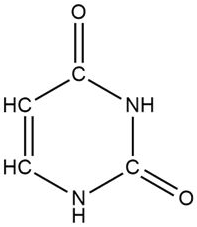
Q1:

Amines

Medium

Which of the following compound will undergo azo coupling reaction with benzene diazonium chloride?

(A) Aniline

(B) Phenol

(C) p-Toluidine

(D) Nitrobenzene

Answer options
Option 4
Correct Answer
Explanation for 2025: 30 May Shift 2 CHE question 1

Q2:

Coordination Compounds

Medium

Arrange the following ligands in increasing order of their field strength:

(A) SCN−\mathrm{SCN^-}

(B) F−\mathrm{F^-}

(C) H2O\mathrm{H_2O}

(D) CO

Answer options
Option 3
Correct Answer
Explanation for 2025: 30 May Shift 2 CHE question 2

Q4:

Chemical Kinetics

Medium

Consider the following statements for the order of a reaction and choose the correct statements.

(A). The order of a reaction is an experimental quantity.

(B). Order can be zero.

(C). Order can be fractional value.

(D). Order is applicable to elementary as well as complex reactions.

Answer options
Option 3
Correct Answer
Explanation for 2025: 30 May Shift 2 CHE question 4

Q5:

Amines

Easy

Identify the least basic amine in gaseous phase?

Answer options
Option 3
Correct Answer
Explanation for 2025: 30 May Shift 2 CHE question 5

Q6:

Chemical Kinetics

Medium

Which one of the following statements is correct for a first order reaction?

Answer options
Option 3
Correct Answer
Explanation for 2025: 30 May Shift 2 CHE question 6

Q8:

Alcohols, Phenols & Ethers

Medium

Match List-I with List-II with the corresponding boiling points.

List-IList-II
Compound NameBoiling Point
(A) CH3CH2OH\mathrm{CH_3CH_2OH}(I) 373K
(B) CH3OCH3\mathrm{CH_3OCH_3}(II) 348K
(C) H2O\mathrm{H_2O}(III) 351K
(D) CH3CH2OCH2CH3\mathrm{CH_3CH_2OCH_2CH_3}(IV) 248K
Answer options
Option 1
Correct Answer
Explanation for 2025: 30 May Shift 2 CHE question 8

Q9:

Biomolecules

Medium

Match List-I with List-II

List-IList-II
Amino acidR group
(A). Alanine(I). −CH3\mathrm{-CH_3}
(B). Lysine(II). HO-CH2-\mathrm{HO\text{-}CH_2\text{-}}
(C). Serine(III). H2N-(CH2)4-\mathrm{H_2N\text{-}(CH_2)_4\text{-}}
(D). Cysteine(IV). HS-CH2-\mathrm{HS\text{-}CH_2\text{-}}
Answer options
Option 2
Correct Answer
Explanation for 2025: 30 May Shift 2 CHE question 9

Q10:

Solutions

Easy

Match List-I with List-II

List-IList-II
Type of solutionExample
(A) solid in solid(I) Camphor in N2\mathrm{N_2}
(B) solid in gas(II) Cu in Au
(C) gas in solid(III) Hg in Na
(D) liquid in solid(IV) H2\mathrm{H_2} in Pd
Answer options

Q13:

Solutions

Easy

"Soft drink bottles are sealed under high pressure to increase the solubility of carbon dioxide" is the application of which of the following laws:

Answer options

Q15:

Haloalkanes & Haloarenes

Easy

What is the structural formula for Freon-12.

Answer options

Q16:

Amines

Medium

Reduction of nitrobenzene by which of the following reagent does not give aniline?

Answer options

Q17:

Alcohols, Phenols & Ethers

Easy

What is Lucas Reagent?

Answer options

Q18:

Alcohols, Phenols & Ethers

Easy

Williamson's synthesis for preparing dimethyl ether involves

Answer options

Q19:

Haloalkanes & Haloarenes

Easy

Aryl halides are extremely less reactive towards the nucleophilic substitution reaction because of

Answer options

Q20:

Electrochemistry

Easy

The unit of molar conductivity is

Answer options

Q21:

Alcohols, Phenols & Ethers

Medium

Choose the correct sequence for the increasing boiling point of the following compounds.

(A) Pentan-1-ol

(B) Butan-2-ol

(C) Ethanol

(D) Propan-1-ol

Answer options

Q23:

Electrochemistry

Easy

Arrange the following electrodes in increasing order of strength as an oxidizing agent.

(A) Ni2++2e−→Ni(s)\mathrm{Ni^{2+} + 2e^- \rightarrow Ni(s)} E∘=−0.25 VE^\circ = -0.25\ \text{V}

(B) Cu2++2e−→Cu(s)\mathrm{Cu^{2+} + 2e^- \rightarrow Cu(s)} E∘=0.34 VE^\circ = 0.34\ \text{V}

(C) Br2+2e−→2Br−\mathrm{Br_2 + 2e^- \rightarrow 2Br^-} E∘=1.09 VE^\circ = 1.09\ \text{V}

(D) O2(g)+2H++2e−→H2O2\mathrm{O_2(g) + 2H^+ + 2e^- \rightarrow H_2O_2} E∘=0.68 VE^\circ = 0.68\ \text{V}

Answer options

Q24:

Coordination Compounds

Easy

What is the formula of following coordination compound:

Potassium trioxalatoaluminate(III)

Answer options

Q25:

Electrochemistry

Easy

If an electrolyte on dissociation gives ν+\nu_+ cations and ν−\nu_- anions, then its limiting molar conductivity is given by

Answer options

Q26:

Coordination Compounds

Easy

Based on CFT, in octahedral crystal field, dd orbitals split into orbitals of t2gt_{2g} and ege_g sets. Which dd orbitals forms the t2gt_{2g} set?

Answer options

Q27:

Chemical Kinetics

Easy

Select the correct relation of half life for a zero order reaction.

Answer options

Q28:

Haloalkanes & Haloarenes

Medium

Which of following reagents will furnish ambident nucleophile?

(A) AgCN

(B) KCN

(C) AgNO2\mathrm{AgNO_2}

(D) KNO2\mathrm{KNO_2}

Answer options

Q29:

Electrochemistry

Medium

The conductivity of electrolytic (ionic) solution depends on

(A). Nature of electrolyte added

(B). Nature of solvent

(C). Temperature

(D). Size of ions produced

Answer options

Q30:

Electrochemistry

Medium

Match List-I with List-II

List-IList-II
CellReaction
(A) Fuel Cell(I) Anode: Zn(s)→Zn2++2e−\mathrm{Zn(s) \rightarrow Zn^{2+} + 2e^-} Cathode: MnO2+NH4++e−→MnO(OH)+NH3\mathrm{MnO_2 + NH_4^+ + e^- \rightarrow MnO(OH) + NH_3}
(B) A secondary cell(II) Cathode: O2 (g)+2H2O(l)+4e−→4OH− (aq)\mathrm{O_2\,(g) + 2H_2O(l) + 4e^- \rightarrow 4OH^-\,(aq)} Anode: 2H2 (g)+4OH− (aq)→4H2O(l)+4e−\mathrm{2H_2\,(g) + 4OH^-\,(aq) \rightarrow 4H_2O(l) + 4e^-}
(C) Mercury cells(III) Pb(s)+PbO2 (s)+2H2SO4 (aq)→2PbSO4 (s)+2H2O(l)\mathrm{Pb(s) + PbO_2\,(s) + 2H_2SO_4\,(aq) \rightarrow 2PbSO_4\,(s) + 2H_2O(l)}
(D) Leclanche cell (Simplified)(IV) Zn(Hg)+HgO(s)→ZnO(s)+Hg(l)\mathrm{Zn(Hg) + HgO(s) \rightarrow ZnO(s) + Hg(l)}
Answer options

Q31:

Coordination Compounds

Medium

Select the correct combination of coordination number and type of hybridization, respectively, in "trigonal bipyramidal" complex

Answer options

Q32:

Chemical Kinetics

Easy

All natural and artificial radioactive decay of unstable nuclei take place by

Answer options

Q33:

Amines

Medium

What product(s) is formed when an Alkyl halide undergoes ammonolysis ?

(A) Primary amine

(B) Secondary amine

(C) Quaternary ammonium salt

(D) Tertiary amine

Answer options

Q34:

Solutions

Easy

The solute and solvent in the solution of hydrogen in palladium are

Answer options

Q35:

Amines

Hard

Arrange the following in increasing order of their basic strength in aqueous phase :

(A) CH3NH2\mathrm{CH_3NH_2}

(B) C6H5CH2NH2\mathrm{C_6H_5CH_2NH_2}

(C) C6H5NH2\mathrm{C_6H_5NH_2}

(D) (CH3)3N\mathrm{(CH_3)_3N}

Answer options

Q37:

Coordination Compounds

Hard

Match the complex given in List-I with its property given in List-II

List-IList-II
ComplexProperty
(A) [CoF6]3−\mathrm{[CoF_6]^{3-}}(I) d5d^5, high spin
(B) [Fe(CN)6]4−\mathrm{[Fe(CN)_6]^{4-}}(II) d6d^6, high spin
(C) [FeF6]3−\mathrm{[FeF_6]^{3-}}(III) d5d^5, low spin
(D) [Mn(CO)6]2+\mathrm{[Mn(CO)_6]^{2+}}(IV) d6d^6, low spin
Answer options

Q38:

Solutions

Medium

A solution of 2.5 g of ethanoic acid in 75 g of benzene is prepared. What is the molar mass of ethanoic acid, moles of ethanoic acid, mass of benzene and molality of ethanoic acid?

(A) 0.556 mol kg−10.556\ \text{mol kg}^{-1}

(B) 0.0417 mol

(C) 60 g mol−160\ \text{g mol}^{-1}

(D) 0.075 kg

Answer options

Q39:

Chemical Kinetics

Easy

The thermal decomposition of HI on gold surface is an example of

Answer options

Q41:

d & f Block Elements

Easy

There are mainly four series of the transition metals, 3d series (Sc to Zn), 4d series (Y to Cd), 5d series (La and Hf to Hg) and 6d series which has Ac and elements from Rf to Cn. The two series of the inner transition metals; 4f (Ce to Lu) and 5f (Th to Lr) are known as lanthanoids and actinoids respectively. Their chemical properties are transitional between those of s and p-block elements. The transition metals (with the exception of Zn, Cd and Hg) are very hard and have low volatility. Their melting and boiling points are high. Transition metals have incomplete d subshell either in neutral atom or in their ions. With partly filled d orbitals these elements exhibit certain characteristic properties such as display of a variety of oxidation states, formation of coloured ions and entering into complex formation with a variety of ligands. The transition metals and their compounds are known for their catalytic activity.

Which of the following is not regarded as transition metal?

Answer options

Q42:

d & f Block Elements

Easy

There are mainly four series of the transition metals, 3d series (Sc to Zn), 4d series (Y to Cd), 5d series (La and Hf to Hg) and 6d series which has Ac and elements from Rf to Cn. The two series of the inner transition metals; 4f (Ce to Lu) and 5f (Th to Lr) are known as lanthanoids and actinoids respectively. Their chemical properties are transitional between those of s and p-block elements. The transition metals (with the exception of Zn, Cd and Hg) are very hard and have low volatility. Their melting and boiling points are high. Transition metals have incomplete d subshell either in neutral atom or in their ions. With partly filled d orbitals these elements exhibit certain characteristic properties such as display of a variety of oxidation states, formation of coloured ions and entering into complex formation with a variety of ligands. The transition metals and their compounds are known for their catalytic activity.

In general the electronic configuration of outer orbitals of transition metals is (n−1)d1−10 ns1−2(n-1)d^{1-10}\, ns^{1-2} but Pd shows an exceptional electronic configuration as......

Answer options

Q43:

d & f Block Elements

Medium

There are mainly four series of the transition metals, 3d series (Sc to Zn), 4d series (Y to Cd), 5d series (La and Hf to Hg) and 6d series which has Ac and elements from Rf to Cn. The two series of the inner transition metals; 4f (Ce to Lu) and 5f (Th to Lr) are known as lanthanoids and actinoids respectively. Their chemical properties are transitional between those of s and p-block elements. The transition metals (with the exception of Zn, Cd and Hg) are very hard and have low volatility. Their melting and boiling points are high. Transition metals have incomplete d subshell either in neutral atom or in their ions. With partly filled d orbitals these elements exhibit certain characteristic properties such as display of a variety of oxidation states, formation of coloured ions and entering into complex formation with a variety of ligands. The transition metals and their compounds are known for their catalytic activity.

Which of the following statements is correct?

Answer options

Q44:

d & f Block Elements

Easy

There are mainly four series of the transition metals, 3d series (Sc to Zn), 4d series (Y to Cd), 5d series (La and Hf to Hg) and 6d series which has Ac and elements from Rf to Cn. The two series of the inner transition metals; 4f (Ce to Lu) and 5f (Th to Lr) are known as lanthanoids and actinoids respectively. Their chemical properties are transitional between those of s and p-block elements. The transition metals (with the exception of Zn, Cd and Hg) are very hard and have low volatility. Their melting and boiling points are high. Transition metals have incomplete d subshell either in neutral atom or in their ions. With partly filled d orbitals these elements exhibit certain characteristic properties such as display of a variety of oxidation states, formation of coloured ions and entering into complex formation with a variety of ligands. The transition metals and their compounds are known for their catalytic activity.

In series Sc to Zn, the lowest enthalpy of atomization is shown by

Answer options

Q45:

d & f Block Elements

Medium

There are mainly four series of the transition metals, 3d series (Sc to Zn), 4d series (Y to Cd), 5d series (La and Hf to Hg) and 6d series which has Ac and elements from Rf to Cn. The two series of the inner transition metals; 4f (Ce to Lu) and 5f (Th to Lr) are known as lanthanoids and actinoids respectively. Their chemical properties are transitional between those of s and p-block elements. The transition metals (with the exception of Zn, Cd and Hg) are very hard and have low volatility. Their melting and boiling points are high. Transition metals have incomplete d subshell either in neutral atom or in their ions. With partly filled d orbitals these elements exhibit certain characteristic properties such as display of a variety of oxidation states, formation of coloured ions and entering into complex formation with a variety of ligands. The transition metals and their compounds are known for their catalytic activity.

The highest oxidation states shown by V, Fe and Ni respectively are.......

Answer options

Q46:

Aldehydes, Ketones & Carboxylic Acids

Hard

Aldehydes, carboxylic acids and ketones are widespread in the animal and plant kingdoms. They play a pivotal role in various biochemical processes of life. Their presence in nature adds fragrance and flavor. These compounds are widely used in food products, pharmaceuticals, paints, resins and other important product industries. These compounds are prepared by various laboratory methods, which mainly include oxidation, formylation, acylation and reduction. Due to the polar nature of the carbonyl group in aldehydes and ketones, they can exhibit different reactions like nucleophilic addition. They do exhibit redox and various condensation reactions which lead to the formation of various important compounds. On the other hand, the carboxylic acids are mainly prepared by oxidation and hydrolysis of different compounds. The carboxylic acid consists of a carbonyl group and the hydroxy group (attached to the carbonyl carbon atom). This makes it possible for the carboxylic acid to participate in various chemical reactions which involve cleavage of the C-OH bond and the O-H bond along with the reactions involving the complete -COOH group.

Arrange the following in the increasing order of their pKa\mathrm{p}K_a values:

(A) CF3-COOH\mathrm{CF_3\text{-}COOH}

(B) O2N-CH2-COOH\mathrm{O_2N\text{-}CH_2\text{-}COOH}

(C) NC-CH2-COOH\mathrm{NC\text{-}CH_2\text{-}COOH}

(D) H-COOH\mathrm{H\text{-}COOH}

Answer options

Q47:

Aldehydes, Ketones & Carboxylic Acids

Easy

Aldehydes, carboxylic acids and ketones are widespread in the animal and plant kingdoms. They play a pivotal role in various biochemical processes of life. Their presence in nature adds fragrance and flavor. These compounds are widely used in food products, pharmaceuticals, paints, resins and other important product industries. These compounds are prepared by various laboratory methods, which mainly include oxidation, formylation, acylation and reduction. Due to the polar nature of the carbonyl group in aldehydes and ketones, they can exhibit different reactions like nucleophilic addition. They do exhibit redox and various condensation reactions which lead to the formation of various important compounds. On the other hand, the carboxylic acids are mainly prepared by oxidation and hydrolysis of different compounds. The carboxylic acid consists of a carbonyl group and the hydroxy group (attached to the carbonyl carbon atom). This makes it possible for the carboxylic acid to participate in various chemical reactions which involve cleavage of the C-OH bond and the O-H bond along with the reactions involving the complete -COOH group.

The IUPAC name of following compound is

OHC-C6H4-CHO\mathrm{OHC\text{-}C_6H_4\text{-}CHO}-pp

Answer options

Q48:

Aldehydes, Ketones & Carboxylic Acids

Easy

Aldehydes, carboxylic acids and ketones are widespread in the animal and plant kingdoms. They play a pivotal role in various biochemical processes of life. Their presence in nature adds fragrance and flavor. These compounds are widely used in food products, pharmaceuticals, paints, resins and other important product industries. These compounds are prepared by various laboratory methods, which mainly include oxidation, formylation, acylation and reduction. Due to the polar nature of the carbonyl group in aldehydes and ketones, they can exhibit different reactions like nucleophilic addition. They do exhibit redox and various condensation reactions which lead to the formation of various important compounds. On the other hand, the carboxylic acids are mainly prepared by oxidation and hydrolysis of different compounds. The carboxylic acid consists of a carbonyl group and the hydroxy group (attached to the carbonyl carbon atom). This makes it possible for the carboxylic acid to participate in various chemical reactions which involve cleavage of the C-OH bond and the O-H bond along with the reactions involving the complete -COOH group.

Identify the incorrect statement for Cannizaro reaction.

Answer options

Q49:

Aldehydes, Ketones & Carboxylic Acids

Easy

Aldehydes, carboxylic acids and ketones are widespread in the animal and plant kingdoms. They play a pivotal role in various biochemical processes of life. Their presence in nature adds fragrance and flavor. These compounds are widely used in food products, pharmaceuticals, paints, resins and other important product industries. These compounds are prepared by various laboratory methods, which mainly include oxidation, formylation, acylation and reduction. Due to the polar nature of the carbonyl group in aldehydes and ketones, they can exhibit different reactions like nucleophilic addition. They do exhibit redox and various condensation reactions which lead to the formation of various important compounds. On the other hand, the carboxylic acids are mainly prepared by oxidation and hydrolysis of different compounds. The carboxylic acid consists of a carbonyl group and the hydroxy group (attached to the carbonyl carbon atom). This makes it possible for the carboxylic acid to participate in various chemical reactions which involve cleavage of the C-OH bond and the O-H bond along with the reactions involving the complete -COOH group.

Which of the following compounds will give butanone on oxidation with chromic anhydride (CrO3\mathrm{CrO_3})?

Answer options

Q50:

Aldehydes, Ketones & Carboxylic Acids

Medium

Aldehydes, carboxylic acids and ketones are widespread in the animal and plant kingdoms. They play a pivotal role in various biochemical processes of life. Their presence in nature adds fragrance and flavor. These compounds are widely used in food products, pharmaceuticals, paints, resins and other important product industries. These compounds are prepared by various laboratory methods, which mainly include oxidation, formylation, acylation and reduction. Due to the polar nature of the carbonyl group in aldehydes and ketones, they can exhibit different reactions like nucleophilic addition. They do exhibit redox and various condensation reactions which lead to the formation of various important compounds. On the other hand, the carboxylic acids are mainly prepared by oxidation and hydrolysis of different compounds. The carboxylic acid consists of a carbonyl group and the hydroxy group (attached to the carbonyl carbon atom). This makes it possible for the carboxylic acid to participate in various chemical reactions which involve cleavage of the C-OH bond and the O-H bond along with the reactions involving the complete -COOH group.

The reagent which doesn't react with both acetone and benzaldehyde is:

Answer options

CUET Chemistry 2025 30 May Shift 2 Past Year Question Paper

Every question from the CUET Chemistry 2025 30 May Shift 2 paper is here in full, with the correct answer and a step by step solution for each one. It is completely free, there is no login and no paywall, and you can read the whole paper online or download it to revise offline.

You can also attempt it instead of only reading it. Take the paper as a full length mock under exam conditions, or filter it by topic and attempt just that topic as a topic test. Both are free, and you get a breakdown of your accuracy, your timing and your weak areas once you submit.

CUET Chemistry past year questions (PYQs) are the closest thing to the real exam, so working through them is the quickest way to learn the paper pattern, the marking scheme and the level of difficulty to expect on the day.