Q1:

Alcohols, Phenols & Ethers

Medium

Arrange the following alcohols in increasing order of their boiling points.

(A) Propan-1-ol

(B) Butan-2-ol

(C) Butan-1-ol

(D) Pentan-1-ol

Answer options
Option 1
Correct Answer
Explanation for 2025: 21 May Shift 1 CHE question 1

Q2:

Electrochemistry

Medium

Choose the correct statement about molar conductivity, Λm\Lambda_m

Answer options
Option 3
Correct Answer
Explanation for 2025: 21 May Shift 1 CHE question 2

Q3:

Haloalkanes & Haloarenes

Medium

Match List-I with List-II

List-IList-II
CompoundUse
(A) Dichloromethane(I) in the manufacturing of propellants for aerosol cans
(B) DDT(II) in the production of the Freon refrigerant R-22
(C) Trichloromethane(III) as a paint remover
(D) Tetrachloromethane(IV) as an insecticide
Answer options
Option 4
Correct Answer
Explanation for 2025: 21 May Shift 1 CHE question 3

Q4:

Aldehydes, Ketones & Carboxylic Acids

Easy

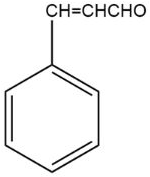
Select the correct name for the following reaction:

Figure

Answer options
Option 2
Correct Answer
Explanation for 2025: 21 May Shift 1 CHE question 4

Q5:

Chemical Kinetics

Easy

In the plot of log⁡[R]0[R]\log\frac{[R]_0}{[R]} versus time for a first order reaction (where [R] represents the concentration of the reactant), the slope and intercept are respectively equal to________

Answer options
Option 3
Correct Answer
Explanation for 2025: 21 May Shift 1 CHE question 5

Q6:

Solutions

Easy

The molality of a solution prepared by dissolving 4.0 g NaOH in 1000 mL distilled water is ________

(Assume that the density of water is 1 g mL−1^{-1})

Answer options
Option 4
Correct Answer
Explanation for 2025: 21 May Shift 1 CHE question 6

Q7:

Amines

Medium

Which of the following can be prepared from Sandmeyer's reaction?

(A) Chlorobenzene

(B) Bromobenzene

(C) Iodobenzene

(D) Fluorobenzene

Answer options
Option 4
Correct Answer
Explanation for 2025: 21 May Shift 1 CHE question 7

Q8:

Solutions

Easy

Which one of the following statements is correct with reference to the solubility of gases in liquid?

Answer options
Option 1
Correct Answer
Explanation for 2025: 21 May Shift 1 CHE question 8

Q9:

d & f Block Elements

Easy

Correct electronic configuration of Cu and Cr are__________

Answer options
Option 2
Correct Answer
Explanation for 2025: 21 May Shift 1 CHE question 9

Q10:

Electrochemistry

Easy

Relation between equilibrium constant and standard potential of the cell under standard conditions is represented by_____

Answer options

Q11:

Solutions

Easy

Henry was the first to give a quantitative relation between pressure and solubility of a gas in a solvent. Choose the correct statement given by Henry.

Answer options

Q12:

Aldehydes, Ketones & Carboxylic Acids

Easy

Identify "Y" in the following reaction:

R−Mg−X+CO2→Dry etherX→H3O+Y\mathrm{R{-}Mg{-}X + CO_2} \xrightarrow{\text{Dry ether}} \mathrm{X} \xrightarrow{\mathrm{H_3O^+}} \mathrm{Y}

Answer options

Q13:

Alcohols, Phenols & Ethers

Easy

Alcohol is more soluble in water when compared to alkanes due to the formation of

Answer options

Q14:

Haloalkanes & Haloarenes

Medium

Match List-I with List-II

List-IList-II
ReactionType of reaction
(A) Hydrolysis of Ethyl Chloride(I) Substitution reaction
(B) 2-Propanol is treated with Conc.Sulphuric acid(II) Addition reaction
(C) Reaction of HCN with Acetone(III) Degradation reaction
(D) Treatment of acetamide with NaOH and Br2\mathrm{Br_2}(IV) Elimination reaction
Answer options

Q15:

Haloalkanes & Haloarenes

Medium

Arrange the following compounds towards increasing SN2\mathrm{S_N2} reaction?

(A) n-Butyl bromide

(B) Isobutyl bromide

(C) Tertiary butyl bromide

(D) Sec-Butyl bromide

Answer options

Q16:

Amines

Medium

Arrange the following in increasing order of basic strength in aqueous solution :

(A) C6H5NH2\mathrm{C_6H_5NH_2}

(B) C2H5NH2\mathrm{C_2H_5NH_2}

(C) (C2H5)2NH\mathrm{(C_2H_5)_2NH}

(D) NH3\mathrm{NH_3}

Answer options

Q17:

Alcohols, Phenols & Ethers

Easy

In alcohols, C-O-H bond angle is

Answer options

Q18:

d & f Block Elements

Medium

Select the correct statements from the following:

(A) Mn show the highest oxidation state in first transition series elements.

(B) Titanium (II) is more stable than titanium (III) and titanium (IV).

(C) Scandium does not exhibit variable oxidation states.

(D) Zn form complexes with only (II) oxidation state.

Answer options

Q19:

Haloalkanes & Haloarenes

Easy

Match List-I with List-II

List-IList-II
Common nameIUPAC name
(A) Vinyl Chloride(I) 1-Chloro-2-methylbenzene
(B) Chloroform(II) Dichloromethane
(C) Methylene chloride(III) Trichloromethane
(D) o-Chlorotoluene(IV) Chloroethene
Answer options

Q20:

Amines

Hard

Arrange the following amines in decreasing order of pKbK_b values in aqueous solution:

(A) Phenylmethanamine

(B) N-Ethylethanamine

(C) N-methylaniline

(D) Benzenamine

Answer options

Q21:

Solutions

Easy

Low oxygen concentration in the human body at high altitudes is due to the ______

Answer options

Q22:

d & f Block Elements

Medium

Considering the following statements; identify the correct statements:

(A) Scandium is regarded as a transition element, but zinc is not.

(B) V2O3\mathrm{V_2O_3} is amphoteric and V2O5\mathrm{V_2O_5} is basic oxide.

(C) The similar radii of Zr and Hf is a consequence of the lanthanoid contraction.

(D) The oxidation state of chromium in chromate and dichromate ion is same.

Answer options

Q23:

Amines

Easy

Which of the following is known as Hinsberg's reagent?

Answer options

Q24:

Electrochemistry

Medium

What is the correct Nernst equation for the following cell?

Zn(s)∣Zn2+∣∣Ag+∣Ag(s)\mathrm{Zn(s)|Zn^{2+}||Ag^+|Ag(s)}

Answer options

Q26:

Chemical Kinetics

Medium

Choose the correct statements for a zero order reaction

(A) The rate of the reaction is independent of the initial concentration of the reactant

(B) The rate of the reaction increases linearly as the initial concentration of the reactant is increased

(C) The plot of concentration against time is a straight line with a positive slope

(D) The unit of rate constant is mol L−1^{-1} s−1^{-1}

Answer options

Q27:

Amines

Easy

Identify "Y" in the following reaction:

R−NH2+HNO2→NaNO2 + HClX→H2OY+N2+HCl\mathrm{R{-}NH_2 + HNO_2} \xrightarrow{\mathrm{NaNO_2\,+\,HCl}} \mathrm{X} \xrightarrow{\mathrm{H_2O}} \mathrm{Y + N_2 + HCl}

Answer options

Q28:

d & f Block Elements

Medium

Choose the incorrect statement from the following:

Answer options

Q29:

Chemical Kinetics

Easy

Select the correct statement.

Answer options

Q30:

Amines

Easy

What is the product of the following reaction?

R−CN→Na(Hg)/C2H5OHH2/Ni\mathrm{R{-}CN} \xrightarrow[\mathrm{Na(Hg)/C_2H_5OH}]{\mathrm{H_2/Ni}}

Answer options

Q32:

Chemical Kinetics

Easy

Select the correct statement.

Answer options

Q33:

Alcohols, Phenols & Ethers

Medium

Arrange the following compounds in order of their increasing boiling points.

(A) Pentan-1-ol

(B) n-Butane

(C) Pentanal

(D) Ethoxyethane

Answer options

Q34:

Chemical Kinetics

Easy

Choose the correct statement.

Answer options

Q35:

Alcohols, Phenols & Ethers

Easy

Which of the following reactions are given by Phenols?

(A) Nitration

(B) Halogenation

(C) Oxidation

(D) Acetylation

Answer options

Q36:

Solutions

Easy

Match List-I (Name) with List-II (solution)

List-IList-II
NameSolution
(A) Isotonic solution(I) A solution with lower osmotic pressure than that of other solution
(B) Hypotonic solution(II) A solution with higher osmotic pressure than that of other solution
(C) Ideal solution(III) Different solutions with equal osmotic pressure
(D) Hypertonic solution(IV) A solution that obeys Raoult's law at all temperatures and concentration
Answer options

Q37:

d & f Block Elements

Easy

Which of the following is used as a catalyst in contact process?

Answer options

Q38:

Electrochemistry

Medium

The standard Gibbs energy of the following reaction is -610 kJ mol−1^{-1}

Mg(s)+2Ag+(aq)→Mg2+(aq)+2Ag(s)\mathrm{Mg(s) + 2Ag^+(aq) \rightarrow Mg^{2+}(aq) + 2Ag(s)}

What is the standard EMF for the cell correspondng to the above reaction?

Given: Faraday's constant = 96500 C mol−1^{-1}

Answer options

Q39:

Electrochemistry

Easy

Fuel cell involves _______

Answer options

Q40:

Aldehydes, Ketones & Carboxylic Acids

Medium

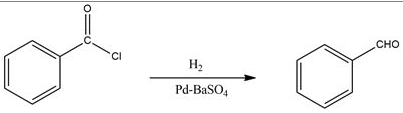
Match List-I with List-II

List-IList-II
Name ReactionReaction
(A) Stephen Reaction(I) Figure
(B) Gatterman-Koch Reaction(II) RCN+SnCl2+HCl⟶RCH=NH→H3O+RCHO\mathrm{RCN + SnCl_2 + HCl \longrightarrow RCH{=}NH \xrightarrow{H_3O^+} RCHO}
(C) Etard Reaction(III) Figure
(D) Rosenmund reduction(IV) Figure
Answer options

Q41:

Coordination Compounds

Easy

The degeneracy of the dd orbitals has been removed due to ligand electron-metal electron repulsions in the octahedral complex to yield three orbitals of lower energy, t2gt_{2g} set and two orbitals of higher energy, ege_g set. This splitting of the degenerate levels due to the presence of ligands in a definite geometry is termed as crystal field splitting and the energy separation is denoted by Δo\Delta_o. Thus energy of the two ege_g orbitals will increase by (3/5) Δo\Delta_o and that of three t2gt_{2g} will decrease by (2/5) Δo\Delta_o. The crystal field splitting Δo\Delta_o depends upon the field produced by the ligand and charge on the metal ion. Some ligands are able to produce strong fields, in which case the splitting will be large, whereas others produce weak fields and consequently result in small splitting of dd orbitals. Relative magnitude of crystal field splitting energy Δo\Delta_o and pairing energy, P (energy required for electron pairing in a single orbital) determine the formation of low spin (Δo\Delta_o > P) or high spin (Δo\Delta_o < P) complex. In tetrahedral coordination entity formation, the dd-orbital splitting is inverted and is smaller as compared to the octahedral field splitting. The crystal field theory attributes the colour of the complex to dd-dd transition of the electron. The colour of the coordination compounds depends on the crystal field splitting. In the absence of ligand, crystal field splitting does not occur and hence the substance is colourless.

Which of the following relations is correct for the splitting of dd orbitals in octahedral and tetrahedral crystal fields, considering same metal, the same ligands and metal-ligand distances?

Answer options

Q42:

Coordination Compounds

Easy

The degeneracy of the dd orbitals has been removed due to ligand electron-metal electron repulsions in the octahedral complex to yield three orbitals of lower energy, t2gt_{2g} set and two orbitals of higher energy, ege_g set. This splitting of the degenerate levels due to the presence of ligands in a definite geometry is termed as crystal field splitting and the energy separation is denoted by Δo\Delta_o. Thus energy of the two ege_g orbitals will increase by (3/5) Δo\Delta_o and that of three t2gt_{2g} will decrease by (2/5) Δo\Delta_o. The crystal field splitting Δo\Delta_o depends upon the field produced by the ligand and charge on the metal ion. Some ligands are able to produce strong fields, in which case the splitting will be large, whereas others produce weak fields and consequently result in small splitting of dd orbitals. Relative magnitude of crystal field splitting energy Δo\Delta_o and pairing energy, P (energy required for electron pairing in a single orbital) determine the formation of low spin (Δo\Delta_o > P) or high spin (Δo\Delta_o < P) complex. In tetrahedral coordination entity formation, the dd-orbital splitting is inverted and is smaller as compared to the octahedral field splitting. The crystal field theory attributes the colour of the complex to dd-dd transition of the electron. The colour of the coordination compounds depends on the crystal field splitting. In the absence of ligand, crystal field splitting does not occur and hence the substance is colourless.

Which of the following complex is not expected to be coloured?

Answer options

Q43:

Coordination Compounds

Medium

The degeneracy of the dd orbitals has been removed due to ligand electron-metal electron repulsions in the octahedral complex to yield three orbitals of lower energy, t2gt_{2g} set and two orbitals of higher energy, ege_g set. This splitting of the degenerate levels due to the presence of ligands in a definite geometry is termed as crystal field splitting and the energy separation is denoted by Δo\Delta_o. Thus energy of the two ege_g orbitals will increase by (3/5) Δo\Delta_o and that of three t2gt_{2g} will decrease by (2/5) Δo\Delta_o. The crystal field splitting Δo\Delta_o depends upon the field produced by the ligand and charge on the metal ion. Some ligands are able to produce strong fields, in which case the splitting will be large, whereas others produce weak fields and consequently result in small splitting of dd orbitals. Relative magnitude of crystal field splitting energy Δo\Delta_o and pairing energy, P (energy required for electron pairing in a single orbital) determine the formation of low spin (Δo\Delta_o > P) or high spin (Δo\Delta_o < P) complex. In tetrahedral coordination entity formation, the dd-orbital splitting is inverted and is smaller as compared to the octahedral field splitting. The crystal field theory attributes the colour of the complex to dd-dd transition of the electron. The colour of the coordination compounds depends on the crystal field splitting. In the absence of ligand, crystal field splitting does not occur and hence the substance is colourless.

What will be the crystal field splitting energy for tetrahedral [CoCl4]2−\mathrm{[CoCl_4]^{2-}} if its value for octahedral [CoCl6]4−\mathrm{[CoCl_6]^{4-}} is 18,000 cm−1^{-1}?

Answer options

Q44:

Coordination Compounds

Easy

The degeneracy of the dd orbitals has been removed due to ligand electron-metal electron repulsions in the octahedral complex to yield three orbitals of lower energy, t2gt_{2g} set and two orbitals of higher energy, ege_g set. This splitting of the degenerate levels due to the presence of ligands in a definite geometry is termed as crystal field splitting and the energy separation is denoted by Δo\Delta_o. Thus energy of the two ege_g orbitals will increase by (3/5) Δo\Delta_o and that of three t2gt_{2g} will decrease by (2/5) Δo\Delta_o. The crystal field splitting Δo\Delta_o depends upon the field produced by the ligand and charge on the metal ion. Some ligands are able to produce strong fields, in which case the splitting will be large, whereas others produce weak fields and consequently result in small splitting of dd orbitals. Relative magnitude of crystal field splitting energy Δo\Delta_o and pairing energy, P (energy required for electron pairing in a single orbital) determine the formation of low spin (Δo\Delta_o > P) or high spin (Δo\Delta_o < P) complex. In tetrahedral coordination entity formation, the dd-orbital splitting is inverted and is smaller as compared to the octahedral field splitting. The crystal field theory attributes the colour of the complex to dd-dd transition of the electron. The colour of the coordination compounds depends on the crystal field splitting. In the absence of ligand, crystal field splitting does not occur and hence the substance is colourless.

Choose the correct statement from the following:

Answer options

Q45:

Coordination Compounds

Medium

The degeneracy of the dd orbitals has been removed due to ligand electron-metal electron repulsions in the octahedral complex to yield three orbitals of lower energy, t2gt_{2g} set and two orbitals of higher energy, ege_g set. This splitting of the degenerate levels due to the presence of ligands in a definite geometry is termed as crystal field splitting and the energy separation is denoted by Δo\Delta_o. Thus energy of the two ege_g orbitals will increase by (3/5) Δo\Delta_o and that of three t2gt_{2g} will decrease by (2/5) Δo\Delta_o. The crystal field splitting Δo\Delta_o depends upon the field produced by the ligand and charge on the metal ion. Some ligands are able to produce strong fields, in which case the splitting will be large, whereas others produce weak fields and consequently result in small splitting of dd orbitals. Relative magnitude of crystal field splitting energy Δo\Delta_o and pairing energy, P (energy required for electron pairing in a single orbital) determine the formation of low spin (Δo\Delta_o > P) or high spin (Δo\Delta_o < P) complex. In tetrahedral coordination entity formation, the dd-orbital splitting is inverted and is smaller as compared to the octahedral field splitting. The crystal field theory attributes the colour of the complex to dd-dd transition of the electron. The colour of the coordination compounds depends on the crystal field splitting. In the absence of ligand, crystal field splitting does not occur and hence the substance is colourless.

Choose the correct order of the ligands in their increasing crystal field splitting:

Answer options

Q46:

Biomolecules

Easy

Optically active polyhydroxy aldehydes or ketones or molecules which provide such units on hydrolysis are called carbohydrates. They can be broadly classified as monosaccharides, disaccharides and polysaccharides depending on their behavior towards hydrolysis. They are also classified as reducing or non reducing sugars. Another class of biomolecules is proteins which are polymers of twenty different amino acids linked by peptide bonds. Amino acids can be classified as acidic, basic or neutral depending on the relative number of amino and carboxyl groups in their molecule. The essential amino acids cannot be synthesized by our body and hence must be provided through diet. Nucleic acids are the polymers of nucleotides which in turn consist of a base, pentose sugar and phosphate. There are two types of nucleic acids namely, DNA and RNA which differ in the composition of sugar and a base.

Which of the following is non-reducing sugar?

Answer options

Q47:

Biomolecules

Easy

Optically active polyhydroxy aldehydes or ketones or molecules which provide such units on hydrolysis are called carbohydrates. They can be broadly classified as monosaccharides, disaccharides and polysaccharides depending on their behavior towards hydrolysis. They are also classified as reducing or non reducing sugars. Another class of biomolecules is proteins which are polymers of twenty different amino acids linked by peptide bonds. Amino acids can be classified as acidic, basic or neutral depending on the relative number of amino and carboxyl groups in their molecule. The essential amino acids cannot be synthesized by our body and hence must be provided through diet. Nucleic acids are the polymers of nucleotides which in turn consist of a base, pentose sugar and phosphate. There are two types of nucleic acids namely, DNA and RNA which differ in the composition of sugar and a base.

The sugar moiety in DNA and RNA molecules, respectively, are

Answer options

Q48:

Biomolecules

Easy

Optically active polyhydroxy aldehydes or ketones or molecules which provide such units on hydrolysis are called carbohydrates. They can be broadly classified as monosaccharides, disaccharides and polysaccharides depending on their behavior towards hydrolysis. They are also classified as reducing or non reducing sugars. Another class of biomolecules is proteins which are polymers of twenty different amino acids linked by peptide bonds. Amino acids can be classified as acidic, basic or neutral depending on the relative number of amino and carboxyl groups in their molecule. The essential amino acids cannot be synthesized by our body and hence must be provided through diet. Nucleic acids are the polymers of nucleotides which in turn consist of a base, pentose sugar and phosphate. There are two types of nucleic acids namely, DNA and RNA which differ in the composition of sugar and a base.

Four bases present in RNA molecule are

Answer options

Q49:

Biomolecules

Medium

Optically active polyhydroxy aldehydes or ketones or molecules which provide such units on hydrolysis are called carbohydrates. They can be broadly classified as monosaccharides, disaccharides and polysaccharides depending on their behavior towards hydrolysis. They are also classified as reducing or non reducing sugars. Another class of biomolecules is proteins which are polymers of twenty different amino acids linked by peptide bonds. Amino acids can be classified as acidic, basic or neutral depending on the relative number of amino and carboxyl groups in their molecule. The essential amino acids cannot be synthesized by our body and hence must be provided through diet. Nucleic acids are the polymers of nucleotides which in turn consist of a base, pentose sugar and phosphate. There are two types of nucleic acids namely, DNA and RNA which differ in the composition of sugar and a base.

The side chain (R group) present in the "Aspartic Acid" amino acid is

Answer options

Q50:

Biomolecules

Easy

Optically active polyhydroxy aldehydes or ketones or molecules which provide such units on hydrolysis are called carbohydrates. They can be broadly classified as monosaccharides, disaccharides and polysaccharides depending on their behavior towards hydrolysis. They are also classified as reducing or non reducing sugars. Another class of biomolecules is proteins which are polymers of twenty different amino acids linked by peptide bonds. Amino acids can be classified as acidic, basic or neutral depending on the relative number of amino and carboxyl groups in their molecule. The essential amino acids cannot be synthesized by our body and hence must be provided through diet. Nucleic acids are the polymers of nucleotides which in turn consist of a base, pentose sugar and phosphate. There are two types of nucleic acids namely, DNA and RNA which differ in the composition of sugar and a base.

"Maltose" disaccharide is composed of

Answer options

CUET Chemistry 2025 21 May Shift 1 Past Year Question Paper

Every question from the CUET Chemistry 2025 21 May Shift 1 paper is here in full, with the correct answer and a step by step solution for each one. It is completely free, there is no login and no paywall, and you can read the whole paper online or download it to revise offline.

You can also attempt it instead of only reading it. Take the paper as a full length mock under exam conditions, or filter it by topic and attempt just that topic as a topic test. Both are free, and you get a breakdown of your accuracy, your timing and your weak areas once you submit.

CUET Chemistry past year questions (PYQs) are the closest thing to the real exam, so working through them is the quickest way to learn the paper pattern, the marking scheme and the level of difficulty to expect on the day.