Q1:

Alcohols, Phenols & Ethers

Medium

Arrange the following in increasing order of their pKapK_a values.

(A) o-nitrophenol

(B) m-nitrophenol

(C) Phenol

(D) Ethanol

Answer options
Option 1
Correct Answer
Explanation for 2025: 2 June Shift 2 CHE question 1

Q2:

Coordination Compounds

Medium

Magnetic moment values for [Fe(H2O)6]3+[Fe(H_2O)_6]^{3+} and [Fe(CN)6]3−[Fe(CN)_6]^{3-} are .....

Answer options
Option 2
Correct Answer
Explanation for 2025: 2 June Shift 2 CHE question 2

Q4:

Coordination Compounds

Medium

Which of the following is correct about the nature of ligand?

Answer options
Option 1,4
Correct Answer
Explanation for 2025: 2 June Shift 2 CHE question 4

Q7:

Electrochemistry

Medium

In the electrochemical series written in the increasing order of reduction potential

(A) The elements which are placed above the hydrogen in the electrochemical series are stronger oxidizing agents.

(B) The elements which are placed above the hydrogen in the electrochemical series are stronger reducing agents.

(C) The elements with the positive electrode potential values lie below the hydrogen in the electrochemical series.

(D) The activity of both the metals and non-metals in the electrochemical series decreases from top to bottom.

Answer options
Option 1
Correct Answer
Explanation for 2025: 2 June Shift 2 CHE question 7

Q8:

Alcohols, Phenols & Ethers

Medium

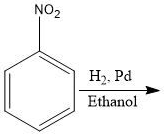
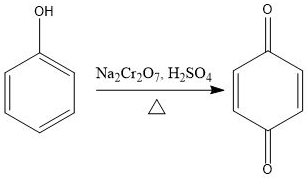
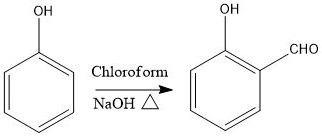
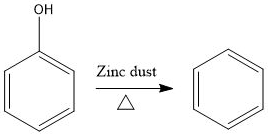
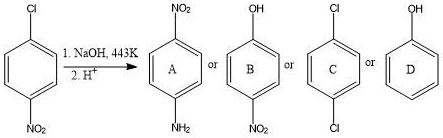
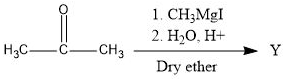
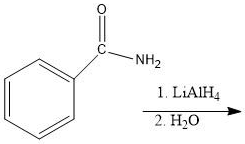
The conversions which are represented correctly are

(A)
Figure

(B)

Figure

(C)

Figure

(D)

Figure

Answer options
Option 4
Correct Answer
Explanation for 2025: 2 June Shift 2 CHE question 8

Q10:

Biomolecules

Medium

Match List-I (Amino acid) with List-II (Example)

List-IList-II
Amino acidExample
(A) Basic amino acid(I) Glycine
(B) Acidic amino acid(II) Alanine
(C) Neutral amino acid(III) Proline
(D) Optically inactive amino acid(IV) Lysine
Answer options

Q13:

Biomolecules

Easy

n-Hexane is obtained when glucose is

Answer options

Q14:

Coordination Compounds

Medium

Which of the following complexes will show absorbance of light at the lowest wavelength?

Answer options

Q15:

Biomolecules

Easy

The product obtained, when starch is hydrolyzed with dilute sulphuric acid at 393 K under pressure, is

(C6H10O5)n+nH2O→393 K; 2-3 atmH+?(C_6H_{10}O_5)_n + nH_2O \xrightarrow[\text{393 K; 2-3 atm}]{H^+} ?

Answer options

Q16:

Haloalkanes & Haloarenes

Easy

Hybridization of the carbon atoms attached with halogens in haloalkanes & haloarenes are

Answer options

Q17:

Solutions

Easy

Which statement is correct for solutions?

Answer options

Q18:

Solutions

Medium

Match List-I with List-II

List-IList-II
TermFormula/expression
(A) Raoult's law(I) p10−p1p10=x2\dfrac{p_1^0 - p_1}{p_1^0} = x_2
(B) Henry's Law(II) ptotal=p1∘+(p2∘−p1∘) x2p_{total} = p_1^\circ + (p_2^\circ - p_1^\circ)\,x_2
(C) Dalton's Law of partial pressure(III) p=KH xp = K_H\,x
(D) Relative lowering of vapor pressure(IV) p2=p2∘ x2p_2 = p_2^\circ\,x_2
Answer options

Q19:

Electrochemistry

Medium

Arrange the following electrodes in decreasing order of the strength of the respective ions as reducing agent.

(A) Cu2++2e−→Cu(s)Cu^{2+} + 2e^- \rightarrow Cu(s) E∘=0.34\quad E^\circ = 0.34 V

(B) Sn2++2e−→Sn(s)Sn^{2+} + 2e^- \rightarrow Sn(s) E∘=−0.14\quad E^\circ = -0.14 V

(C) AgBr(s)+e−→Ag(s)+Br−AgBr(s) + e^- \rightarrow Ag(s) + Br^- E∘=0.10\quad E^\circ = 0.10 V

(D) Pb2++2e−→Pb(s)Pb^{2+} + 2e^- \rightarrow Pb(s) E∘=−0.13\quad E^\circ = -0.13 V

Answer options

Q20:

Haloalkanes & Haloarenes

Easy

Match List-I with List-II

List-IList-II
(Name)(Use)
(A) Carbon tetrachloride(I) Pesticide
(B) DDT(II) Solvent
(C) Iodoform(III) Refrigerant
(D) Freons-12(IV) Antiseptic
Answer options

Q22:

Electrochemistry

Easy

The correct cell representation for the following reaction is

Mg(s)+2Ag+ (0.0001 M)→Mg2+ (0.130 M)+2Ag(s)Mg(s) + 2Ag^+\,(0.0001\text{ M}) \rightarrow Mg^{2+}\,(0.130\text{ M}) + 2Ag(s)

Answer options

Q23:

d & f Block Elements

Easy

Arrange the following elements in decreasing order of their radii:

(A) La

(B) Pr

(C) Gd

(D) Yb

Answer options

Q24:

Amines

Easy

Match List-I (Common name) with List-II (IUPAC name)

List-IList-II
Common NameIUPAC name
(A) Aniline(I) N-Phenylethanamide
(B) Acetanilide(II) Benzenamine
(C) Sulphanilic acid(III) Prop-2-en-1-amine
(D) Allylamine(IV) p-aminobenzene sulphonic acid
Answer options

Q25:

d & f Block Elements

Medium

Interstitial compounds are formed when small atoms like H, C, or N are trapped in the crystal lattice of metal. Which of the following statements are true about the interstitial compounds?

(A) Interstitial compounds have higher melting points than the pure metals.

(B) Interstitial compounds are very soft.

(C) Interstitial compounds are very reactive.

(D) Interstitial compounds retain metallic conductivity.

Answer options

Q26:

d & f Block Elements

Medium

Match the ions given in List-I with number of unpaired electrons given in List-II

List-IList-II
IonNumber of unpaired electrons
(A) V2+V^{2+}(I) 1
(B) Cr2+Cr^{2+}(II) 4
(C) Ti2+Ti^{2+}(III) 3
(D) Cu2+Cu^{2+}(IV) 2
Answer options

Q27:

Solutions

Easy

Osmotic pressure of 0.02 M urea solution at 27 °C, is (given R= 0.0821 atm L mol−1mol^{-1} K−1K^{-1})

Answer options

Q28:

Electrochemistry

Easy

The specific conductance of a decinormal KCl solution is 0.0121 ohm−1ohm^{-1} cm−1cm^{-1} and the resistance was found to be 56 ohm. Cell constant for the reaction will be

Answer options

Q29:

d & f Block Elements

Easy

Magnetic moment of first series of transition metal complexes is determined by.........

Answer options

Q30:

Haloalkanes & Haloarenes

Easy

Haloalkanes can be represented by the formula

Answer options

Q31:

Alcohols, Phenols & Ethers

Easy

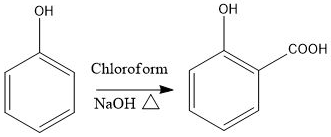
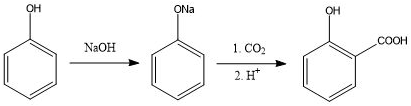
The reaction for the conversion of phenol into salicylic acid is known as
Figure

Answer options

Q32:

Coordination Compounds

Easy

The coordination number (CN) and oxidation state (OS) of Co in [Co(C2O4)3]3−[Co(C_2O_4)_3]^{3-} is.........

Answer options

Q33:

Electrochemistry

Easy

From the statements given below, choose the correct statement regarding the galvanic cell.

Answer options

Q36:

Amines

Medium

The amines which are soluble in water

(A) Methanamine

(B) Ethanamine

(C) Propanamine

(D) Benzylamine

Answer options

Q37:

Haloalkanes & Haloarenes

Hard

Arrange the following in order of increasing boiling points

(A) 1,4-Dichlorobenzene

(B) 1,3-Dichlorobenzene

(C) 1,2-Dichlorobenzene

(D) Chlorobenzene

Answer options

Q38:

Coordination Compounds

Medium

Identify the optically active compounds from the following:

(A) [Co(en)3]3+[Co(en)_3]^{3+}

(B) trans-[Co(en)2Cl2]+[Co(en)_2Cl_2]^+

(C) cis-[Co(en)2Cl2]+[Co(en)_2Cl_2]^+

(D) [Cr(NH3)5Cl][Cr(NH_3)_5Cl]

Answer options

Q39:

Solutions

Medium

Arrange the following electrolytes in the increasing order of van't Hoff factor(ii) for complete dissociation of solute.

(A) [Co(NH3)6]Cl3[Co(NH_3)_6]Cl_3

(B) MgCl2MgCl_2

(C) K4[Fe(CN)6]K_4[Fe(CN)_6]

(D) KClKCl

Answer options

Q41:

Chemical Kinetics

Medium

Kinetic studies not only help us to determine the rate of a chemical reaction but also describe the conditions by which the reaction rates can be altered. The factors such as concentration, temperature, pressure and catalyst affect the rate of a reaction. The speed of a reaction or the rate of a reaction can be defined as the change in concentration of a reactant or product in unit time.

Rate = k [A]x [B]yk\,[A]^x\,[B]^y

Here kk is the rate constant

x + y gives the overall order of a reaction, whereas x and y represent the order with respect to the reactants A and B, respectively.

Table: Initial rate of formation of NO2NO_2

S.No.Initial [NO]/mol L−1L^{-1}Initial [O2][O_2]/mol L−1L^{-1}Initial rate of formation of NO2NO_2 /mol L−1L^{-1} s−1s^{-1}
10.300.300.096
20.600.300.384
30.300.600.192
40.600.600.768

Based on the above observations, the rate of formation of NO2NO_2 can be represented as

Answer options

Q42:

Chemical Kinetics

Easy

Kinetic studies not only help us to determine the rate of a chemical reaction but also describe the conditions by which the reaction rates can be altered. The factors such as concentration, temperature, pressure and catalyst affect the rate of a reaction. The speed of a reaction or the rate of a reaction can be defined as the change in concentration of a reactant or product in unit time.

Rate = k [A]x [B]yk\,[A]^x\,[B]^y

Here kk is the rate constant

x + y gives the overall order of a reaction, whereas x and y represent the order with respect to the reactants A and B, respectively.

The unit of rate constant for first order reaction is

Answer options

Q43:

Chemical Kinetics

Easy

Kinetic studies not only help us to determine the rate of a chemical reaction but also describe the conditions by which the reaction rates can be altered. The factors such as concentration, temperature, pressure and catalyst affect the rate of a reaction. The speed of a reaction or the rate of a reaction can be defined as the change in concentration of a reactant or product in unit time.

Rate = k [A]x [B]yk\,[A]^x\,[B]^y

Here kk is the rate constant

x + y gives the overall order of a reaction, whereas x and y represent the order with respect to the reactants A and B, respectively.

The order of a reaction which does not exist is

Answer options

Q44:

Chemical Kinetics

Easy

Kinetic studies not only help us to determine the rate of a chemical reaction but also describe the conditions by which the reaction rates can be altered. The factors such as concentration, temperature, pressure and catalyst affect the rate of a reaction. The speed of a reaction or the rate of a reaction can be defined as the change in concentration of a reactant or product in unit time.

Rate = k [A]x [B]yk\,[A]^x\,[B]^y

Here kk is the rate constant

x + y gives the overall order of a reaction, whereas x and y represent the order with respect to the reactants A and B, respectively.

If the temperature is raised by 10 °C, then the rate of the reaction increases approximately by

Answer options

Q45:

Chemical Kinetics

Medium

Kinetic studies not only help us to determine the rate of a chemical reaction but also describe the conditions by which the reaction rates can be altered. The factors such as concentration, temperature, pressure and catalyst affect the rate of a reaction. The speed of a reaction or the rate of a reaction can be defined as the change in concentration of a reactant or product in unit time.

Rate = k [A]x [B]yk\,[A]^x\,[B]^y

Here kk is the rate constant

x + y gives the overall order of a reaction, whereas x and y represent the order with respect to the reactants A and B, respectively.

Which of the following statements are correct?

(A) Catalysts increase the rate of a chemical reaction.

(B) Catalysts can catalyze both spontaneous and non-spontaneous reactions.

(C) Higher the activation energy for a chemical reaction, lower is the rate of the reaction.

(D) Catalyst increases the potential energy barrier.

Answer options

Q46:

Aldehydes, Ketones & Carboxylic Acids

Easy

Carbonyl compounds such as aldehydes, ketones, and carboxylic acids play an important role in the biochemical process of plants and animal kingdom. Many aldehydes and ketones find applications in dye, perfumery and other industries . The carbonyl carbon atom is sp2sp^2-hybridized forming three sigma and one pi-bond with oxygen. C-O bonds are polar bond due to high electronegativity of oxygen than carbon. Hence the carbonyl carbon behaves as an electrophilic center and oxygen as a nucleophilic centre. Primary and secondary alcohols yield aldehydes and ketones respectively upon oxidation with variety of oxidizing agents. The boiling points of aldehydes and ketones differ from hydrocarbons and ethers. Aldehydes and ketones undergo nucleophilic addition reaction due to presence of electrophilic carbonyl carbon. Nucleophile and a proton add across the carbon oxygen double bond.

Formalin which is used to preserve biological specimen is an aqueous solution of

Answer options

Q47:

Aldehydes, Ketones & Carboxylic Acids

Easy

Carbonyl compounds such as aldehydes, ketones, and carboxylic acids play an important role in the biochemical process of plants and animal kingdom. Many aldehydes and ketones find applications in dye, perfumery and other industries . The carbonyl carbon atom is sp2sp^2-hybridized forming three sigma and one pi-bond with oxygen. C-O bonds are polar bond due to high electronegativity of oxygen than carbon. Hence the carbonyl carbon behaves as an electrophilic center and oxygen as a nucleophilic centre. Primary and secondary alcohols yield aldehydes and ketones respectively upon oxidation with variety of oxidizing agents. The boiling points of aldehydes and ketones differ from hydrocarbons and ethers. Aldehydes and ketones undergo nucleophilic addition reaction due to presence of electrophilic carbonyl carbon. Nucleophile and a proton add across the carbon oxygen double bond.

In polar C-O bond in carbonyl compounds, the nature of carbon and oxygen atom is

Answer options

Q48:

Aldehydes, Ketones & Carboxylic Acids

Easy

Carbonyl compounds such as aldehydes, ketones, and carboxylic acids play an important role in the biochemical process of plants and animal kingdom. Many aldehydes and ketones find applications in dye, perfumery and other industries . The carbonyl carbon atom is sp2sp^2-hybridized forming three sigma and one pi-bond with oxygen. C-O bonds are polar bond due to high electronegativity of oxygen than carbon. Hence the carbonyl carbon behaves as an electrophilic center and oxygen as a nucleophilic centre. Primary and secondary alcohols yield aldehydes and ketones respectively upon oxidation with variety of oxidizing agents. The boiling points of aldehydes and ketones differ from hydrocarbons and ethers. Aldehydes and ketones undergo nucleophilic addition reaction due to presence of electrophilic carbonyl carbon. Nucleophile and a proton add across the carbon oxygen double bond.

The starting compound Y in the following reaction is

Y→oxidationaldehyde→oxidationcarboxylic acidsY \xrightarrow{\text{oxidation}} \text{aldehyde} \xrightarrow{\text{oxidation}} \text{carboxylic acids}

Answer options

Q49:

Aldehydes, Ketones & Carboxylic Acids

Easy

Carbonyl compounds such as aldehydes, ketones, and carboxylic acids play an important role in the biochemical process of plants and animal kingdom. Many aldehydes and ketones find applications in dye, perfumery and other industries . The carbonyl carbon atom is sp2sp^2-hybridized forming three sigma and one pi-bond with oxygen. C-O bonds are polar bond due to high electronegativity of oxygen than carbon. Hence the carbonyl carbon behaves as an electrophilic center and oxygen as a nucleophilic centre. Primary and secondary alcohols yield aldehydes and ketones respectively upon oxidation with variety of oxidizing agents. The boiling points of aldehydes and ketones differ from hydrocarbons and ethers. Aldehydes and ketones undergo nucleophilic addition reaction due to presence of electrophilic carbonyl carbon. Nucleophile and a proton add across the carbon oxygen double bond.

Identify the product Y in the following reaction

CH3-CH=CH-CH2OH→Pyridinium ChlochromateYCH_3\text{-}CH{=}CH\text{-}CH_2OH \xrightarrow{\text{Pyridinium Chlochromate}} Y

Answer options

Q50:

Aldehydes, Ketones & Carboxylic Acids

Easy

Carbonyl compounds such as aldehydes, ketones, and carboxylic acids play an important role in the biochemical process of plants and animal kingdom. Many aldehydes and ketones find applications in dye, perfumery and other industries . The carbonyl carbon atom is sp2sp^2-hybridized forming three sigma and one pi-bond with oxygen. C-O bonds are polar bond due to high electronegativity of oxygen than carbon. Hence the carbonyl carbon behaves as an electrophilic center and oxygen as a nucleophilic centre. Primary and secondary alcohols yield aldehydes and ketones respectively upon oxidation with variety of oxidizing agents. The boiling points of aldehydes and ketones differ from hydrocarbons and ethers. Aldehydes and ketones undergo nucleophilic addition reaction due to presence of electrophilic carbonyl carbon. Nucleophile and a proton add across the carbon oxygen double bond.

The alcohol which cannot be used to prepare carbonyl compound through oxidation is

Answer options

CUET Chemistry 2025 2 June Shift 2 Past Year Question Paper

Every question from the CUET Chemistry 2025 2 June Shift 2 paper is here in full, with the correct answer and a step by step solution for each one. It is completely free, there is no login and no paywall, and you can read the whole paper online or download it to revise offline.

You can also attempt it instead of only reading it. Take the paper as a full length mock under exam conditions, or filter it by topic and attempt just that topic as a topic test. Both are free, and you get a breakdown of your accuracy, your timing and your weak areas once you submit.

CUET Chemistry past year questions (PYQs) are the closest thing to the real exam, so working through them is the quickest way to learn the paper pattern, the marking scheme and the level of difficulty to expect on the day.