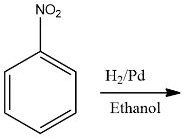
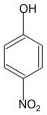
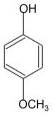
Q3:

d & f Block Elements

Easy

On what basis scandium is a considered as transition metal, but Zinc is not considered as transition metal?

Answer options
Option 2
Correct Answer
Explanation for 2025: 16 May Shift 1 CHE question 3

Q5:

Solutions

Easy

Based on the solute-solvent interaction, the solute which will be most soluble in n-octane is:

Answer options
Option 1
Correct Answer
Explanation for 2025: 16 May Shift 1 CHE question 5

Q6:

Coordination Compounds

Easy

Match the type of hybridisation given in List-I with their geometry given in List-II

List-IList-II
Type of hybridisationGeometry
(A) sp3^3(I) Trigonal bipyramidal
(B) dsp2^2(II) Octahedral
(C) sp3^3d(III) Square planar
(D) sp3^3d2^2(IV) Tetrahedral
Answer options
Option 4
Correct Answer
Explanation for 2025: 16 May Shift 1 CHE question 6

Q8:

Chemical Kinetics

Easy

Identify the order of the two reactions whose rate constants are given below:

(i) k=2.3×10⁻⁵k = 2.3 \times 10^{-5} L mol−1^{-1} s−1^{-1}

(ii) k=3×10⁻⁴k = 3 \times 10^{-4} s−1^{-1}

Answer options
Option 2
Correct Answer
Explanation for 2025: 16 May Shift 1 CHE question 8

Q9:

d & f Block Elements

Medium

Out of the following given statements, identify the correct ones:

(A) Yttrium does not exhibit variable oxidation states, yet it is a transition element.

(B) Many compounds of transition elements act as catalysts in various chemical reactions.

(C) Technetium is an artificially synthesized element of 4d transition series.

(D) The E∘^\circ value for the Mn3+^{3+}/Mn2+^{2+} couple is much more positive than that for Cr3+^{3+}/Cr2+^{2+}.

Answer options
Option 3
Correct Answer
Explanation for 2025: 16 May Shift 1 CHE question 9

Q10:

Chemical Kinetics

Easy

According to the collision theory which one of the following statements is correct?

Answer options

Q11:

Haloalkanes & Haloarenes

Hard

Choose the incorrect statements from the following:

(A) The dipole moment of cyclohexyl chloride is smaller than chlorobenzene.

(B) Alkyl halides are immiscible with water.

(C) The dipole moment of methyl chloride is higher than that of methyl fluoride.

(D) Chloroform renders ariel oxidation in the presence of oxygen

Answer options

Q12:

Biomolecules

Easy

Boiling of Sucrose with water in the presence of acid (H+^+) will give:

Answer options

Q13:

Solutions

Medium

Isotonic solutions must have the same

(A) Solute

(B) Density

(C) Elevation in boiling point

(D) Depression in freezing point

Answer options

Q14:

Haloalkanes & Haloarenes

Medium

The correct order of increasing reactivity of C-X bond towards nucleophilic substitution reaction (SN_N1) in the following compounds is

(A) Chlorobenzene

(B) Benzyl Chloride

(C) Tertiary Butyl Chloride

(D) 1-Chlorobutane

Answer options

Q15:

Chemical Kinetics

Easy

Match List-I with List-II

List-IList-II
Order of reactionExpressions/Unit
(A) Unit of zero order(I) kt=[R]o−[R]tkt = [R]_o - [R]_t
(B) Unit of First order(II) mol L−1^{-1} s−1^{-1}
(C) Integrated Rate Law for zero order(III) s−1^{-1}
(D) Integrated Rate Law for First order(IV) [R]=[R]0e−kt[R] = [R]_0e^{-kt}
Answer options

Q17:

Amines

Easy

Select the correct statements for Hoffmann bromamide degradation reaction:

(A) Used to prepare primary amines

(B) Amides are treated with bromine in aqueous solution.

(C) NaOH is used in this reaction.

(D) HCl is used in this reaction

Answer options

Q18:

Haloalkanes & Haloarenes

Easy

The C-Br bond in bromobenzene as compared with C-Br bond in ethyl bromide is

Answer options

Q19:

Biomolecules

Easy

Which of the following statements is correct for an enzyme?

(A) It is a biocatalyst.

(B) It can catalyze any chemical reaction.

(C) Almost all enzymes are globular proteins.

(D) They reduce the magnitude of activation energy.

Answer options

Q20:

d & f Block Elements

Easy

Match the metal/ion given in List-I with properties given in List-II

List-IList-II
MetalProperties
(A) Sc3+^{3+}(I) 3d3^3
(B) Cr3+^{3+}(II) Colorless
(C) Cu2+^{2+}(III) 3d8^8
(D) Ni2+^{2+}(IV) 3d9^9
Answer options

Q21:

Aldehydes, Ketones & Carboxylic Acids

Easy

Name the reaction when a mixture of acetaldehyde and propanal is treated with aqueoous alkali solution.

Answer options

Q23:

Biomolecules

Medium

Match List-I (vitamin) with List-II (deficiency disease)

List-IList-II
VitaminDeficiency disease
(A) Thiamine(I) Convulsions
(B) Pyridoxine(II) Cheilosis
(C) Vitamin E(III) Retarded Growth
(D) Riboflavin(IV) Muscular weakness
Answer options

Q24:

Coordination Compounds

Medium

Which of the following is not a limitation of valence bond theory (VBT)?

Answer options

Q25:

Coordination Compounds

Easy

Number of unpaired electrons in the square planar [Pt(CN)4_4]2−^{2-} are:

Answer options

Q26:

Solutions

Easy

The molality of a solution made by dissolving 2.5 g of ethanoic acid (CH3_3COOH) in 75 g of benzene is:

Answer options

Q27:

Chemical Kinetics

Easy

Identify the correct expression of Arrhenius equation:

Answer options

Q28:

Coordination Compounds

Medium

Match the compounds given in List-I with the oxidation state of cobalt present in it given in List-II

List-IList-II
CompoundOxidation state of cobalt
(A) Co(NCS)(NH3_3)5_5(I) +3
(B) [Co(NH3_3)4_4Cl2_2]SO4_4(II) +2
(C) Na4_4[Co(S2_2O3_3)3_3](III) 0
(D) [Co2_2(CO)8_8](IV) +4
Answer options

Q30:

Amines

Medium

Arrange the following in decreasing order of their basic strength in aqueous solution

(A) C6_6H5_5NH2_2

(B) C2_2H5_5NH2_2

(C) (C2_2H5_5)2_2NH

(D) NH3_3

Answer options

Q31:

Solutions

Easy

45 g of ethylene glycol (C2_2H6_6O2_2) is mixed with 600 g of water. Calculate the depression in freezing point.

(KfK_f for water =1.86 K kg mol−1^{-1})

Answer options

Q33:

Solutions

Medium

Arrange the following mixtures in increasing order of their resultant molarity

(A) 20 mL of 0.5 M HCl + 30 mL of 0.3 M HCl

(B) 30 mL of 0.3 M HCl + 30 mL of 0.3 M HCl

(C) 20 mL of 0.5 M HCl + 20 mL of 0.3 M HCl

(D) 20 mL of 0.3 M HCl + 30 mL of 0.5 M HCl

Answer options

Q34:

d & f Block Elements

Medium

Arrange the following in the increasing order of their spin-only magnetic moment values in free state

(A) Mn3+^{3+}

(B) Fe3+^{3+}

(C) Sc3+^{3+}

(D) Cr3+^{3+}

Answer options

Q35:

Alcohols, Phenols & Ethers

Easy

The steam distillation method is used for the separation of 1:1 mixture of p-nitrophenol and o-nitrophenols because

Answer options

Q36:

Chemical Kinetics

Easy

A first order reaction is found to have a rate constant, k=5.5×10⁻¹⁴k = 5.5 \times 10^{-14} s−1^{-1}. The half life of the reaction will be :

Answer options

Q37:

Coordination Compounds

Medium

The IUPAC name of [CoCl2_2(en)2_2]Cl complex is:

Answer options

Q39:

Alcohols, Phenols & Ethers

Medium

The cleavage of methyl tertbutyl ether with HI gives

Answer options

Q40:

Alcohols, Phenols & Ethers

Medium

The correct order of decreasing pKa_a values of the following compounds

(A) Figure

(B) Figure

(C) Figure

(D) Figure

Answer options

Q41:

Aldehydes, Ketones & Carboxylic Acids

Hard

Aldehydes, carboxylic acids and ketones are widespread in the animal and plant kingdoms. They play a pivotal role in various biochemical processes of life. Their presence in nature adds fragrance and flavor. These compounds are widely used in food products, pharmaceuticals, paints, resins and other important product industries. These compounds are prepared by various laboratory methods, which mainly include oxidation, formylation, acylation and reduction. Due to the polar nature of the carbonyl group in aldehydes and ketones, they can exhibit different reactions like nucleophilic addition. They do exhibit redox and various condensation reactions which lead to the formation of various important compounds. On the other hand, the carboxylic acids are mainly prepared by oxidation and hydrolysis of different compounds. The carboxylic acid consists of a carbonyl group and the hydroxy group (attached to the carbonyl carbon atom). This makes it possible for the carboxylic acid to participate in various chemical reactions which involve cleavage of the C-OH bond and the O-H bond along with the reactions involving the complete -COOH group.

Arrange the following in the increasing order of their pKa_a values:

(A) CF3_3-COOH

(B) O2_2N-CH2_2-COOH

(C) NC-CH2_2-COOH

(D) H-COOH

Answer options

Q42:

Aldehydes, Ketones & Carboxylic Acids

Easy

Aldehydes, carboxylic acids and ketones are widespread in the animal and plant kingdoms. They play a pivotal role in various biochemical processes of life. Their presence in nature adds fragrance and flavor. These compounds are widely used in food products, pharmaceuticals, paints, resins and other important product industries. These compounds are prepared by various laboratory methods, which mainly include oxidation, formylation, acylation and reduction. Due to the polar nature of the carbonyl group in aldehydes and ketones, they can exhibit different reactions like nucleophilic addition. They do exhibit redox and various condensation reactions which lead to the formation of various important compounds. On the other hand, the carboxylic acids are mainly prepared by oxidation and hydrolysis of different compounds. The carboxylic acid consists of a carbonyl group and the hydroxy group (attached to the carbonyl carbon atom). This makes it possible for the carboxylic acid to participate in various chemical reactions which involve cleavage of the C-OH bond and the O-H bond along with the reactions involving the complete -COOH group.

Propyne on hydration in presence of mercury ions produce

Answer options

Q43:

Aldehydes, Ketones & Carboxylic Acids

Medium

Aldehydes, carboxylic acids and ketones are widespread in the animal and plant kingdoms. They play a pivotal role in various biochemical processes of life. Their presence in nature adds fragrance and flavor. These compounds are widely used in food products, pharmaceuticals, paints, resins and other important product industries. These compounds are prepared by various laboratory methods, which mainly include oxidation, formylation, acylation and reduction. Due to the polar nature of the carbonyl group in aldehydes and ketones, they can exhibit different reactions like nucleophilic addition. They do exhibit redox and various condensation reactions which lead to the formation of various important compounds. On the other hand, the carboxylic acids are mainly prepared by oxidation and hydrolysis of different compounds. The carboxylic acid consists of a carbonyl group and the hydroxy group (attached to the carbonyl carbon atom). This makes it possible for the carboxylic acid to participate in various chemical reactions which involve cleavage of the C-OH bond and the O-H bond along with the reactions involving the complete -COOH group.

Identify the final product (X) of the chemical reaction obtained from the following transformation:
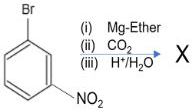
Figure

Answer options

Q44:

Aldehydes, Ketones & Carboxylic Acids

Easy

Aldehydes, carboxylic acids and ketones are widespread in the animal and plant kingdoms. They play a pivotal role in various biochemical processes of life. Their presence in nature adds fragrance and flavor. These compounds are widely used in food products, pharmaceuticals, paints, resins and other important product industries. These compounds are prepared by various laboratory methods, which mainly include oxidation, formylation, acylation and reduction. Due to the polar nature of the carbonyl group in aldehydes and ketones, they can exhibit different reactions like nucleophilic addition. They do exhibit redox and various condensation reactions which lead to the formation of various important compounds. On the other hand, the carboxylic acids are mainly prepared by oxidation and hydrolysis of different compounds. The carboxylic acid consists of a carbonyl group and the hydroxy group (attached to the carbonyl carbon atom). This makes it possible for the carboxylic acid to participate in various chemical reactions which involve cleavage of the C-OH bond and the O-H bond along with the reactions involving the complete -COOH group.

The IUPAC name of following compound is

OHC-C6_6H4_4-CHO-pp

Answer options

Q45:

Aldehydes, Ketones & Carboxylic Acids

Medium

Aldehydes, carboxylic acids and ketones are widespread in the animal and plant kingdoms. They play a pivotal role in various biochemical processes of life. Their presence in nature adds fragrance and flavor. These compounds are widely used in food products, pharmaceuticals, paints, resins and other important product industries. These compounds are prepared by various laboratory methods, which mainly include oxidation, formylation, acylation and reduction. Due to the polar nature of the carbonyl group in aldehydes and ketones, they can exhibit different reactions like nucleophilic addition. They do exhibit redox and various condensation reactions which lead to the formation of various important compounds. On the other hand, the carboxylic acids are mainly prepared by oxidation and hydrolysis of different compounds. The carboxylic acid consists of a carbonyl group and the hydroxy group (attached to the carbonyl carbon atom). This makes it possible for the carboxylic acid to participate in various chemical reactions which involve cleavage of the C-OH bond and the O-H bond along with the reactions involving the complete -COOH group.

The products formed when 2,2-Dimethylpropan-1-al is heated with concentrated KOH are:

Answer options

Q46:

Electrochemistry

Easy

Molar conductivity (Λm\Lambda_m) of a solution at a given concentration (cc) is the conductance of volume, VV of solution, containing one mole of electrolyte kept between the two electrodes with area of cross-section AA and at a distance of unit length. It increases with the decrease in concentration and when the concentration approaches zero, the molar conductivity is called limiting molar conductivity (Λm0\Lambda_m^0). For a strong electrolyte, Λm\Lambda_m increases linearly with dilution and is given by Λm=Λm0−Ac1/2\Lambda_m = \Lambda_m^0 - Ac^{1/2}. The value of the constant A for a given solvent depends on the type of electrolyte along with temperature. According to Kohlrausch law, the value of Λm0\Lambda_m^0 for an electrolyte is Λm0=v+λ+0+v−λ−0\Lambda_m^0 = v_+\lambda_+^0 + v_-\lambda_-^0, where v+v_+ and v−v_- are the number of cations and anions, respectively, per molecule of the electrolyte and λ+0\lambda_+^0 and λ−0\lambda_-^0 are limiting molar conductivities of cation and anion, respectively. Kohlrausch law finds many applications, like determining the solubility of a sparingly soluble salt, determining the degree of dissociation (Λm/Λm0\Lambda_m/\Lambda_m^0) and the dissociation constant of a weak electrolyte.

The plot between Λm\Lambda_m and c1/2c^{1/2} is a straight line with

Answer options

Q47:

Electrochemistry

Easy

Molar conductivity (Λm\Lambda_m) of a solution at a given concentration (cc) is the conductance of volume, VV of solution, containing one mole of electrolyte kept between the two electrodes with area of cross-section AA and at a distance of unit length. It increases with the decrease in concentration and when the concentration approaches zero, the molar conductivity is called limiting molar conductivity (Λm0\Lambda_m^0). For a strong electrolyte, Λm\Lambda_m increases linearly with dilution and is given by Λm=Λm0−Ac1/2\Lambda_m = \Lambda_m^0 - Ac^{1/2}. The value of the constant A for a given solvent depends on the type of electrolyte along with temperature. According to Kohlrausch law, the value of Λm0\Lambda_m^0 for an electrolyte is Λm0=v+λ+0+v−λ−0\Lambda_m^0 = v_+\lambda_+^0 + v_-\lambda_-^0, where v+v_+ and v−v_- are the number of cations and anions, respectively, per molecule of the electrolyte and λ+0\lambda_+^0 and λ−0\lambda_-^0 are limiting molar conductivities of cation and anion, respectively. Kohlrausch law finds many applications, like determining the solubility of a sparingly soluble salt, determining the degree of dissociation (Λm/Λm0\Lambda_m/\Lambda_m^0) and the dissociation constant of a weak electrolyte.

Which one of the following has a different value of constant A in water?

Answer options

Q48:

Electrochemistry

Medium

Molar conductivity (Λm\Lambda_m) of a solution at a given concentration (cc) is the conductance of volume, VV of solution, containing one mole of electrolyte kept between the two electrodes with area of cross-section AA and at a distance of unit length. It increases with the decrease in concentration and when the concentration approaches zero, the molar conductivity is called limiting molar conductivity (Λm0\Lambda_m^0). For a strong electrolyte, Λm\Lambda_m increases linearly with dilution and is given by Λm=Λm0−Ac1/2\Lambda_m = \Lambda_m^0 - Ac^{1/2}. The value of the constant A for a given solvent depends on the type of electrolyte along with temperature. According to Kohlrausch law, the value of Λm0\Lambda_m^0 for an electrolyte is Λm0=v+λ+0+v−λ−0\Lambda_m^0 = v_+\lambda_+^0 + v_-\lambda_-^0, where v+v_+ and v−v_- are the number of cations and anions, respectively, per molecule of the electrolyte and λ+0\lambda_+^0 and λ−0\lambda_-^0 are limiting molar conductivities of cation and anion, respectively. Kohlrausch law finds many applications, like determining the solubility of a sparingly soluble salt, determining the degree of dissociation (Λm/Λm0\Lambda_m/\Lambda_m^0) and the dissociation constant of a weak electrolyte.

The unit of constant A is:

Answer options

Q49:

Electrochemistry

Medium

Molar conductivity (Λm\Lambda_m) of a solution at a given concentration (cc) is the conductance of volume, VV of solution, containing one mole of electrolyte kept between the two electrodes with area of cross-section AA and at a distance of unit length. It increases with the decrease in concentration and when the concentration approaches zero, the molar conductivity is called limiting molar conductivity (Λm0\Lambda_m^0). For a strong electrolyte, Λm\Lambda_m increases linearly with dilution and is given by Λm=Λm0−Ac1/2\Lambda_m = \Lambda_m^0 - Ac^{1/2}. The value of the constant A for a given solvent depends on the type of electrolyte along with temperature. According to Kohlrausch law, the value of Λm0\Lambda_m^0 for an electrolyte is Λm0=v+λ+0+v−λ−0\Lambda_m^0 = v_+\lambda_+^0 + v_-\lambda_-^0, where v+v_+ and v−v_- are the number of cations and anions, respectively, per molecule of the electrolyte and λ+0\lambda_+^0 and λ−0\lambda_-^0 are limiting molar conductivities of cation and anion, respectively. Kohlrausch law finds many applications, like determining the solubility of a sparingly soluble salt, determining the degree of dissociation (Λm/Λm0\Lambda_m/\Lambda_m^0) and the dissociation constant of a weak electrolyte.

If the molar conductance values of Ca2+^{2+} and Cl−^- at infinite dilution are, respectively, 118.8×10−4118.8 \times 10^{-4} ohm−1^{-1} m2^2 mol−1^{-1} and 77.33×10−477.33 \times 10^{-4} ohm−1^{-1} m2^2 mol−1^{-1}, then the molar conductance of CaCl2_2 at infinite dilution will be:

Answer options

Q50:

Electrochemistry

Medium

Molar conductivity (Λm\Lambda_m) of a solution at a given concentration (cc) is the conductance of volume, VV of solution, containing one mole of electrolyte kept between the two electrodes with area of cross-section AA and at a distance of unit length. It increases with the decrease in concentration and when the concentration approaches zero, the molar conductivity is called limiting molar conductivity (Λm0\Lambda_m^0). For a strong electrolyte, Λm\Lambda_m increases linearly with dilution and is given by Λm=Λm0−Ac1/2\Lambda_m = \Lambda_m^0 - Ac^{1/2}. The value of the constant A for a given solvent depends on the type of electrolyte along with temperature. According to Kohlrausch law, the value of Λm0\Lambda_m^0 for an electrolyte is Λm0=v+λ+0+v−λ−0\Lambda_m^0 = v_+\lambda_+^0 + v_-\lambda_-^0, where v+v_+ and v−v_- are the number of cations and anions, respectively, per molecule of the electrolyte and λ+0\lambda_+^0 and λ−0\lambda_-^0 are limiting molar conductivities of cation and anion, respectively. Kohlrausch law finds many applications, like determining the solubility of a sparingly soluble salt, determining the degree of dissociation (Λm/Λm0\Lambda_m/\Lambda_m^0) and the dissociation constant of a weak electrolyte.

If the equivalent conductivity of 1 M Phthalic acid is 12.8 S cm2^2 eq−1^{-1} and the limiting equivalent conductivities of the hydrogen and Phthalate ions are 42 and 288.42 S cm2^2 eq−1^{-1}, respectively, the degree of dissociation of Phthalic acid will be:

Answer options

CUET Chemistry 2025 16 May Shift 1 Past Year Question Paper

Every question from the CUET Chemistry 2025 16 May Shift 1 paper is here in full, with the correct answer and a step by step solution for each one. It is completely free, there is no login and no paywall, and you can read the whole paper online or download it to revise offline.

You can also attempt it instead of only reading it. Take the paper as a full length mock under exam conditions, or filter it by topic and attempt just that topic as a topic test. Both are free, and you get a breakdown of your accuracy, your timing and your weak areas once you submit.

CUET Chemistry past year questions (PYQs) are the closest thing to the real exam, so working through them is the quickest way to learn the paper pattern, the marking scheme and the level of difficulty to expect on the day.