Q1:

Haloalkanes & Haloarenes

Easy

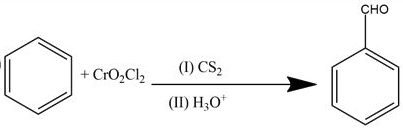
What is the product (s) formed when toulene reacts with Cl2Cl_2 in presence of anhydrous AlCl3AlCl_3 ?

Answer options
Option 3
Correct Answer
Explanation for 2025: 15 May Shift 2 CHE question 1

Q2:

Aldehydes, Ketones & Carboxylic Acids

Easy

Identify the correct IUPAC name of the given compound:
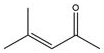
Figure

Answer options
Option 1
Correct Answer
Explanation for 2025: 15 May Shift 2 CHE question 2

Q3:

Coordination Compounds

Hard

Arrange the following complexes in increasing order of their magnetic moment

(A) [NiCl4]2−[NiCl_4]^{2-}

(B) [Fe(H2O)6]2+[Fe(H_2O)_6]^{2+}

(C) [Cr(H2O)6]3+[Cr(H_2O)_6]^{3+}

(D) [Co(C2O4)3]3−[Co(C_2O_4)_3]^{3-}

Answer options
Option 2
Correct Answer
Explanation for 2025: 15 May Shift 2 CHE question 3

Q4:

d & f Block Elements

Medium

Which of the following statements is incorrect?

Answer options
Option 3
Correct Answer
Explanation for 2025: 15 May Shift 2 CHE question 4

Q5:

Electrochemistry

Medium

Which of the statements given below are correct with reference to corrosion:

(A) Corrosion covers the surfaces of metallic objects with oxides or other salts.

(B) In corrosion, a metal is oxidised by the loss of electrons to oxygen and results in the formation of oxides.

(C) Rust is hydrated ferric oxide.

(D) A sacrificial electrode is used to save an object from corrosion.

Answer options
Option 3
Correct Answer
Explanation for 2025: 15 May Shift 2 CHE question 5

Q6:

Haloalkanes & Haloarenes

Medium

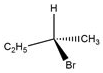
Which of the following compounds will give a pair of enantiomers upon nucleophilic substitution reaction with a hydroxideion?

Answer options
Option 1
Correct Answer
Explanation for 2025: 15 May Shift 2 CHE question 6

Q7:

Amines

Medium

Match List-I with List-II

List-IList-II
(Reaction Name)(Reaction )
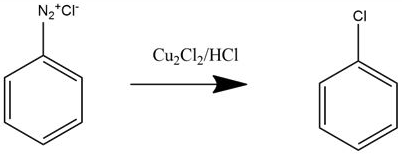
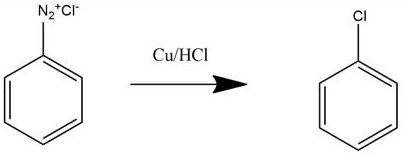
(A) Carbylamine reaction(I) RNH2+KOH+CHCl3⟶RNC+KCl+H2ORNH_2 + KOH + CHCl_3 \longrightarrow RNC + KCl + H_2O
(B) Gatterman Rection(II) Figure
(C) Sandmeyer reaction(III) RCONH2+NaOH+Br2⟶RNH2+NaBr+H2O+Na2CO3RCONH_2 + NaOH + Br_2 \longrightarrow RNH_2 + NaBr + H_2O + Na_2CO_3
(D) Hoffmann Bromamide reaction(IV) Figure
Answer options
Option 3
Correct Answer
Explanation for 2025: 15 May Shift 2 CHE question 7

Q8:

Haloalkanes & Haloarenes

Easy

Which of the following alkyl halide will undergo SN1S_N1 reaction fastest?

Answer options
Option 4
Correct Answer
Explanation for 2025: 15 May Shift 2 CHE question 8

Q9:

Electrochemistry

Medium

Four different electrolyte solutions with the concentrations given below have the same molar conductivity value of 1.29×10⁻⁴ S m2 mol−11.29 \times 10^{-4}\ S\ m^2\ mol^{-1}. Arrange them in increasing order of their conductivity values:

(A) 0.1 M

(B) 0.075 M

(C) 0.15 M

(D) 0.05 M

Answer options
Option 4
Correct Answer
Explanation for 2025: 15 May Shift 2 CHE question 9

Q10:

Biomolecules

Easy

Match List-I with List-II

List-IList-II
(Name of the molecule/drug)( Use/disease name)
(A) Thyroxine(I) Scurvy
(B) Ascorbic acid(II) Thyroid gland
(C) Steroid hormones(III) Identification of criminals
(D) DNA fingerprinting(IV) Adrenal cortex
Answer options

Q11:

Coordination Compounds

Medium

Match the complexes given in List-I with their properties given in List-II

List-IList-II
ComplexProperty
(A) [FeF6]3−[FeF_6]^{3-}(I) d6d^6, high spin
(B) [CoF6]3−[CoF_6]^{3-}(II) d5d^5, high spin
(C) [Mn(CN)6]3−[Mn(CN)_6]^{3-}(III) d6d^6, low spin
(D) [Co(CN)6]3−[Co(CN)_6]^{3-}(IV) d4d^4, low spin
Answer options

Q12:

Amines

Medium

Arrange the following in decreasing order of the basic character in aqueous phase

(A) Ethanamine

(B) Benzeneamine

(C) Phenylmethanamine

(D) N-methylaniline

Answer options

Q13:

Electrochemistry

Medium

For the following reaction, at equilibrium the Nernst equation may be written as:

Zn(s)+Cu2+(aq)→Zn2+(aq)+Cu(s)Zn(s) + Cu^{2+}(aq) \rightarrow Zn^{2+}(aq) + Cu(s)

Answer options

Q14:

d & f Block Elements

Medium

Thiosulphte S2O32−S_2O_3^{2-} is oxidized to .................. in presence of permanganate ion.

Answer options

Q15:

Coordination Compounds

Medium

The complex [Co(NH3)4(NO2)2]Cl[Co(NH_3)_4(NO_2)_2]Cl will show.......

(A) Linkage isomerism

(B) Ionization isomerism

(C) Coordination isomerism

(D) Geometrical isomerism

Answer options

Q16:

Aldehydes, Ketones & Carboxylic Acids

Medium

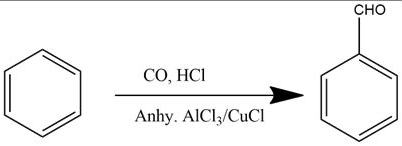
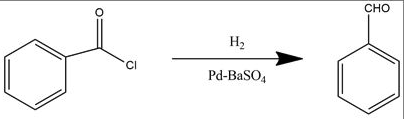
Match List-I with List-II

List-IList-II
(Reaction Name)(Reaction)
(A) Rosenmund Reaction(I) C6H5CN+SnCl2→(ii) H3O+(I) HClC6H5CHOC_6H_5CN + SnCl_2 \xrightarrow[(ii)\ H_3O^+]{(I)\ HCl} C_6H_5CHO
(B) Stephen Reaction(II) Figure
(C) Gattermann Koch Reaction(III) Figure
(D) Etard Reaction(IV) Figure
Answer options

Q18:

Amines

Medium

Choose the correct sequence of reagents to carry out the following conversion:
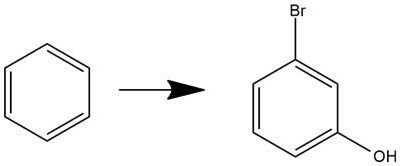
Figure

(A) Conc. HNO3HNO_3/Conc.H2SO4H_2SO_4

(B) Sn/HCl

(C) Br2/FeBr3Br_2/FeBr_3

(D) NaNO2NaNO_2/HCl; followed by boiling with water

Answer options

Q19:

Aldehydes, Ketones & Carboxylic Acids

Medium

Identify A and B in the following reaction.
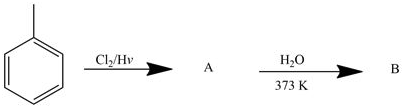
Figure

Answer options

Q20:

Coordination Compounds

Easy

In the process of extraction, gold combines with cyanide in the presence of oxygen and water to make a complex. The formula of the complex is

Answer options

Q21:

Biomolecules

Easy

Which of the following cannot be explained by the open chain structure of glucose?

Answer options

Q22:

Aldehydes, Ketones & Carboxylic Acids

Easy

The reagent involved in the Clemmensen reduction of a carbonyl compound is

Answer options

Q23:

Electrochemistry

Easy

The unit for molar conductivity is

Answer options

Q25:

d & f Block Elements

Medium

The calculated magnetic moment using the 'spin only' formula

μ=n(n+2)\mu = \sqrt{n(n+2)} for Cr2+Cr^{2+} and Fe2+Fe^{2+} respectively is

Answer options

Q26:

Biomolecules

Medium

DNA and RNA do not differ from each other in which of the following

Answer options

Q27:

Solutions

Easy

The boiling point elevation constant KbK_b is also known as:

Answer options

Q28:

Solutions

Medium

Calculate the mole fraction of ethanoic acid (CH3COOHCH_3COOH) in an aqueous solution containing 20 % of CH3COOHCH_3COOH by mass.

Answer options

Q29:

Biomolecules

Medium

Which of the following statements is(are) correct for amino acids ?

(A) Amino acids behave like salts

(B) In aqueous solution they form zwitter ion.

(C) Most naturally occurring amino acids exist in D configuration

(D) Tyrosine is a non-essential amino acid

Answer options

Q30:

Coordination Compounds

Medium

The IUPAC name of the complex K3[Fe(CN)5NO]K_3[Fe(CN)_5NO] is

Answer options

Q31:

Solutions

Easy

Which of the following statements regarding osmosis is not correct?

Answer options

Q32:

Alcohols, Phenols & Ethers

Medium

Pick the reactions which can be used to distinguish between n-propyl alcohol and isopropyl alcohol.

(A) Haloform reaction

(B) Dehydration

(C) Dehydrogenation with Cu/573 K

(D) Oxidation with CrO3CrO_3

Answer options

Q33:

d & f Block Elements

Medium

Match the property given in List-I with the element given in List-II

List-IList-II
PropertyElement
(A) lanthanoid, which can show +2 oxidation state(I) Pm
(B) Radioactive lanthanoid(II) Lu
(C) Lanthanoid which has 4f74f^7 electronic configuration in +3 oxidation state(III) Eu
(D) Lanthanoid which has 4f144f^{14} electronic configuration in +3 oxidation state(IV) Gd
Answer options

Q35:

Solutions

Easy

If you place blood cells in a solution containing more than 0.9% (mass/volume) sodium chloride, water will flow out of the cells and they will shrink. Such a solution is called

Answer options

Q36:

d & f Block Elements

Medium

Based on the data given below, which metal in its +2 oxidation state will not librate hydrogen from acids?

MetalVTiCoCr
E∘ (M3+/M2+)E^\circ\ (M^{3+}/M^{2+})-0.26-0.37+1.97-0.41
Answer options

Q37:

Biomolecules

Easy

Enzymes are biological catalysts. They accelerate biological reactions. Which of the following is not true about enzymes?

Answer options

Q38:

Aldehydes, Ketones & Carboxylic Acids

Medium

Which of the following will not respond to Fehling's Test?

(A) Benzaldehyde

(B) Acetone

(C) Acetaldehyde

(D) Acetophenone

Answer options

Q39:

Electrochemistry

Easy

The conductivity of electrolytic solutions does not depend upon

Answer options

Q40:

Solutions

Medium

1.02 g of the following substances are dissolved in 100 mL of water. Arrange them in increasing order of their molarity:

(A) NaCl

(B) KCl

(C) MgSO4MgSO_4

(D) NaOH

Answer options

Q41:

Chemical Kinetics

Easy

The number of reacting species (atoms, ions or molecules) taking part in an elementary reaction, which must collide simultaneously in order to bring about a chemical reaction is called molecularity of a reaction. In the rate equation

Rate = k [A]x [B]yk\,[A]^x\,[B]^y

x and y indicate how sensitive the rate is to the change in concentration of A and B, respectively. Sum of these exponents, i.e., x + y gives the overall order of a reaction where x and y represent the order with respect to the reactants A and B, respectively. Hence, the sum of powers of the concentration of the reactants in the rate law expression is called the order of that chemical reaction. For a first order reaction, the concentration of the reactant varies as [R]=[R]0e−kt[R] = [R]_0e^{-kt}.

The conversion of molecules X to Y follows second order kinetics. If the concentration of X is increased to four times, how does it affect the rate of formation of Y?

Answer options

Q42:

Chemical Kinetics

Easy

The number of reacting species (atoms, ions or molecules) taking part in an elementary reaction, which must collide simultaneously in order to bring about a chemical reaction is called molecularity of a reaction. In the rate equation

Rate = k [A]x [B]yk\,[A]^x\,[B]^y

x and y indicate how sensitive the rate is to the change in concentration of A and B, respectively. Sum of these exponents, i.e., x + y gives the overall order of a reaction where x and y represent the order with respect to the reactants A and B, respectively. Hence, the sum of powers of the concentration of the reactants in the rate law expression is called the order of that chemical reaction. For a first order reaction, the concentration of the reactant varies as [R]=[R]0e−kt[R] = [R]_0e^{-kt}.

Which of the following statements is not true for order of a reaction?

Answer options

Q43:

Chemical Kinetics

Easy

The number of reacting species (atoms, ions or molecules) taking part in an elementary reaction, which must collide simultaneously in order to bring about a chemical reaction is called molecularity of a reaction. In the rate equation

Rate = k [A]x [B]yk\,[A]^x\,[B]^y

x and y indicate how sensitive the rate is to the change in concentration of A and B, respectively. Sum of these exponents, i.e., x + y gives the overall order of a reaction where x and y represent the order with respect to the reactants A and B, respectively. Hence, the sum of powers of the concentration of the reactants in the rate law expression is called the order of that chemical reaction. For a first order reaction, the concentration of the reactant varies as [R]=[R]0e−kt[R] = [R]_0e^{-kt}.

The units of first and zero order rate constant of reactions are respectively:

Answer options

Q44:

Chemical Kinetics

Easy

The number of reacting species (atoms, ions or molecules) taking part in an elementary reaction, which must collide simultaneously in order to bring about a chemical reaction is called molecularity of a reaction. In the rate equation

Rate = k [A]x [B]yk\,[A]^x\,[B]^y

x and y indicate how sensitive the rate is to the change in concentration of A and B, respectively. Sum of these exponents, i.e., x + y gives the overall order of a reaction where x and y represent the order with respect to the reactants A and B, respectively. Hence, the sum of powers of the concentration of the reactants in the rate law expression is called the order of that chemical reaction. For a first order reaction, the concentration of the reactant varies as [R]=[R]0e−kt[R] = [R]_0e^{-kt}.

Which of the following is a zero order reaction?

Answer options

Q45:

Chemical Kinetics

Medium

The number of reacting species (atoms, ions or molecules) taking part in an elementary reaction, which must collide simultaneously in order to bring about a chemical reaction is called molecularity of a reaction. In the rate equation

Rate = k [A]x [B]yk\,[A]^x\,[B]^y

x and y indicate how sensitive the rate is to the change in concentration of A and B, respectively. Sum of these exponents, i.e., x + y gives the overall order of a reaction where x and y represent the order with respect to the reactants A and B, respectively. Hence, the sum of powers of the concentration of the reactants in the rate law expression is called the order of that chemical reaction. For a first order reaction, the concentration of the reactant varies as [R]=[R]0e−kt[R] = [R]_0e^{-kt}.

The initial concentration of N2O5N_2O_5 in the following first order reaction

N2O5(g)→2 NO2(g)+1/2O2 (g)N_2O_5(g) \rightarrow 2\ NO_2(g) + 1/2O_2\ (g)

was 1.2×10−21.2 \times 10^{-2} mol L−1L^{-1} at 298 K. The concentration of N2O5N_2O_5 after 30 minutes was 0.60×10−20.60 \times 10^{-2} mol L−1L^{-1}. Calculate the rate constant of the reaction at 298 K.

Answer options

Q46:

Alcohols, Phenols & Ethers

Easy

Alcohols are versatile compounds as they can act as both nucleophile and electrophiles. They undergo reactions based on cleavage of O-H and C-O bonds. The cleavage of O-H bond reflects the acidic character of alcohols. However they are weaker acids than water, phenol and carboxylic acids. Alkoxide ion formed by loss of proton from the OH group of alcohols react with water to form the corresponding conjugate acid - base pair. They act as Bronsted base due to presence of unshared electron pairs on oxygen.Both alcohols and phenol react with carboxylic acids, acid chlorides and anhydrides to form esters. The introduction of acetyl group in alcohols or phenol is known as acetylation. Alcohols react with hydrogen halides to form alkyl halides which form the basis of Lucas test. They also undergo acid catalyzed dehydration to form alkenes. Alcohols can be easily oxidized with variety of oxidizing agents. The nature of the product depends on the type of oxidizing agent and the nature of alcohol.

Pyridinium chlorochromate is used for:

Answer options

Q47:

Alcohols, Phenols & Ethers

Easy

Alcohols are versatile compounds as they can act as both nucleophile and electrophiles. They undergo reactions based on cleavage of O-H and C-O bonds. The cleavage of O-H bond reflects the acidic character of alcohols. However they are weaker acids than water, phenol and carboxylic acids. Alkoxide ion formed by loss of proton from the OH group of alcohols react with water to form the corresponding conjugate acid - base pair. They act as Bronsted base due to presence of unshared electron pairs on oxygen.Both alcohols and phenol react with carboxylic acids, acid chlorides and anhydrides to form esters. The introduction of acetyl group in alcohols or phenol is known as acetylation. Alcohols react with hydrogen halides to form alkyl halides which form the basis of Lucas test. They also undergo acid catalyzed dehydration to form alkenes. Alcohols can be easily oxidized with variety of oxidizing agents. The nature of the product depends on the type of oxidizing agent and the nature of alcohol.

Which of the following gives the correct sequential steps for dehydration of alcohol ?

Answer options

Q48:

Alcohols, Phenols & Ethers

Easy

Alcohols are versatile compounds as they can act as both nucleophile and electrophiles. They undergo reactions based on cleavage of O-H and C-O bonds. The cleavage of O-H bond reflects the acidic character of alcohols. However they are weaker acids than water, phenol and carboxylic acids. Alkoxide ion formed by loss of proton from the OH group of alcohols react with water to form the corresponding conjugate acid - base pair. They act as Bronsted base due to presence of unshared electron pairs on oxygen.Both alcohols and phenol react with carboxylic acids, acid chlorides and anhydrides to form esters. The introduction of acetyl group in alcohols or phenol is known as acetylation. Alcohols react with hydrogen halides to form alkyl halides which form the basis of Lucas test. They also undergo acid catalyzed dehydration to form alkenes. Alcohols can be easily oxidized with variety of oxidizing agents. The nature of the product depends on the type of oxidizing agent and the nature of alcohol.

Oxidation of alcohols involves formation of carbon oxygen double bond with

Answer options

Q49:

Alcohols, Phenols & Ethers

Medium

Alcohols are versatile compounds as they can act as both nucleophile and electrophiles. They undergo reactions based on cleavage of O-H and C-O bonds. The cleavage of O-H bond reflects the acidic character of alcohols. However they are weaker acids than water, phenol and carboxylic acids. Alkoxide ion formed by loss of proton from the OH group of alcohols react with water to form the corresponding conjugate acid - base pair. They act as Bronsted base due to presence of unshared electron pairs on oxygen.Both alcohols and phenol react with carboxylic acids, acid chlorides and anhydrides to form esters. The introduction of acetyl group in alcohols or phenol is known as acetylation. Alcohols react with hydrogen halides to form alkyl halides which form the basis of Lucas test. They also undergo acid catalyzed dehydration to form alkenes. Alcohols can be easily oxidized with variety of oxidizing agents. The nature of the product depends on the type of oxidizing agent and the nature of alcohol.

Identify the most acidic alcohol among the following:

Answer options

Q50:

Alcohols, Phenols & Ethers

Easy

Alcohols are versatile compounds as they can act as both nucleophile and electrophiles. They undergo reactions based on cleavage of O-H and C-O bonds. The cleavage of O-H bond reflects the acidic character of alcohols. However they are weaker acids than water, phenol and carboxylic acids. Alkoxide ion formed by loss of proton from the OH group of alcohols react with water to form the corresponding conjugate acid - base pair. They act as Bronsted base due to presence of unshared electron pairs on oxygen.Both alcohols and phenol react with carboxylic acids, acid chlorides and anhydrides to form esters. The introduction of acetyl group in alcohols or phenol is known as acetylation. Alcohols react with hydrogen halides to form alkyl halides which form the basis of Lucas test. They also undergo acid catalyzed dehydration to form alkenes. Alcohols can be easily oxidized with variety of oxidizing agents. The nature of the product depends on the type of oxidizing agent and the nature of alcohol.

Lucas reagent is

Answer options

CUET Chemistry 2025 15 May Shift 2 Past Year Question Paper

Every question from the CUET Chemistry 2025 15 May Shift 2 paper is here in full, with the correct answer and a step by step solution for each one. It is completely free, there is no login and no paywall, and you can read the whole paper online or download it to revise offline.

You can also attempt it instead of only reading it. Take the paper as a full length mock under exam conditions, or filter it by topic and attempt just that topic as a topic test. Both are free, and you get a breakdown of your accuracy, your timing and your weak areas once you submit.

CUET Chemistry past year questions (PYQs) are the closest thing to the real exam, so working through them is the quickest way to learn the paper pattern, the marking scheme and the level of difficulty to expect on the day.