Q1:

Haloalkanes & Haloarenes

Easy

The best reagent for preparing an alkyl chloride from an alcohol is

Answer options
Option 2
Correct Answer
Explanation for 2025: 13 May Shift 2 CHE question 1

Q2:

Alcohols, Phenols & Ethers

Medium

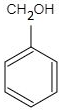
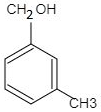
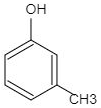
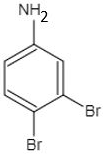
Which of the following compounds are aromatic alcohols?

(A). Figure
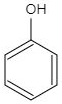
(B). Figure

(C). Figure

(D). Figure

Answer options
Option 2
Correct Answer
Explanation for 2025: 13 May Shift 2 CHE question 2

Q3:

Haloalkanes & Haloarenes

Medium

Reaction of C6H5CH2BrC_6H_5CH_2Br with aqueous sodium hydroxide follows

Answer options
Option 1
Correct Answer
Explanation for 2025: 13 May Shift 2 CHE question 3

Q5:

Solutions

Easy

Which of the following statements with reference to a solution are correct?

(A) the molarity of the solution changes with the change in the temperature.

(B) the volume of the solution changes with the change in the temperature.

(C) the molality of the solution changes with the change in the temperature.

(D) the normality of the solution changes with the change in the temperature.

Answer options
Option 1
Correct Answer
Explanation for 2025: 13 May Shift 2 CHE question 5

Q6:

Alcohols, Phenols & Ethers

Easy

Anisole on heating with concentrated HI gives

Answer options
Option 3
Correct Answer
Explanation for 2025: 13 May Shift 2 CHE question 6

Q7:

Chemical Kinetics

Easy

The reaction, where all the species involved are in same phase, is called

Answer options
Option 3
Correct Answer
Explanation for 2025: 13 May Shift 2 CHE question 7

Q8:

Solutions

Medium

Match List-I with List-II

List-IList-II
ElectrolytesExamples
(A) Non-electrolyte(I) Sucrose, Urea
(B) Binary electrolyte(II) KCl, CH3COOHCH_3COOH
(C) Quaternary electrolyte(III) H2SO4H_2SO_4, BaCl2BaCl_2
(D) Ternary electrolyte(IV) AlCl3AlCl_3, K3PO4K_3PO_4
Answer options
Option 3
Correct Answer
Explanation for 2025: 13 May Shift 2 CHE question 8

Q9:

Haloalkanes & Haloarenes

Easy

Arrange the following compounds in increasing order of their boiling points.

(A) Bromomethane

(B) Bromoform

(C) Chloromethane

(D) Dibromomethane

Answer options
Option 2
Correct Answer
Explanation for 2025: 13 May Shift 2 CHE question 9

Q10:

Biomolecules

Easy

Identify the incorrect statement for glucose

Answer options

Q11:

Coordination Compounds

Medium

Select the correct increasing order of conductivity of the given complexes in their solution _________

(A) [Co(NH3)6]Cl3[Co(NH_3)_6]Cl_3

(B) [Cr(NH3)5Cl]Cl2[Cr(NH_3)_5Cl]Cl_2

(C) [Co(NH3)4Cl2]Cl[Co(NH_3)_4Cl_2]Cl

(D) [Co(NH3)3Cl3][Co(NH_3)_3Cl_3]

Answer options

Q12:

Solutions

Medium

Arrange the following gases in the increasing order of their solubility in water at 298 K and atmospheric pressure.

(A) CH4CH_4 (KHK_H = 0.413 kbar)

(B) HCHO (KHK_H = 1.83×10−51.83 \times 10^{-5} kbar)

(C) He (KHK_H = 144.97 kbar)

(D) CO2CO_2 (KHK_H = 1.67 kbar)

Answer options

Q13:

Aldehydes, Ketones & Carboxylic Acids

Medium

Which of the following reagents will not convert Toluene into Benzaldehyde ?

Answer options

Q15:

Biomolecules

Easy

Match List-I with List-II

List-IList-II
Name of vitaminsDeficiency disease
(A) Vitamin A(I) Increase in Fragility of RBC
(B) Vitamin E(II) Increase blood clotting time
(C) Vitamin C(III) Xerophthalmia
(D) Vitamin K(IV) Scurvy
Answer options

Q16:

Chemical Kinetics

Easy

Why must the reacting molecules have a minimum energy for an effective collision?

Answer options

Q17:

Haloalkanes & Haloarenes

Easy

Arrange the following alkyl halides in order of increasing reactivity towards SN1SN^1 reaction.

(A) (CH3)3C−I(CH_3)_3C-I

(B) (CH3)3C−F(CH_3)_3C-F

(C) (CH3)3C−Br(CH_3)_3C-Br

(D) (CH3)3C−Cl(CH_3)_3C-Cl

Answer options

Q18:

Haloalkanes & Haloarenes

Medium

What is the total number of structural isomers possible for the compound with molecular formula C4H9BrC_4H_9Br?

Answer options

Q19:

Haloalkanes & Haloarenes

Medium

Match List-I with List-II

List-IList-II
CompoundsUses
(A) Dichloromethane(I) Freon R 22
(B) Trichloromethane(II) Synthesis of Chlorofluorocarbons
(C) Triiodomethane(III) Propellant
(D)Tetrachloromethane(IV) Antiseptic
Answer options

Q20:

Coordination Compounds

Medium

Which of the following statements is incorrect?

Answer options

Q21:

Alcohols, Phenols & Ethers

Medium

What is the product formed when tertiary alcohol is treated with alkaline KMnO4KMnO_4 at elevated temperature?

Answer options

Q23:

d & f Block Elements

Easy

Lanthanoids (Ln) when heated with nitrogen, form compounds of the type________

Answer options

Q24:

Coordination Compounds

Easy

sp3sp^3 hybridization leads to__________

Answer options

Q25:

Aldehydes, Ketones & Carboxylic Acids

Medium

Which of the following compound(s) does not react with Fehling solution?

(A) CH3CHOCH_3CHO

(B) Ph-CHO

(C) Glucose

(D) Figure

Answer options

Q26:

Aldehydes, Ketones & Carboxylic Acids

Easy

Match List-I with List-II

List-IList-II
Common nameIUPAC name
(A) Oxalic acid(I) Ethanedioic acid
(B) Adipic acid(II) Alpha - hydroxy propanoic acid
(C) Lactic acid(III) Hexanedioic acid
(D) Phthalic acid(IV) Benzene-1,2-dicarboxylic acid
Answer options

Q27:

Coordination Compounds

Medium

What is the structure of anionic coordination sphere in [Cr(NH3)6][CuCl5][Cr(NH_3)_6][CuCl_5] complex?

Answer options

Q29:

d & f Block Elements

Medium

Which of the following does not involve Pt as catalyst?

(A) contact process for making H2SO4H_2SO_4.

(B) Ziegler-Nata catalyst.

(C) Adams catalyst, used for reduction.

(D) catalyst to decompose KClO3KClO_3 to give O2O_2.

Answer options

Q30:

Chemical Kinetics

Medium

The half life of a first order reaction having rate constant, k=1.7×10⁻⁵ s−1k = 1.7 \times 10^{-5}\ s^{-1} is

Answer options

Q32:

Chemical Kinetics

Medium

The unit of rate constant of a reaction with the rate law, Rate = k[A]3/2[B]−1k[A]^{3/2}[B]^{-1} is

Answer options

Q33:

Chemical Kinetics

Easy

The correct statements for the activation energy of a reaction are :

(A) Activation energy is the energy difference between the activated complex and the total energy of the reactants.

(B) Higher is the activation energy, the faster is the rate of reaction.

(C) Catalyst increases the rate of the reaction by following the path of lower activation energy.

(D) In the Arrhenius equation, EaE_a corresponds to the activation energy

Answer options

Q34:

Solutions

Easy

Select the colligative property which is used in the calculation of molar mass of biomolecules.

Answer options

Q35:

Coordination Compounds

Easy

Which of the following complexes is heteroleptic?

Answer options

Q36:

Aldehydes, Ketones & Carboxylic Acids

Medium

Arrange the following compounds in increasing order of boiling point.

(A) Ethanol

(B) Diethyl ether

(C) Ethanal

(D) Ethane

Answer options

Q37:

d & f Block Elements

Medium

Match the lanthanoid property given in List-I with lanthanoid ion given in List-II

List-IList-II
(Lanthanoid Property)(Ion)
(A) Strong oxidant(I) Lu3+Lu^{3+}
(B) Strong Reducing agent(II) La3+La^{3+}
(C) [Xe]f14[Xe]f^{14} configuration(III) Ce4+Ce^{4+}
(D) largest ionic radii(IV) Eu2+Eu^{2+}
Answer options

Q38:

Aldehydes, Ketones & Carboxylic Acids

Easy

The chemical composition of Tollens' regent is

Answer options

Q39:

Solutions

Easy

The correct expression for the osmotic pressure of the solution involving dissociation of the solute is

Answer options

Q41:

Electrochemistry

Easy

When a metal is placed in a solution of its ions, the metal can lose electron and can go in the solution as ion or the metal ion in the solution can take electron from the electrode and get deposited as metal. Thus, the electrode acquires either positive or negative charge with respect to the solution leading to the development of a potential difference between the metal electrode and the solution. This potential difference is called the electrode potential of the metal. The electrode potential of a metal is a measure of relative tendency to undergo oxidation (loss of electron) or reduction (gain of electron). When the concentration of the ions in the solution is unity, the electrode potential is called standard electrode potential. The magnitude of potential depends upon the nature of electrode, concentration of ions in solution and the temperature. In a galvanic cell, the electrode at which oxidation occurs is known as anodic half-cell and the electrode at which reduction occurs is known as cathodic half cell. The emf of the cell in terms of standard reduction potential is given by Ecello=Ecathodeo−EanodeoE^{o}_{cell} = E^{o}_{cathode} - E^{o}_{anode}. The standard free energy change of the redox reaction taking place in the cell is related to EcelloE^{o}_{cell} by ΔGo=−nFEo\Delta G^{o} = -nFE^{o}. A redox reaction would occur spontaneously if the free energy change is negative. The equilibrium constant of the reaction is related to the standard free energy change by ΔGo=−RTln⁡K\Delta G^{o} = -RT \ln K.

The equilibrium constant of a feasible cell reaction is

Answer options

Q42:

Electrochemistry

Easy

When a metal is placed in a solution of its ions, the metal can lose electron and can go in the solution as ion or the metal ion in the solution can take electron from the electrode and get deposited as metal. Thus, the electrode acquires either positive or negative charge with respect to the solution leading to the development of a potential difference between the metal electrode and the solution. This potential difference is called the electrode potential of the metal. The electrode potential of a metal is a measure of relative tendency to undergo oxidation (loss of electron) or reduction (gain of electron). When the concentration of the ions in the solution is unity, the electrode potential is called standard electrode potential. The magnitude of potential depends upon the nature of electrode, concentration of ions in solution and the temperature. In a galvanic cell, the electrode at which oxidation occurs is known as anodic half-cell and the electrode at which reduction occurs is known as cathodic half cell. The emf of the cell in terms of standard reduction potential is given by Ecello=Ecathodeo−EanodeoE^{o}_{cell} = E^{o}_{cathode} - E^{o}_{anode}. The standard free energy change of the redox reaction taking place in the cell is related to EcelloE^{o}_{cell} by ΔGo=−nFEo\Delta G^{o} = -nFE^{o}. A redox reaction would occur spontaneously if the free energy change is negative. The equilibrium constant of the reaction is related to the standard free energy change by ΔGo=−RTln⁡K\Delta G^{o} = -RT \ln K.

The standard oxidation potentials E0E^0 for the half cell reactions are

Zn→Zn2++2e−Zn \rightarrow Zn^{2+} + 2e^- : E0E^0 = + 0.76 V

Fe→Fe2++2e−Fe \rightarrow Fe^{2+} + 2e^- : E0E^0 = + 0.41 V

The emf of cell Fe2++Zn→Zn2++FeFe^{2+} + Zn \rightarrow Zn^{2+} + Fe is________

Answer options

Q43:

Electrochemistry

Medium

When a metal is placed in a solution of its ions, the metal can lose electron and can go in the solution as ion or the metal ion in the solution can take electron from the electrode and get deposited as metal. Thus, the electrode acquires either positive or negative charge with respect to the solution leading to the development of a potential difference between the metal electrode and the solution. This potential difference is called the electrode potential of the metal. The electrode potential of a metal is a measure of relative tendency to undergo oxidation (loss of electron) or reduction (gain of electron). When the concentration of the ions in the solution is unity, the electrode potential is called standard electrode potential. The magnitude of potential depends upon the nature of electrode, concentration of ions in solution and the temperature. In a galvanic cell, the electrode at which oxidation occurs is known as anodic half-cell and the electrode at which reduction occurs is known as cathodic half cell. The emf of the cell in terms of standard reduction potential is given by Ecello=Ecathodeo−EanodeoE^{o}_{cell} = E^{o}_{cathode} - E^{o}_{anode}. The standard free energy change of the redox reaction taking place in the cell is related to EcelloE^{o}_{cell} by ΔGo=−nFEo\Delta G^{o} = -nFE^{o}. A redox reaction would occur spontaneously if the free energy change is negative. The equilibrium constant of the reaction is related to the standard free energy change by ΔGo=−RTln⁡K\Delta G^{o} = -RT \ln K.

The measured potential for

Ag++e−→Ag(s)Ag^+ + e^- \rightarrow Ag(s)

does not change with

Answer options

Q44:

Electrochemistry

Easy

When a metal is placed in a solution of its ions, the metal can lose electron and can go in the solution as ion or the metal ion in the solution can take electron from the electrode and get deposited as metal. Thus, the electrode acquires either positive or negative charge with respect to the solution leading to the development of a potential difference between the metal electrode and the solution. This potential difference is called the electrode potential of the metal. The electrode potential of a metal is a measure of relative tendency to undergo oxidation (loss of electron) or reduction (gain of electron). When the concentration of the ions in the solution is unity, the electrode potential is called standard electrode potential. The magnitude of potential depends upon the nature of electrode, concentration of ions in solution and the temperature. In a galvanic cell, the electrode at which oxidation occurs is known as anodic half-cell and the electrode at which reduction occurs is known as cathodic half cell. The emf of the cell in terms of standard reduction potential is given by Ecello=Ecathodeo−EanodeoE^{o}_{cell} = E^{o}_{cathode} - E^{o}_{anode}. The standard free energy change of the redox reaction taking place in the cell is related to EcelloE^{o}_{cell} by ΔGo=−nFEo\Delta G^{o} = -nFE^{o}. A redox reaction would occur spontaneously if the free energy change is negative. The equilibrium constant of the reaction is related to the standard free energy change by ΔGo=−RTln⁡K\Delta G^{o} = -RT \ln K.

The standard reduction potential of Zinc is represented by the reaction

Answer options

Q45:

Electrochemistry

Easy

When a metal is placed in a solution of its ions, the metal can lose electron and can go in the solution as ion or the metal ion in the solution can take electron from the electrode and get deposited as metal. Thus, the electrode acquires either positive or negative charge with respect to the solution leading to the development of a potential difference between the metal electrode and the solution. This potential difference is called the electrode potential of the metal. The electrode potential of a metal is a measure of relative tendency to undergo oxidation (loss of electron) or reduction (gain of electron). When the concentration of the ions in the solution is unity, the electrode potential is called standard electrode potential. The magnitude of potential depends upon the nature of electrode, concentration of ions in solution and the temperature. In a galvanic cell, the electrode at which oxidation occurs is known as anodic half-cell and the electrode at which reduction occurs is known as cathodic half cell. The emf of the cell in terms of standard reduction potential is given by Ecello=Ecathodeo−EanodeoE^{o}_{cell} = E^{o}_{cathode} - E^{o}_{anode}. The standard free energy change of the redox reaction taking place in the cell is related to EcelloE^{o}_{cell} by ΔGo=−nFEo\Delta G^{o} = -nFE^{o}. A redox reaction would occur spontaneously if the free energy change is negative. The equilibrium constant of the reaction is related to the standard free energy change by ΔGo=−RTln⁡K\Delta G^{o} = -RT \ln K.

The half cell reaction is the one that

Answer options

Q46:

Amines

Easy

Amines are considered as derivatives of ammonia obtained by replacement of hydrogen atoms with alkyl or aryl groups. In nature they occur among proteins, vitamins, alkaloids and hormones. These can be primary, secondary or tertiary depending on the number of hydrogen groups replaced. They can be prepared from nitro compounds, alkyl halides, nitriles , amides etc. Due to unshared pair of electrons they behave as Lewis bases. Influence of the number of hydrogen atoms at nitrogen atom is displayed in physical properties such as solubility, boiling point and chemical reactions including basicity. Basic character of amines is expressed in terms of their KbK_b and pKbpK_b values. Three classes of amines can be distinguished with p-toluene sulphonyl chloride which reacts with primary and secondary amines. Amino group when attached to benzene ring behaves as an activating and ortho para directing group.

Which of the following reaction is not given by aniline?

Answer options

Q47:

Amines

Easy

Amines are considered as derivatives of ammonia obtained by replacement of hydrogen atoms with alkyl or aryl groups. In nature they occur among proteins, vitamins, alkaloids and hormones. These can be primary, secondary or tertiary depending on the number of hydrogen groups replaced. They can be prepared from nitro compounds, alkyl halides, nitriles , amides etc. Due to unshared pair of electrons they behave as Lewis bases. Influence of the number of hydrogen atoms at nitrogen atom is displayed in physical properties such as solubility, boiling point and chemical reactions including basicity. Basic character of amines is expressed in terms of their KbK_b and pKbpK_b values. Three classes of amines can be distinguished with p-toluene sulphonyl chloride which reacts with primary and secondary amines. Amino group when attached to benzene ring behaves as an activating and ortho para directing group.

Which of the following is a tertiary amine?

Answer options

Q48:

Amines

Medium

Amines are considered as derivatives of ammonia obtained by replacement of hydrogen atoms with alkyl or aryl groups. In nature they occur among proteins, vitamins, alkaloids and hormones. These can be primary, secondary or tertiary depending on the number of hydrogen groups replaced. They can be prepared from nitro compounds, alkyl halides, nitriles , amides etc. Due to unshared pair of electrons they behave as Lewis bases. Influence of the number of hydrogen atoms at nitrogen atom is displayed in physical properties such as solubility, boiling point and chemical reactions including basicity. Basic character of amines is expressed in terms of their KbK_b and pKbpK_b values. Three classes of amines can be distinguished with p-toluene sulphonyl chloride which reacts with primary and secondary amines. Amino group when attached to benzene ring behaves as an activating and ortho para directing group.

Which reagent is used for the conversion of acetamide into ethylamine?

Answer options

Q49:

Amines

Easy

Amines are considered as derivatives of ammonia obtained by replacement of hydrogen atoms with alkyl or aryl groups. In nature they occur among proteins, vitamins, alkaloids and hormones. These can be primary, secondary or tertiary depending on the number of hydrogen groups replaced. They can be prepared from nitro compounds, alkyl halides, nitriles , amides etc. Due to unshared pair of electrons they behave as Lewis bases. Influence of the number of hydrogen atoms at nitrogen atom is displayed in physical properties such as solubility, boiling point and chemical reactions including basicity. Basic character of amines is expressed in terms of their KbK_b and pKbpK_b values. Three classes of amines can be distinguished with p-toluene sulphonyl chloride which reacts with primary and secondary amines. Amino group when attached to benzene ring behaves as an activating and ortho para directing group.

Which amine will have highest pKbpK_b value?

Answer options

Q50:

Amines

Easy

Amines are considered as derivatives of ammonia obtained by replacement of hydrogen atoms with alkyl or aryl groups. In nature they occur among proteins, vitamins, alkaloids and hormones. These can be primary, secondary or tertiary depending on the number of hydrogen groups replaced. They can be prepared from nitro compounds, alkyl halides, nitriles , amides etc. Due to unshared pair of electrons they behave as Lewis bases. Influence of the number of hydrogen atoms at nitrogen atom is displayed in physical properties such as solubility, boiling point and chemical reactions including basicity. Basic character of amines is expressed in terms of their KbK_b and pKbpK_b values. Three classes of amines can be distinguished with p-toluene sulphonyl chloride which reacts with primary and secondary amines. Amino group when attached to benzene ring behaves as an activating and ortho para directing group.

Give the IUPAC name of the compound

Figure

Answer options

CUET Chemistry 2025 13 May Shift 2 Past Year Question Paper

Every question from the CUET Chemistry 2025 13 May Shift 2 paper is here in full, with the correct answer and a step by step solution for each one. It is completely free, there is no login and no paywall, and you can read the whole paper online or download it to revise offline.

You can also attempt it instead of only reading it. Take the paper as a full length mock under exam conditions, or filter it by topic and attempt just that topic as a topic test. Both are free, and you get a breakdown of your accuracy, your timing and your weak areas once you submit.

CUET Chemistry past year questions (PYQs) are the closest thing to the real exam, so working through them is the quickest way to learn the paper pattern, the marking scheme and the level of difficulty to expect on the day.