
Anisole on heating with concentrated HI gives
Anisole on heating with concentrated HI gives
Solution
Anisole () is a mixed alkyl aryl ether. With HI, the ether oxygen is protonated, and attacks the smaller, less hindered alkyl carbon (the methyl group) by an path.
The bond is not broken. Its carbon is hybridised and has partial double bond character from resonance of the oxygen lone pair with the ring. So the products are phenol and methyl iodide.
Options 1 and 2: iodobenzene would need cleavage of the aryl C-O bond, which does not happen. A phenyl cation is also unstable, and cannot attack the carbon by .
Option 4: methanol would form only if ended up on the phenyl ring. In concentrated HI, the methyl group is converted to , not an alcohol.
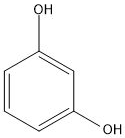
Phenol does not react further with HI to give iodobenzene, because the C-O bond of phenol is also strong.
Related questions:
2026: 7 June Shift 2


2025: 24 May Shift 2
2025: 30 May Shift 1
2025: 19 May Shift 2