
Arrange the following in increasing order of basic strength in aqueous solution :
(A)
(B)
(C)
(D)
Arrange the following in increasing order of basic strength in aqueous solution :
(A)
(B)
(C)
(D)
Solution
Basic strength depends on how available the nitrogen lone pair is for accepting a proton.
The order of increasing basic strength is:
(A) : the lone pair is delocalised into the benzene ring by resonance, so it is the weakest base.
(D) : no alkyl groups and no resonance, so it is stronger than aniline.
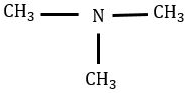
(B) : the +I effect of one ethyl group increases electron density on N, so it is stronger than .
(C) : two ethyl groups push more electron density onto N, and the resulting cation is stabilised by hydration, so it is the strongest base.
Option 4: it places below ethylamine correctly, but wrongly puts ethylamine below aniline, which ignores resonance in aniline.
Options 2 and 3: they place aniline correctly but put as the strongest base or reverse (B) and (C), ignoring the +I effect of alkyl groups.
Related questions:
2025: 27 May Shift 2
2025: 13 May Shift 1
2026: 12 May Shift 2
2025: 27 May Shift 2
2026: 14 May Shift 2