CUET Chemistry: ChemistryAldehydes, Ketones & Carboxylic Acids. Free, no login required.

Q1:

2026: 19 May Shift 2

Aldehydes, Ketones & Carboxylic Acids

Medium

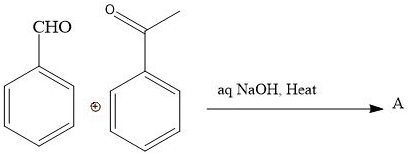
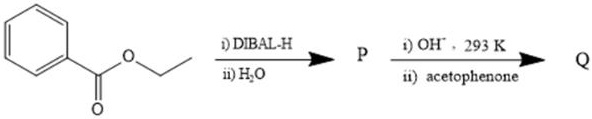
Which of the following reactions does not produce ketone?

Answer options
Option 2
Correct Answer
Explanation for 2026: 19 May Shift 2 CHE question 1

Q2:

2026: 19 May Shift 2

Aldehydes, Ketones & Carboxylic Acids

Medium

Arrange the following carbonyl compounds in decreasing order of their reactivity toward hydrogen cyanide.

A. Benzaldehyde

B. Acetone

C. Formaldehyde

D. Benzophenone

Answer options
Option 4
Correct Answer
Explanation for 2026: 19 May Shift 2 CHE question 2

Q3:

2026: 19 May Shift 2

Aldehydes, Ketones & Carboxylic Acids

Medium

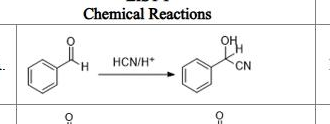
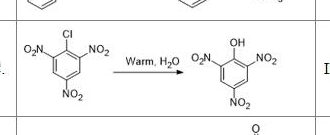
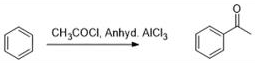
Match LIST-I with LIST-II.

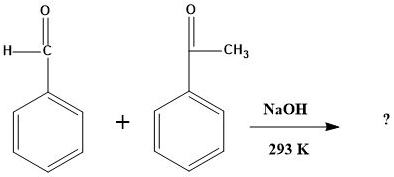
LIST-I Chemical ReactionsLIST-II Type of Reactions
A.FigureI.Electrophilic substitution reaction
B.FigureII.Nucleophilic substitution reaction
C.FigureIII.Nucleophilic addition reaction
D.FigureIV.Oxidation
Answer options
Option 3
Correct Answer
Explanation for 2026: 19 May Shift 2 CHE question 3

Q4:

2026: 19 May Shift 1

Aldehydes, Ketones & Carboxylic Acids

Easy

Cyclohexanecarbaldehyde reacts with zinc-amalgam in the presence of concentrated hydrochloric acid to give the compound X. The compound X is

Answer options
Option 4
Correct Answer
Explanation for 2026: 19 May Shift 1 CHE question 4

Q6:

2026: 19 May Shift 1

Aldehydes, Ketones & Carboxylic Acids

Easy

Identify the final product of the following reaction

C6H5CH3+CrO2Cl2→H3O+CS2C_6H_5CH_3 + CrO_2Cl_2 \xrightarrow[H_3O^{+}]{CS_2}

Answer options
Option 1
Correct Answer
Explanation for 2026: 19 May Shift 1 CHE question 6

Q7:

2026: 19 May Shift 1

Aldehydes, Ketones & Carboxylic Acids

Medium

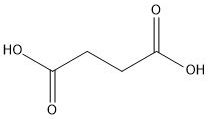
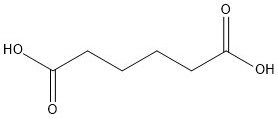
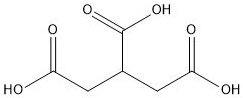
Match List-I with List-II

List IList II
Chemical nameChemical formula
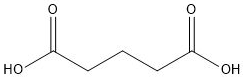
(A) Adipic acid(I) Figure
(B) Succinic acid(II) Figure
(C) Glutaric acid(III) Figure
(D) Carballylic acid(IV) Figure
Answer options
Option 2
Correct Answer
Explanation for 2026: 19 May Shift 1 CHE question 7

Q8:

2026: 19 May Shift 1

Aldehydes, Ketones & Carboxylic Acids

Easy

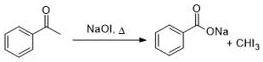
Which of the following ketones does not give haloform reaction?

Answer options
Option 2
Correct Answer
Explanation for 2026: 19 May Shift 1 CHE question 8

Q9:

2026: 18 May Shift 2

Aldehydes, Ketones & Carboxylic Acids

Medium

Arrange the following groups in increasing order of their electron withdrawing tendency?

A. –CN

B. –CF3CF_3

C. –NO2NO_2

D. -Ph

Answer options
Option 1
Correct Answer
Explanation for 2026: 18 May Shift 2 CHE question 9

Q12:

2026: 18 May Shift 2

Aldehydes, Ketones & Carboxylic Acids

Medium

The addition of hydrogen cyanide to carbonyl carbon is an example of a nucleophilic addition reaction. Identify the CORRECT statements from the following.

A. The hybridization of carbonyl carbon changes from sp2sp^2 to sp3sp^3 after the attack of CN−CN^- to the carbonyl center.

B. It results in the formation of tetrahedral intermediate.

C. The reaction is acid catalysed.

D. Cyanohydrins are formed, which are useful synthetic intermediates.

Answer options

Q13:

2026: 18 May Shift 2

Aldehydes, Ketones & Carboxylic Acids

Easy

Which of the following compounds will give positive iodoform test?

Answer options

Q14:

2026: 18 May Shift 1

Aldehydes, Ketones & Carboxylic Acids

Medium

The reagent(s) required to carry out the following conversion are
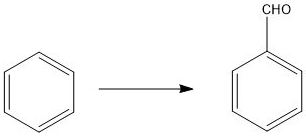
Figure

Answer options

Q16:

2026: 18 May Shift 1

Aldehydes, Ketones & Carboxylic Acids

Easy

The hybridization of carbonyl carbon changes from ...... to ..........in a nucleophilic addition reaction.

Answer options

Q17:

2026: 18 May Shift 1

Aldehydes, Ketones & Carboxylic Acids

Medium

The carbonyl (C=O) group in aldehydes and ketones reduces into alcohols in the presence of which of the following reagents.

(A) LiAlH4LiAlH_4

(B) NaBH4NaBH_4

(C) CrO3CrO_3-H2SO4H_2SO_4

(D) Grignard reagents.

Answer options

Q18:

2026: 18 May Shift 1

Aldehydes, Ketones & Carboxylic Acids

Medium

The aldehyde group is converted into carboxylic acid in the presence of

(A) aqueous copper sulfate and alkaline sodium potassium tartarate.

(B) Freshly prepared ammonical silver nitrate solution.

(C) Lithium aluminium hydride.

(D) H2H_2 and Palladium on barium sulphate.

Answer options

Q19:

2026: 18 May Shift 1

Aldehydes, Ketones & Carboxylic Acids

Medium

Arrange the following compounds in the increasing order of their boiling points.

(A) n-Butane

(B) Propanol

(C) Propanal

(D) Acetone

Answer options

Q20:

2026: 15 May Shift 1

Aldehydes, Ketones & Carboxylic Acids

Easy

Give IUPAC name of the following compound:
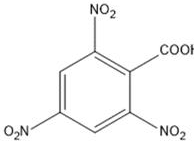
Figure

Answer options

Q21:

2026: 15 May Shift 1

Aldehydes, Ketones & Carboxylic Acids

Easy

Carboxylic Acids: Types of Reactions

Carboxylic acid exhibits a number of reactions depending on the involvement of a specific part of the -COOH group. It mainly includes nucleophilic acyl substitution reaction, in which a hydroxy group of -COOH is replaced by another nucleophile, and the acidic behavior of carboxylic acids, which is due to the cleavage of O-H bond in -COOH group. The former reaction leads to the conversion of carboxylic acid into a variety of different derivatives/categories of organic compounds, whereas the later converts it into salts which find applications in many industries, like soap and detergent synthesis and pharmaceutical industries. Other important types of chemical reactions involve reduction of -COOH group, decarboxylation, electrolysis and substitution reactions in the hydrocarbon part at α-carbon atom.

Which of the following carboxylic acid has the highest pKa\mathrm{pK_a} value?

Answer options

Q22:

2026: 15 May Shift 1

Aldehydes, Ketones & Carboxylic Acids

Easy

Carboxylic Acids: Types of Reactions

Carboxylic acid exhibits a number of reactions depending on the involvement of a specific part of the -COOH group. It mainly includes nucleophilic acyl substitution reaction, in which a hydroxy group of -COOH is replaced by another nucleophile, and the acidic behavior of carboxylic acids, which is due to the cleavage of O-H bond in -COOH group. The former reaction leads to the conversion of carboxylic acid into a variety of different derivatives/categories of organic compounds, whereas the later converts it into salts which find applications in many industries, like soap and detergent synthesis and pharmaceutical industries. Other important types of chemical reactions involve reduction of -COOH group, decarboxylation, electrolysis and substitution reactions in the hydrocarbon part at α-carbon atom.

Which of the following reagent is most preferred for converting RCOOH into RCOCl ?

Answer options

Q23:

2026: 15 May Shift 1

Aldehydes, Ketones & Carboxylic Acids

Easy

Carboxylic Acids: Types of Reactions

Carboxylic acid exhibits a number of reactions depending on the involvement of a specific part of the -COOH group. It mainly includes nucleophilic acyl substitution reaction, in which a hydroxy group of -COOH is replaced by another nucleophile, and the acidic behavior of carboxylic acids, which is due to the cleavage of O-H bond in -COOH group. The former reaction leads to the conversion of carboxylic acid into a variety of different derivatives/categories of organic compounds, whereas the later converts it into salts which find applications in many industries, like soap and detergent synthesis and pharmaceutical industries. Other important types of chemical reactions involve reduction of -COOH group, decarboxylation, electrolysis and substitution reactions in the hydrocarbon part at α-carbon atom.

Identify the correct product of the following reaction:
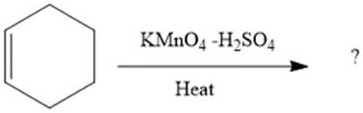
Figure

Answer options

Q24:

2026: 15 May Shift 1

Aldehydes, Ketones & Carboxylic Acids

Hard

Carboxylic Acids: Types of Reactions

Carboxylic acid exhibits a number of reactions depending on the involvement of a specific part of the -COOH group. It mainly includes nucleophilic acyl substitution reaction, in which a hydroxy group of -COOH is replaced by another nucleophile, and the acidic behavior of carboxylic acids, which is due to the cleavage of O-H bond in -COOH group. The former reaction leads to the conversion of carboxylic acid into a variety of different derivatives/categories of organic compounds, whereas the later converts it into salts which find applications in many industries, like soap and detergent synthesis and pharmaceutical industries. Other important types of chemical reactions involve reduction of -COOH group, decarboxylation, electrolysis and substitution reactions in the hydrocarbon part at α-carbon atom.

Oxidation of 5-methylhexan-3-one using strong oxidising agent KMnO4\mathrm{KMnO_4} results in formation of which of the following mixture of acids ?

Answer options

Q25:

2026: 15 May Shift 1

Aldehydes, Ketones & Carboxylic Acids

Easy

Carboxylic Acids: Types of Reactions

Carboxylic acid exhibits a number of reactions depending on the involvement of a specific part of the -COOH group. It mainly includes nucleophilic acyl substitution reaction, in which a hydroxy group of -COOH is replaced by another nucleophile, and the acidic behavior of carboxylic acids, which is due to the cleavage of O-H bond in -COOH group. The former reaction leads to the conversion of carboxylic acid into a variety of different derivatives/categories of organic compounds, whereas the later converts it into salts which find applications in many industries, like soap and detergent synthesis and pharmaceutical industries. Other important types of chemical reactions involve reduction of -COOH group, decarboxylation, electrolysis and substitution reactions in the hydrocarbon part at α-carbon atom.

Which of the following will give Cannizzaro reaction?

Answer options

Q26:

2026: 14 May Shift 2

Aldehydes, Ketones & Carboxylic Acids

Easy

Benzaldehyde cannot be prepared by

Answer options

Q27:

2026: 14 May Shift 2

Aldehydes, Ketones & Carboxylic Acids

Easy

Match the LIST-I with LIST-II.

LIST-I (Name Reaction)LIST-II (Transformation)
A.Rosenmund reductionI.Benzonitrile to benzaldehyde
B.Etard reactionII.Benzene to benzaldehyde
C.Gatterman-Koch reactionIII.Benzoyl chloride to benzaldehyde
D.Stephen reactionIV.Toluene to benzaldehyde
Answer options

Q29:

2026: 14 May Shift 2

Aldehydes, Ketones & Carboxylic Acids

Medium

Propionitrile when treated with phenyl magnesium bromide followed by acidic hydrolysis gives (P) which further undergoes Clemmensen reduction to give

Answer options

Q30:

2026: 12 May Shift 2

Aldehydes, Ketones & Carboxylic Acids

Easy

Relative acidic strength of Carboxylic acids and their derivatives

Carboxylic acids are weak acids. Mineral acids like HCl or HNO3_3 are very strong acids and non-edible, but many carboxylic acids are edible acids. Carboxylic acids are more acidic than phenol. The conjugate base of carboxylic acid is stabilized by two equivalent resonating structures in which the negative charge is at the more electronegative oxygen atom. Electron withdrawing group (EWG) increases the acidity of carboxylic acids while electron donating group (EDG) decreases the acidic strength of carboxylic acids. The acidic nature of carboxylic acid is also affected by direct attachment of groups such as phenyl or vinyl to the carboxylic acid. They increase the acidity of corresponding carboxylic acids.

It is due to the greater electronegativity of sp2^2 hybridized carbon to which carboxylic carbon is attached. This acidic character of carboxylic acid is based on its pKa values. The smaller the pka values, the stronger the acid. The effect of the following groups in increasing acidic order is

Ph < I < Br < Cl < F < CN < NO2_2 < CF3_3

Among the following acids, which acid is the strongest acid ?

CF3COOH\mathrm{CF_3COOH}, CCl3COOH\mathrm{CCl_3COOH}, CH3COOH\mathrm{CH_3COOH}, HCOOH

Answer options