CUET Chemistry: ChemistryAldehydes, Ketones & Carboxylic Acids. Free, no login required.

Q1:

2026: 12 May Shift 2

Aldehydes, Ketones & Carboxylic Acids

Medium

Relative acidic strength of Carboxylic acids and their derivatives

Carboxylic acids are weak acids. Mineral acids like HCl or HNO3_3 are very strong acids and non-edible, but many carboxylic acids are edible acids. Carboxylic acids are more acidic than phenol. The conjugate base of carboxylic acid is stabilized by two equivalent resonating structures in which the negative charge is at the more electronegative oxygen atom. Electron withdrawing group (EWG) increases the acidity of carboxylic acids while electron donating group (EDG) decreases the acidic strength of carboxylic acids. The acidic nature of carboxylic acid is also affected by direct attachment of groups such as phenyl or vinyl to the carboxylic acid. They increase the acidity of corresponding carboxylic acids.

It is due to the greater electronegativity of sp2^2 hybridized carbon to which carboxylic carbon is attached. This acidic character of carboxylic acid is based on its pKa values. The smaller the pka values, the stronger the acid. The effect of the following groups in increasing acidic order is

Ph < I < Br < Cl < F < CN < NO2_2 < CF3_3

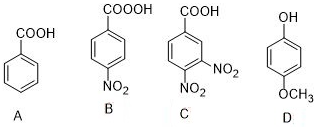
Among the following aromatic acids, which one is the least acidic in nature?
Figure

Answer options
Option 4
Correct Answer
Explanation for 2026: 12 May Shift 2 CHE question 1

Q2:

2026: 12 May Shift 2

Aldehydes, Ketones & Carboxylic Acids

Easy

Relative acidic strength of Carboxylic acids and their derivatives

Carboxylic acids are weak acids. Mineral acids like HCl or HNO3_3 are very strong acids and non-edible, but many carboxylic acids are edible acids. Carboxylic acids are more acidic than phenol. The conjugate base of carboxylic acid is stabilized by two equivalent resonating structures in which the negative charge is at the more electronegative oxygen atom. Electron withdrawing group (EWG) increases the acidity of carboxylic acids while electron donating group (EDG) decreases the acidic strength of carboxylic acids. The acidic nature of carboxylic acid is also affected by direct attachment of groups such as phenyl or vinyl to the carboxylic acid. They increase the acidity of corresponding carboxylic acids.

It is due to the greater electronegativity of sp2^2 hybridized carbon to which carboxylic carbon is attached. This acidic character of carboxylic acid is based on its pKa values. The smaller the pka values, the stronger the acid. The effect of the following groups in increasing acidic order is

Ph < I < Br < Cl < F < CN < NO2_2 < CF3_3

Identify the strongest acid among, 4-methoxy benzoic acid, benzoic acid, acetic acid and 4-nitrobenzoic acid

Answer options
Option 1
Correct Answer
Explanation for 2026: 12 May Shift 2 CHE question 2

Q3:

2026: 12 May Shift 2

Aldehydes, Ketones & Carboxylic Acids

Medium

Relative acidic strength of Carboxylic acids and their derivatives

Carboxylic acids are weak acids. Mineral acids like HCl or HNO3_3 are very strong acids and non-edible, but many carboxylic acids are edible acids. Carboxylic acids are more acidic than phenol. The conjugate base of carboxylic acid is stabilized by two equivalent resonating structures in which the negative charge is at the more electronegative oxygen atom. Electron withdrawing group (EWG) increases the acidity of carboxylic acids while electron donating group (EDG) decreases the acidic strength of carboxylic acids. The acidic nature of carboxylic acid is also affected by direct attachment of groups such as phenyl or vinyl to the carboxylic acid. They increase the acidity of corresponding carboxylic acids.

It is due to the greater electronegativity of sp2^2 hybridized carbon to which carboxylic carbon is attached. This acidic character of carboxylic acid is based on its pKa values. The smaller the pka values, the stronger the acid. The effect of the following groups in increasing acidic order is

Ph < I < Br < Cl < F < CN < NO2_2 < CF3_3

Which of the following conditions will not result in esterification ?

Answer options
Option 4
Correct Answer
Explanation for 2026: 12 May Shift 2 CHE question 3

Q4:

2026: 12 May Shift 2

Aldehydes, Ketones & Carboxylic Acids

Easy

Relative acidic strength of Carboxylic acids and their derivatives

Carboxylic acids are weak acids. Mineral acids like HCl or HNO3_3 are very strong acids and non-edible, but many carboxylic acids are edible acids. Carboxylic acids are more acidic than phenol. The conjugate base of carboxylic acid is stabilized by two equivalent resonating structures in which the negative charge is at the more electronegative oxygen atom. Electron withdrawing group (EWG) increases the acidity of carboxylic acids while electron donating group (EDG) decreases the acidic strength of carboxylic acids. The acidic nature of carboxylic acid is also affected by direct attachment of groups such as phenyl or vinyl to the carboxylic acid. They increase the acidity of corresponding carboxylic acids.

It is due to the greater electronegativity of sp2^2 hybridized carbon to which carboxylic carbon is attached. This acidic character of carboxylic acid is based on its pKa values. The smaller the pka values, the stronger the acid. The effect of the following groups in increasing acidic order is

Ph < I < Br < Cl < F < CN < NO2_2 < CF3_3

What is the IUPAC name of the following acid?

CH3−CH2−CH(Br)−COOH\mathrm{CH_3{-}CH_2{-}CH(Br){-}COOH}

Answer options
Option 3
Correct Answer
Explanation for 2026: 12 May Shift 2 CHE question 4

Q5:

2026: 11 May Shift 1

Aldehydes, Ketones & Carboxylic Acids

Easy

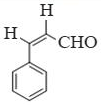
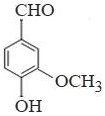
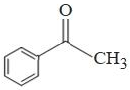
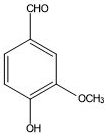
Match List-I compounds with their structures in List-II.

LIST-I (Name of the compound)LIST-II (Structure)
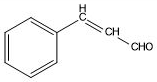
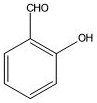
A.AcetophenoneI.Figure
B.VanillinII.Figure
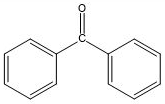
C.SalicylaldehydeIII.Figure
D.CinnamaldehydeIV.Figure
Answer options
Option 1
Correct Answer
Explanation for 2026: 11 May Shift 1 CHE question 5

Q6:

2026: 11 May Shift 1

Aldehydes, Ketones & Carboxylic Acids

Medium

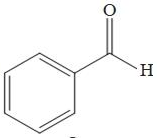
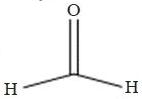
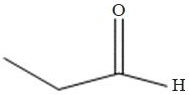
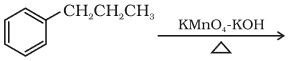
Arrange the following compounds in decreasing order of the reactivity towards nucleophilic addition reaction.

A. Figure
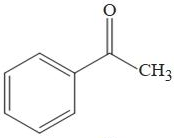
B. Figure

C. Figure

D. Figure

Answer options
Option 2
Correct Answer
Explanation for 2026: 11 May Shift 1 CHE question 6

Q7:

2026: 11 May Shift 1

Aldehydes, Ketones & Carboxylic Acids

Easy

The reagents used in the Gatterman-Koch reaction for the synthesis of benzaldehyde from benzene are

Answer options
Option 4
Correct Answer
Explanation for 2026: 11 May Shift 1 CHE question 7

Q8:

2026: 11 May Shift 1

Aldehydes, Ketones & Carboxylic Acids

Easy

Reaction of toluene with CrO2Cl2\mathrm{CrO_2Cl_2} in CS2\mathrm{CS_2} followed by acidic hydrolysis gave compound A . The structure of compound A is

Answer options
Option 1
Correct Answer
Explanation for 2026: 11 May Shift 1 CHE question 8

Q9:

2026: 11 May Shift 1

Aldehydes, Ketones & Carboxylic Acids

Easy

What are the suitable conditions for the Cannizzaro reaction?

Answer options
Option 4
Correct Answer
Explanation for 2026: 11 May Shift 1 CHE question 9

Q10:

2025: 3 June Shift 2

Aldehydes, Ketones & Carboxylic Acids

Easy

The IUPAC name of the following compound is

Figure

Answer options

Q12:

2025: 3 June Shift 2

Aldehydes, Ketones & Carboxylic Acids

Easy

Which of the following compound is most reactive towards nucleophilic addition reaction?

Answer options

Q13:

2025: 3 June Shift 2

Aldehydes, Ketones & Carboxylic Acids

Medium

Haloform test is given by

(A) Formaldehyde

(B) Acetone

(C) α-Phenyl ethyl alcohol

(D) Acetaldehyde

Answer options

Q14:

2025: 3 June Shift 2

Aldehydes, Ketones & Carboxylic Acids

Easy

In Clemmensen reduction, the carbonyl compound is treated with

Answer options

Q15:

2025: 2 June Shift 2

Aldehydes, Ketones & Carboxylic Acids

Easy

Carbonyl compounds such as aldehydes, ketones, and carboxylic acids play an important role in the biochemical process of plants and animal kingdom. Many aldehydes and ketones find applications in dye, perfumery and other industries . The carbonyl carbon atom is sp2sp^2-hybridized forming three sigma and one pi-bond with oxygen. C-O bonds are polar bond due to high electronegativity of oxygen than carbon. Hence the carbonyl carbon behaves as an electrophilic center and oxygen as a nucleophilic centre. Primary and secondary alcohols yield aldehydes and ketones respectively upon oxidation with variety of oxidizing agents. The boiling points of aldehydes and ketones differ from hydrocarbons and ethers. Aldehydes and ketones undergo nucleophilic addition reaction due to presence of electrophilic carbonyl carbon. Nucleophile and a proton add across the carbon oxygen double bond.

Formalin which is used to preserve biological specimen is an aqueous solution of

Answer options

Q16:

2025: 2 June Shift 2

Aldehydes, Ketones & Carboxylic Acids

Easy

Carbonyl compounds such as aldehydes, ketones, and carboxylic acids play an important role in the biochemical process of plants and animal kingdom. Many aldehydes and ketones find applications in dye, perfumery and other industries . The carbonyl carbon atom is sp2sp^2-hybridized forming three sigma and one pi-bond with oxygen. C-O bonds are polar bond due to high electronegativity of oxygen than carbon. Hence the carbonyl carbon behaves as an electrophilic center and oxygen as a nucleophilic centre. Primary and secondary alcohols yield aldehydes and ketones respectively upon oxidation with variety of oxidizing agents. The boiling points of aldehydes and ketones differ from hydrocarbons and ethers. Aldehydes and ketones undergo nucleophilic addition reaction due to presence of electrophilic carbonyl carbon. Nucleophile and a proton add across the carbon oxygen double bond.

In polar C-O bond in carbonyl compounds, the nature of carbon and oxygen atom is

Answer options

Q17:

2025: 2 June Shift 2

Aldehydes, Ketones & Carboxylic Acids

Easy

Carbonyl compounds such as aldehydes, ketones, and carboxylic acids play an important role in the biochemical process of plants and animal kingdom. Many aldehydes and ketones find applications in dye, perfumery and other industries . The carbonyl carbon atom is sp2sp^2-hybridized forming three sigma and one pi-bond with oxygen. C-O bonds are polar bond due to high electronegativity of oxygen than carbon. Hence the carbonyl carbon behaves as an electrophilic center and oxygen as a nucleophilic centre. Primary and secondary alcohols yield aldehydes and ketones respectively upon oxidation with variety of oxidizing agents. The boiling points of aldehydes and ketones differ from hydrocarbons and ethers. Aldehydes and ketones undergo nucleophilic addition reaction due to presence of electrophilic carbonyl carbon. Nucleophile and a proton add across the carbon oxygen double bond.

The starting compound Y in the following reaction is

Y→oxidationaldehyde→oxidationcarboxylic acidsY \xrightarrow{\text{oxidation}} \text{aldehyde} \xrightarrow{\text{oxidation}} \text{carboxylic acids}

Answer options

Q18:

2025: 2 June Shift 2

Aldehydes, Ketones & Carboxylic Acids

Easy

Carbonyl compounds such as aldehydes, ketones, and carboxylic acids play an important role in the biochemical process of plants and animal kingdom. Many aldehydes and ketones find applications in dye, perfumery and other industries . The carbonyl carbon atom is sp2sp^2-hybridized forming three sigma and one pi-bond with oxygen. C-O bonds are polar bond due to high electronegativity of oxygen than carbon. Hence the carbonyl carbon behaves as an electrophilic center and oxygen as a nucleophilic centre. Primary and secondary alcohols yield aldehydes and ketones respectively upon oxidation with variety of oxidizing agents. The boiling points of aldehydes and ketones differ from hydrocarbons and ethers. Aldehydes and ketones undergo nucleophilic addition reaction due to presence of electrophilic carbonyl carbon. Nucleophile and a proton add across the carbon oxygen double bond.

Identify the product Y in the following reaction

CH3-CH=CH-CH2OH→Pyridinium ChlochromateYCH_3\text{-}CH{=}CH\text{-}CH_2OH \xrightarrow{\text{Pyridinium Chlochromate}} Y

Answer options

Q19:

2025: 2 June Shift 2

Aldehydes, Ketones & Carboxylic Acids

Easy

Carbonyl compounds such as aldehydes, ketones, and carboxylic acids play an important role in the biochemical process of plants and animal kingdom. Many aldehydes and ketones find applications in dye, perfumery and other industries . The carbonyl carbon atom is sp2sp^2-hybridized forming three sigma and one pi-bond with oxygen. C-O bonds are polar bond due to high electronegativity of oxygen than carbon. Hence the carbonyl carbon behaves as an electrophilic center and oxygen as a nucleophilic centre. Primary and secondary alcohols yield aldehydes and ketones respectively upon oxidation with variety of oxidizing agents. The boiling points of aldehydes and ketones differ from hydrocarbons and ethers. Aldehydes and ketones undergo nucleophilic addition reaction due to presence of electrophilic carbonyl carbon. Nucleophile and a proton add across the carbon oxygen double bond.

The alcohol which cannot be used to prepare carbonyl compound through oxidation is

Answer options

Q20:

2025: 2 June Shift 1

Aldehydes, Ketones & Carboxylic Acids

Easy

The following reaction is an example of
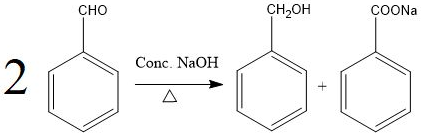
Figure

Answer options

Q21:

2025: 2 June Shift 1

Aldehydes, Ketones & Carboxylic Acids

Medium

The correct IUPAC name for the following structure is
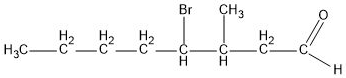
Figure

Answer options

Q22:

2025: 2 June Shift 1

Aldehydes, Ketones & Carboxylic Acids

Easy

The composition of Fehling solution A and Fehling solution B respectively are

Answer options

Q23:

2025: 2 June Shift 1

Aldehydes, Ketones & Carboxylic Acids

Easy

Match List-I (Name) with List-II (Structure)

List-IList-II
(Name)(Structure)
(A) Cinnamaldehyde(I) Figure
(B) Vanillin(II) Figure
(C) Salicylaldehyde(III) Figure
(D) Benzophenone(IV) Figure
Answer options

Q24:

2025: 2 June Shift 1

Aldehydes, Ketones & Carboxylic Acids

Medium

Identify the interrmediate (Y) in the following reaction for the commercial method of manufacturing of benzaldehyde?
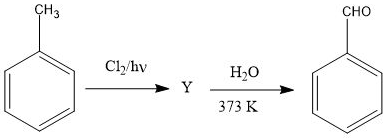
Figure

Answer options

Q25:

2025: 30 May Shift 2

Aldehydes, Ketones & Carboxylic Acids

Hard

Aldehydes, carboxylic acids and ketones are widespread in the animal and plant kingdoms. They play a pivotal role in various biochemical processes of life. Their presence in nature adds fragrance and flavor. These compounds are widely used in food products, pharmaceuticals, paints, resins and other important product industries. These compounds are prepared by various laboratory methods, which mainly include oxidation, formylation, acylation and reduction. Due to the polar nature of the carbonyl group in aldehydes and ketones, they can exhibit different reactions like nucleophilic addition. They do exhibit redox and various condensation reactions which lead to the formation of various important compounds. On the other hand, the carboxylic acids are mainly prepared by oxidation and hydrolysis of different compounds. The carboxylic acid consists of a carbonyl group and the hydroxy group (attached to the carbonyl carbon atom). This makes it possible for the carboxylic acid to participate in various chemical reactions which involve cleavage of the C-OH bond and the O-H bond along with the reactions involving the complete -COOH group.

Arrange the following in the increasing order of their pKa\mathrm{p}K_a values:

(A) CF3-COOH\mathrm{CF_3\text{-}COOH}

(B) O2N-CH2-COOH\mathrm{O_2N\text{-}CH_2\text{-}COOH}

(C) NC-CH2-COOH\mathrm{NC\text{-}CH_2\text{-}COOH}

(D) H-COOH\mathrm{H\text{-}COOH}

Answer options

Q26:

2025: 30 May Shift 2

Aldehydes, Ketones & Carboxylic Acids

Easy

Aldehydes, carboxylic acids and ketones are widespread in the animal and plant kingdoms. They play a pivotal role in various biochemical processes of life. Their presence in nature adds fragrance and flavor. These compounds are widely used in food products, pharmaceuticals, paints, resins and other important product industries. These compounds are prepared by various laboratory methods, which mainly include oxidation, formylation, acylation and reduction. Due to the polar nature of the carbonyl group in aldehydes and ketones, they can exhibit different reactions like nucleophilic addition. They do exhibit redox and various condensation reactions which lead to the formation of various important compounds. On the other hand, the carboxylic acids are mainly prepared by oxidation and hydrolysis of different compounds. The carboxylic acid consists of a carbonyl group and the hydroxy group (attached to the carbonyl carbon atom). This makes it possible for the carboxylic acid to participate in various chemical reactions which involve cleavage of the C-OH bond and the O-H bond along with the reactions involving the complete -COOH group.

The IUPAC name of following compound is

OHC-C6H4-CHO\mathrm{OHC\text{-}C_6H_4\text{-}CHO}-pp

Answer options

Q27:

2025: 30 May Shift 2

Aldehydes, Ketones & Carboxylic Acids

Easy

Aldehydes, carboxylic acids and ketones are widespread in the animal and plant kingdoms. They play a pivotal role in various biochemical processes of life. Their presence in nature adds fragrance and flavor. These compounds are widely used in food products, pharmaceuticals, paints, resins and other important product industries. These compounds are prepared by various laboratory methods, which mainly include oxidation, formylation, acylation and reduction. Due to the polar nature of the carbonyl group in aldehydes and ketones, they can exhibit different reactions like nucleophilic addition. They do exhibit redox and various condensation reactions which lead to the formation of various important compounds. On the other hand, the carboxylic acids are mainly prepared by oxidation and hydrolysis of different compounds. The carboxylic acid consists of a carbonyl group and the hydroxy group (attached to the carbonyl carbon atom). This makes it possible for the carboxylic acid to participate in various chemical reactions which involve cleavage of the C-OH bond and the O-H bond along with the reactions involving the complete -COOH group.

Identify the incorrect statement for Cannizaro reaction.

Answer options

Q28:

2025: 30 May Shift 2

Aldehydes, Ketones & Carboxylic Acids

Easy

Aldehydes, carboxylic acids and ketones are widespread in the animal and plant kingdoms. They play a pivotal role in various biochemical processes of life. Their presence in nature adds fragrance and flavor. These compounds are widely used in food products, pharmaceuticals, paints, resins and other important product industries. These compounds are prepared by various laboratory methods, which mainly include oxidation, formylation, acylation and reduction. Due to the polar nature of the carbonyl group in aldehydes and ketones, they can exhibit different reactions like nucleophilic addition. They do exhibit redox and various condensation reactions which lead to the formation of various important compounds. On the other hand, the carboxylic acids are mainly prepared by oxidation and hydrolysis of different compounds. The carboxylic acid consists of a carbonyl group and the hydroxy group (attached to the carbonyl carbon atom). This makes it possible for the carboxylic acid to participate in various chemical reactions which involve cleavage of the C-OH bond and the O-H bond along with the reactions involving the complete -COOH group.

Which of the following compounds will give butanone on oxidation with chromic anhydride (CrO3\mathrm{CrO_3})?

Answer options

Q29:

2025: 30 May Shift 2

Aldehydes, Ketones & Carboxylic Acids

Medium

Aldehydes, carboxylic acids and ketones are widespread in the animal and plant kingdoms. They play a pivotal role in various biochemical processes of life. Their presence in nature adds fragrance and flavor. These compounds are widely used in food products, pharmaceuticals, paints, resins and other important product industries. These compounds are prepared by various laboratory methods, which mainly include oxidation, formylation, acylation and reduction. Due to the polar nature of the carbonyl group in aldehydes and ketones, they can exhibit different reactions like nucleophilic addition. They do exhibit redox and various condensation reactions which lead to the formation of various important compounds. On the other hand, the carboxylic acids are mainly prepared by oxidation and hydrolysis of different compounds. The carboxylic acid consists of a carbonyl group and the hydroxy group (attached to the carbonyl carbon atom). This makes it possible for the carboxylic acid to participate in various chemical reactions which involve cleavage of the C-OH bond and the O-H bond along with the reactions involving the complete -COOH group.

The reagent which doesn't react with both acetone and benzaldehyde is:

Answer options

Q30:

2025: 30 May Shift 1

Aldehydes, Ketones & Carboxylic Acids

Easy

The product (Y) in the following reaction is

2 C6H5CHO→Heatconc. NaOHY+C6H5COONa2\ \mathrm{C_6H_5CHO} \xrightarrow[\text{Heat}]{\text{conc. NaOH}} \mathrm{Y + C_6H_5COONa}

Answer options