CUET Chemistry: ChemistryAldehydes, Ketones & Carboxylic Acids. Free, no login required.

Q1:

2026: 24 May Shift 1

Aldehydes, Ketones & Carboxylic Acids

Easy

Conversion of carboxylic acid to hydrocarbon is carried out using

Answer options
Option 3
Correct Answer
Explanation for 2026: 24 May Shift 1 CHE question 1

Q2:

2026: 22 May Shift 2

Aldehydes, Ketones & Carboxylic Acids

Easy

Aldol Condensation

Aldehydes and ketones undergo a number of reactions due to the acidic nature of α-hydrogen. Aldehydes and ketones having at least one α-hydrogen undergo a reaction in the presence of dilute alkali as catalyst to form β-hydroxy aldehydes or β-hydroxy ketones, respectively. This is known as aldol reaction. The aldol and ketol readily lose water to give α, β-unsaturated carbonyl compounds, which are aldol condensation products; the reaction is called aldol condensation. When aldol condensation is carried out between two different aldehydes and/or ketones, it is called cross aldol condensation. Ethanal and propanal undergo this reaction to form mixture of products. However, benzaldehyde and acetophenone react to give only one product . Moreover, aldehydes which do not have an α-hydrogen atom, undergo self oxidation and reduction ( disproportionation) reaction on heating with concentrated alkali. The reaction is known as Cannizzaro reaction. In this reaction, one molecule of the aldehyde is reduced to alcohol while another is oxidised to carboxylic acid salt.

What is the reason for the acidic nature of α-hydrogen?

Answer options
Option 2
Correct Answer
Explanation for 2026: 22 May Shift 2 CHE question 2

Q3:

2026: 22 May Shift 2

Aldehydes, Ketones & Carboxylic Acids

Medium

Aldol Condensation

Aldehydes and ketones undergo a number of reactions due to the acidic nature of α-hydrogen. Aldehydes and ketones having at least one α-hydrogen undergo a reaction in the presence of dilute alkali as catalyst to form β-hydroxy aldehydes or β-hydroxy ketones, respectively. This is known as aldol reaction. The aldol and ketol readily lose water to give α, β-unsaturated carbonyl compounds, which are aldol condensation products; the reaction is called aldol condensation. When aldol condensation is carried out between two different aldehydes and/or ketones, it is called cross aldol condensation. Ethanal and propanal undergo this reaction to form mixture of products. However, benzaldehyde and acetophenone react to give only one product . Moreover, aldehydes which do not have an α-hydrogen atom, undergo self oxidation and reduction ( disproportionation) reaction on heating with concentrated alkali. The reaction is known as Cannizzaro reaction. In this reaction, one molecule of the aldehyde is reduced to alcohol while another is oxidised to carboxylic acid salt.

Identify the product formed during the aldol condensation reaction of acetone.

Answer options
Option 4
Correct Answer
Explanation for 2026: 22 May Shift 2 CHE question 3

Q4:

2026: 22 May Shift 2

Aldehydes, Ketones & Carboxylic Acids

Medium

Aldol Condensation

Aldehydes and ketones undergo a number of reactions due to the acidic nature of α-hydrogen. Aldehydes and ketones having at least one α-hydrogen undergo a reaction in the presence of dilute alkali as catalyst to form β-hydroxy aldehydes or β-hydroxy ketones, respectively. This is known as aldol reaction. The aldol and ketol readily lose water to give α, β-unsaturated carbonyl compounds, which are aldol condensation products; the reaction is called aldol condensation. When aldol condensation is carried out between two different aldehydes and/or ketones, it is called cross aldol condensation. Ethanal and propanal undergo this reaction to form mixture of products. However, benzaldehyde and acetophenone react to give only one product . Moreover, aldehydes which do not have an α-hydrogen atom, undergo self oxidation and reduction ( disproportionation) reaction on heating with concentrated alkali. The reaction is known as Cannizzaro reaction. In this reaction, one molecule of the aldehyde is reduced to alcohol while another is oxidised to carboxylic acid salt.

How many products are formed during the cross aldol condensation of propionaldehyde and acetaldehyde?

Answer options
Option 3
Correct Answer
Explanation for 2026: 22 May Shift 2 CHE question 4

Q5:

2026: 22 May Shift 2

Aldehydes, Ketones & Carboxylic Acids

Medium

Aldol Condensation

Aldehydes and ketones undergo a number of reactions due to the acidic nature of α-hydrogen. Aldehydes and ketones having at least one α-hydrogen undergo a reaction in the presence of dilute alkali as catalyst to form β-hydroxy aldehydes or β-hydroxy ketones, respectively. This is known as aldol reaction. The aldol and ketol readily lose water to give α, β-unsaturated carbonyl compounds, which are aldol condensation products; the reaction is called aldol condensation. When aldol condensation is carried out between two different aldehydes and/or ketones, it is called cross aldol condensation. Ethanal and propanal undergo this reaction to form mixture of products. However, benzaldehyde and acetophenone react to give only one product . Moreover, aldehydes which do not have an α-hydrogen atom, undergo self oxidation and reduction ( disproportionation) reaction on heating with concentrated alkali. The reaction is known as Cannizzaro reaction. In this reaction, one molecule of the aldehyde is reduced to alcohol while another is oxidised to carboxylic acid salt.

What is the IUPAC name of the product formed from the aldol reaction between benzaldehyde and acetophenone ?

Answer options
Option 1
Correct Answer
Explanation for 2026: 22 May Shift 2 CHE question 5

Q6:

2026: 22 May Shift 2

Aldehydes, Ketones & Carboxylic Acids

Easy

Aldol Condensation

Aldehydes and ketones undergo a number of reactions due to the acidic nature of α-hydrogen. Aldehydes and ketones having at least one α-hydrogen undergo a reaction in the presence of dilute alkali as catalyst to form β-hydroxy aldehydes or β-hydroxy ketones, respectively. This is known as aldol reaction. The aldol and ketol readily lose water to give α, β-unsaturated carbonyl compounds, which are aldol condensation products; the reaction is called aldol condensation. When aldol condensation is carried out between two different aldehydes and/or ketones, it is called cross aldol condensation. Ethanal and propanal undergo this reaction to form mixture of products. However, benzaldehyde and acetophenone react to give only one product . Moreover, aldehydes which do not have an α-hydrogen atom, undergo self oxidation and reduction ( disproportionation) reaction on heating with concentrated alkali. The reaction is known as Cannizzaro reaction. In this reaction, one molecule of the aldehyde is reduced to alcohol while another is oxidised to carboxylic acid salt.

Which of the following pairs will not undergo an aldol condensation reaction?

Answer options
Option 4
Correct Answer
Explanation for 2026: 22 May Shift 2 CHE question 6

Q7:

2026: 22 May Shift 1

Aldehydes, Ketones & Carboxylic Acids

Easy

Which class of follwing compound react with 2,4-DNP reagent to form an orange-red precipitate?

Answer options
Option 4
Correct Answer
Explanation for 2026: 22 May Shift 1 CHE question 7

Q8:

2026: 22 May Shift 1

Aldehydes, Ketones & Carboxylic Acids

Medium

Match List-I with List-II

Organic CompoundsPositive Tests
(A) Formaldehyde(I) Bromine water test
(B) Phenol(II) Tollen's test
(C) 3° Alcohol(III) Iodoform test
(D) Acetophenone(IV) Lucas test
Answer options
Option 2
Correct Answer
Explanation for 2026: 22 May Shift 1 CHE question 8

Q10:

2026: 22 May Shift 1

Aldehydes, Ketones & Carboxylic Acids

Medium

Arrange the following compounds in increasing order of their reactivity towards nucleophilic addition reaction.

(A) Ethanal

(B) Propanal

(C) Propanone

(D) Butanone

Answer options

Q11:

2026: 22 May Shift 1

Aldehydes, Ketones & Carboxylic Acids

Easy

Ammoniacal silver nitrate solution is

Answer options

Q12:

2026: 21 May Shift 2

Aldehydes, Ketones & Carboxylic Acids

Easy

CARBONYL COMPOUNDS

In aldehydes, the carbonyl group is bonded to a carbon and hydrogen while in the ketones, it is bonded to two carbon atoms. Aldehydes and ketones undergo nucleophilic addition reactions. A nucleophile attacks the electrophilic carbon atom of the polar carbonyl group from a direction approximately perpendicular to the plane of sp2sp^2 hybridized orbitals of carbonyl carbon. The hybridization of carbon changes from sp2sp^2 to sp3sp^3 in the nucleophilic addition. Aldehydes give Fehling's test positive while aromatic aldehydes do not respond to this test .

An organic compound 'A' with molecular formula C3H5N\mathrm{C_3H_5N}, undergoes Stephen reaction to produce another compound 'B'. Compound 'B' gives orange precipitate with 2,4-DNP but it does not undergo Haloform reaction. However, the reaction of compound B with dilute alkali produces a compound 'C' which is β-hydroxy compound with increased number of carbon atoms.

Choose the reagent that converts compound 'A' to 'B'.

Answer options

Q13:

2026: 21 May Shift 2

Aldehydes, Ketones & Carboxylic Acids

Easy

CARBONYL COMPOUNDS

In aldehydes, the carbonyl group is bonded to a carbon and hydrogen while in the ketones, it is bonded to two carbon atoms. Aldehydes and ketones undergo nucleophilic addition reactions. A nucleophile attacks the electrophilic carbon atom of the polar carbonyl group from a direction approximately perpendicular to the plane of sp2sp^2 hybridized orbitals of carbonyl carbon. The hybridization of carbon changes from sp2sp^2 to sp3sp^3 in the nucleophilic addition. Aldehydes give Fehling's test positive while aromatic aldehydes do not respond to this test .

An organic compound 'A' with molecular formula C3H5N\mathrm{C_3H_5N}, undergoes Stephen reaction to produce another compound 'B'. Compound 'B' gives orange precipitate with 2,4-DNP but it does not undergo Haloform reaction. However, the reaction of compound B with dilute alkali produces a compound 'C' which is β-hydroxy compound with increased number of carbon atoms.

Which functional group is present in compound 'A'?

Answer options

Q14:

2026: 21 May Shift 2

Aldehydes, Ketones & Carboxylic Acids

Easy

CARBONYL COMPOUNDS

In aldehydes, the carbonyl group is bonded to a carbon and hydrogen while in the ketones, it is bonded to two carbon atoms. Aldehydes and ketones undergo nucleophilic addition reactions. A nucleophile attacks the electrophilic carbon atom of the polar carbonyl group from a direction approximately perpendicular to the plane of sp2sp^2 hybridized orbitals of carbonyl carbon. The hybridization of carbon changes from sp2sp^2 to sp3sp^3 in the nucleophilic addition. Aldehydes give Fehling's test positive while aromatic aldehydes do not respond to this test .

An organic compound 'A' with molecular formula C3H5N\mathrm{C_3H_5N}, undergoes Stephen reaction to produce another compound 'B'. Compound 'B' gives orange precipitate with 2,4-DNP but it does not undergo Haloform reaction. However, the reaction of compound B with dilute alkali produces a compound 'C' which is β-hydroxy compound with increased number of carbon atoms.

Identify the name reaction involved in formation of compound 'C' from 'B' is

Answer options

Q15:

2026: 21 May Shift 2

Aldehydes, Ketones & Carboxylic Acids

Easy

CARBONYL COMPOUNDS

In aldehydes, the carbonyl group is bonded to a carbon and hydrogen while in the ketones, it is bonded to two carbon atoms. Aldehydes and ketones undergo nucleophilic addition reactions. A nucleophile attacks the electrophilic carbon atom of the polar carbonyl group from a direction approximately perpendicular to the plane of sp2sp^2 hybridized orbitals of carbonyl carbon. The hybridization of carbon changes from sp2sp^2 to sp3sp^3 in the nucleophilic addition. Aldehydes give Fehling's test positive while aromatic aldehydes do not respond to this test .

An organic compound 'A' with molecular formula C3H5N\mathrm{C_3H_5N}, undergoes Stephen reaction to produce another compound 'B'. Compound 'B' gives orange precipitate with 2,4-DNP but it does not undergo Haloform reaction. However, the reaction of compound B with dilute alkali produces a compound 'C' which is β-hydroxy compound with increased number of carbon atoms.

Fehling's reagent is an aqueous solution of

Answer options

Q16:

2026: 21 May Shift 2

Aldehydes, Ketones & Carboxylic Acids

Medium

CARBONYL COMPOUNDS

In aldehydes, the carbonyl group is bonded to a carbon and hydrogen while in the ketones, it is bonded to two carbon atoms. Aldehydes and ketones undergo nucleophilic addition reactions. A nucleophile attacks the electrophilic carbon atom of the polar carbonyl group from a direction approximately perpendicular to the plane of sp2sp^2 hybridized orbitals of carbonyl carbon. The hybridization of carbon changes from sp2sp^2 to sp3sp^3 in the nucleophilic addition. Aldehydes give Fehling's test positive while aromatic aldehydes do not respond to this test .

An organic compound 'A' with molecular formula C3H5N\mathrm{C_3H_5N}, undergoes Stephen reaction to produce another compound 'B'. Compound 'B' gives orange precipitate with 2,4-DNP but it does not undergo Haloform reaction. However, the reaction of compound B with dilute alkali produces a compound 'C' which is β-hydroxy compound with increased number of carbon atoms.

IUPAC name of compound 'C' is

Answer options

Q17:

2026: 21 May Shift 1

Aldehydes, Ketones & Carboxylic Acids

Easy

Which of the following reagent/test can distinguish methanal from ethanal?

Answer options

Q18:

2026: 21 May Shift 1

Aldehydes, Ketones & Carboxylic Acids

Medium

Match List-I with List-II

List-I
Conversion
List-II
Reagents
(A) Aldehyde to Carboxylic acid(I) Zn - Hg/conc. HCl
(B) Benzophenone to Diphenyl methane(II) dil NaOH, Δ\Delta
(C) Ethanal to But-2-en-1-al(III) Na2Cr2O7/ H2SO4\mathrm{Na_2Cr_2O_7/\ H_2SO_4}
(D) Propionic acid to α\alpha-Bromopropionic acid(IV) Br2\mathrm{Br_2}/Red P, H2O\mathrm{H_2O}
Answer options

Q19:

2026: 21 May Shift 1

Aldehydes, Ketones & Carboxylic Acids

Easy

An unknown organic compound X on treatment with tollen's regent gave a silver mirror. Further, the compound X on oxidation with K2Cr2O7\mathrm{K_2Cr_2O_7} produces a carboxylic acid Y. What is the functional group present in compound X?

Answer options

Q21:

2026: 21 May Shift 1

Aldehydes, Ketones & Carboxylic Acids

Medium

The compound with the lowest pKa value is

Answer options

Q22:

2026: 21 May Shift 1

Aldehydes, Ketones & Carboxylic Acids

Medium

Arrange the following compounds in increasing order of their boiling points.

(A) Propanone

(B) Propanal

(C) Butanol

(D) Butanone

Answer options

Q23:

2026: 20 May Shift 2

Aldehydes, Ketones & Carboxylic Acids

Easy

In the following molecules, which will not give positive Iodoform test?

Answer options

Q24:

2026: 20 May Shift 2

Aldehydes, Ketones & Carboxylic Acids

Easy

Fehling solution B is

Answer options

Q25:

2026: 20 May Shift 2

Aldehydes, Ketones & Carboxylic Acids

Easy

Match the LIST-I with LIST-II.

LIST-I (Common /Latin Name)LIST-II (Natural sources)
A.ButyrumI.Formalin
B.AcetumII.Red Ants
C.FormicaIII.Rancid Butter
D.CH2OCH_2OIV.Vineger
Answer options

Q26:

2026: 20 May Shift 2

Aldehydes, Ketones & Carboxylic Acids

Medium

The reaction of cyclohexanecarbaldehyde with semicarbazide hydrochloride in presence of weak acid gives

Answer options

Q27:

2026: 20 May Shift 2

Aldehydes, Ketones & Carboxylic Acids

Medium

In the following reaction, identify A and B.
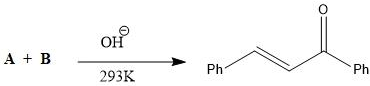
Figure

Answer options

Q28:

2026: 19 May Shift 2

Aldehydes, Ketones & Carboxylic Acids

Medium

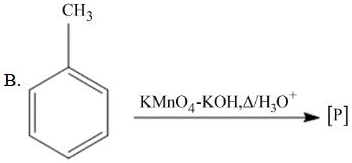
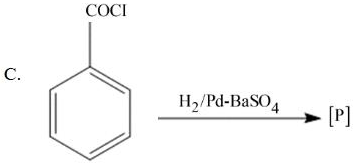
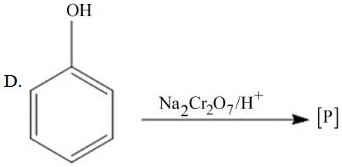
Which of the following reaction products [P] gives Cannizzaro reaction?

A. Figure
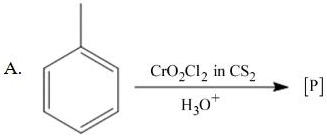
B. Figure

C. Figure

D. Figure

Answer options

Q29:

2026: 19 May Shift 2

Aldehydes, Ketones & Carboxylic Acids

Easy

The product of Hell-Volhard-Zelinsky reaction of propanoic acid is

Answer options

Q30:

2026: 19 May Shift 2

Aldehydes, Ketones & Carboxylic Acids

Easy

Which of the following acids do not contain a carboxylic group?

A. Picric acid

B. Phthalic acid

C. Benzoic acid

D. Sulphurous acid

Answer options