Q1:

Globalisation

Easy

Which of the following statements are correct about Globalisation?

(A) Globalisation has occurred in earlier periods in history in different parts of the world.

(B) In 1991, responding to a financial crisis and to the desire for higher rates of economic growth, India embarked on a programme of economic reforms.

(C) The World Social Forum (WSF) brings together a wide coalition, opposed to neoliberal globalisation.

(D) Technology is not a critical element of globalisation.

Answer options
Option 1
Correct Answer
Explanation for 2025: 26 May Shift 1 POL question 1

Q2:

Environment & Resources

Medium

Arrange the following events in chronological order.

(A) Antarctic Treaty

(B) Rio Summit

(C) Brundtland Report

(D) Kyoto Protocol

Answer options
Option 2
Correct Answer
Explanation for 2025: 26 May Shift 1 POL question 2

Q3:

Congress System

Easy

Why did the Congress President S. Nijalingappa issue a whip on all the Congress MPs and MLAs in 1969?

Answer options
Option 3
Correct Answer
Explanation for 2025: 26 May Shift 1 POL question 3

Q4:

Regional Aspirations

Medium

What was the change made in the provision of the Constitution of Jammu and Kashmir in 1965?

Answer options
Option 1
Correct Answer
Explanation for 2025: 26 May Shift 1 POL question 4

Q5:

South Asia

Hard

Which of the following statements are correct about South Asia's political scenario?

(A) Sri Lanka gains independence in 1948.

(B) Proclamation of independence by leaders of Bangladesh in 1971.

(C) Pakistan and Bangladesh establish diplomatic ties in 1976

(D) India and Sri Lanka sign the Free Trade Agreement in 1996.

Answer options
Option 3
Correct Answer
Explanation for 2025: 26 May Shift 1 POL question 5

Q6:

Regional Aspirations

Easy

Which of the following are lessons learnt from politics of accomodation and national integration in India?

(A) Regional aspirations are not a part of democratic politics.

(B) The best way to respond to regional aspirations is through suppression rather than through democratic negotiations.

(C) Regions must have a share in deciding the destiny of the nation.

(D) Regional imbalance in economic development contributes to the feeling of regional discrimination.

Answer options
Option 3
Correct Answer
Explanation for 2025: 26 May Shift 1 POL question 6

Q7:

Recent Issues & Challenges

Medium

Which among the following statements is correct about Lok Sabha elections result?

Answer options
Option 2
Correct Answer
Explanation for 2025: 26 May Shift 1 POL question 7

Q8:

Recent Issues & Challenges

Easy

Which decision of the Supreme Court was nullified by the Muslim Women (Protection of Rights on Divorce) Act, 1986?

Answer options
Option 2
Correct Answer
Explanation for 2025: 26 May Shift 1 POL question 8

Q9:

Congress System

Medium

Match List-I with List-II

List-I (Political leaders)List-II (Their achievement)
(A) Morarji Desai(I) Indian High Commissioner to Ceylon
(B) Jayaprakash Narayan(II) Original contribution to a non-European socialist theory
(C) V.V. Giri(III) Chief Minister of Bombay State
(D) Ram Manohar Lohia(IV) Founder general secretary of the Congress Socialist Party
Answer options
Option 4
Correct Answer
Explanation for 2025: 26 May Shift 1 POL question 9

Q10:

Crisis of Democratic Order

Easy

The appointment of Justice A.N. Ray as the Chief Justice of India was controversial because-

Answer options

Q11:

Congress System

Easy

Which political leader left the Congress party and founded the Bharatiya Kranti Dal in 1967?

Answer options

Q12:

Centres of Power

Easy

Which of the following five countries signed the Bangkok Declaration leading to the formation of ASEAN?

Answer options

Q13:

End of Bipolarity

Easy

In which year did the Union of Soviet Socialist Republics (USSR) come into being after the socialist revolution in Russia?

Answer options

Q14:

Nation-Building

Easy

In which year was the State Reorganization Commission appointed to look into the issue of redrawing of the boundaries of states?

Answer options

Q15:

South Asia

Hard

Arrange the following events related to democracy in Nepal in chronological order.

(A) Nepal became a democratic republic after abolishing the monarchy.

(B) Nepal adopted a new constitution after abolishing the monarchy

(C) The monarch abolished the parliament and ended the limited democracy that existed in Nepal.

(D) The monarch accepted the demand of a new democratic constitution in the wake of pro-democracy movement.

Answer options

Q16:

Regional Aspirations

Medium

Arrange the following events in the correct sequence of their occurrence

(A) The Akali Dal was formed as the political wing of the Sikhs.

(B) Asom Gana Parishad came to power with the promise to build Golden Assam.

(C) Mizoram and Arunachal Pradesh were given the status of states.

(D) Article 370 was abrogated.

Answer options

Q17:

External Relations

Medium

Match List-I with List-II

List-IList-II
(A) Indus Water Treaty(I) 1971
(B) Tashkent Agreement(II) 1965
(C) Arrest of Sheikh Mujib-ur Rahman by the Pakistani Army(III) 1966
(D) India-Pakistan war(IV) 1960
Answer options

Q19:

External Relations

Medium

Arrange the following events in a correct chronological order :

(A) China took over control of Tibet.

(B) Panchsheel agreement signed between India and China.

(C) Chinese Invasion in Arunanchal Pradesh.

(D) Dalai Lama took asylum in India.

Answer options

Q20:

Regional Aspirations

Medium

Arrange the following major developments in Punjab in the correct chronological order

(A) The Government of India carried out 'Operation Blue Star'.

(B) Indira Gandhi was assassinated.

(C) The Anandpur Sahib Resolution was passed.

(D) The alliance of Akali Dal (Badal) and the BJP won in the first normal elections in post-militancy era in Punjab.

Answer options

Q21:

Congress System

Medium

Match List-I with List-II

List-I (Political leader)List-II (Achievements)
(A) Ram Manohar Lohia(I) A Gandhian who was involved in the Bhoodan Movement
(B) V.V. Giri(II) Opposition to English
(C) Jayaprakash Narayan(III) First PM belonging to a non-Congress party
(D) Morarji Desai(IV) Contested presidential election as independent candidate
Answer options

Q22:

Nation-Building

Medium

Which of the following statements are correct about the integration of Princely states?

(A) British India was divided into British India Provinces and the Princely States.

(B) The British Indian Provinces were directly under the control of the British government.

(C) States ruled by princes enjoyed some form of control over their internal affairs as long as they accepted British supremacy.

(D) Three out of four Indians lived under princely rule

Answer options

Q23:

International Organisations

Medium

Which of the following statements are correct about the Resolution adopted by the UN General Assembly in1992?

(A)The Security Council fails to represent contemporary political realities.

(B) The decisions of the Security Council reflect only Western values.

(C) The Security Council lacks equitable representation.

(D) The Security Council needs to offer a permanent seat to India because of its emerging status as an economic power.

Answer options

Q24:

End of Bipolarity

Medium

Which of the following statements are correct with reference to the disintegration of the Soviet Union?

(A) Gorbachev initiated policies of economic and political reform (perestroika and glasnost) within the Soviet Union in 1985.

(B) Lithuania became the first of the 15 Soviet republics to declare its independence in 1990.

(C) Russia, Belarus and Ukraine established the Commonwealth of Independent States (CIS) in 1991.

(D) Three Baltic republics of Estonia, Latvia and Lithuania became members of the UN in 1991.

Answer options

Q25:

Crisis of Democratic Order

Easy

What was the ground for challenging Indira Gandhi's election to the Lok Sabha?

Answer options

Q28:

Coalition Politics

Easy

Who among the following was the Prime Minister candidate in the National Democratic Alliance led by Bharatiya Janata Party in October 1999?

Answer options

Q29:

Environment & Resources

Medium

The conflict between Israel, Syria and Jordan in the 1950s and 1960s was because of attempts by each side to divert water from Jordan and ___________.

Answer options

Q30:

End of Bipolarity

Medium

Which among the following statement is not correct about the crisis within the USSR in 1991?

Answer options

Q31:

South Asia

Medium

Which of these following statements are correct about the history of military rule in Pakistan?

(A) After Pakistan framed its first constitution, General Yahya Khan took over the administration of the country.

(B) During General Ayub Khan's rule, Pakistan faced the Bangladesh crisis.

(C) The elected government under the leadership of Zulfikar Ali Bhutto came to power in Pakistan from 1971 to 1977.

(D) The Bhutto government was removed by General Zia-ul-Haq in 1977.

Answer options

Q32:

Regional Aspirations

Easy

The Assam movement from 1979 to 1985 was against-

Answer options

Q33:

End of Bipolarity

Easy

Match List-I with List-II

List-I (Events)List-II (Year)
(A) The Soviet invasion of Afghanistan(I) 1991
(B) Mikhail Gorbachev elected as General Secretary of the Communist Party(II) 1985
(C) Terror attack on US World Trade Centre(III)1979
(D) Disintegration of the Soviet Union(IV) 2001
Answer options

Q35:

Nation-Building

Easy

Under which of the following plans/Acts are the Princely States free to join India or Pakistan?

Answer options

Q36:

International Organisations

Medium

Match List-I with List-II

List-I (UN Secretary General)List-II (Achievement)
(A) Trygve Lie(I)Oversaw the relief operation in Bangladesh
(B) Javier Perez de Cuellar(II) Worked for the creation of UN Women
(C) Kurt Waldheim(III)Worked for ceasefire between India and Pakistan on Kashmir
(D) Ban Ki-moon(IV)Mediated between Britain and Argentina after the Falklands War
Answer options

Q37:

Regional Aspirations

Medium

Which of the following provisions was not part of the Punjab Accord?

(A) It was agreed that Chandigarh would be transferred to Punjab.

(B) A separate commission would be appointed to resolve the border dispute between Punjab and Haryana.

(C) The number of military troops will be increased to depute in various areas of Punjab.

(D) A tribunal will be set up to decide the sharing of Ravi-Beas river water among Punjab, Haryana and Gujarat.

Answer options

Q38:

South Asia

Medium

Arrange the following events in a chronologial order :

(A) Signing of the SAFTA

(B) Indus Water Treaty

(C) Establishment of SAARC

(D) Formation of European Union

Answer options

Q39:

Environment & Resources

Medium

Which of the following statements explain India's stand on environmental issues?

(A) India signed and ratified the Kyoto Protocol.

(B) The Indian government is keen to launch a National Biodiesel Mission.

(C) India ratified the Paris Climate Agreement.

(D) India has one of the largest renewable energy program in the world.

Answer options

Q40:

Planned Development

Medium

An important aspect of the Indian economy from the early 1960s till the early 1970s was that-

Answer options
Option 1,4
Correct Answer
Explanation for 2025: 26 May Shift 1 POL question 40

Q41:

Centres of Power

Easy

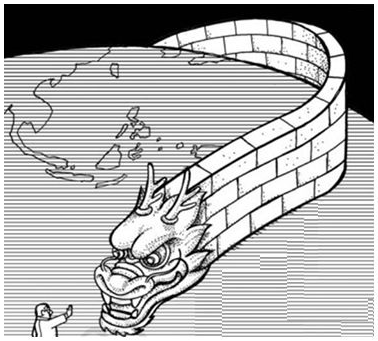
Answer the questions based on the following image :

Figure

The above image represents which country?

Answer options

Q42:

Centres of Power

Medium

Answer the questions based on the following image :

Figure

In which year did the above-indicated country end its political and economic isolation and establish diplomatic relations with the United States?

Answer options

Q43:

Centres of Power

Easy

Answer the questions based on the following image :

Figure

Which of the following was not part of Premier Zhou Enlai's proposal of the 'four modernisations' in 1973?

Answer options

Q44:

Centres of Power

Easy

Answer the questions based on the following image :

Figure

Which among the following leaders announced the 'open door' policy and economic reforms in the above-indicated country?

Answer options

Q45:

Centres of Power

Easy

Answer the questions based on the following image :

Figure

In which year did the above-indicated country become a member of WTO?

Answer options

Q46:

Security

Easy

Arms control regulates the acquisition or development of weapons. The Anti-ballistic Missile (ABM) Treaty in 1972 tried to stop the United States and Soviet Union from using ballistic missiles as a defensive shield to launch a nuclear attack. While it did allow both countries to deploy a very limited number of defensive systems, it stopped them from large-scale production of those systems. The US and Soviet Union signed a number of other arms control treaties, including the Strategic Arms Limitations Treaty II or SALT II and the Strategic Arms Reduction Treaty (START). The Nuclear Non-Proliferation Treaty (NPT) of 1968 was an arms control treaty in the sense that it regulated the acquisition of nuclear weapons: those countries that had tested and manufactured nuclear weapons before 1967 were allowed to keep their weapons; and those that had not done so were to give up the right to acquire them. The NPT did not abolish nuclear weapons; rather, it limited the number of countries that could have them.

Which among the following statements is not related to the Anti-ballistic missile (ABM) Treaty?

Answer options

Q47:

Security

Easy

Arms control regulates the acquisition or development of weapons. The Anti-ballistic Missile (ABM) Treaty in 1972 tried to stop the United States and Soviet Union from using ballistic missiles as a defensive shield to launch a nuclear attack. While it did allow both countries to deploy a very limited number of defensive systems, it stopped them from large-scale production of those systems. The US and Soviet Union signed a number of other arms control treaties, including the Strategic Arms Limitations Treaty II or SALT II and the Strategic Arms Reduction Treaty (START). The Nuclear Non-Proliferation Treaty (NPT) of 1968 was an arms control treaty in the sense that it regulated the acquisition of nuclear weapons: those countries that had tested and manufactured nuclear weapons before 1967 were allowed to keep their weapons; and those that had not done so were to give up the right to acquire them. The NPT did not abolish nuclear weapons; rather, it limited the number of countries that could have them.

What was the objective of Nuclear Non-Proliferation Treaty (NPT) ?

Answer options

Q48:

Security

Easy

Arms control regulates the acquisition or development of weapons. The Anti-ballistic Missile (ABM) Treaty in 1972 tried to stop the United States and Soviet Union from using ballistic missiles as a defensive shield to launch a nuclear attack. While it did allow both countries to deploy a very limited number of defensive systems, it stopped them from large-scale production of those systems. The US and Soviet Union signed a number of other arms control treaties, including the Strategic Arms Limitations Treaty II or SALT II and the Strategic Arms Reduction Treaty (START). The Nuclear Non-Proliferation Treaty (NPT) of 1968 was an arms control treaty in the sense that it regulated the acquisition of nuclear weapons: those countries that had tested and manufactured nuclear weapons before 1967 were allowed to keep their weapons; and those that had not done so were to give up the right to acquire them. The NPT did not abolish nuclear weapons; rather, it limited the number of countries that could have them.

Which among the following statement is correct about NPT?

Answer options

Q49:

Security

Easy

Arms control regulates the acquisition or development of weapons. The Anti-ballistic Missile (ABM) Treaty in 1972 tried to stop the United States and Soviet Union from using ballistic missiles as a defensive shield to launch a nuclear attack. While it did allow both countries to deploy a very limited number of defensive systems, it stopped them from large-scale production of those systems. The US and Soviet Union signed a number of other arms control treaties, including the Strategic Arms Limitations Treaty II or SALT II and the Strategic Arms Reduction Treaty (START). The Nuclear Non-Proliferation Treaty (NPT) of 1968 was an arms control treaty in the sense that it regulated the acquisition of nuclear weapons: those countries that had tested and manufactured nuclear weapons before 1967 were allowed to keep their weapons; and those that had not done so were to give up the right to acquire them. The NPT did not abolish nuclear weapons; rather, it limited the number of countries that could have them.

The Strategic Arms Limitations Treaty II (SALT II) for arms control was signed between the following countries-

Answer options

Q50:

Security

Easy

Arms control regulates the acquisition or development of weapons. The Anti-ballistic Missile (ABM) Treaty in 1972 tried to stop the United States and Soviet Union from using ballistic missiles as a defensive shield to launch a nuclear attack. While it did allow both countries to deploy a very limited number of defensive systems, it stopped them from large-scale production of those systems. The US and Soviet Union signed a number of other arms control treaties, including the Strategic Arms Limitations Treaty II or SALT II and the Strategic Arms Reduction Treaty (START). The Nuclear Non-Proliferation Treaty (NPT) of 1968 was an arms control treaty in the sense that it regulated the acquisition of nuclear weapons: those countries that had tested and manufactured nuclear weapons before 1967 were allowed to keep their weapons; and those that had not done so were to give up the right to acquire them. The NPT did not abolish nuclear weapons; rather, it limited the number of countries that could have them.

In which year was the Anti-ballistic Missile (ABM) Treaty signed?

Answer options

CUET Political Science 2025 26 May Shift 1 Past Year Question Paper

Every question from the CUET Political Science 2025 26 May Shift 1 paper is here in full, with the correct answer and a step by step solution for each one. It is completely free, there is no login and no paywall, and you can read the whole paper online or download it to revise offline.

You can also attempt it instead of only reading it. Take the paper as a full length mock under exam conditions, or filter it by topic and attempt just that topic as a topic test. Both are free, and you get a breakdown of your accuracy, your timing and your weak areas once you submit.

CUET Political Science past year questions (PYQs) are the closest thing to the real exam, so working through them is the quickest way to learn the paper pattern, the marking scheme and the level of difficulty to expect on the day.