Q1:
Contemporary World Politics
Security
Medium
Which of the following statement is not correct about traditional security?
Correct Answer
Option 3
Correct Answer

Contemporary World Politics
Security
Medium
Which of the following statement is not correct about traditional security?
Politics in India Since Independence
Recent Issues & Challenges
Easy
Match List-I with List-II
| List-I | List-II |
|---|---|
| (Events) | (Years) |
| (A) Formation of Bharatiya Janata Party | (I) 2019 |
| (B) Supreme Court judgement on Ram Janmabhoomi | (II) 1984 |
| (C) Shah Bano Case | (III) 1980 |
| (D) Assassination of Indira Gandhi | (IV) 1985 |
Contemporary World Politics
Centres of Power
Medium
Which of the following statements are correct about the ASEAN?
(A) ASEAN was established in 1967 by five countries of this region — Indonesia, Malaysia, the Philippines, Singapore and Thailand — by signing the Bangkok Declaration.
(B) ASEAN had several agreements in place by which member states promised to uphold peace, neutrality, cooperation, non-interference, and respect for national differences and sovereign rights.
(C) The ASEAN Regional Forum (ARF), which was established in 1994, is the organisation that carries out coordination of security and foreign policy.
(D) The ASEAN-India FTA came into effect in 2014.
Politics in India Since Independence
Recent Issues & Challenges
Easy
Which one of the following crisis triggered the 'New Economic Reforms' of 1991 ?
Politics in India Since Independence
Crisis of Democratic Order
Hard
Arrange the following political developments in the correct chronological order.
(A) The National Coordination Committee of Railwaymen's Struggle gave a call for a nation-wide strike.
(B) Massive demonstration organized by Jayaprakash Narayan in Delhi's Ramlila grounds.
(C) The government set aside the seniority of three judges and appointed A.N. Ray as the Chief Justice of India.
(D) Shah Commission of Inquiry was appointed.
Contemporary World Politics
End of Bipolarity
Medium
Match List-I with List-II
| List-I | List-II |
|---|---|
| (Events) | (Years) |
| (A) Boris Yeltsin becomes the President of Russia | (I) 1989 |
| (B) Lithuania becomes the first Soviet republic to declare its independence | (II) 1985 |
| (C) Berlin Wall falls | (III) 1991 |
| (D) Boris Yeltsin is appointed as the head of the Communist party in Moscow | (IV) 1990 |
Contemporary World Politics
International Organisations
Easy
Which Secretary General of UN worked for the creation of UN Women?
Contemporary World Politics
End of Bipolarity
Medium
Which political leader proposed Asian Collective Security System?
Politics in India Since Independence
Congress System
Medium
The real challenge to Indira Gandhi came not from the opposition but from within her own party, the popularly named syndicate. Who led the syndicate?
Politics in India Since Independence
Crisis of Democratic Order
Medium
In which year did the Supreme Court over-rule the High Courts to decide that during Emergency the government could take away the citizen's right to life and liberty?
Politics in India Since Independence
Crisis of Democratic Order
Easy
In which one of the following cases, the Supreme Court decided that there are some basic features of the Constitution that cannot be amended?
Politics in India Since Independence
Crisis of Democratic Order
Medium
Match List-I with List-II
| List-I | List-II |
|---|---|
| (A) Left the Congress and founded Bharatiya Kranti Party | (I) E.V. Ramasami Naicker |
| (B) Propounded the thesis that north Indians and Brahmins are Aryans | (II) Chaudhary Charan Singh |
| (C) Ensured the surrender of dacoits in Chambal | (III) Jayaprakash Narayan |
| (D) First PM belonging to a non-Congress party | (IV) Morarji Desai |
Politics in India Since Independence
Crisis of Democratic Order
Easy
Who gave the call for total revolution in the social, economic and political spheres in order to establish 'true democracy'?
Politics in India Since Independence
Recent Issues & Challenges
Easy
In August 1990, which of the following governments decided to implement one of the recommendations of the Mandal Commission?
Contemporary World Politics
Globalisation
Easy
Which one of the following statements is correct about globalisation?
Contemporary World Politics
International Organisations
Medium
Match List-I with List-II
| List-I | List-II |
|---|---|
| (Years) | (Events in the formation of the UN) |
| (A) August 1941 | (I) Yalta Conference of the ‘Big Three’ (Roosevelt, Churchill and Stalin) decides to organize a United Nations conference |
| (B) December 1943 | (II) Signing of the UN Charter by 50 nations |
| (C) February 1945 | (III) Signing of the Atlantic Charter by the US President Franklin D. Roosevelt and British PM Winston S.Churchill |
| (D) June 1945 | (IV) Tehran Conference Declaration of the Three Powers (US, Britain and Soviet Union) |
Politics in India Since Independence
Regional Aspirations
Easy
Which one of the following states became the 22nd State of the Indian Union?
Politics in India Since Independence
External Relations
Easy
The Shimla Agreement (3 July 1972) formalised the return of peace between India and Pakistan signed by two prominent leaders of both countries. Who were the two leaders?
Contemporary World Politics
South Asia
Medium
Match List-I with List-II
| List-I | List-II |
|---|---|
| (Events) | (Years) |
| (A) UN India-Pakistan Observation Mission | (I) 1988 |
| (B) India and Sri Lanka sign the Free Trade Agreement | (II) 1965 |
| (C) India and Pakistan sign the agreement not to attack nuclear installations and facilities of each other. | (III) 1998 |
| (D) Proclamation of Independence by leaders of Bangladesh | (IV) 1971 |
Contemporary World Politics
Environment & Resources
Medium
The first anti-dam movement launched in the North in the 1980s is the campaign to save-
Contemporary World Politics
Centres of Power
Medium
Which of the following statements are correct?
(A) The border dispute between China and India was principally over a border conflict and the Chinese takeover of Tibet in 1950.
(B) Premier Zhuo Enlai initiated the modernisation of agriculture only.
(C) China's accession to the WTO has been a further step in its opening to the outside world.
(D) Rajiv Gandhi's visit to China provides the impetus for an improvement in India-China relations.
Politics in India Since Independence
One-Party Dominance
Easy
Which one of the following is not a reason for the extraordinary success of the Congress party in the immediate post-Independence period?
Contemporary World Politics
International Organisations
Easy
Which of the following is not part of the steps decided by heads of all the member states in September 2005 to be taken to make the UN more relevant in the changing context?
Politics in India Since Independence
One-Party Dominance
Easy
Who was the founder of the Independent Labor Party in India?
Contemporary World Politics
Environment & Resources
Hard
Arrange the following measures by the Indian government in the correct chronological order:
(A) India ratified the Paris Climate Agreement.
(B) The Energy Conservation Act was passed to improve energy efficiency.
(C) A review of the implementation of the agreements at Earth Summit was undertaken by India.
(D) The Electricity Act was passed to encourage the use of renewable energy.
Contemporary World Politics
Centres of Power
Medium
When did Japan become a member of the Organisation for Economic Cooperation and Development (OECD)?
Politics in India Since Independence
Nation-Building
Medium
Which of the following statements are correct about Integration of Princely states?
(A) Hyderabad was the largest of the Princely States, surrounded entirely by Indian territory.
(B) Some parts of old Hyderabad state are today parts of Maharashtra, Karnataka, Punjab and Gujarat.
(C) The Nizam of Hyderabad entered into a Standstill Agreement with India in November 1946 while negotiations with the Indian government were going on.
(D) The Nizam wanted an independent status for Hyderabad,
Politics in India Since Independence
Planned Development
Medium
Which of the following statements are correct about Kerala Model of Planning and Development?
(A) The focus of the Model was on education, health, land reform and poverty alleviation.
(B) Despite having a high per capita income and a strong industrial base, Kerala had high infant and female mortality.
(C) Between 1987 and 1991, the government launched the New Democratic Initiative.
(D) The New Democratic Initiative involved campaigns for direct participation of people in development activities through the IMF and WTO.
Politics in India Since Independence
Regional Aspirations
Medium
Arrange the following statements about regional aspirations in the North-East in post-Independence India according to correct chronological order.
(A) The Mizo National Front started an armed campaign for independence.
(B) A peace agreement was signed between Rajiv Gandhi and Laldenga.
(C) There was a great famine in the Mizo hills.
(D) Led by Angami Zaphu Phizo, a section of the Nagas declared independence from India.
Politics in India Since Independence
Regional Aspirations
Hard
Which among the following statements are correct about politics in Jammu and Kashmir since 1948?
(A) In 1974 Indira Gandhi reached an agreement with Sheikh Abdullah.
(B) CM Farooq Abdullah revived the National Conference which was elected with a majority in the assembly elections in 1977.
(C) The National Conference in 1986 agreed to have an electoral alliance with the Congress party.
(D) By 1989, Jammu and Kashmir came in the grip of a militant movement mobilized under the cause of a separate Kashmiri nation.
Contemporary World Politics
South Asia
Easy
'The struggle among pro-monarchy, pro-democracy groups and extremists created an atmosphere of political instability'.
In context to which one of the following countries, the above statement is correct?
Contemporary World Politics
South Asia
Easy
Which one of the following statements is not correct about forms of government in South Asian countries?
Politics in India Since Independence
External Relations
Medium
Match the List-I with List II
| List I | List II |
|---|---|
| (A) USSR invaded Hungary | (I) 1971 |
| (B) Pakistani army arrested Sheikh Mujib-ur Rahman | (II) 1956 |
| (C) Pakistan launched armed attacks in the Rann of Kutch area of Gujarat | (III) 1966 |
| (D) Tashkent Agreement was signed | (IV)1965 |
Politics in India Since Independence
One-Party Dominance
Easy
India's general elections of 1952 became a landmark in the history of democracy all over the world because-
Politics in India Since Independence
Nation-Building
Easy
Which one of the following was not one of the challenges faced by the newly independent Indian state?
Politics in India Since Independence
External Relations
Easy
The international community was critical of India and Pakistan's nuclear tests in 1998 because-
Politics in India Since Independence
Nation-Building
Easy
The formation of the linguistic states underlined the acceptance of-
Contemporary World Politics
End of Bipolarity
Medium
Arrange the following events in the correct chronological order.
(A) Gorbachev resigns as the president of the Soviet Union.
(B) The Soviet Union declares that the Warsaw Pact members are free to decide their own futures.
(C) The independence movement began in Lithuania, Estonia and Latvia.
(D) The Russian Parliament declares its independence from the Soviet Union.
Politics in India Since Independence
Coalition Politics
Medium
Arrange the following Prime Minister's tenure according to correct chronological order.
(A) H.D. Deve Gowda
(B) A.B. Vajpayee (BJP Minority govt)
(C) Chandra Shekhar
(D) I.K. Gujral
Contemporary World Politics
Security
Easy
Which of the following is not a part of the concept of non-traditional security?
Politics in India Since Independence
Crisis of Democratic Order
Easy
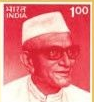
Answer the questions based on the following image :
Politics in India Since Independence
Crisis of Democratic Order
Easy
Answer the questions based on the following image :
Politics in India Since Independence
Crisis of Democratic Order
Easy
Answer the questions based on the following image :
Politics in India Since Independence
Congress System
Medium
Answer the questions based on the following image :
Politics in India Since Independence
Crisis of Democratic Order
Medium
Answer the questions based on the following image :
Politics in India Since Independence
Recent Issues & Challenges
Easy
Politics in India Since Independence
Recent Issues & Challenges
Easy
Politics in India Since Independence
Recent Issues & Challenges
Easy
Politics in India Since Independence
Recent Issues & Challenges
Easy
Politics in India Since Independence
Recent Issues & Challenges
Easy
Every question from the CUET Political Science 2025 2 June Shift 2 paper is here in full, with the correct answer and a step by step solution for each one. It is completely free, there is no login and no paywall, and you can read the whole paper online or download it to revise offline.
You can also attempt it instead of only reading it. Take the paper as a full length mock under exam conditions, or filter it by topic and attempt just that topic as a topic test. Both are free, and you get a breakdown of your accuracy, your timing and your weak areas once you submit.
CUET Political Science past year questions (PYQs) are the closest thing to the real exam, so working through them is the quickest way to learn the paper pattern, the marking scheme and the level of difficulty to expect on the day.