Q1:
Politics in India Since Independence
Congress System
Easy
Who among the following had invented the idea of "non-Congressism"?
Correct Answer
Option 4
Correct Answer

Politics in India Since Independence
Congress System
Easy
Who among the following had invented the idea of "non-Congressism"?
Politics in India Since Independence
External Relations
Easy
Which provision of the Indian Constitution lays down that the state shall endeavor to 'encourage settlement of international disputes by arbitration'?
Politics in India Since Independence
Congress System
Medium
Which among the following policies was not initiated by Indira Gandhi?
Contemporary World Politics
Centres of Power
Hard
Which of the following statements regarding ASEAN is correct?
(A) ASEAN was established in 1967 by five countries-Indonesia, Malaysia, Singapore, Thailand and Vietnam.
(B) It was established by signing the Bangkok Declaration.
(C) The objectives of ASEAN were primarily to accelerate economic growth and through that 'social progress and cultural development'.
(D) The ASEAN Regional Forum (ARF) was established in 1997.
Contemporary World Politics
Globalisation
Easy
Where was the first World Social Forum (WSF) meeting held?
Contemporary World Politics
Globalisation
Medium
Which of the following statements is correct about the impact of globalisation?
(A) Globalisation has eroded state sovereignty.
(B) Globalisation has paved the way to a maximalist welfare state.
(C) The increased role of multinational companies has reduced states' decision making capacity.
(D) Globalisation has had differentiated impact on all states and societies.
Politics in India Since Independence
Regional Aspirations
Easy
Who was the first woman Chief Minister of the state of Jammu and Kashmir?
Politics in India Since Independence
Regional Aspirations
Easy
Which military operation was carried out by the Government of India in the Golden Temple of Amritsar in 1984?
Politics in India Since Independence
Congress System
Easy
What was the reason for the abrupt end of Lal Bahadur Shastri's Prime Ministership?
Contemporary World Politics
Environment & Resources
Easy
Which one of the following issues was dealt with in the book 'Limits to Growth', published by the Club of Rome in 1972?
Politics in India Since Independence
Coalition Politics
Easy
Who was the Chairperson of the Second Backward Classes Commission?
Contemporary World Politics
Security
Medium
Match List-I with List-II
| List-I | List-II |
|---|---|
| (Convention/Treaty) | (Year) |
| (A) Kyoto Protocol | (I) 1968 |
| (B) Chemical Weapons Convention | (II) 1972 |
| (C) Anti-ballistic Missile (ABM) Treaty | (III) 1992 |
| (D) Nuclear Non-Proliferation Treaty | (IV) 1997 |
Contemporary World Politics
South Asia
Easy
Pakistan faced the Bangladesh crisis under the leadership of:
Politics in India Since Independence
Coalition Politics
Easy
On which issue had the Left Party withdrawn its support during the UPA government's second tenure ?
Politics in India Since Independence
Crisis of Democratic Order
Easy
The Kesavananda Bharati case deals with-
Contemporary World Politics
Environment & Resources
Medium
'States shall cooperate in the spirit of global partnership to conserve, protect and restore the health and integrity of the Earth's ecosystem'. In which of the following conferences was this statement made?
Politics in India Since Independence
Nation-Building
Easy
Who among the following leaders went on an indefinite fast that led to his death demanding that the Telegu speaking area should be separated from rest of the Madras province?
Contemporary World Politics
South Asia
Medium
Which among the following statements about SAARC is not correct?
Contemporary World Politics
Security
Easy
Which of the following is not an example of non-traditional conception of security?
Politics in India Since Independence
External Relations
Medium
In which year full diplomatic relations were restored between India and China?
Contemporary World Politics
Globalisation
Medium
Match List-I with List-II
| List-I | List-II |
|---|---|
| (A) World Social Forum | (I) Multi-dimensional phenomenon |
| (B) Globalisation | (II) Structural Reforms |
| (C) India's New Economic Policy | (III) Cultural consequences of globalization |
| (D) McDonaldisation | (IV)Opposed to neo-liberal globalisation |
Politics in India Since Independence
External Relations
Medium
Arrange the following events related to India's external relations in chronological order.
(A) The then External Affairs Minister, Atal Behari Vajpayee visited China after full diplomatic relations between India and China were restored.
(B)The Panchsheel Agreement was signed between India and China.
(C) The Shimla Agreement between Indira Gandhi and Zulfikar Ali Bhutto was signed.
(D) The Kargil conflict
Politics in India Since Independence
Coalition Politics
Medium
Which Commission was set up to investigate the extent of educational and social backwardness among various sections of Indian society and recommend ways of identifying these 'backward classes' ?
Politics in India Since Independence
Nation-Building
Easy
Who addressed the special session of the Constituent Assembly on 14-15 August, 1947 midnight?
Contemporary World Politics
International Organisations
Medium
Match List-I with List-II
| List-I | List-II |
|---|---|
| (UN Secretary General) | (Associated with) |
| (A) Antonio Manuel de Oliveira Guterres | (I) A diplomat and jurist from Egypt |
| (B) Kofi A. Annan | (II) Established the UN Peacekeeping Force in Cyprus |
| (C) Boutros Boutros Ghali | (III) Former PM of Portugal |
| (D) U Thant | (IV)Created Global Fund to fight AIDS |
Contemporary World Politics
Centres of Power
Medium
In which year was the European Union awarded the Nobel Peace Prize?
Politics in India Since Independence
One-Party Dominance
Easy
In which of the following states did the Congress party not get a majority in the state assembly elections of 1957?
Contemporary World Politics
Centres of Power
Medium
Arrange the following European Integration events in chronological order-
(A) The Treaty of Paris was signed.
(B) European Economic Community was established.
(C) Spain and Portugal joined the European Community.
(D) Euro was introduced in 12 EU countries.
Politics in India Since Independence
Nation-Building
Medium
Who among the following leaders was a member of the Committee of Minorites of Constituent Assembly?
Contemporary World Politics
International Organisations
Medium
The leaders on the completion of 60 years of the United Nations's existence decided to make the UN more relevant in the changing context by taking steps in the September 2005 meeting. In this context, which one of the following steps was not decided by the members?
Politics in India Since Independence
External Relations
Easy
Under whose guidance was India's nuclear programme initiated in the late 1940s?
Politics in India Since Independence
Recent Issues & Challenges
Easy
Who among the following leaders defined Hindutva as the basis of Indian nationhood?
Politics in India Since Independence
Planned Development
Easy
Who is the Chairperson of the NITI Ayog?
Contemporary World Politics
International Organisations
Easy
Who among the following was the first Asian to hold the post of UN Secretary-General?
Contemporary World Politics
International Organisations
Hard
Which of the following statements are correct about the United Nations?
(A) The UN was founded as a successor to the League of Nations.
(B) By 2011, the UN had 193 member states.
(C) UN Security Council membership was expanded from 11 to 15 countries in 1965.
(D) India joined the United Nations membership on 30 October 1955.
Politics in India Since Independence
Recent Issues & Challenges
Medium
Match List-I with List-II
| List-I | List-II |
|---|---|
| (A) Personal Law and Gender Justice | (I) Rise of OBCs |
| (B) Era of Coalitions | (II) 2014 |
| (C) Caste-based parties | (III) Shah Bano case |
| (D) 16th Lok Sabha Elections | (IV) 1989 |
Politics in India Since Independence
Planned Development
Medium
In which month and year the draft of the First Five-Year Plan and subsequently the actual Plan Document were released?
Contemporary World Politics
International Organisations
Easy
Which proposal of US President Dwight Eisenhower brought into being the International Atomic Energy Agency (IAEA)?
Politics in India Since Independence
Crisis of Democratic Order
Medium
The term "committed bureaucracy" was popularly used during the Prime Ministership of _________
Politics in India Since Independence
One-Party Dominance
Medium
The Congress, as an organisation, was considered as .........during its evolution in 1885.
Politics in India Since Independence
Nation-Building
Medium
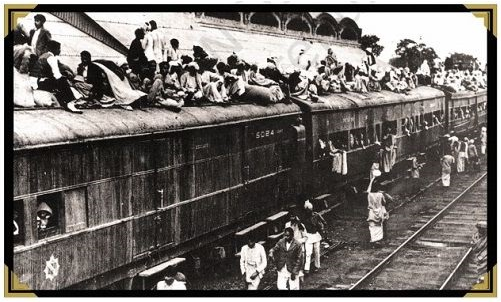
Answer the questions based on the image given below:
Politics in India Since Independence
Nation-Building
Easy
Answer the questions based on the image given below:
Politics in India Since Independence
Nation-Building
Medium
Answer the questions based on the image given below:
Politics in India Since Independence
Nation-Building
Easy
Answer the questions based on the image given below:
Politics in India Since Independence
Nation-Building
Easy
Answer the questions based on the image given below:
Politics in India Since Independence
Planned Development
Easy
Politics in India Since Independence
Planned Development
Easy
Politics in India Since Independence
Planned Development
Easy
Politics in India Since Independence
Planned Development
Easy
Politics in India Since Independence
Planned Development
Easy
Every question from the CUET Political Science 2025 19 May Shift 1 paper is here in full, with the correct answer and a step by step solution for each one. It is completely free, there is no login and no paywall, and you can read the whole paper online or download it to revise offline.
You can also attempt it instead of only reading it. Take the paper as a full length mock under exam conditions, or filter it by topic and attempt just that topic as a topic test. Both are free, and you get a breakdown of your accuracy, your timing and your weak areas once you submit.
CUET Political Science past year questions (PYQs) are the closest thing to the real exam, so working through them is the quickest way to learn the paper pattern, the marking scheme and the level of difficulty to expect on the day.