Q1:
Politics in India Since Independence
Regional Aspirations
Easy
Under which provision of the Indian Constitution, Kashmir was given a special status?
Correct Answer
Option 3
Correct Answer

Politics in India Since Independence
Regional Aspirations
Easy
Under which provision of the Indian Constitution, Kashmir was given a special status?
Politics in India Since Independence
External Relations
Easy
With which country India signed a 20 year Treaty of Peace and Friendship in 1971?
Contemporary World Politics
End of Bipolarity
Medium
The fall of the Berlin Wall symbolises which of the following events in International Politics?
Politics in India Since Independence
Regional Aspirations
Medium
In which year did the All Assam Students' Union (AASU) lead an anti-foreigner movement?
Politics in India Since Independence
Regional Aspirations
Easy
Who among the following started the Self-Respect Movement in 1925?
Politics in India Since Independence
Planned Development
Medium
Which initiative was launched by the government between 1987 and 1991 that involved campaigns for development?
Politics in India Since Independence
External Relations
Easy
Who played an instrumental role for India in world affairs and was responsible for the establishment of contacts between India and other newly independent states in Asia and Africa?
Politics in India Since Independence
External Relations
Easy
Which of the following provision of the Indian Constitution deals with promoting International Peace and Security?
Politics in India Since Independence
External Relations
Hard
When was the Department of Defence Supplies established?
Politics in India Since Independence
Planned Development
Easy
Operation Flood deals with:
Politics in India Since Independence
Nation-Building
Easy
Which of the following part of the Indian Constitution is related to the Directive Principles of State Policy?
Contemporary World Politics
International Organisations
Easy
The olive branches in the emblem of the United Nations' logo signifies:
Contemporary World Politics
South Asia
Easy
In which of the following year did India and Pakistan sign the Shimla Agreement?
Politics in India Since Independence
Nation-Building
Medium
Which of the following statements are correct about the problems of the Partition of India?
(A) There was no single belt of Muslim majority areas in British India.
(B) Khan Abdul Gaffar Khan of North Eastern Frontier Province opposed the two nation theory.
(C) There were areas in Bengal and Punjab provinces in British India where non-Muslims were in majority.
(D) Minorities on both sides of the border suffered violence due to Partition.
Politics in India Since Independence
Nation-Building
Easy
Which among the following was not a challenge to nationhood in the immediate post-Independent India?
Politics in India Since Independence
Congress System
Medium
The DMK came to power for the first time in state elections because-
Politics in India Since Independence
Congress System
Hard
Arrange the following events in chronological order:
(A) DMK was formed.
(B) Indira Gandhi got the Congress Working Committee adopt a Ten Point Programme.
(C) K. Kamraj proposed that all Congressmen should resign from office.
(D) The fifth general election to Lok Sabha were held.
Contemporary World Politics
Globalisation
Easy
'McDonaldisation' is the result of which one of the following?
Contemporary World Politics
End of Bipolarity
Hard
Arrange the following events related to disintegration of the Soviet Union in chronological order:
(A) Boris Yeltsin is appointed as the head of the Communist Party in Moscow.
(B) Soviet Union declares that the Warsaw Pact members are free to decide their own future.
(C) Boris Yeltsin becomes the President of Russia.
(D) The Commonwealth of Independent States is established.
Contemporary World Politics
Environment & Resources
Medium
Match List-I with List-II
| List-I | List-II |
|---|---|
| (A) Brundtland Report | (I) 1992 |
| (B) Antarctic Treaty | (II) 1991 |
| (C) Antarctic Environmental Protocol | (III) 1959 |
| (D) Earth summit in Rio de Janeiro | (IV) 1987 |
Contemporary World Politics
International Organisations
Easy
The WTO was set up in 1995 as the successor to which of the following organization?
Politics in India Since Independence
Crisis of Democratic Order
Hard
Match List-I with List-II
| List-I | List-II |
|---|---|
| (A) Gujarat Movement | (I) May 1974 |
| (B) Bihar Movement | (II) 1979 |
| (C) Assam Movement | (III) March 1974 |
| (D) Railway Strike | (IV) January 1974 |
Politics in India Since Independence
Recent Issues & Challenges
Easy
The Shah Bano case dealt with-
Contemporary World Politics
Environment & Resources
Easy
Limits to Growth focuses on which of the following Environmental Concerns?
Contemporary World Politics
Centres of Power
Easy
Which country's development into an economic power is known as the "Miracle on the Han River"?
Politics in India Since Independence
Congress System
Medium
Which of the following statements is/are not true about privy purse?
(A) A privy purse was given to the Princely States.
(B) It was given as an assurance that after the dissolution of princely rule, the then rulers families would be allowed to retain certain private property and given a grant in heredity or government allowance.
(C) At the time of accession, there was little criticism of these privileges since integration and consolidation was the primary aim.
(D) Hereditary privileges were consonant with the principles of equality, social and economic justice.
Contemporary World Politics
International Organisations
Easy
Which one of the following international institutions plays an important role in determining economic policies across the world?
Politics in India Since Independence
Regional Aspirations
Easy
In which of the following movements was the slogan-'Vadakku Vaazhkiradhu;Therkku Thaeikiradhu' (The north thrives even as the south decays)- used?
Politics in India Since Independence
One-Party Dominance
Medium
How many women were not recorded in the first draft of the electoral rolls?
Politics in India Since Independence
Coalition Politics
Medium
Which of the following statements are correct about elections in India?
(A) The Congress Party won more seats in the Lok Sabha in 1989 elections than in 1984 elections.
(B) The 1991 Lok Sabha elections marked the end of the 'Congress system'.
(C) The Lok Sabha elections in 1989 led to the defeat of the Congress party but did not result in a majority for any other party.
(D) In 1989 the National Front formed a coalition government at the centre.
Contemporary World Politics
South Asia
Medium
In which year did India and Bangladesh sign the Farakka Treaty for sharing of the Ganga water?
Contemporary World Politics
Centres of Power
Medium
Which Treaty was resisted by Denmark and Sweden as an Euro-skeptic response to European Union's integrationist agenda?
Politics in India Since Independence
Crisis of Democratic Order
Medium
Arrange the following events in chronological order:
(A) The peasant uprising took place in the Naxalbari police station area of Darjeeling hills district in West Bengal.
(B) The opposition political parties led by J.P. Narayan organised a massive demonstration in Delhi's Ramlila grounds demanding the resignation of Indira Gandhi.
(C) The Janata Party government appointed Shah Commission of Inquiry.
(D) The Supreme Court decided the Keshavananda Bharati case.
Contemporary World Politics
Globalisation
Medium
Which among the following statements are correct about the impact of Globalisation?
(A) Globalisation results in erosion of state capacity.
(B) It means erosion in the ability of the government to do what they do.
(C) All over the world, the old 'welfare state' is now giving way to a more minimalist state that performs certain core functions.
(D) In place of the welfare state, it is the market that becomes the prime determinant of economic and social priorities.
Politics in India Since Independence
One-Party Dominance
Easy
The first general elections was held in India between:
Contemporary World Politics
Environment & Resources
Easy
Which of the following regions are subject to special regional rules of Environmental Protection?
Politics in India Since Independence
Nation-Building
Easy
Which political leader did not participate in any of the Independence Day Celebrations on the 15th August 1947?
Contemporary World Politics
Centres of Power
Medium
Arrange the events in chronological order:
(A) China occupies Aksai-Chin area
(B) Full diplomatic relations was restored between India and China
(C) Atal Behari Vajpayee the first top level leader to visit China
(D) China's massive invasion
Contemporary World Politics
South Asia
Easy
The Vajpayee-Musharraf Summit in 2001 was held in-
Contemporary World Politics
Security
Medium
Match List-I with List-II
| List-I | List-II |
|---|---|
| (A) Anti-ballistic Missile Treaty | (I) 1968 |
| (B) Nuclear Non-Proliferation Treaty | (II) 1974 |
| (C) Chemical Weapons Convention Treaty | (III) 1972 |
| (D) India first tested a nuclear device | (IV) 1992 |
Contemporary World Politics
South Asia
Easy
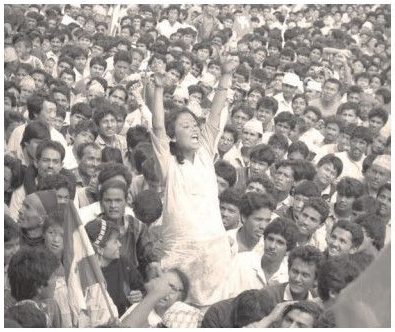
Answer the following questions based on the given image:
Contemporary World Politics
South Asia
Medium
Answer the following questions based on the given image:
Contemporary World Politics
South Asia
Medium
Answer the following questions based on the given image:
Contemporary World Politics
South Asia
Medium
Answer the following questions based on the given image:
Contemporary World Politics
South Asia
Easy
Answer the following questions based on the given image:
Contemporary World Politics
South Asia
Easy
Contemporary World Politics
South Asia
Easy
Contemporary World Politics
South Asia
Easy
Contemporary World Politics
South Asia
Medium
Contemporary World Politics
South Asia
Easy
Every question from the CUET Political Science 2025 13 May Shift 1 paper is here in full, with the correct answer and a step by step solution for each one. It is completely free, there is no login and no paywall, and you can read the whole paper online or download it to revise offline.
You can also attempt it instead of only reading it. Take the paper as a full length mock under exam conditions, or filter it by topic and attempt just that topic as a topic test. Both are free, and you get a breakdown of your accuracy, your timing and your weak areas once you submit.
CUET Political Science past year questions (PYQs) are the closest thing to the real exam, so working through them is the quickest way to learn the paper pattern, the marking scheme and the level of difficulty to expect on the day.