Q1:

Coalition Politics

Medium

Arrange the following Prime Minister's tenure according to correct chronological order.

(A) I.K. Gujral

(B) Narsimha Rao

(C) Chandra Shekhar

(D) V. P. Singh

Answer options
Option 2
Correct Answer
Explanation for 2025: 30 May Shift 1 POL question 1

Q2:

Security

Easy

Which of the following is not a component of the traditional notion of security?

Answer options
Option 4
Correct Answer
Explanation for 2025: 30 May Shift 1 POL question 2

Q3:

Coalition Politics

Easy

The Left parties withdrew support from the Congress led UPA government in July 2008 on which of the following issues?

Answer options
Option 2
Correct Answer
Explanation for 2025: 30 May Shift 1 POL question 3

Q4:

Environment & Resources

Medium

What do you mean by res communis humanitatis ?

Answer options
Option 4
Correct Answer
Explanation for 2025: 30 May Shift 1 POL question 4

Q5:

Centres of Power

Medium

Which among the following statements are correct about the European Union?

(A) European integration after 1945 was aided by the Second World War

(B) The US extended massive financial help for reviving Europe's economy under the Washington Plan.

(C) The Council of Europe was a step forward in political cooperation.

(D) The European Union has political and diplomatic influence as it has members who hold permanent and non-permanent seats on the UN Security Council.

Answer options
Option 2
Correct Answer
Explanation for 2025: 30 May Shift 1 POL question 5

Q6:

Congress System

Medium

Match List-I with List-II

List-IList-II
(A) Ram Manohar Lohia(I) Proponent of Dravid culture
(B) S. Nijalingappa(II) Non-Congressism
(C) C. Natarajan Annadurai(III) Chief Minister of Mysore
(D) Karpoori Thakur(IV) Strong opponent of the use of English Language
Answer options
Option 3
Correct Answer
Explanation for 2025: 30 May Shift 1 POL question 6

Q7:

External Relations

Medium

Match List-I with List-II

List-IList-II
(A) Afro-Asian Conference in Bandung(I) 1950
(B) China annexed Tibet(II) 1947
(C) India convened the Asian Relations Conference(III) 1954
(D) Panchsheel Agreement was signed(IV) 1955
Answer options
Option 1
Correct Answer
Explanation for 2025: 30 May Shift 1 POL question 7

Q8:

Congress System

Hard

Which among the following statements are correct about political developments in the aftermath of the fourth general elections?

(A) The Fourth General Elections brought into the picture the phenomenon of coalitions .

(B) Since no single party had got a majority, various non-Congress parties came together to form joint legislative parties,called Samyukt Vidhayak Dal that supported non-Congress governments.

(C) The Samyukt Vidhayak Dal government in Bihar included the two socialist parties-SSP and PSP-along with the CPI on the right and Jana Sangh on the left.

(D) In Punjab it was called the 'Popular United Front' and comprised CPI and CPI(M), the SSP, the Republican Party and the Bharatiya Jana Sangh

Answer options
Option 2
Correct Answer
Explanation for 2025: 30 May Shift 1 POL question 8

Q9:

Recent Issues & Challenges

Easy

The decisions to implement the recommendations of Mandal Commission by the National Front government was challenged in which of the following cases?

Answer options
Option 2
Correct Answer
Explanation for 2025: 30 May Shift 1 POL question 9

Q10:

Globalisation

Easy

The process of 'McDonaldisation' is dangerous because-

Answer options

Q11:

One-Party Dominance

Easy

Which one of the following electoral system was adopted for the general elections by India?

Answer options

Q12:

Crisis of Democratic Order

Medium

In 1974, who among the following leaders announced that he would go on an indefinite fast, if fresh elections were not held in the state of Gujarat?

Answer options

Q13:

Globalisation

Easy

In 1991 , India embarked upon a programme of economic reforms to acheive a higher rate of economic growth by:

Answer options

Q14:

Centres of Power

Easy

Which of the following countries developed into an economic power between 1960s and 1980s, and is termed as 'Miracle on the Han River'?

Answer options

Q15:

Congress System

Easy

The results of which of the following general elections was considered as a 'Political Earthquake' by political observers?

Answer options

Q16:

Regional Aspirations

Easy

The Assam Movement from 1979 to 1985 is an example of a movement against____________.

Answer options

Q17:

International Organisations

Medium

Match List-I with List-II

List-IList-II
(UN Secretary General)(Activities)
(A)Ban-ki-moon(I) Oversaw the relief operations in Bangladesh
(B) Kurt Waldheim(II)Declared the US-led invasion of Iraq as an illegal act.
(C) Boutros Boutros Ghali(III) Issued a Report ' An Agenda for Peace'
(D) Kofi A. Annan(IV) Creation of UN Women
Answer options

Q18:

South Asia

Medium

Arrange the following events in the correct chronological order.

(A) India and Bangladesh signed the Farakka Treaty for sharing water from the river Ganga.

(B) India and Pakistan signing the Indus Water Treaty

(C) Indo-Soviet Treaty of Friendship

(D) India and Pakistan signed the Shimla Agreement

Answer options

Q20:

Crisis of Democratic Order

Medium

Match List-I with List-II

List-IList-II
(A) Naxalbari uprising(I) 1975
(B) Jayaprakash Narayan led a peoples' march to the Parliament(II) 1977
(C) Keshavananda Bharati case(III) 1967
(D) General elections that was turned into a referendum on the experience of Emergency(IV) 1973
Answer options

Q21:

International Organisations

Easy

Which among the following countries is the largest contributor to the United Nations' regular budget for 2019?

Answer options

Q22:

Environment & Resources

Easy

Which one of the following is a reason for water wars?

Answer options

Q23:

Crisis of Democratic Order

Hard

Which among the following statements are correct about lessons learnt from the experience of the Emergency?

(A) Internal Emergency can be proclaimed only on the grounds of 'armed rebellion' and it is necessary that the advice to the President to proclaim Emergency must be given in writing by the Union Cabinet.

(B) The Courts have assumed a proactive role in protecting the civil liberties of the individuals.

(C) There is a tension between routine functioning of a democratic government and the continuous political protests by parties and groups.

(D) According to Balwant Rai Commission Report, the administration and the police become vulnerable to political pressures in this context.

Answer options

Q24:

Crisis of Democratic Order

Easy

In which one of the following cases, the Supreme Court decided that the basic features of the Indian Constitution cannot be amended?

Answer options

Q25:

External Relations

Easy

In 1956, India led the world protest against a neo-colonial invasion. The invasion is known as :

Answer options

Q26:

One-Party Dominance

Medium

Who among the following was not a member of the election committee formed by the Congress, to choose party candidates in 1951?

Answer options

Q27:

Planned Development

Medium

Which of the following statements is correct about the First Five Year Plan?

Answer options

Q28:

Crisis of Democratic Order

Easy

Which court and judge passed a judgment declaring Indira Gandhi's election to the Lok Sabha invalid?

Answer options

Q30:

Security

Medium

Which among the following statements are correct about Cooperative Security?

(A) Many of the non-traditional threats to security require cooperation rather than military confrontation.

(B) Cooperative security may involve both national and international players like the UN, WHO, IMF and others.

(C) Cooperative security may involve non-governmental organizations like the Amnesty International, the Red Cross and others.

(D) Cooperative Security totally rejects the use of force even as the last resort.

Answer options

Q31:

Recent Issues & Challenges

Easy

Who among the following Prime Ministers initiated the structural adjustment programme, which radically changed the direction that Indian economy pursued since independence?

Answer options

Q32:

End of Bipolarity

Medium

Which among the following statements are correct about the reasons for disintegration of the Soviet Union?

(A) The internal weaknesses of the Soviet political and economic institutions.

(B) Economic progress led to consumer surplus and large section of Soviet society accepted the system openly.

(C) The Soviet Union became stagnant in an administrative and political sense.

(D) The unwillingness to allow more openness in government and the centralisation of authority lacked popular backing.

Answer options

Q33:

Centres of Power

Medium

Arrange the following events related to European Integration in the correct chronological order.

(A) The Schengen Agreement abolishes border controls among the European Community members.

(B) Unification of Germany

(C) Referendum in Britain to decide Britain's exit from European Union.

(D) First direct elections to the European Parliament

Answer options

Q34:

Crisis of Democratic Order

Medium

Who among the following gave a call for a nationwide strike by all employees of the Railways for pressing their demands related to bonus and services conditions?

Answer options

Q35:

Globalisation

Easy

Which one of the following statements is correct about the nature of globalization ?

Answer options

Q36:

Congress System

Hard

Which of the following statements are correct about the results of the Lok Sabha elections of 1971?

(A) The Congress(R)-CPI alliance won more seats and votes than the Congress had ever won in the first four general elections.

(B) The Congress(R)-CPI combine won 375 seats in the Lok Sabha and secured 48.4 percent votes.

(C) The Congress(O) won 16 seats.

(D) The Grand Alliance of the opposition won less than 40 seats.

Answer options

Q37:

Regional Aspirations

Medium

Who among the following was the founder of Sikkim Praja Mandal and also founded the Sikkim National Congress in 1962?

Answer options

Q38:

Nation-Building

Medium

What was the name of Maharaja of Manipur who signed the Instrument of Accession with the Indian government on the assurance that internal autonomy of Manipur would be maintained?

Answer options

Q39:

International Organisations

Medium

Which among the following was not a part of the resolution adopted by the United Nation's General Assembly in 1992 ?

Answer options

Q40:

One-Party Dominance

Medium

Which one of the following states faced the first instance of the misuse of constitutional emergency powers under Article 356 of the Constitution?

Answer options

Q41:

End of Bipolarity

Easy

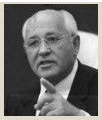
Answer the questions based on the following image :

Figure

Who is the leader in the above picture ?

Answer options

Q42:

End of Bipolarity

Easy

Answer the questions based on the following image :

Figure

What is the meaning of perestroika ?

Answer options

Q43:

End of Bipolarity

Easy

Answer the questions based on the following image :

Figure

What is the meaning of glasnost ?

Answer options

Q44:

End of Bipolarity

Medium

Answer the questions based on the following image :

Figure

In which year was the leader (in the picture) elected as the General Secretary of the Communist Party of the Soviet Union?

Answer options

Q45:

End of Bipolarity

Medium

Answer the questions based on the following image :

Figure

Which among the following steps was undertaken by the leader (in the picture)?

Answer options

Q46:

Regional Aspirations

Easy

After independence, the Mizo Hills area was made an autonomous district within Assam. Some Mizos believed that they were never a part of British India and therefore did not belong to the Indian union. But the movement for secession gained popular support after the Assam government failed to respond adequately to the great famine of 1959 in Mizo hills. The Mizos' anger led to the formation of the Mizo National Front (MNF) under the leadership of Laldenga. In 1966, the MNF started an armed campaign for independence. Thus, started a two decade long battle between Mizo insurgents and the Indian army. The MNF fought a guerilla war, got support from Pakistani government and secured shelter in the then East Pakistan. The Indian security forces countered it with a series of repressive measures of which the common people were the victims. At one point even Air Force was used. These measures caused more anger and alienation among the people.

Laldenga came back from exile in Pakistan and started negotiations with the Indian government. Rajiv Gandhi steered these negotiations to a positive conclusion. In 1986 a peace agreement was signed between Rajiv Gandhi and Laldenga. As per this accord, Mizoram was granted full-fledged statehood with special powers and the MNF agreed to give up the secessionist struggle. Laldenga took over as the Chief Minister. This accord proved a turning point in the history of Mizoram.

The Mizo secessionist movement gained popular support in 1959 because-

Answer options

Q47:

Regional Aspirations

Easy

After independence, the Mizo Hills area was made an autonomous district within Assam. Some Mizos believed that they were never a part of British India and therefore did not belong to the Indian union. But the movement for secession gained popular support after the Assam government failed to respond adequately to the great famine of 1959 in Mizo hills. The Mizos' anger led to the formation of the Mizo National Front (MNF) under the leadership of Laldenga. In 1966, the MNF started an armed campaign for independence. Thus, started a two decade long battle between Mizo insurgents and the Indian army. The MNF fought a guerilla war, got support from Pakistani government and secured shelter in the then East Pakistan. The Indian security forces countered it with a series of repressive measures of which the common people were the victims. At one point even Air Force was used. These measures caused more anger and alienation among the people.

Laldenga came back from exile in Pakistan and started negotiations with the Indian government. Rajiv Gandhi steered these negotiations to a positive conclusion. In 1986 a peace agreement was signed between Rajiv Gandhi and Laldenga. As per this accord, Mizoram was granted full-fledged statehood with special powers and the MNF agreed to give up the secessionist struggle. Laldenga took over as the Chief Minister. This accord proved a turning point in the history of Mizoram.

Who was the leader of MNF ?

Answer options

Q48:

Regional Aspirations

Easy

After independence, the Mizo Hills area was made an autonomous district within Assam. Some Mizos believed that they were never a part of British India and therefore did not belong to the Indian union. But the movement for secession gained popular support after the Assam government failed to respond adequately to the great famine of 1959 in Mizo hills. The Mizos' anger led to the formation of the Mizo National Front (MNF) under the leadership of Laldenga. In 1966, the MNF started an armed campaign for independence. Thus, started a two decade long battle between Mizo insurgents and the Indian army. The MNF fought a guerilla war, got support from Pakistani government and secured shelter in the then East Pakistan. The Indian security forces countered it with a series of repressive measures of which the common people were the victims. At one point even Air Force was used. These measures caused more anger and alienation among the people.

Laldenga came back from exile in Pakistan and started negotiations with the Indian government. Rajiv Gandhi steered these negotiations to a positive conclusion. In 1986 a peace agreement was signed between Rajiv Gandhi and Laldenga. As per this accord, Mizoram was granted full-fledged statehood with special powers and the MNF agreed to give up the secessionist struggle. Laldenga took over as the Chief Minister. This accord proved a turning point in the history of Mizoram.

MNF movement got support from which neighbouring country ?

Answer options

Q49:

Regional Aspirations

Easy

After independence, the Mizo Hills area was made an autonomous district within Assam. Some Mizos believed that they were never a part of British India and therefore did not belong to the Indian union. But the movement for secession gained popular support after the Assam government failed to respond adequately to the great famine of 1959 in Mizo hills. The Mizos' anger led to the formation of the Mizo National Front (MNF) under the leadership of Laldenga. In 1966, the MNF started an armed campaign for independence. Thus, started a two decade long battle between Mizo insurgents and the Indian army. The MNF fought a guerilla war, got support from Pakistani government and secured shelter in the then East Pakistan. The Indian security forces countered it with a series of repressive measures of which the common people were the victims. At one point even Air Force was used. These measures caused more anger and alienation among the people.

Laldenga came back from exile in Pakistan and started negotiations with the Indian government. Rajiv Gandhi steered these negotiations to a positive conclusion. In 1986 a peace agreement was signed between Rajiv Gandhi and Laldenga. As per this accord, Mizoram was granted full-fledged statehood with special powers and the MNF agreed to give up the secessionist struggle. Laldenga took over as the Chief Minister. This accord proved a turning point in the history of Mizoram.

What was an important outcome of the 1986 peace agreement that was signed between Rajiv Gandhi and Laldenga? ?

Answer options

Q50:

Regional Aspirations

Easy

After independence, the Mizo Hills area was made an autonomous district within Assam. Some Mizos believed that they were never a part of British India and therefore did not belong to the Indian union. But the movement for secession gained popular support after the Assam government failed to respond adequately to the great famine of 1959 in Mizo hills. The Mizos' anger led to the formation of the Mizo National Front (MNF) under the leadership of Laldenga. In 1966, the MNF started an armed campaign for independence. Thus, started a two decade long battle between Mizo insurgents and the Indian army. The MNF fought a guerilla war, got support from Pakistani government and secured shelter in the then East Pakistan. The Indian security forces countered it with a series of repressive measures of which the common people were the victims. At one point even Air Force was used. These measures caused more anger and alienation among the people.

Laldenga came back from exile in Pakistan and started negotiations with the Indian government. Rajiv Gandhi steered these negotiations to a positive conclusion. In 1986 a peace agreement was signed between Rajiv Gandhi and Laldenga. As per this accord, Mizoram was granted full-fledged statehood with special powers and the MNF agreed to give up the secessionist struggle. Laldenga took over as the Chief Minister. This accord proved a turning point in the history of Mizoram.

Who was the first chief minister of Mizoram ?

Answer options

CUET Political Science 2025 30 May Shift 1 Past Year Question Paper

Every question from the CUET Political Science 2025 30 May Shift 1 paper is here in full, with the correct answer and a step by step solution for each one. It is completely free, there is no login and no paywall, and you can read the whole paper online or download it to revise offline.

You can also attempt it instead of only reading it. Take the paper as a full length mock under exam conditions, or filter it by topic and attempt just that topic as a topic test. Both are free, and you get a breakdown of your accuracy, your timing and your weak areas once you submit.

CUET Political Science past year questions (PYQs) are the closest thing to the real exam, so working through them is the quickest way to learn the paper pattern, the marking scheme and the level of difficulty to expect on the day.