Q1:
Politics in India Since Independence
Regional Aspirations
Easy
The Rajiv Gandhi-Longowal Accord is also known as:
Correct Answer
Option 1
Correct Answer

Politics in India Since Independence
Regional Aspirations
Easy
The Rajiv Gandhi-Longowal Accord is also known as:
Contemporary World Politics
Environment & Resources
Easy
The 1992 United Nations Framework Convention on Climate Change (UNFCCC) provides that the parties should act to protect the climate system on the __________.
Politics in India Since Independence
External Relations
Easy
Which provision in the Indian Constitution lays down the principles of 'promotion of international Peace and Security'?
Politics in India Since Independence
External Relations
Medium
In which of the following year did Britain attack Egypt over the issue of the Suez Canal?
Politics in India Since Independence
Regional Aspirations
Easy
What was the focus of Anandpur Sahib Resolution?
Politics in India Since Independence
Regional Aspirations
Easy
Which state was a 'protectorate 'of India at the time of independence?
Contemporary World Politics
Centres of Power
Medium
Arrange the following events related to the European Union in chronological order.
(A) Greece joined the European Community
(B) Spain joined the European Community
(C) Austria has joined the European Union
(D) The Treaty of Maastricht was signed
Politics in India Since Independence
One-Party Dominance
Medium
How many seats did the Congress party win in the first Lok Sabha election?
Contemporary World Politics
End of Bipolarity
Medium
Which leader of the Soviet Union proposed Asian Collective Security system?
Contemporary World Politics
Security
Medium
Which of the following is not a new non-traditional sources of threat to security?
Politics in India Since Independence
Recent Issues & Challenges
Hard
Which of the following statements are correct about B. P. Mandal?
(A) He chaired the Second Backward Classes Commission
(B) He was a M.P from Bihar for1967-1970
(C) He was the Chief Minister of Bihar in 1968
(D) He joined the Janata Party in 1977
Contemporary World Politics
Centres of Power
Medium
In which year was the Council of Europe established?
Politics in India Since Independence
Crisis of Democratic Order
Easy
Which of the following provision in the Indian Constitution was evoked by the government to declare a state of emergency in June 1975?
Politics in India Since Independence
Congress System
Medium
Match List-I with List-II
| List-I | List-II |
|---|---|
| (A) Aya Ram, Gaya Ram | (I) Floor-Crossing |
| (B) Political earthquake | (II) Fourth general election |
| (C) Non-Congressism | (III) Anti-congress parties' strategy against Congress |
| (D) Save Democracy | (IV) Opposition slogan during 1977 election |
Politics in India Since Independence
Congress System
Easy
In 1963, it was proposed that all senior Congressmen should resign from office to make way for younger party workers. This proposal is famous as-
Contemporary World Politics
Globalisation
Medium
Which of the following statements are not correct about the globalisation?
(A) Globalisation as a concept fundamentally restricts the flow of ideas, capital, commodities and people.
(B) The crucial element of globalisation is the worldwide interconnectedness.
(C) Globalisation has eroded state capacity and sovereignty.
(D)Globalisation has replaced minimalist state with welfare oriented state.
Politics in India Since Independence
Recent Issues & Challenges
Medium
Match List-I with List-II
| List-I | List-II |
|---|---|
| (A) BAMCEF was formed | (I) 1992 |
| (B) Mandal Commission gave its recommendations | (II) 1978 |
| (C) United Progressive Alliance (I) led by Congress came to power | (III)1980 |
| (D) Indira Sawhney Case | (IV) 2004 |
Politics in India Since Independence
Nation-Building
Easy
Who among the following leaders said, 'Tomorrow we shall be free from the slavery of the British domination. But at midnight, India will be partitioned. Tomorrow will thus be a day of rejoicing as well as of mourning?
Politics in India Since Independence
Planned Development
Easy
In which year the NITI Aayog came into existence?
Contemporary World Politics
Environment & Resources
Medium
In which year was the World Council of Indigenous Peoples formed?
Contemporary World Politics
Environment & Resources
Medium
In which of the following declarations the principle of 'common but differentiated responsibilities' has been adopted?
Politics in India Since Independence
Crisis of Democratic Order
Easy
Which one of the following was the ground for the declaration of emergency by Indira Gandhi?
Politics in India Since Independence
Congress System
Medium
Match List-I with List-II
| List-I | List-II |
|---|---|
| (Politician or Personality) | (Their achievements) |
| (A) Indira Gandhi | (I) Congress President, Chief Minister of Madras, introduced mid-day meal scheme for schoolchildren. |
| (B) Ram Manohar Lohia | (II) Staunch follower of Lohia, known for his decision to introduce reservations for the backward classes in Bihar during his second Chief Ministership. |
| (C) K. Kamraj | (III) Nationalsation of banks, abolition of privy purses, and India's first nuclear test during Prime Ministership |
| (D) Karpoori Thakur | (IV) Founder editor of Mankind and Jan, introduced a strategy of non-Congressism. |
Politics in India Since Independence
Planned Development
Easy
The focus of the First Five-Year Plan was:
Politics in India Since Independence
Coalition Politics
Easy
Which of the following parties emerged as the largest party in the 1996 election and was invited to form a government but could not secure a majority in Lok Sabha?
Contemporary World Politics
Globalisation
Medium
Which of the following is a political consequence of globalization?
Politics in India Since Independence
One-Party Dominance
Hard
Arrange the following events in Indian politics in chronological order.
(A) The Socialist Party was formed.
(B) The Communist Party abandoned the path of violent revolution and decided to participate in the first general elections.
(C) Swatantra Party was formed.
(D) National Revolutionary Party was formed.
Politics in India Since Independence
Nation-Building
Easy
Which of the following was the first and the immediate challenge that India faced after Independence?
Contemporary World Politics
International Organisations
Easy
The United Nations (UN) was established on:
Politics in India Since Independence
Regional Aspirations
Medium
Which among the following statements are correct about the crisis in Jammu and Kashmir?
(A) The Kashmir issue is a major bone of contention between India and China.
(B) Jammu and Kashmir comprises of three social and political regions.
(C) It expresses the aspirations of the people of Jammu and Kashmir for political autonomy.
(D) This dispute involves the issue of Kashmiriyat.
Politics in India Since Independence
One-Party Dominance
Easy
Which of the following is not correct about the 'Congress Party'?
Contemporary World Politics
Environment & Resources
Easy
The approach to development that combines economic growth with ecological responsibility is called-
Contemporary World Politics
International Organisations
Easy
Match List-I with List-II
| List-I | List-II |
|---|---|
| (International Organisations) | (Their Profile/Function) |
| (A) Amnesty International | (I) Created in 1945, its activities are focused on developing countries. It works for human development (education, health), agriculture and rural development, Environmental protection, infrastructure (roads, electricity), and governance. |
| (B) WTO | (II) An international organization has 189 member countries and oversees those financial institutions and regulations that act at the international level. |
| (C) World Bank | (III) An NGO that campaigns for the protection of human rights all over the world. |
| (D) IMF | (IV) The successor to the General Agreement on Trade and Tariffs (GATT) |
Contemporary World Politics
End of Bipolarity
Medium
Match List-I with List-II
| List-I | List-II |
|---|---|
| (A) Berlin Wall falls | (I) 1985 |
| (B) Russia takes over the USSR seat in the United Nations | (II) 1990 |
| (C) Russian parliament declares its independence from the Soviet Union | (III) 1991 |
| (D)Boris Yeltsin is appointed as the head of the Communist Party in Moscow | (IV)1989 |
Contemporary World Politics
International Organisations
Easy
Which one among of the following countries is not the permanent member in the UN Security Council?
Contemporary World Politics
South Asia
Easy
The South Asian Free Trade (SAFTA) agreement was signed in which year?
Contemporary World Politics
South Asia
Easy
In which year did the South Asian leaders sign the SAARC Charter in Dhaka?
Politics in India Since Independence
Coalition Politics
Medium
Match List-I with List-II
| List-I | List-II |
|---|---|
| (A) I.K. Gujral | (I) Congress (June 1991-May 1996) |
| (B) A.B. Vajpayee | (II) United Front (June 1996-April 1997) |
| (C) H.D.Deve Gowda | (III) United Front(April 1997-March 1998) |
| (D) P.V. Narsimha Rao | (IV) NDA( March 1998- October 1999, October 1999-May 2004) |
Contemporary World Politics
End of Bipolarity
Medium
Which among the following is correct about the consequences of the collapse of the Soviet Union?
(A) The ideological dispute between socialist and capitalist systems came to an end.
(B) The end to arms race and a possible new peace
(C) The US became the sole superpower
(D) Politically, liberal democracy emerged as the best way to organise political life.
Politics in India Since Independence
Crisis of Democratic Order
Easy
Which Commission was appointed to inquire into the Emergency?
Contemporary World Politics
Environment & Resources
Easy
Study the picture carefully and answer the questions that follow:
Picture interpretation:
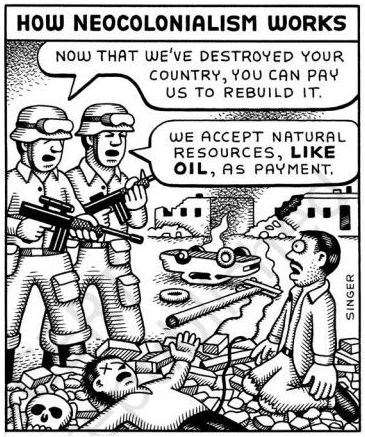
Contemporary World Politics
Environment & Resources
Easy
Study the picture carefully and answer the questions that follow:
Picture interpretation:
Contemporary World Politics
Environment & Resources
Easy
Study the picture carefully and answer the questions that follow:
Picture interpretation:
Contemporary World Politics
Environment & Resources
Easy
Study the picture carefully and answer the questions that follow:
Picture interpretation:
Contemporary World Politics
Environment & Resources
Medium
Study the picture carefully and answer the questions that follow:
Picture interpretation:
Politics in India Since Independence
Nation-Building
Medium
Politics in India Since Independence
Nation-Building
Easy
Politics in India Since Independence
Nation-Building
Easy
Politics in India Since Independence
Nation-Building
Easy
Politics in India Since Independence
Nation-Building
Easy
Every question from the CUET Political Science 2025 14 May Shift 2 paper is here in full, with the correct answer and a step by step solution for each one. It is completely free, there is no login and no paywall, and you can read the whole paper online or download it to revise offline.
You can also attempt it instead of only reading it. Take the paper as a full length mock under exam conditions, or filter it by topic and attempt just that topic as a topic test. Both are free, and you get a breakdown of your accuracy, your timing and your weak areas once you submit.
CUET Political Science past year questions (PYQs) are the closest thing to the real exam, so working through them is the quickest way to learn the paper pattern, the marking scheme and the level of difficulty to expect on the day.