CUET Chemistry: ChemistryAlcohols, Phenols & Ethers. Free, no login required.

Q1:

2026: 19 May Shift 1

Alcohols, Phenols & Ethers

Easy

Phenetole on cleavage with HBr gives

Answer options
Option 2
Correct Answer
Explanation for 2026: 19 May Shift 1 CHE question 1

Q2:

2026: 18 May Shift 2

Alcohols, Phenols & Ethers

Easy

Alcohols

Alcohols are formed when a hydrogen atom in aliphatic hydrocarbon is replaced by -OH group. Alcohols are classified as primary, secondary and tertiary alcohols depending on the attachment of -OH group to primary, secondary and tertiary carbon atom, respectively. In alcohols, the oxygen of the -OH group is attached to carbon by a sigma (σ\sigma) bond formed by the overlap of a sp3sp^3 hybridised orbital of carbon with a sp3sp^3 hybridised orbital of oxygen. Alcohols consist of two parts, an alkyl group and a hydroxyl group. The properties of alcohols are chiefly due to the hydroxyl group. The nature of alkyl groups simply modify these properties. The boiling points of alcohols increase with increase in the number of carbon atoms (increase in van der Waals forces). In alcohols, the boiling points decrease with increase of branching in carbon chain (because of decrease in van der Waals forces with decrease in surface area). Alcohols undergo dehydration (removal of a molecule of water) to form alkenes on treating with a protic acid e.g., concentrated H2SO4H_2SO_4 or H3PO4H_3PO_4, or catalysts such as anhydrous zinc chloride or alumina. Alcohols are versatile compounds. They act both as nucleophiles and electrophiles. An alcohol with molecular formula C4H10OC_4H_{10}O (A) is prepared the reduction of corresponding ketone. 'A' is also prepared by the reaction of propanal with methylmagnesium bromide followed by hydrolysis. Compound A on dehydration gives alkene (B).

Which reagent is used for reduction of ketone to compound "A"?

Answer options
Option 3
Correct Answer
Explanation for 2026: 18 May Shift 2 CHE question 2

Q3:

2026: 18 May Shift 2

Alcohols, Phenols & Ethers

Easy

Alcohols

Alcohols are formed when a hydrogen atom in aliphatic hydrocarbon is replaced by -OH group. Alcohols are classified as primary, secondary and tertiary alcohols depending on the attachment of -OH group to primary, secondary and tertiary carbon atom, respectively. In alcohols, the oxygen of the -OH group is attached to carbon by a sigma (σ\sigma) bond formed by the overlap of a sp3sp^3 hybridised orbital of carbon with a sp3sp^3 hybridised orbital of oxygen. Alcohols consist of two parts, an alkyl group and a hydroxyl group. The properties of alcohols are chiefly due to the hydroxyl group. The nature of alkyl groups simply modify these properties. The boiling points of alcohols increase with increase in the number of carbon atoms (increase in van der Waals forces). In alcohols, the boiling points decrease with increase of branching in carbon chain (because of decrease in van der Waals forces with decrease in surface area). Alcohols undergo dehydration (removal of a molecule of water) to form alkenes on treating with a protic acid e.g., concentrated H2SO4H_2SO_4 or H3PO4H_3PO_4, or catalysts such as anhydrous zinc chloride or alumina. Alcohols are versatile compounds. They act both as nucleophiles and electrophiles. An alcohol with molecular formula C4H10OC_4H_{10}O (A) is prepared the reduction of corresponding ketone. 'A' is also prepared by the reaction of propanal with methylmagnesium bromide followed by hydrolysis. Compound A on dehydration gives alkene (B).

What type of alcohol is compound "A"?

Answer options
Option 2
Correct Answer
Explanation for 2026: 18 May Shift 2 CHE question 3

Q4:

2026: 18 May Shift 2

Alcohols, Phenols & Ethers

Easy

Alcohols

Alcohols are formed when a hydrogen atom in aliphatic hydrocarbon is replaced by -OH group. Alcohols are classified as primary, secondary and tertiary alcohols depending on the attachment of -OH group to primary, secondary and tertiary carbon atom, respectively. In alcohols, the oxygen of the -OH group is attached to carbon by a sigma (σ\sigma) bond formed by the overlap of a sp3sp^3 hybridised orbital of carbon with a sp3sp^3 hybridised orbital of oxygen. Alcohols consist of two parts, an alkyl group and a hydroxyl group. The properties of alcohols are chiefly due to the hydroxyl group. The nature of alkyl groups simply modify these properties. The boiling points of alcohols increase with increase in the number of carbon atoms (increase in van der Waals forces). In alcohols, the boiling points decrease with increase of branching in carbon chain (because of decrease in van der Waals forces with decrease in surface area). Alcohols undergo dehydration (removal of a molecule of water) to form alkenes on treating with a protic acid e.g., concentrated H2SO4H_2SO_4 or H3PO4H_3PO_4, or catalysts such as anhydrous zinc chloride or alumina. Alcohols are versatile compounds. They act both as nucleophiles and electrophiles. An alcohol with molecular formula C4H10OC_4H_{10}O (A) is prepared the reduction of corresponding ketone. 'A' is also prepared by the reaction of propanal with methylmagnesium bromide followed by hydrolysis. Compound A on dehydration gives alkene (B).

Which of the isomers of the compound "A" has maximum boiling point?

Answer options
Option 1
Correct Answer
Explanation for 2026: 18 May Shift 2 CHE question 4

Q5:

2026: 18 May Shift 2

Alcohols, Phenols & Ethers

Easy

Alcohols

Alcohols are formed when a hydrogen atom in aliphatic hydrocarbon is replaced by -OH group. Alcohols are classified as primary, secondary and tertiary alcohols depending on the attachment of -OH group to primary, secondary and tertiary carbon atom, respectively. In alcohols, the oxygen of the -OH group is attached to carbon by a sigma (σ\sigma) bond formed by the overlap of a sp3sp^3 hybridised orbital of carbon with a sp3sp^3 hybridised orbital of oxygen. Alcohols consist of two parts, an alkyl group and a hydroxyl group. The properties of alcohols are chiefly due to the hydroxyl group. The nature of alkyl groups simply modify these properties. The boiling points of alcohols increase with increase in the number of carbon atoms (increase in van der Waals forces). In alcohols, the boiling points decrease with increase of branching in carbon chain (because of decrease in van der Waals forces with decrease in surface area). Alcohols undergo dehydration (removal of a molecule of water) to form alkenes on treating with a protic acid e.g., concentrated H2SO4H_2SO_4 or H3PO4H_3PO_4, or catalysts such as anhydrous zinc chloride or alumina. Alcohols are versatile compounds. They act both as nucleophiles and electrophiles. An alcohol with molecular formula C4H10OC_4H_{10}O (A) is prepared the reduction of corresponding ketone. 'A' is also prepared by the reaction of propanal with methylmagnesium bromide followed by hydrolysis. Compound A on dehydration gives alkene (B).

The IUPAC name and structure of compound "A" is:

Answer options
Option 1
Correct Answer
Explanation for 2026: 18 May Shift 2 CHE question 5

Q6:

2026: 18 May Shift 2

Alcohols, Phenols & Ethers

Easy

Alcohols

Alcohols are formed when a hydrogen atom in aliphatic hydrocarbon is replaced by -OH group. Alcohols are classified as primary, secondary and tertiary alcohols depending on the attachment of -OH group to primary, secondary and tertiary carbon atom, respectively. In alcohols, the oxygen of the -OH group is attached to carbon by a sigma (σ\sigma) bond formed by the overlap of a sp3sp^3 hybridised orbital of carbon with a sp3sp^3 hybridised orbital of oxygen. Alcohols consist of two parts, an alkyl group and a hydroxyl group. The properties of alcohols are chiefly due to the hydroxyl group. The nature of alkyl groups simply modify these properties. The boiling points of alcohols increase with increase in the number of carbon atoms (increase in van der Waals forces). In alcohols, the boiling points decrease with increase of branching in carbon chain (because of decrease in van der Waals forces with decrease in surface area). Alcohols undergo dehydration (removal of a molecule of water) to form alkenes on treating with a protic acid e.g., concentrated H2SO4H_2SO_4 or H3PO4H_3PO_4, or catalysts such as anhydrous zinc chloride or alumina. Alcohols are versatile compounds. They act both as nucleophiles and electrophiles. An alcohol with molecular formula C4H10OC_4H_{10}O (A) is prepared the reduction of corresponding ketone. 'A' is also prepared by the reaction of propanal with methylmagnesium bromide followed by hydrolysis. Compound A on dehydration gives alkene (B).

The IUPAC name of the major alkene (Compound B) formed by the dehydration of compound "A" is:

Answer options
Option 2
Correct Answer
Explanation for 2026: 18 May Shift 2 CHE question 6

Q7:

2026: 18 May Shift 1

Alcohols, Phenols & Ethers

Easy

Ethanol in the presence of concentrated sulfuric acid (conc. H2SO4H_2SO_4) at 443 K produces

Answer options
Option 1
Correct Answer
Explanation for 2026: 18 May Shift 1 CHE question 7

Q9:

2026: 18 May Shift 1

Alcohols, Phenols & Ethers

Easy

The sugar (C12H22O11C_{12}H_{22}O_{11}) from sugarcane and grapes in the presence of an enzyme invertase produces

Answer options
Option 2
Correct Answer
Explanation for 2026: 18 May Shift 1 CHE question 9

Q10:

2026: 18 May Shift 1

Alcohols, Phenols & Ethers

Easy

Methanol poisoning can be treated using intravenous infusions of which of the following compound ?

Answer options

Q13:

2026: 15 May Shift 1

Alcohols, Phenols & Ethers

Easy

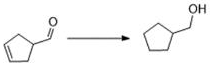
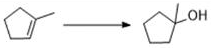
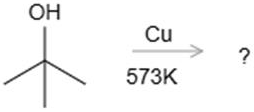
The major product of the following reaction is
Figure

Answer options

Q14:

2026: 15 May Shift 1

Alcohols, Phenols & Ethers

Easy

Secondary and tertiary alcohols are not favoured for the preparation of ether via dehydration at elevated temperature in the presence of sulfuric acid because

Answer options

Q15:

2026: 14 May Shift 2

Alcohols, Phenols & Ethers

Medium

Arrange the following alcohols in the increasing order of their reactivity with HBr.

A. Benzyl alcohol

B. p-nitrobenzyl alcohol

C. p-methylbenzyl alcohol

D. p-chlorobenzyl alcohol

Answer options

Q16:

2026: 14 May Shift 2

Alcohols, Phenols & Ethers

Hard

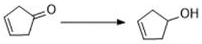
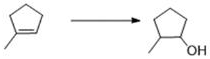
Match the reactions (List-I) with reagents (List-II) used to get the product.

LIST-I (Reactions)LIST-II (Reagents)
A.FigureI.H+/H2OH^+/H_2O
B.FigureII.BH3/H2O2,OH−BH_3/H_2O_2, OH^-
C.FigureIII.Lithium aluminum hydride/ H2OH_2O
D.FigureIV.Sodium borohydride
Answer options

Q17:

2026: 14 May Shift 2

Alcohols, Phenols & Ethers

Easy

Which of the following are not ethers?

A. Anisole

B. Cumene hydroperoxide

C. Ethylene oxide

D. Sodium phenoxide

Answer options

Q19:

2026: 14 May Shift 2

Alcohols, Phenols & Ethers

Medium

When benzene diazonium chloride is heated with water, it gives the compound P which on further reaction with chloroform and aqueous sodium hydroxide /H3O+H_3O^+ gives the compound Q. Identify the compounds P and Q, respectively.

A. Benzene

B. Phenol

C. Salicylic acid

D. Salicylaldehyde

Answer options

Q20:

2026: 12 May Shift 2

Alcohols, Phenols & Ethers

Easy

Match List-I (Name of reaction)with List-II (End product)

List-IList-II
Name of reactionEnd product
(A) Reimer Tiemann reaction(I) Aspirin
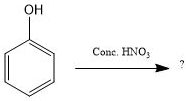
(B) Nitration of phenol by conc. HNO3_3(II) Salicylic acid
(C) Acetylation of salicylic acid(III) Salicylaldehyde
(D) Kolbe reaction(IV) Picric Acid
Answer options

Q21:

2026: 12 May Shift 2

Alcohols, Phenols & Ethers

Easy

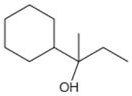
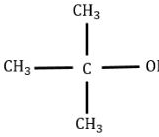
IUPAC name of the following alcohol is
Figure

Answer options

Q22:

2026: 12 May Shift 2

Alcohols, Phenols & Ethers

Easy

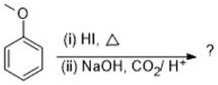
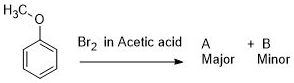
What will be the major product in the following reaction?
Figure

Answer options

Q23:

2026: 12 May Shift 2

Alcohols, Phenols & Ethers

Easy

Bromination of phenol with bromine water gives product A while bromination of phenol with Br2_2-CS2_2 and at low temeprature gives product B as a major product. Identity the products A and B in the reaction.

Answer options

Q24:

2026: 12 May Shift 2

Alcohols, Phenols & Ethers

Medium

Williamson synthesis is an important method for the preparation of ethers.

R−X+R′−O¨ˉNa+⟶R−O¨−R′+Na X\mathrm{R{-}X + R'{-}\bar{\ddot{O}}\overset{+}{Na} \longrightarrow R{-}\ddot{O}{-}R' + Na\,X}

Consider the following statments and identify the correct statements

(A) This method is not applicable for preparation of symmetrical ethers.

(B) This method is used for the preparation of both symmetrical and unsymmetrical ethers .

(C) This involves SN1\mathrm{S_N1} attack of an alkoxide on primary alkyl halide.

(D) Ethers containing substituted alkyl groups (secondary or tertiary ) can also be prepared by this method.

Answer options

Q25:

2026: 11 May Shift 1

Alcohols, Phenols & Ethers

Easy

Phenol

Aniline reacts with nitrous acid at 273- 278 K followed by treating with dilute acid gives a compound A. Compound A reacted with bromine water gives a Compound B as a white precipitate. Compound A reacts with Zinc dust to give compound C. Compound C reacts with Cl2\mathrm{Cl_2} in the presence of Lewis acid to give compound D. Further, Compound A undergoes oxidation with chromic acid to give compound E.

What is the structure of compound A?

Answer options

Q26:

2026: 11 May Shift 1

Alcohols, Phenols & Ethers

Easy

Phenol

Aniline reacts with nitrous acid at 273- 278 K followed by treating with dilute acid gives a compound A. Compound A reacted with bromine water gives a Compound B as a white precipitate. Compound A reacts with Zinc dust to give compound C. Compound C reacts with Cl2\mathrm{Cl_2} in the presence of Lewis acid to give compound D. Further, Compound A undergoes oxidation with chromic acid to give compound E.

What is the structure of compound B?

Answer options

Q27:

2026: 11 May Shift 1

Alcohols, Phenols & Ethers

Easy

Phenol

Aniline reacts with nitrous acid at 273- 278 K followed by treating with dilute acid gives a compound A. Compound A reacted with bromine water gives a Compound B as a white precipitate. Compound A reacts with Zinc dust to give compound C. Compound C reacts with Cl2\mathrm{Cl_2} in the presence of Lewis acid to give compound D. Further, Compound A undergoes oxidation with chromic acid to give compound E.

What is the structure of compound C?

Answer options

Q28:

2026: 11 May Shift 1

Alcohols, Phenols & Ethers

Medium

Phenol

Aniline reacts with nitrous acid at 273- 278 K followed by treating with dilute acid gives a compound A. Compound A reacted with bromine water gives a Compound B as a white precipitate. Compound A reacts with Zinc dust to give compound C. Compound C reacts with Cl2\mathrm{Cl_2} in the presence of Lewis acid to give compound D. Further, Compound A undergoes oxidation with chromic acid to give compound E.

What is the structure of compound D?

Answer options

Q29:

2026: 11 May Shift 1

Alcohols, Phenols & Ethers

Medium

Phenol

Aniline reacts with nitrous acid at 273- 278 K followed by treating with dilute acid gives a compound A. Compound A reacted with bromine water gives a Compound B as a white precipitate. Compound A reacts with Zinc dust to give compound C. Compound C reacts with Cl2\mathrm{Cl_2} in the presence of Lewis acid to give compound D. Further, Compound A undergoes oxidation with chromic acid to give compound E.

What is the structure of compound E?

Answer options